Luke 6
Haalin Mallano · Tap a verse to see its cross-references.
Ukunsen Rooroa Goynsa Oysadhoono
1Ayiwd eensa ukunsen rooroaka Yesus gazgon ushon haaminsa shaarinka kinin yivenka, kisa paanan yivayna eena gazgon tishanam qunthate qadhayse gavite ke dahade. 2Parisa eenasa waani waani eena “Ukunsen rooroaka zaskimon waadimanam harrnee waadadhe?” kena ke hamade. 3Yesusaar yin giyayse kena ki maasade: “Ena Bitaa Dawtbee kimbesana kinka dahaana eenabe kenin daaqardhonka kinin hayonam yedi nabbabeete? 4Kidi Barjosa gazan ooninsa mayante ardayse gudullakalanka een abinin itsimon Barjosa birante wodadhon balashanam tiyayse ki itsade; kimbete dahaana eenanaar ki imade. 5Inta Eedi Naas ukunsen rooroasa Imbaane” kena ki hamade.
Aaniysa Woboa Eam Yesusin Pacchoono
6Ukunsen rooro abka Yesus Ayiwd eensa bukin raqinte ardayse eenaam dhettsan ki yedade. Raqin ogotear anta mizaqaysa wobaa eedi kalaa ki dahade. 7Musesa yigginam dhettsaynabee Parisa eenabe Yesusam bersana zagayse, “Ukunsen rooroaka Yesus eediam paccho ki dew?” hamayse kiam shedite ke dahade. 8Yesusaar kesa qaabenam dhesayse, aaniysa woboa eana “Dhaabhayse eensa shaarinte woyaa!” kina ki hamade. Ear dhaabhayse ki woyade. 9Yesus kena yi giyna: “Yeam ida oyse: Ukunsen rooroaka Musesa yiggino har wonin waadadhoadettsi wona ko giye? Payya yermoo? Siya yeru? Eediam wonin dhacchoadettsimoo? Eediam wonin deesoadettsine?” kena ki hamade. 10Yesusaar kisa gasante dohon een wulam shedayse, yisa aanin woboaka “Aanin hannonam pishkaa!” kina ki hamade. Ear yisa aaninam ki pishkade. Kisa annoar ko paashade.
11Musesa yigginam dhettsaynabee Parisa eenabe ogoka kattsi wacimayse, “Hamin kiam wo hayanna wona ko paydhe?” hamayse kinka kikal ke dhalqade.
Yesusin Tarjamonnante Yittsaynaam Kamoono
12Ogo wodanka Yesus Barjoam miskana dhukandar ki utade; ogotear Barjoam miskaate ki wodhade. 13Ogora peen sedhaysaka yisa paanan yivaynaam yikal keam ki eelade; kesaar iira tabhi lamaanaam ki kamade. Pir “Tarjamonnante Yittsadhaana” hamayse kena naabe ki wodade. 14Kediar: Bhethiroos hamayse kisa naabe kinin wodaa Simoonbee, indanaasa Indiriasbee, Yayqoobbee, Wannisbee, Pilbhoosbee, Bartelemoosbee, 15Maatoosbee, Toomaasebee, Ilpoos naasa Yayqoobbee, “Peen yinnonna bish qaabeane” hamayse giidhea Simoonbee, 16Yayqoob naasa Yiwdabee, Yesusam dembhinna saskate imea Asqoronto peen ea Yiwdabene.
Yesus Thoothin Eenam Kinin Dhettsonbee Kinin Pacchonbe
17Yesus igina tabhi lamaanabete kinka dhukara hanchayse torente ki woyade; kisa paanan yivayna eenasaar thoothino eeno ogote ko dahade. Taar kisa dhalqinam qansanabee yisa burqoraar paashanabe Yiwda peen wulbee, Yerusaalem katamanbee, bazinsa aponte dahaana Thiroosbee Sidoonabera kikal nivoono thoothino eeno ko dahade. Beero yiam yedaysaka gaalaynaar ke paashade. 19Pacchansa kantano kikalanka utayse ke wulam pacchite konin dohonna, eeno wul Yesusam kaamana koda zage.
Wozabee Eepibe
20Yesusaar yisa paanan yivaynaam shedayse yin ki giyade:
“Yedi qambhinato, Barjosa bitamono yenti konin dohonna wozadhee;
21yedi ta daaqardhaynato, yenin mishenna wozadhee;
yedi ta eepaynato, yenin hancenna wozadhee.
22I Eedi Naasina hamayse eeno yeam konin jibbenkabee, yembesana kinka kalaa maatintanam garayse yeam konin edenkabee, yeam konin iirenkabee, yesa naabenam konin genenkabe, wozadhee. 23Marrato! Yena kashadhayno bazano cecinte gebhi konin dohonna, ogo wodanka wozadhee, wozaka bhulee. Ena kesa eykenaar Barjokala qansayse eenna giyaynaam agaadettsi keam ke hayade.
24Yedi wodimbhaanato, yena maaten yerin wulam ta yenin haaponna, os birante yenin haapiminna hay!
25Yedi ta mishaanato, yenin daaqardhenna hay!
Yedi ta hancaynato, qaabonka yenin atennabee yenin eepennabe hay!
26Eeno wul yeam shawkaate payyamon yesa konin giyenka hay! Ena buudamoka ‘Wodi Barjokala qansayse eenna giyaynane’ hamaynaam yesa eykenaar yin ke shawkade” kena ki hamade.
Wosa Banqin Eenaam Nasha Zaskayno
27Yesus pir “Inin giyenam qansaynana yin ida giye: Yeam jibbayna eenaam nashee; kena yer payya hayee. 28Yeam ashaynana payya malsi kena maasee; yeam genaynanaar Barjoam miskee. 29Hasa karcanam ceveana karca waam kina shirshayse dhahaa; hasa kotteam tiyeana shuraabeamaar kina imaa. 30Hakal miskayna wulna imaa; hasa yer tiyaar hana kinin maasoadettsi kiam oysaabhode. 31Eenin yena hayoadettsi yenin nashenam yediar kena ogodettsi hayee.
32“Ta yeam nashaynaam bish ye nashina yeam shawkadhok? Seeson eena yiam nashaynaam keda nashe. 33Yer payya yena hayaynana payya ye hayna yeam shawkadhok? Seeson eenaar ogodettsi keda haye. 34‘Maasate ina kasha ki kashe’ hamayse yenin qaabe hayaynana yenin bazenna yeam shawkadhok? Seeson eenaar ogo yinin bazonam tiyana seeson eenana keda baze.
35“Yediar yesa banqin eenaam nashee; yer payyaar kena hayee. ‘Maasate ina kasha ki kashe’ hamayse woylam qajima kena bazee. Yin yenin hayenka, yesa bazano gebhi koda maate; Wuldara Sagea Barjo naana maateeda maate. Kidi kiam gobshiminabee seesaynabena payyane. 36Yesa Imbaa eedina burqadhea kinin dohondettsi, yediar eedina burqadhayna maatee.
Eedidar Pirda Zaskimoono
37“Eedisa seesoam paydeebhode; yesaar seesonam paydadhehe. Eedidar pirdeebhode; yedarar pirdadhehe. Eedina garee; yenaar koda gardhe.
38“Imee; yena imbha ko imbhe. Yenin kahaaka maasate yenaar kaadha ko kaadhe; payya uxate thoothayse konin laymenka yekka yena kaadha ko kaadhe” kena ki hamade.
39Ogora Yesus kamsika kena yin ki giyade: “Aapin kaya ea aapin kaya eam entsana dama ki damo? Lamaana kinka oolontetayu kenin dhambayno? 40Dhettsadhea ear kiam dhettseadara sagehe. Ko dahaannaar payya hayayse dhesidi ki hanna, kiam dhettsaadettsi kida maate.
41“Hannon aapinte dohon haaqanam shedima, ha aanantasa aapinte dohon kosonam harrnaa shede? 42Hannon aapinte dohon haaqanam shedima, ha aanantana ‘Imbanaasa, aapin hannora hana kosonam i bule’ hamayse giyana haminaa damaa? Ya maltia ea, birayse hannon aapinte dohon haaqanam bulaa; ogosa budonte ha aanantasa aapinte dohon kosonam bulana payya hayayse hada shede.
Haaqa Yisa Aapinka Konin Dhesimayno
43“Payya hatta siya aapi ushehe; tapir hatta siya payya aapi ushehe. 44Haaqa wul yisa aapinka koda dhesime. Ukumbhara shaapsa aapi kambhehe; buukira woynisa aapi kambhehe. 45Ea payyaa woylaminte yisa dohon yerin payyara yer payyaam kida giye; ea siyaa woylaminte yisa dohon yerin siyora yer siyaam kida giye. Harrna hambhidianna, yisa woylaminte thoothora yisa aponka kida giye.
Onna Lamaana Woysadhaanasa Kamsino
46“Ta keeda harrnee ‘Imbo, Imbo!’ iam hame? Inin yena giyenam hayattene. 47Ikal nivayse isa upsinam qansayse hayayna wul hayyeam kenin maatenam yena ida giye. 48Kidiar oonin yinin woysenka oolonam payya koyayse haachan peendar woysea eam kida maate. Mirro nivayse oonin ogoam ko kupade. Onnoar haachan peendar konin woysadhonna shoana damadehe. 49Isa upsinam qansayse haymina peendar payya hayayse oolonam koyma yisa ooninam woysea eam kida maate. Doobin qanaysaka mirro nivayse oonin ogoam konin kupenka, kodiar saanawa ko dhambade. Dhambidinoar kosa kattsi siyane” kena ki hamade.
Did you know?
The Sabbath, the Twelve, and the Plain
- On a Sabbath, as Jesus passed through the grainfields, his disciples picked heads of grain, rubbed them in their hands, and ate them, and some Pharisees called this unlawful. Jesus recalled that David and his hungry companions ate consecrated bread from the house of God, bread lawful only for the priests, and said that the Son of Man is Lord of the Sabbath. On another Sabbath he restored a man’s withered right hand in the synagogue while scribes and Pharisees watched for a reason to accuse him; a chronology dates both episodes to AD 28.Sources: the Bible text itself · Corn on the Sabbath · Healing a Withered Hand
- After spending the night in prayer on the mountain, Jesus called his disciples and chose twelve, whom he designated apostles. Among them were Simon, whom he named Peter, and Peter’s brother Andrew, fishermen from Bethsaida on the western coast of the Sea of Galilee, and Matthew, a tax collector at Capernaum who had formerly been known as Levi.Sources: the Bible text itself · Simon Peter · Andrew · Matthew
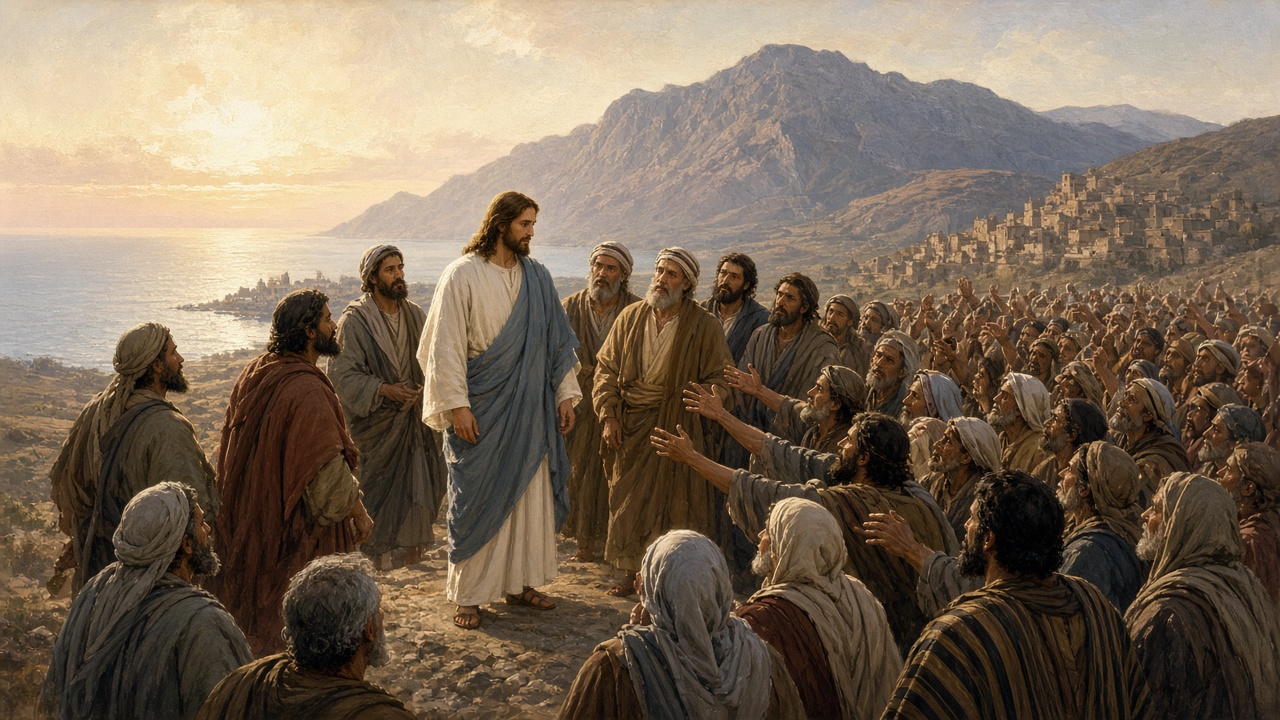
- Jesus came down with them and stood on a level place, where people from Judea, Jerusalem, and the sea coast of Tyre and Sidon had gathered to hear him and to be healed. Tyre and Sidon were ancient Phoenician cities on the Mediterranean; Sidon, the older city, lay about twenty-five miles north of Tyre. A chronology dates this teaching to AD 28 and titles it the Sermon on the Mount, though the narrative places Jesus on level ground after he came down from the mountain.Sources: the Bible text itself · Tyre · Sidon · Sermon on the Mount
Notes written with AI assistance from open sources (Theographic Bible Metadata, CC BY-SA 4.0; Easton’s Bible Dictionary, public domain) and reviewed before publishing.
Places in this chapter
- Jerusalem · 31.777, 35.234 · verse 17
- Judea · Today: Judea 1 · 31.777, 35.234 · verse 17
- Sidon · Today: Sandikli archaeological site in Sidon · 33.561, 35.372 · verse 17
- Tyre · 33.271, 35.196 · verse 17
Only places identified with high confidence are shown (90% or more according to the scholarly sources compiled by OpenBible). Period map: DARE (Digital Atlas of the Roman Empire), CC BY 4.0; modern map: © OpenStreetMap contributors; places: OpenBible.info (CC BY 4.0).
Credits and license for this translation
Haalin Mallano
The New Testament in the Banna language of Ethiopia
copyright © 2014 SIM International
Language: Banna (Hamer-Banna)
Translation by: SIM
This translation text is made available to you under the
terms of the Creative Commons License: Attribution-Noncommercial-No Derivative Works.
( http://creativecommons.org/licenses/by-nc-nd/3.0/ )
In addition, you have permission to port the text to different file formats, as long as you
do not change any of the text or punctuation of the Bible.
You may share, copy, distribute, transmit, and extract portions
or quotations from this work, provided that you include the above copyright
information:
You must give Attribution to the work.
You do not sell this work for a profit.
You do not make any derivative works that change any of the actual words or punctuation of the Scriptures.
Permissions beyond the scope of this license may be
available if you contact
us with your request.
This translation is made available to you under the terms of the
Creative Commons Attribution-Noncommercial-No Derivatives license 4.0.
You may share and redistribute this Bible translation or extracts from it in any format, provided that:
You include the above copyright and source information.
You do not sell this work for a profit.
You do not change any of the words or punctuation of the Scriptures.
Pictures included with Scriptures and other documents on this site are licensed just for use with those Scriptures and documents.
For other uses, please contact the respective copyright owners.
2014-10-15
Source: http://ebible.org/amf/ · eBible.org