Hebrews 3
Haalin Mallano · Tap a verse to see its cross-references.
Yesus Musedara Sagi Kinin Dohoono
1Ogonante cecinngayn Barjosa eelimenam kashimayna, gaza maataana imbanaanato, Barjodar woylamin wosa qajidin goynsa Barjoyn yittsaa gudullasa gebhaa Yesusam bhocchee. 2Muse Barjo oonin wulir woylam yindar qajadhea kinin dohondettsi, Yesusaar yiam kamayse wodaa Barjokal woylam yindar qajadhea ki maatade. 3Ooninam woysea oonindara sagi kisa gobshi dohondettsi, ogodettsi Yesus Musedara sagi gobshi yiam zaskea maatayse ki haapadhade. 4Ooni wul koam woysaa eedi daane; yerin wulam ashkaa Barjone.
5Os birante giidhen yerinna tarja maatota Muse Barjo oonin wulsa waadima eedi dahayse woylam yindar qajadhea ki maatade. 6Kiristoos Barjosa Naasi dahayse Barjo oonin wottsadhenka woylam yindar qajadhea ki maatade. Wodiar Barjosa oonine; kisa ooni wonin maatayno wonin woylam qajenbee qaabe daran hayayse woninka erimayna yerrabeam wocchinsayse wonin yedenkane.
Barjo Eenana Imbhoono Upsino Wocchino
7Ogonante Manpas Gazanin giyendettsi,
“Kina kisa upsinam ye qansidianna,
8darante yesa eykena iam taysayse kenin shedenka
iam kenin dhagattsondettsi
yesa woylaminam wocchinseebhode.
9Ogote eykena yenna iam taysate ke shedade;
eedi lamaa kaysa levena inin waadadhonam ke haapade.
10Ogonante ogo wodanka dahaana eenaam i wacimade.
‘Kesa woylammo rooro wul koda dhaddhise;
isa goynamaar kedi dhesadehe’ i hamade.
11Pir ‘Inin imen ukunsen raqinte
hamin ko dahaakaar kedi ardehe’
hamayse isa wacimenka inta mallidine”
hamayse ko giyade.
12Imbanaanato, yesa iira hayyear lay dehea Barjokala pegisea siyabee kidar woylamin qajima woylambe konin doamadettsi mete yesaam gishee. 13Kalon yesa iira hayyear seesoka taysadhayse yisa woylaminam kinin wocchisoamadettsi, “kina” hamayse kinin eldhaa rooroayn dohonka yekka rooroa rooroaka kinka kiam kiam kiilee. 14Harrna hambhidianna, birayse wosa dohon Barjodar woylamin wonin qajenam macchinka yekka wocchinsayse wo yedanna, Kiristoosbesana kashimayna wo maatade. 15Ogonoar
“Kina kisa upsinam ye qansidianna,
yesa eykena iam kenin dhagattsondettsi
yesa woylaminam wocchinseebhode” ko hambhade.
16Igina kisa upsinam qansayse kiam dhagattsaana haybene? Igina Muse keam entsaysaka Gibth peera utaana wultayu? 17Barjoar eedi lamaa kaysa levena yindar wacimaana igina haybene? Igina seeson hayaana, yisa leesinin darante dhambayse shidhaanatayu? 18“Inin kena imen ukunsen raqinte ardehe” hamayse kedar kinin mallaana haybene? Igina kina ee hamimina eenatayu? 19Ogonante Barjo kena imen ukunsen raqinte ardana kenin damaammo Barjodar woylamin kenin qajea kesa qolmon goynka konin dohonam woda haape.
Did you know?
Greater Glory Than Moses
- Hebrews asks its readers to fix their attention on Jesus, the apostle and high priest they confess. He was faithful to the one who appointed him, just as Moses was faithful in all God's house, but Jesus is counted worthy of greater glory than Moses, as the builder of a house has greater honor than the house. Moses was faithful as a servant; Christ is faithful as the Son over God's house.Sources: the Bible text itself
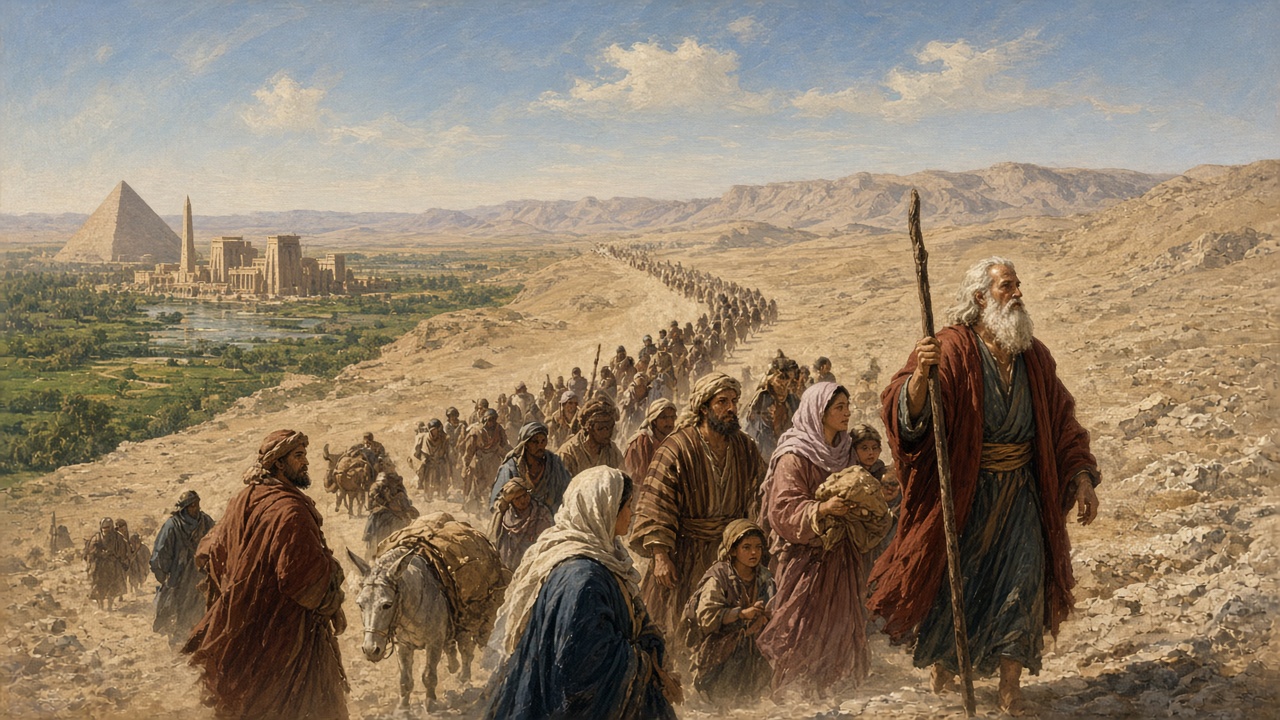
- The warning looks back to the people Moses led out of Egypt. For forty years in the wilderness they tested God, who was angry with that generation and swore they would never enter his rest; their bodies fell in the wilderness. The chapter says that unbelief kept them from entering.Sources: the Bible text itself
- Egypt, the land they left with Moses, is the land of the Nile and the pyramids. Easton's Bible Dictionary (1897) explains the name Moses as Drawn, or links it with the Egyptian word mesu, meaning son.Sources: the Bible text itself · Egypt · Moses
Notes written with AI assistance from open sources (Theographic Bible Metadata, CC BY-SA 4.0; Easton’s Bible Dictionary, public domain) and reviewed before publishing.
Places in this chapter
- Egypt · 30.129, 31.308 · verse 16
Only places identified with high confidence are shown (90% or more according to the scholarly sources compiled by OpenBible). Period map: DARE (Digital Atlas of the Roman Empire), CC BY 4.0; modern map: © OpenStreetMap contributors; places: OpenBible.info (CC BY 4.0).
Credits and license for this translation
Haalin Mallano
The New Testament in the Banna language of Ethiopia
copyright © 2014 SIM International
Language: Banna (Hamer-Banna)
Translation by: SIM
This translation text is made available to you under the
terms of the Creative Commons License: Attribution-Noncommercial-No Derivative Works.
( http://creativecommons.org/licenses/by-nc-nd/3.0/ )
In addition, you have permission to port the text to different file formats, as long as you
do not change any of the text or punctuation of the Bible.
You may share, copy, distribute, transmit, and extract portions
or quotations from this work, provided that you include the above copyright
information:
You must give Attribution to the work.
You do not sell this work for a profit.
You do not make any derivative works that change any of the actual words or punctuation of the Scriptures.
Permissions beyond the scope of this license may be
available if you contact
us with your request.
This translation is made available to you under the terms of the
Creative Commons Attribution-Noncommercial-No Derivatives license 4.0.
You may share and redistribute this Bible translation or extracts from it in any format, provided that:
You include the above copyright and source information.
You do not sell this work for a profit.
You do not change any of the words or punctuation of the Scriptures.
Pictures included with Scriptures and other documents on this site are licensed just for use with those Scriptures and documents.
For other uses, please contact the respective copyright owners.
2014-10-15
Source: http://ebible.org/amf/ · eBible.org