2 Corinthians 7
Haalin Mallano · Tap a verse to see its cross-references.
1Keeda inin nashaynato, kono wul qaabe wonin hayayno konin dohonna, wosa waanbee woylaminbeam minngisayna yerra wulkala woam wo ashke; Barjoamaar kurtumbhintaka gon gazana eena wo maate.
Bhawloosin Wozadhoono
2Yesa nashimmakkonam may wona dhehee. Hayyeamaar genootone; hayyeamaar dhaddhisootone; haykalaar taysate yer tiyootone. 3Ogoam inin giyaynoar yedar pirdanatehe. Harrna hambhidianna, yembesana kinka diyanabee daanabe wosa woylaminte yenin dahaadettsi birayse inta yena giydine. 4Yedar woylamin inin qajayno gebhine; yenka inin erimaynoar gebhine. Ogona ida wocchimbhe; wosa gaalen wulka inta kattsi wozadhayda wozadhe.
5Moqodoonia peente wo nivaysakaar raq wulbar wodar gaale ko yeskade, ukunse haapootone; mayambar wacime, iinbar kurtumbhe ko dahade. 6Ko dahaannaar, qaabonka burqadhaynaam wocchinsea Barjo Tiitosa nivintanka woam ki wocchinsade. 7Wonin wocchimbhoonoar kisa nivintanka bish dayma, yediar kiam yenin wocchinsonam wonin qansenkane. Iam shedana yenin zagenbee, qaabonka yenin burqadhenbee, inka agana yenin anngardhenbeam wona kinin giyen wodanka, ini hamora sagi i wozadhade.
8Kosa birayse inin yena thaapon warqatinka yeam bucchaa i hannaar, inin thaaponka burqadhattine. Harrna hambhidianna, burqadhidi i hanna, inin thaapon warqatinka likka wodana yeam inin bucchonam i shedade; 9ko dahaannaar ta iam kattsi wozisidine. Inin wozadhoonoar yeam inin bucchonna dayma, yenin burqadhon goynka seeson waadimanam garayse Barjodar yenin maatonnane. Yenin burqadhoono Barjosa bhocchindettsi konin dohonna, wodi yeam yer kalaaka hattear genootone hamintane.
10Barjosa bhocchindettsi maatoono burqadhintano seeson waadiman garayse, targadhe qolmon Barjodar maatintanbee dhaqintanbeam koda beve; peen ko gayno burqadhintano dembhinam koda beve. 11Ogono Barjosa bhocchindettsi maatoono burqadhintano yesa shaarinte har konin waadadhonam shedee: Wocchimbhayse ye bhocchade; marimaate seeso yesa qolmonam ye dhahade; seeson eadar ye wacimade; ogo dhalqinna ye kurtumbhade; iam shedana ye zagade; inka agana ye anngardhade; seeson waadadhaam kiam zaskendettsi ye dhabshade. Dhalqin ogoka gazana eena yenin maatonam yer wulka yedi dhettsisidine.
12Ta inin yena thaapoono seeso waadadhaa eana way yiam seesadhaa eanatehe; ko dahaannaar wona yesa dohoono wocchimbheno Barjo birante yena may konin dhesimoadettsine. 13Wonin wocchimbhoono ogokane.
Wonin wocchimbherra sagi Tiitoyn wozadhonna, wodi kattsi wozadhidine. Harrna hambhidianna, kisa woylammoar ye wulka ukunse haapidine. 14Yenka inin erimonam Tiitona inta giydine; yediar iam ooshinseetene. Yer wulam yena gon wonin giyondettsi, Tiitona wonin giyoono erimeno gon maatidine. 15Tiitoar kurtumbhebee gibazbeka hamin kiam yenin tiyonbee ye wulsa ee hamintanbeam bhocchada, yena kisa dohon nashimmakkonam ki thoosade. 16Yer wulka yedar woylamin inin qajenna inta wozadhidine.
Did you know?
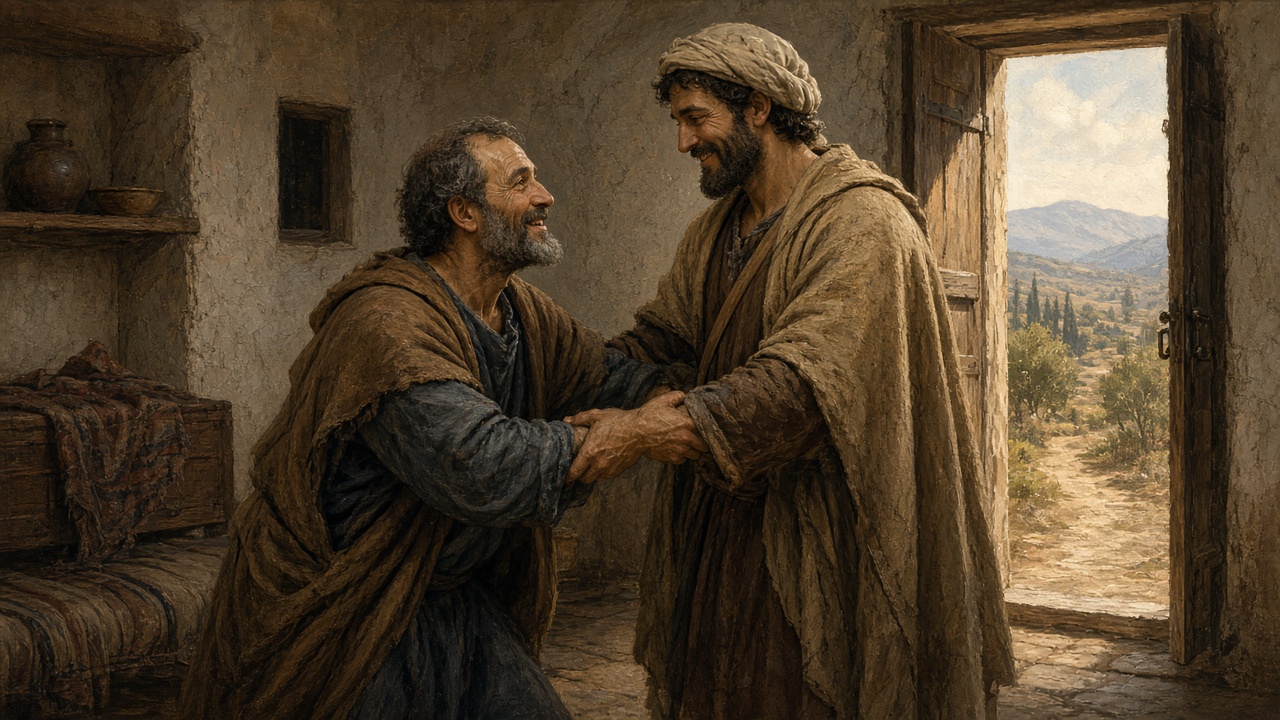
Comfort after a painful letter
- Macedonia, where Paul says he arrived with no rest in his body—conflicts outside and fears within—was a Roman province north of Greece. There, he writes, the God who comforts the downcast comforted him by the arrival of Titus.Sources: Macedonia · the Bible text itself
- Paul speaks of a letter that made them sorrowful, but only for a short time. He now rejoices not because they were sorrowful, but because that sorrow led them to repentance; he says they felt the sorrow God intended, were not harmed by him, and showed earnestness, zeal, and innocence in the matter.Sources: the Bible text itself
- A short account describes Titus as a companion of Paul, apparently a Gentile chiefly engaged in ministering to Gentiles. In this chapter Paul says Titus’s arrival comforted him, that Titus reported their longing, mourning, and zeal, and that they welcomed Titus with fear and trembling.Sources: Titus · the Bible text itself
Notes written with AI assistance from open sources (Theographic Bible Metadata, CC BY-SA 4.0; Easton’s Bible Dictionary, public domain) and reviewed before publishing.
Places in this chapter
- Macedonia · 41.600, 22.540 · verse 5
Only places identified with high confidence are shown (90% or more according to the scholarly sources compiled by OpenBible). Period map: DARE (Digital Atlas of the Roman Empire), CC BY 4.0; modern map: © OpenStreetMap contributors; places: OpenBible.info (CC BY 4.0).
Credits and license for this translation
Haalin Mallano
The New Testament in the Banna language of Ethiopia
copyright © 2014 SIM International
Language: Banna (Hamer-Banna)
Translation by: SIM
This translation text is made available to you under the
terms of the Creative Commons License: Attribution-Noncommercial-No Derivative Works.
( http://creativecommons.org/licenses/by-nc-nd/3.0/ )
In addition, you have permission to port the text to different file formats, as long as you
do not change any of the text or punctuation of the Bible.
You may share, copy, distribute, transmit, and extract portions
or quotations from this work, provided that you include the above copyright
information:
You must give Attribution to the work.
You do not sell this work for a profit.
You do not make any derivative works that change any of the actual words or punctuation of the Scriptures.
Permissions beyond the scope of this license may be
available if you contact
us with your request.
This translation is made available to you under the terms of the
Creative Commons Attribution-Noncommercial-No Derivatives license 4.0.
You may share and redistribute this Bible translation or extracts from it in any format, provided that:
You include the above copyright and source information.
You do not sell this work for a profit.
You do not change any of the words or punctuation of the Scriptures.
Pictures included with Scriptures and other documents on this site are licensed just for use with those Scriptures and documents.
For other uses, please contact the respective copyright owners.
2014-10-15
Source: http://ebible.org/amf/ · eBible.org