1 Corinthians 7
Haalin Mallano · Tap a verse to see its cross-references.
Keemon Goynsa Oysadhon Oysimensa Malsino
1Ina yenin thaapon yerinsa: Eedi maa ki keemaamma payyane. 2Ko dahaannaar sharmucimakko konin haydhoamadettsi anngi kalaasa maa kallo ko dee; maa kallonsaar anngi kalaa ki dee. 3Geshoa geshonna zaskonam kona ki haye; ogodettsi geshono geshoana zaskonam kina ko haye. 4Harrna hambhidianna, geshonsa waan konnondar kosa hayamo qolehe, hayamono geshoasane. Tapir geshoasa kinnon waandar kisa hayamo qolehe, hayamono geshonsane. 5Barjo miskota hamayse kinka dhalqayse woda likkana kinka kikala ye edimaamma, kinka kiam kiam mareebhode. Kikalanka yenin edimenka, meten yennon yenin gishen goyn yeam bashaysaka Seethaanin yeam taysate shedoamadettsi pir kinka dehee.
6Ta kono inin yena giyayno isa kiilimene, kantaka yin hayee hamintatehe. 7Eeno wul maa keemima idettsi ko dee ida nashe. Ko dahaannaar Barjo eenna yisa meteka meteka qaabi waana waana ki imade. Kalaana maa keemayse kinin doadettsi, waanaar maa keemima kinin doadettsi qaabi ki imade.
8Kiam keemaamma eenabee annginaysa diyaana maanabena inta yin ida giye: Idettsi keemima ke daana kena payyane. 9Ko dahaannaar meten kennonam kenin gishayno keam bashidi hatte ko daana, kinka kiam ke keeme. Harrna hambhidianna, anngarmanka kenin atenna, kiam kenin keemayno kena payyane.
10Kiam keemaana eenana inta yin ida giye: Ogono inin giyaynoar Imbaa wontea Yesusin giyoonone, inin bish giyaatehe. Kembhoono edono geshoa yinteam ko garabhoode. 11Garidi ko hannaar kembhima ko dee; way kosa geshoabete ko qaashime. Geshoar geshon yinnonam ki garabhoode.
12Een waanina, Imbaa wontea Yesus dayma, inta kena yin ida giye: Eedi kalaa Barjodar woylamin qajea dahayse Barjodar woylam qajima maa kisa daa ko hanna, kimbesana kinka doota nashea ko hanna, koam ki bulabhoode. 13Barjodar woylamin qajon geshonsa Barjodar woylam qajima anngi kosa daa ko hanna, kombesana kinka doota nashea ki hanna, geshono kalanka ko utabhoode. 14Harrna hambhidianna, Barjodar woylamin qajima geshoam Barjo geshon goynka kiam eedi yinti hayayse tiya ki tiye. Barjodar woylamin qajaamon geshonamaar Barjo geshoa goynka koam eedi yinti hayayse tiya ki tiye. Yin ko dahaamma, kesa naana minngi keda dee; taaki kedi gazane.
15Kesa iira Barjodar woylamin qajima eedi kalaa garana nashaa ki gare. Ogo wodanka Barjodar woylamin qajea geshoa ki hannaar, geshono ko hannaar, ogo keemon goynka dhaxadhaanatehe. Barjo woam kinin eeloono payyamoka wo deene. 16Ya kono Barjodar woylamin qajayno mayno, geshoa hantea hannon goynka kinin dhaqensa haraa dhesaa? Ya kaa Barjodar woylamin qajea geshoa, geshono hanno hannon goynka konin dhaqensa haraa dhesaa?
Barjoyn Eelenka Yenin Dahaadettsi Maatayse Daynta Yeam Zaskayno
17Yedi wulatte Barjo yena kinin imon imintondettsi, yeam kinin eelon wodanka yenin dahaadettsi dehee. Misken oonin waani gidir dohon een wulnaar yin ida giye: 18Eedi hay ki hannaar, yisa qaaman taxadhayse ki daaka eldhaa dahaa ki hanna, qaama taxadhaama eedidettsi maatana ki qaababhoode; qaaman taxadhima eldhaa dahaa ki hanna, qaaman yisa ki taxadhabhoode. 19Qaaman taxadhenbee taxadhimonbeyn eedina yer hayea qolehe, sunne. Zaskayno yerro Barjoyn giyonam ee hamintaka waadimintane.
20Ogonante eeno yisa meteka meteka wulatte Barjoyn koam eelon wodanka konin dahaadettsi dahayse ko dee. 21Barjoyn haam eelon wodanka ya worsho hatte ha daana, ogo yin hanin dohonna qaabisa iir ardaabhode. Worshamora utana goyti hana haapadhidi ko hanna, ogono payyamo hammo baalino hakalanka ko sagabhoode. 22Harrna hambhidianna, worsho dahayse Imbaa Yesusin eelaa ea, Imbaa Yesus goynka baza qolma daadhen goynam ki haapade. Yin tapir worshotay dahayse eldhaa ea, Kiristoossa worshone. 23Barjo yena baza kashayse yeam kinin shanonna eedina worsho maateebhode. 24Ogonante imbanaanato, yedi wul yesa meteka meteka yenin eldhen wodanka yenin dahaadettsi dahayse Barjosa birante daymate.
Kiam Keemaamma Eena Goynsa Giidhoono
25Kiam keemaamma eena goynsa Imbaa wontea Yesuskalanka inin tiyaa upsi qolehe. Ko dahaannaar, Barjosa payyamonka inta eedi gon hama inin dohonna, kaasa choobar guttsayse dohoono kiilime intine. 26Ta wonin dohoono wodano kono gaale woda konin dohonna, yenin dahaadettsi ye daydianna ina payya koda maate. 27Yin ko dahaakaar, maa keemidi hatte ha daana, bulana zagaabhode; maa keemaama hatte ha daana, keemana zagaabhode. 28Ko dahaannaar ya maa keemea hanna, hana seeso maatehe; yin tapir naano anzano kembhea hatte ko daana, kona seeso maatehe. Ko dahaakaar peen kodar kenin dehen goynka kiam keemaanadar gaale koda yeske. Ogona inno qaabeno ogo gaalensa iira yenin dhaqoadettsine.
29Imbanaanato, inta yena yin ida giye: Macchin wodano orgadhidine. Keeda os maanka dahaa maaysa qolmaadettsi maatayse ki dee; 30eepayna eena eepiminadettsi, wozadhaynaar wozadhiminadettsi ke dee; koymon shanayna eenaar koymono kenti konin dahaamadettsi hayayse ke shede. 31Peen kodar dahaana yerraka dahayna eena “Kenka woda gebhe” hamayse qaaben kennon wulam kedar ke maasabhoode. Harrna hambhidianna, peen kosa dantano saga ko sage.
32Keeda qaabonka gaalimaka yenin dehenam ida nashe. Maan keemaama ea Imbaa yintea Yesusam wozisana kinin nashenna, kattsika Imbaa yintea Yesussa waadimanam kida qaabe. 33Maan keemaa ear geshon yinnonam wozisana kinin nashenna, peen kodar dohon yerinam kida qaabe; 34ogo goynka qaabono kisa raq lamaadar kashimidine. Anngiysa qolmin qambhinbee naan anzanbe bishin yinnonbee sadan yinnonbeka Imbaa kontea Yesusna edimayse daana konin nashenna, qaabeno konno kattsika Imbaa kontea Yesussa waadimanam koda qaabe. Kembhoono mayno geshoa yinteam wozisana konin nashenna, peen kodar dohon yerinam koda qaabe. 35Ogoam inta yennon metenna yena ida giye; yeam zaanidettsi yedana giyattine. Qaabeno inno yedi yeam konin zaskendettsi ye deebee qaaben yennonka lambhima woylam wulka Imbaa wontea Yesusna yenin waadadhoadettsine.
36Eedi kalaa “Maa keemattine” hamayse kinin dehenka, ena kinin seesoono naano gebhayse kembhea ko yeskaysaka, koam keemima kinin dahayno darshishan kiam ko bashaysaka, keemana zagidi hatte ki daana, ki keeme; seeso kina maatehe. 37Ko dahaannaar, “Maa keemima wocchimbhayse ida dee” kinin hamenka, kantaka “Maa keemaa” hamayse kiam anngarshayse kantisea yer qolmina, maa keemima kinin dahayno kina payyane. 38Ogonante maan keemea ea yer payya kida haye; maan keemima ea sagi yer payya kida haye.
39Geshono geshoa konteayn sadanka dohon wodanka, keemon goynka kodi dhaxadhoonone. Geshoayn kosa diyonsa budobar, kembhana nashidi hatte ko daana, kembhana dama ko dame; koninkay kembhea ear Barjodar woylam qajaa eedi kinin doadettsi ko zaske. 40Innon qaabenka kembhima dehea ko hanna, sagi wozadhaate koda doaye. Ogo inin giyenam Barjosa Manpasinin inka dahaa ina koda maate.
Did you know?
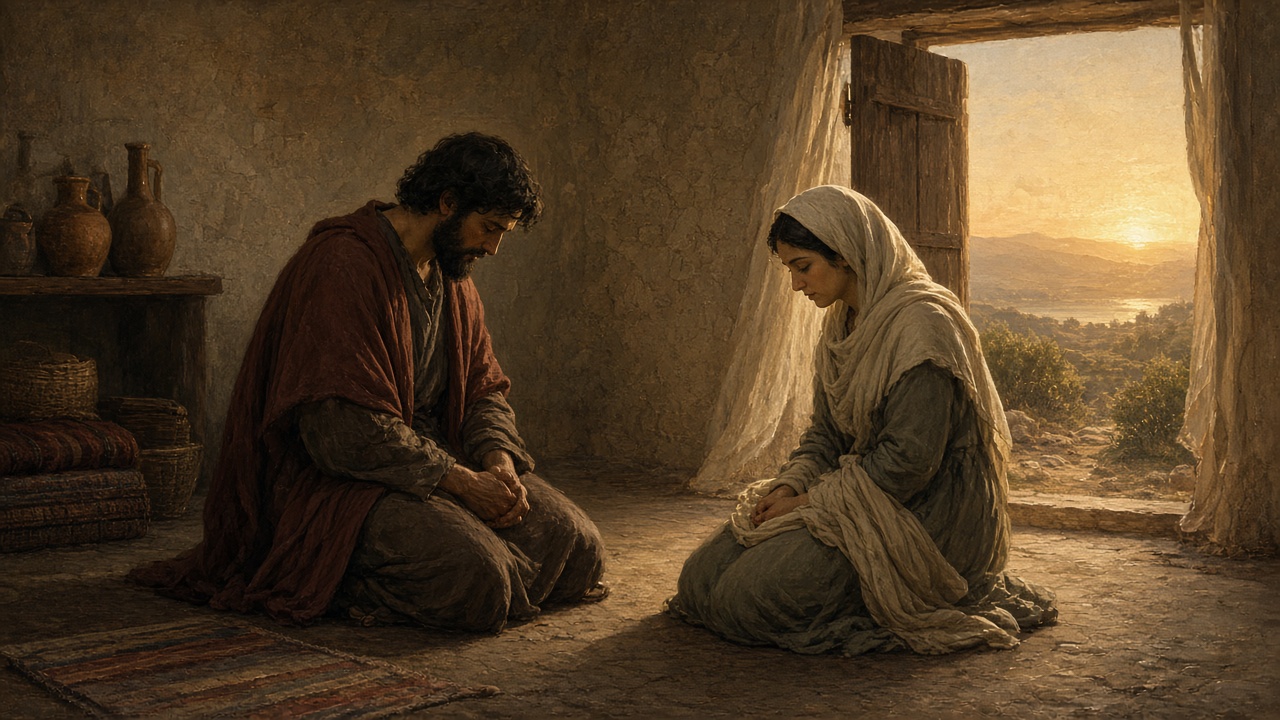
Counsel on marriage and the present crisis
- The chapter opens as a reply to matters the readers had written about. The writer says it is good to abstain from sexual relations, yet, because there is so much sexual immorality, each man should have his own wife and each woman her own husband. He presents this as a concession, not as a command, and says that each person has their own gift from God.Sources: the Bible text itself
- In marriage, the writer says the wife does not have authority over her own body, but the husband does, and likewise the husband does not have authority over his own body, but the wife does. They should not deprive each other except by mutual consent and for a time, so they may devote themselves to prayer, and then come together again, so that Satan will not tempt them through lack of self-control. Easton's Bible Dictionary (1897) presents the name Satan as “adversary” or “accuser,” and notes that he tempted Jesus in the wilderness.Sources: the Bible text itself · Satan
- The writer distinguishes a command he attributes to the Lord—a wife must not separate from her husband, and a husband must not divorce his wife—from his own judgment where he says he, not the Lord, is speaking, including marriages with an unbeliever and questions about virgins. Because of what he calls the present crisis, and because he says the time is short and this world in its present form is passing away, he thinks it good to remain as one is. He adds that to marry is not to sin, though those who marry will face troubles in this life.Sources: the Bible text itself
Notes written with AI assistance from open sources (Theographic Bible Metadata, CC BY-SA 4.0; Easton’s Bible Dictionary, public domain) and reviewed before publishing.
Credits and license for this translation
Haalin Mallano
The New Testament in the Banna language of Ethiopia
copyright © 2014 SIM International
Language: Banna (Hamer-Banna)
Translation by: SIM
This translation text is made available to you under the
terms of the Creative Commons License: Attribution-Noncommercial-No Derivative Works.
( http://creativecommons.org/licenses/by-nc-nd/3.0/ )
In addition, you have permission to port the text to different file formats, as long as you
do not change any of the text or punctuation of the Bible.
You may share, copy, distribute, transmit, and extract portions
or quotations from this work, provided that you include the above copyright
information:
You must give Attribution to the work.
You do not sell this work for a profit.
You do not make any derivative works that change any of the actual words or punctuation of the Scriptures.
Permissions beyond the scope of this license may be
available if you contact
us with your request.
This translation is made available to you under the terms of the
Creative Commons Attribution-Noncommercial-No Derivatives license 4.0.
You may share and redistribute this Bible translation or extracts from it in any format, provided that:
You include the above copyright and source information.
You do not sell this work for a profit.
You do not change any of the words or punctuation of the Scriptures.
Pictures included with Scriptures and other documents on this site are licensed just for use with those Scriptures and documents.
For other uses, please contact the respective copyright owners.
2014-10-15
Source: http://ebible.org/amf/ · eBible.org