Acts 6
Kije Manido Odikido8in: Ocki Mazinaigan · Tap a verse to see its cross-references.
Ka onabamagani8i8agobanen nij8atcin a8iagog // kidji 8idjia8adjin Anodaganan
1Kegapitc dac, ki ani kitci mane8agoban ka teb8eta8a8adjin Jesosan. Ii dac apitc, Coda8innig Kanek (Grec) ka ijigij8e8adj ki madji animizi8ag, e ina8adjin Coda8innin Ebaro (Hébreux) ka ijigij8endjin: “Apitc ako migi8ani8ag taso kajik acamigo8izi8in, 8anikanagani8i8ag ka pejigo8adj ik8e8ag nina8itinakag,” ki ikido8ag. 2Ka midatcin acitc niji8adj dac Anodaganag ogi nd8e8ema8an kakina kagi teb8etamindjin, ma8asag kidji ma8adjiidi8adj. Ogi ina8an dac: “Ka8in ijinag8asinon kidji iji ponito8ag e kagik8eiag kidji gi madinamageiagiban midjim. 3Nidjiki8enanag! Nanada 8abamikog dac nij8atcin nabeg e kitci inenimagani8i8adj, Mino Manidon ka kigickago8adjin acitc ka kitci kagita8endagozi8adj. 8ina8a dac oga mikidana8a ii. 4Nina8it dac niga tebapitcimin kidji aiamieiag acitc kidji kagik8eiag Kije Manido odikido8in.”
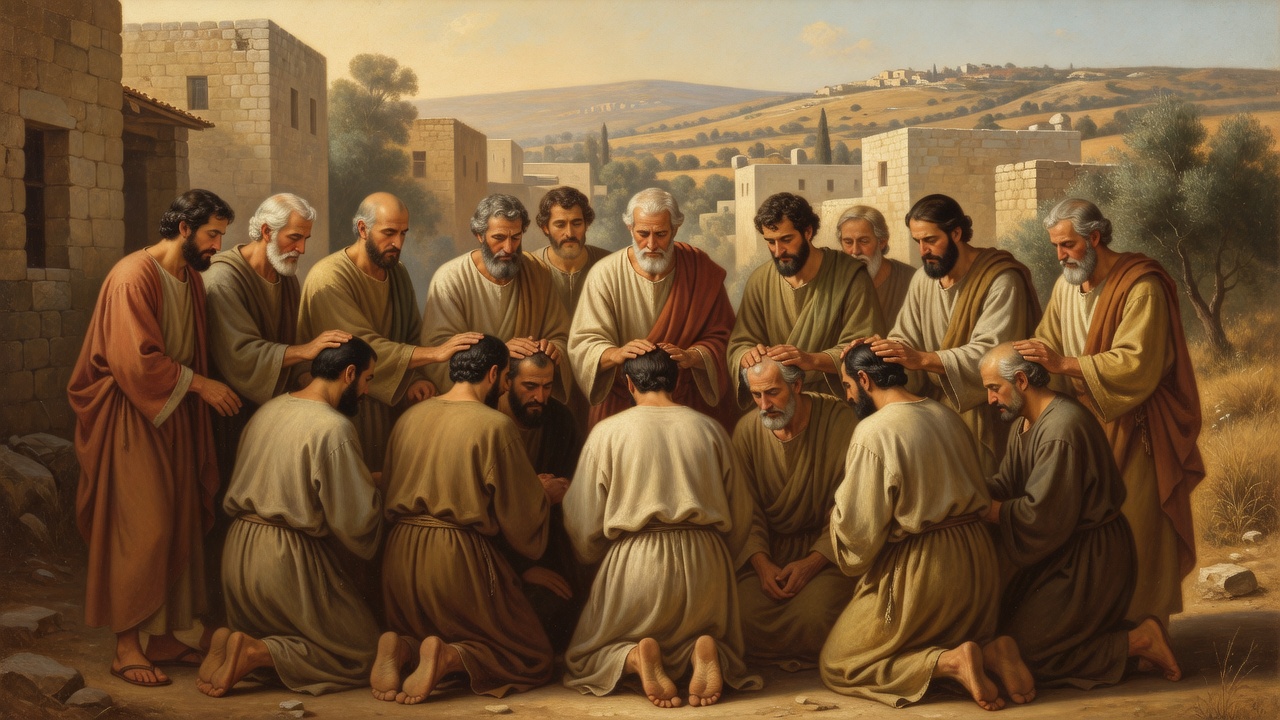
5Kakina dac ki nakomobanig kagi iji ikidonani8anig. Ki onabamagani8i dac Stepan (Étienne), e kitci teb8etag acitc e kigickagodjin Mino Manidon. Ki onabamagani8i8ag acitc Pilip (Philippe), Panikon (Prochore), Nikanon (Nicanor), Timon (Timon), Parmenas acitc Nikolas, 8in Antiok odenag ka odjidj kagi adjitodj odaiamie8in kidji gi Coda8inni8idj. 6Anodaganikag ki iji8inagani8i8ag igi8e kagi onabamagani8i8agobanen. Anodaganag dac ki aiamie8ag 8ina8a odji, acitc ogi samina8an.
7Eckam dac a8iagog ogi ani teb8etana8a Kije Manidon odikido8ini. Eckam dac ki ani kitci mane8ag ka teb8etamo8adj Jerusalem odenakag. Kitci mane Coda8inni aiamie ogimag ke8ina8a ogi ani teb8eta8a8agoban Jesosan.
Ka takonagani8igobanen Stepan (Étienne)
8Stepan ogi kitci ca8enimigon Kije Manidon. Ogi minigon macka8izi8ini kidji mamada8izidj acitc ka mamakadendag8anigin kegonan kidji todagin. 9Nandam dac Coda8innig ka8in ododji 8i nda8enimasi8a8an Stepanan. Pejig Coda8inni aiamiemigi8amini iji tibendagozi8agoban, “8eckadj ka tibenimagani8i8agobanen anokitage8innig aiamiemigi8am,” mi e ijinikadenigobanen. Igi8e dac Coda8innig Sinen (Cyrène) odena acitc Aleksandania (Alexandrie) odena odji8agoban. Igi8e dac, acitc ke8ina8a kodagiag Coda8innig, Silisia (Cilicie) aki acitc Eja (Asie) aki ka odose8adj, kakina ki pija8ag kidji k8ag8e cagozoma8adjin Stepanan. 10Mino Manidon dac ogi 8idjiigon Stepan kidji kitci kagita8edj. Ka8in dac Coda8innig ododji kackitosina8a kidji cagozoma8adjin. 11Midac ogi kijika8a8an nandam naben kidji ikidondjin: “Nigi noda8anan aa nabe e manazomadjin Moisan acitc Kije Manidon.” 12Midac igi8e Coda8innig ka iji kackito8adj kidji 8ikobina8adjin kakina a8iagon, acitc Coda8innin ka niganizindjin, acitc Coda8inni kikinoamage8innin. Ogi pi takona8an Stepanan, midac ka iji iji8ina8adjin ka iji ma8adjiidindjin Coda8inni kitci aiamie onakonige8innin. 13Ogi pidji8ina8an acitc nandam naben kidji kagina8ickindjin, e ikidondjin: “8aa nabe kabe omamanazodan kitci aiamiemigi8amini Kije Manidon ka tibendamindjin acitc dac Mois odinakonige8ini. 14Nigi noda8anan e mikomadjin Jesosan, Nazaret ka odosendjin, e ikidodj kidji pigobidondjin oo kitci aiamiemigi8amini acitc kidji adjitondjin ijitcige8inan Mois kagi minigo8ak,” ki ikido8ag. 15Kakina igi8e kitci aiamie onakonige8innig 8e8enda ogi kijigabama8an Stepanan. Midac maia ajenin ka ijig8endjin ka ani ijina8a8adjin.
Did you know?
The Seven and the Trial of Stephen
- Tension arose between Greek-speaking and Hebraic Jews over the daily distribution of food to widows, prompting the apostles to appoint seven respected men to oversee the task. Notably, all seven men named—including Nicolas, a proselyte from Antioch—carried Greek names.Sources: the Bible text itself · Nicolas
- Jews from across the Roman world had their own community synagogues in Jerusalem, such as the Synagogue of the Freedmen and gatherings for people from Cyrene, Alexandria, Cilicia, and the province of Asia. Members of these regional groups were the first to formally debate Stephen regarding his teachings.Sources: the Bible text itself · Cilicia · Asia
- When opponents failed to refute Stephen's arguments, they brought him before the Sanhedrin under charges of speaking against the temple and the law of Moses. As the council members examined him during these accusations, they observed that his face appeared like that of an angel.Sources: the Bible text itself · Stephen
Notes written with AI assistance from open sources (Theographic Bible Metadata, CC BY-SA 4.0; Easton’s Bible Dictionary, public domain) and reviewed before publishing.
Places in this chapter
- Antioch · Today: Antioch on the Orontes · 36.227, 36.172 · verse 5
- Jerusalem · 31.777, 35.234 · verse 7
- Alexandria · 31.183, 29.896 · verse 9
- Asia · 38.400, 28.300 · verse 9
- Cilicia · 36.913, 34.892 · verse 9
- Cyrene · 32.821, 21.851 · verse 9
- Nazareth · 32.702, 35.298 · verse 14
Only places identified with high confidence are shown (90% or more according to the scholarly sources compiled by OpenBible). Period map: DARE (Digital Atlas of the Roman Empire), CC BY 4.0; modern map: © OpenStreetMap contributors; places: OpenBible.info (CC BY 4.0).
Credits and license for this translation
Kije Manido Odikido8in: Ocki Mazinaigan
Algonquin: Algonquin New Testament New Testament only
copyright © 1998 Canadian Bible Society
Language: Algonquin
Translation by: Canadian Bible Society
Algonquin New Testament
About Algonquin
Algonquin is one of the Algonquian languages of Canada in the same family as Cree, Ojibwe, Naskapi and Atikamekw. It is locally known as Anicinabemowin. It is spoken in northwestern Quebec in 9 communities in Abitibi-Temiscamingue, and one community in Ontario. Like other languages in Quebec introduced to Christianity by the Roman Catholic Church, it is written using Roman script instead of the syllabic script used in Cree, Ojibwe and various other Algonquian languages in Canada.
About This Translation
The translation represented by this text was started under the auspices of the North American Branch of the Summer Institute of Linguistics in 1975. SIL staff worked in close partnership with members of the Algonquin First Nation at Pikogan and with the Roman Catholic Church. The Canadian Bible Society provided consultant and publishing support to this project and published the New Testament in 1998. The translation team also produced weekly lectionary readings for the Church. If you are interested in obtaining a printed copy of this New Testament, please contact the Canadian Bible Society at http://www.biblescanada.com .
Copyright Information
Algonquin New Testament © 1998 Canadian Bible Society
The text of the Bible in Algonquin that appears in this electronic format or website is for personal use only.
Up to five hundred (500) verses of the Bible text in any form (written, visual, electronic or audio) may be quoted without permission. The quoted verses may not be more than 50% of a complete book of the Bible, or more than 25% of the total text of the work in which they are quoted. Prior written permission must be obtained for any other use of the text. Copyright acknowledgement must in all cases appear on the title or copyright page.
For more information on copyright conditions or to apply, visit http://www.biblesociety.ca/copyright .
Algonquin New Testament © 1998 Canadian Bible Society
This translation is made available to you under the terms of the
Creative Commons Attribution-Noncommercial-No Derivatives license 4.0.
You may share and redistribute this Bible translation or extracts from it in any format, provided that:
You include the above copyright and source information.
You do not sell this work for a profit.
You do not change any of the words or punctuation of the Scriptures.
Pictures included with Scriptures and other documents on this site are licensed just for use with those Scriptures and documents.
For other uses, please contact the respective copyright owners.
2014-04-21
Source: http://ebible.org/alqALGNT/ · eBible.org