Acts 12
Wakʉ Itekare: Emenna' Pe Ekonekan Nɨto' · Tap a verse to see its cross-references.
Pi'ta Epa'ka'pʉ Pariki'si Tapai
1Mɨrɨ koro'tau, Sises apurɨnin nan kota'ma i'se kin Era' esi'pʉ, mɨrɨpan uya soisa amʉ' ennoko'pʉ so'si epuru ton Surusiran pon kon a'sise'na, mɨrɨpan kon tʉto' pe to' uya pariki'si ta'. 2Era' uya soisa apiyo'ma'pʉ Isens, Isaan rui wɨto' pe iya supara ke. 3Era' uya i'tu'pʉ Isens wɨsa' tʉuya a'tai, pori' pe kuru Esuwerʉ amʉ' ena'pʉ tukai', mɨrɨ awonsi'kɨ soisa amʉ' kanan apiyo'ma'pʉ iya Pi'ta a'sito' pe to' uya iwɨto' pe kanan. Serɨ e'kupʉ'pʉ A'sarutanʉ'sa' Pen Pʉreti Pɨ' Enta'nan Weyu a'tai. 4Soisa amʉ' uya Pi'ta a'si tʉpo, to' uya arɨ'pʉ pariki'si ta', mɨrɨpan Era' uya asakɨrɨ'nan kon iyamu'kuru' ton asakɨrɨ'nan yawon kon soisa amʉ' apiyo'ma'pʉ erasuntɨ pɨ'. Era' esi'pʉ Pi'ta tenpa'kai' pariki'si tapai ɨnekama'popɨ'pai Esuwerʉ amʉ' pana airɨ, To' Epoi Itɨ'pʉ Weyu Rʉ'pʉ tʉpo. 5Mɨrɨ pɨ' rɨ pariki'si tau Pi'ta enkurunpa'pʉ to' uya, e'tane apurɨnin nan esi'pʉ Papa ekama'po pɨ', Pi'ta pika'tɨto' pe iya.
6Era' e'kamasa' Pi'ta enpa'ka pɨ' ekama'popɨ'to' pe tʉuya mɨn winon ewarupɨɨi tau, Pi'ta esi'pʉ e'nʉn nɨ pɨ' asa'ron kon soisa amʉ' a'sanau. To' uya itemekon auronpɨ'sa' esi'pʉ. Tʉron kon soisa amʉ' esi'pʉ mʉra'ta erasuntɨ pɨ'. 7Ite'kwanau pʉra rɨ, inserʉ usenpoika'pʉ Pi'ta piya', mɨrɨpan uya a'kwa pe pata kupʉ'pʉ pariki'si tau. Inserʉ uya Pi'ta enpaka'pʉ ta'pɨ'pɨ'se, “Inke pʉra e'mʉ'sa'ka',” ta'pʉ iya, mɨrɨpan auronpɨ'sa' itemiyatʉ utaranka'pʉ. 8Mɨrɨ tʉpo, “Ekoneka', asapatooi ipata'tɨ',” ta'pʉ inserʉ uya ipɨ', mɨrɨpan kupʉ'pʉ Pi'ta uya. “Ɨpon pʉro'pon ipata'tɨ', mɨrɨ awonsi'kɨ uya'kɨrɨ ɨsi'kɨ,” ta'pʉ inserʉ uya.
9Pi'ta utɨ'pʉ iya'kɨrɨ pariki'si tapai. I'napai rɨ pe' ne'ku'ai'ne' esi tai'ma rɨ Pi'ta epa'ka'pʉ pariki'si tapai, tenu uta'kwakasa' uya rɨ na'kɨ ene tukai' ɨsenuminkai'ma. 10Pi'ta mɨrɨ awonsi'kɨ inserʉ uya wapiyaro' kon soisa amʉ' entakakaa'pʉ, mɨrɨ awonsi'kɨ ite'ma'pʉ pe te'san kanan entakakaa'pʉ to' uya. Soisa amʉ' uya to' ene pʉra. To' uye'kaa'pʉ wa'ka pun pe te'sen mʉra'ta na', pata ya' tʉutɨsen, mɨrɨpan mʉra'ta uta'koka'pʉ tiwano' pe rɨ, mɨrɨpan kon epa'ka'pʉ. Ɨnnɨ rʉ'kwɨ rɨ asanta tau to' utɨkaa'pʉ tʉpo, inserʉ uya inɨmɨ'pʉ.
11“I'napairɨ rɨ ka'si, pariki'si tapai epa'kasa' serɨ wa!” ta'pʉ Pi'ta uya. “Si'tuka'ai' si, Itepuru uya tinserʉʉi enno'sa' upika'tɨi' Era' esi tʉnkupʉnʉ ɨnku'pai upɨ' apai mɨrɨ awonsi'kɨ iye'kupʉ kuru tawon nan nɨrɨ Esuwerʉ amʉ' piyapai,” ta'pʉ iya. Ite'kwanau pʉra rɨ, inserʉ usenpoika'pʉ Pi'ta piya'.|src="CN01953B.tif" size="span" loc="ACT 12:1-11" copy="David C. Cook" ref="12:7"
12Pi'ta uya i'tusa' a'tai, itɨ'pʉ Meri, Isaan san iwʉ' ta'. Tu'kan kon nɨ ka'pon amʉ' amʉrasa' ɨpʉremase'na tepose. 13Pi'ta uya mʉra'ta wɨpɨtʉ'pʉ. Ka'pon uya rɨ tewonnʉ'to' pe, apiyo' pe rʉ'kwɨ te'sen, Rota itese' uyee'pʉ imaimu'se'na mʉra'ta na'. 14Pi'ta maimu etasa' tʉuya a'tai, epori'mai'ma iyeka'tumʉ'pʉ, mʉra'ta ta'kokai' pʉra, ɨutɨ tawon kon pana'tɨi', “Pi'ta man mʉra'ta nau!” ta'pʉ iya.
15“Ɨ'rɨ uya ayano'ma, Rota?” ta'pʉ to' uya ipɨ', e'tane rɨ akonomapɨ'kaa'pʉ iya,
“Pi'ta esi mɨ airɨ ukayai'ne ko!” takaa'pʉ iya kanan.
“A'tai pʉra itinserʉʉi rɨ na'kɨ,” ta'pʉ to' uya.
16Mʉra'ta wɨpɨtʉ pɨ' rɨ Pi'ta esi'pʉ to' uya a'kokato' pe. To' uya a'kokasa' a'tai, to' usewansiuka'pʉ ene tʉuya'nokon pɨ'. 17Pi'ta uya temiyatʉ ke e'pana e'tɨ' ta'pʉ to' pɨ', mɨrɨpan uya Papa inserʉʉi uya tenpa'kasa' pariki'si tapai rʉ'pʉ ekama'pʉ. “Serɨ mekamatʉi' Isens pɨ' mɨrɨ awonsi'kɨ tʉron kon ɨtonpa kon amʉ' pɨ',” ta'pʉ iya. Mɨrɨ tʉpo, tʉron nɨ pata ya' itɨ'pʉ.
18Mɨrɨ ema'sa' yau, soisa amʉ' utaipo'pʉ ipan pe rɨ, apʉne pʉra ɨ'rɨ kasa Pi'ta epa'ka'pʉ tukai' to' uya i'tu pʉra rɨ iyesi'pʉ. 19Era' uya soisa amʉ' apiyo'ma'pʉ Pi'ta warinpato' pe to' uya, e'tane to' uya eporo pʉra iyesi'pʉ. Mɨrɨ pɨ' to' ekama'popɨtʉ'pʉ iya, ɨ'rɨ kasa Pi'ta epa'ka'pʉ tukai', e'tane to' nekama ton pʉra rɨ iyesi'pʉ, mɨrɨpan uya tʉron kon soisa amʉ' apiyo'ma'pʉ Pi'ta erasuntɨnin nan pe iku'sa' kon nʉ'san wɨto' pe to' uya.
Mɨrɨ tʉpo, Era' utɨ'pʉ Sisariya pona Isutiya ponsi'kɨ, mɨrɨpan uko'mamʉ'pʉ inke rʉ'kwɨ rɨ.
Era' Uma'tato'
20Era' usakorota'pʉ ipan pe rɨ Taya mɨrɨ awonsi'kɨ Saitan pon kon ka'pon amʉ' pɨ'. Tʉron kon ka'pon amʉ' Taya mɨrɨ awonsi'kɨ Saitan pon kon tonpa ton utɨ'pʉ Era' ense'na. Era' poitorʉ, eke pe kuru te'sen Pʉrastas e'to' pe tʉmaimu kon awɨrɨ kin Era' auro'kato' pe to' uya ekama'po'pʉ, tʉpata'se' kon yawon kon ka'pon amʉ' e'to' pe wakʉ pe kin a'kɨrɨ tukai', apʉne pʉra kin pata'se' apai ti'kiyari kon eponin nan pe te'to' kon pe.
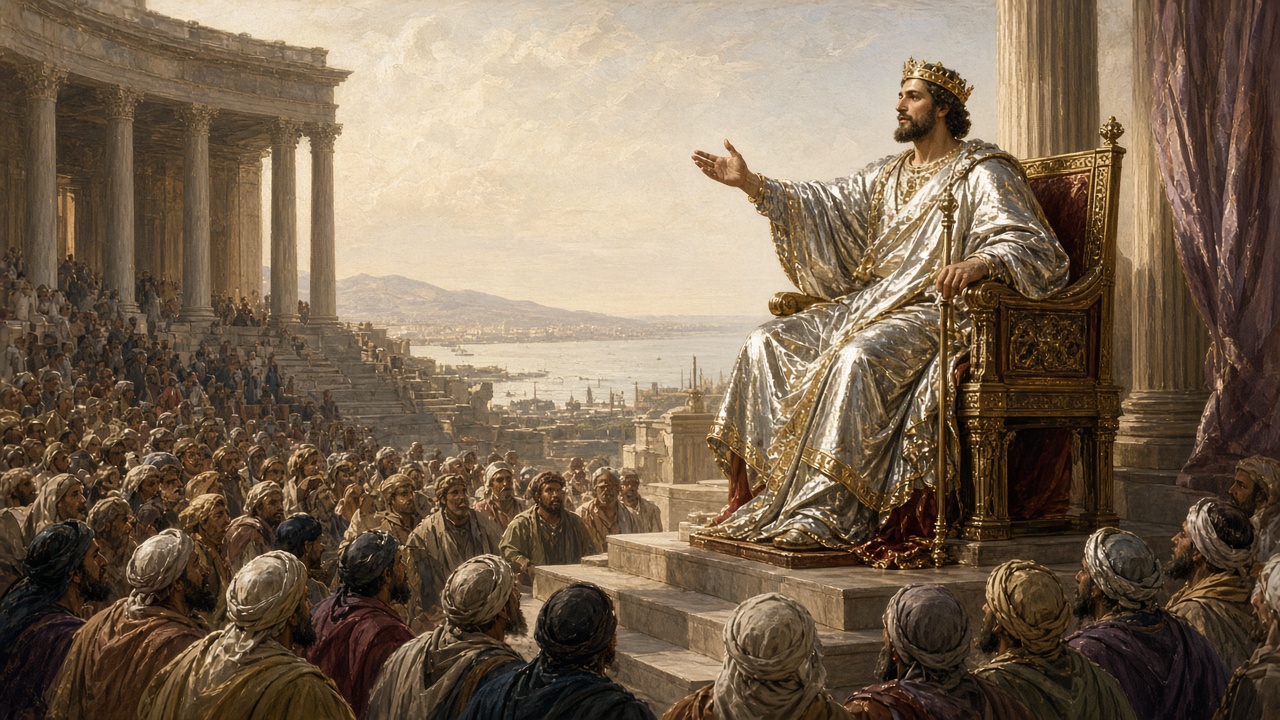
21Tʉweyu pe tʉneporo'pʉ a'tai, Era' uya tʉpon pata'tɨ'pʉ kin pe tesi ekamanin, mɨrɨpan ereuta'pʉ tapon po, ka'pon amʉ' iyamʉrasa' kon auro'ka pɨ'. 22“Pʉse rɨ kʉrɨ rɨ Papa nʉsauro'ai'ne', ka'pon pen nɨ!” tukai', ka'pon amʉ' ukɨ'pɨ'nʉnpɨtʉ'pʉ Era' pɨ'.
23Inke pʉra Papa inserʉʉi uya eno'ma'pʉ non pona, apʉne pʉra ka'pon amʉ' uya tapurɨ i'se iyesi wenai mɨrɨ awonsi'kɨ Papa ru'ku inamatɨ' ta iya kasa pʉra. Mɨrɨpan anɨ'pʉ weruwe amʉ' uya, mɨrɨpan erikʉ'pʉ.
24E'tane Papa maimu rɨ esi'pʉ miyarɨ rɨ utɨn pɨ' mɨrɨ awonsi'kɨ epan nɨ pɨ'.
25Tʉtʉrawasooi kon u'ma'sa' a'tai, Panapas mɨrɨ awonsi'kɨ Saarʉ pokon enna'po'pʉ Surusiran poi. Isaan, Ma' tato' nee'pʉ to' uya ta'kɨrɨ'nokon.
Did you know?
Peter's escape and Herod's death
- The King Herod of this chapter is Herod Agrippa I, grandson of Herod the Great, who in time held his grandfather's entire kingdom and the title of king. He put James to death and imprisoned Peter. Easton's Bible Dictionary (1897) says that on the second day of a festival honoring the emperor Claudius, Agrippa appeared in the great theatre at Caesarea wearing magnificent silver robes; it was early in the day, and the sun's rays dazzled those who saw him.Sources: Herod Agrippa I · the Bible text itself
- The James killed with the sword was James the son of Zebedee, brother of the apostle John, a fisherman who had worked in partnership with Peter. Easton's Bible Dictionary (1897) calls him the first of the apostles to be put to death and says that Herod Agrippa had him beheaded. The James whom Peter tells the believers to notify is another man: the same dictionary identifies him as the James who headed the church in Jerusalem.Sources: James (Son of Zebedee) · James (Brother of Jesus) · the Bible text itself
- Once he knew he was free, Peter went to the house of Mary, mother of John Mark, in Jerusalem, which Easton's Bible Dictionary (1897) calls a common meeting place of the disciples; many people were gathered there praying. The servant who came to the outer gate was Rhoda, a name that means a rose; overjoyed at his voice, she ran inside to announce him and forgot to open the gate. John, also called Mark, was Mary's son—Mark, his Roman name, gradually replaced the Jewish name John—and he later left Jerusalem with Barnabas and Saul.Sources: Mary (Mother of John Mark) · Rhoda · John Mark · the Bible text itself
Notes written with AI assistance from open sources (Theographic Bible Metadata, CC BY-SA 4.0; Easton’s Bible Dictionary, public domain) and reviewed before publishing.
Places in this chapter
- Caesarea · Today: Caesarea Maritima · 32.500, 34.892 · verse 19
- Judea · Today: Judea 1 · 31.777, 35.234 · verse 19
- Sidon · Today: Sandikli archaeological site in Sidon · 33.561, 35.372 · verse 20
- Tyre · 33.271, 35.196 · verse 20
- Jerusalem · 31.777, 35.234 · verse 25
Only places identified with high confidence are shown (90% or more according to the scholarly sources compiled by OpenBible). Period map: DARE (Digital Atlas of the Roman Empire), CC BY 4.0; modern map: © OpenStreetMap contributors; places: OpenBible.info (CC BY 4.0).
Credits and license for this translation
Wakʉ Itekare: Emenna' Pe Ekonekan Nɨto'
New Testament in Akawaio (GY:ake:Akawaio)
copyright © 2010 Wycliffe Bible Translators, Inc.
Language: Akawaio
Translation by: Wycliffe Bible Translators, Inc.
Akawaio
ake
Guyana
Copyright Information
© 2010, Wycliffe Bible Translators, Inc. All rights reserved.
This translation text is made available to you under the
terms of the Creative Commons License: Attribution-Noncommercial-No Derivative Works.
( http://creativecommons.org/licenses/by-nc-nd/3.0/ )
In addition, you have permission to port the text to different file formats, as long as you
do not change any of the text or punctuation of the Bible.
You may share, copy, distribute, transmit, and extract portions
or quotations from this work, provided that you include the above copyright
information:
You must give Attribution to the work.
You do not sell this work for a profit.
You do not make any derivative works that change any of the actual words or punctuation of the Scriptures.
Permissions beyond the scope of this license may be
available if you contact
us with your request.
The New Testament
in Akawaio
© 2010, Wycliffe Bible Translators, Inc. All rights reserved.
This translation is made available to you under the terms of the
Creative Commons Attribution-Noncommercial-No Derivatives license 4.0.
You may share and redistribute this Bible translation or extracts from it in any format, provided that:
You include the above copyright and source information.
You do not sell this work for a profit.
You do not change any of the words or punctuation of the Scriptures.
Pictures included with Scriptures and other documents on this site are licensed just for use with those Scriptures and documents.
For other uses, please contact the respective copyright owners.
2014-04-21
Source: http://ebible.org/akeNT/ · eBible.org