Malachi 1
Yi Antiw Bible / Yi Ac'aj Testament · Tap a verse to see its cross-references.
About this book
About Malachi
- Easton's Bible Dictionary (1897) presents Malachi, a name meaning "messenger" or "angel," as the last of the minor prophets and the writer of the last book of the Old Testament canon. Nothing is known of him beyond what is contained in his book of prophecies.Sources: Easton: Malachi · Malachi
- Some have supposed that the name is simply a title for a messenger of Jehovah, not a proper name. Easton's Bible Dictionary (1897) concludes, however, that there is reason to regard Malachi as the prophet's ordinary name.Sources: Easton: Malachi · Malachi
- Easton's Bible Dictionary (1897) dates the prophecies to about 420 B.C., after Nehemiah's second return from Persia, or possibly before that return. Because Ezra does not mention him and he does not mention the restoration of the temple, the dictionary infers that he prophesied after Haggai and Zechariah.Sources: Easton: Malachi
- Easton's Bible Dictionary (1897) treats Malachi as a contemporary of Nehemiah, comparing Malachi 2:8 with Nehemiah 13:15 and Malachi 2:10-16 with Nehemiah 13:23. It also notes that the temple services were still in existence, citing Malachi 1:10, 3:1 and 3:10.Sources: Easton: Malachi
Notes written with AI assistance from open sources (Theographic Bible Metadata, CC BY-SA 4.0; Easton’s Bible Dictionary, public domain) and reviewed before publishing.
Wi'nin na pek' Ryos scye yi e' xonl Israel
1Yi xtxolbile'j na jilon te chicaws yi e' xonl Israel yi at tulbil squibaj, yi alijt cyen tan Kataj Ryos tetz Malaquías tan xtxolil scyetz. 2“Axwok xonl Israel, ilenin na wal yi wi'nin na chimpek' tzite'j, chij Kataj. Poro yi axwok na ital swetz: ‘¿Mbi puntilil mbanu' tan ẍchajle'n yi na pek'u' ske'j?’ Ma jalu' je puntile'j: ¿Nk'e'tz ptzun quitz'un quitzicy quib yi e' imam k'ajtzun Jacow tu Esaú? Bintzi nin, quitz'un quitzicy quib, poro ja chimpek' mas te Jacow. 3Ma te Esaú, ilenin qui nchimpek' mas te'j. Ej nin ja no'c tan po'tze'n cyakil yi e'chk ju'wtz kale najlche't yi e' xonl i'. Nin ja oc cyen wa'n tetz jun ama'l tz'inunin tu'. Ntin e'chk smaron txuc najlche'-tz tul.
4”Mpe nink cyal yi e' aj Edom: ‘Ja wi't kalo'on, poro kocpon tan xtxicbaje'n junt tir tircu'n yi lo'onakt,’ swale' scyetz: ‘Ba'n cxo'cwok tan xtxicbaje'n junt tir, poro quil wak' ama'l tzitetz, na nocpon tan xite'n cu'n cyakil yi na ibanwok.’ Ej nin stz'a'lchok te iluwar: ‘Ya'stzun chi'ama'l yi e' malnak. Ej nin ya'stzun yi ama'l yi na chi'ch c'u'l Ryos te'j, tetz bin k'ej ben sak.’
5”Yi axwok itetz xonl Israel, tz'elepon itxum tetz yi xtxolbila'se'j, nin tzitale'wok: ‘Chumam nin porer yi Kataj Ryos, na ncha'tz na lajluchax yi tetz porer joylaj len yi mojomil yi katanum Israel.’ ”
Yi toque'n Kataj Ryos tan ẍchajle'n scyetz yi e' pale' yi e' len pajol ca'wl
6Je yol Kataj Ryose'j scyetz yi e' pale': “Yi e' cy'ajol na cyak' chik'ej chitaj, nin yi e' mos na cyak' chik'ej chipatrón. Poro yi axwok itetz, qui na itak' mu'ẍ tal ink'ej, wech in iTaj, nin in Cawl itetz. ¿Nxac tzun qui na itak'wok ink'ej? Poro chin pajpuj nin axwok, na na ital: ¿Mbi na kaban tan telse'n k'eju'? 7Je ipaltile'j: Na itoywok pam swetz yi cy'a'n il c'ol ta'n, yi nk'e'tz tz'aknak cu'n, nin na nin cxtzane't tan jakle'n swetz: ¿Mbi puntilil nkaban tan telse'n k'eju'? Na itak'wok ch'on tetz walma', tan paj yi qui na itak'wok k'ej yi wetz inaltar, kale na ipatwit e'ch itx'ixwatz tzinwutz. 8I tane'n tziwutz itetz, yi nk'e'tz xan yi na itoy e'chk awun swetz yi moyi'ẍ, nka yi co'x quikan, nka yabi'ẍ. Pilwok bin tan toye'n e'chk awuna'tz scyetz itajcawil. ¿Ẍchitzatzink ptzun tzite'j? Nxac tzun na itoy e'chk oya'tz swetz, wech in yi Ryos yi cya'l na xcye' quen swe'j. 9Na cxo'cwok tan jakle'n ibanl, poro ko na xcon yi e'chk jilwutz oya'tz ita'n, quil cxo'cwok tan xtxumle'n yi ẍchintzatzink tzite'j. Je inyole'j: 10Ba'nt cu'n yi nink tz'oc jun tzitetz tan jople'n cu'n yi puertil yi templo, bantz quil tz'oc jun tan tocse'n k'ak' wi inaltar tan cha'tz tu', na yi in wetz qui na chintzatzin tzite'j, nin quil tzincujij mas yi e'chk oya'tz yi na itoy swetz, na in yi Ryos. 11Bene'n tzi'n wi munt ẍchixo'l cyakil jilwutz wunak, at e' yi na cyak' chik'ajsbil swetz, nin yi na chipat insens tan tak'le'n ink'ej, nin na cyoy chumbalaj oy swetz. 12Ma yi axwok itetz ntin na el ink'ej ita'n, na le wutz itetz itajtza'kl i'tz, yi ba'n tz'el k'ej yi wetz inaltar ita'n, poro yi altara'tz at k'ej, na ya'stzun inmes kale na chinwane't tane'n. 13Yi axwok itetz na ital: ‘Ja icy' kapaj tan banle'n tane'n yi e'chk munle'j.’ Nin tan yi xtxolbila'tz yi na ital, na cxtzanwok tan telse'n ink'ej. Ej nin ncha'tz na itxum yi na chintzatzin te jun oy yi na ul ita'n tzinwutz yi alk'a'n tu' na itulej, nka le iwutz itetz itajtza'kl na chintzatzin te jun wacẍ yi co'x, nka yi yabi'ẍ. 14Poro tz'ul icaws tircu'n axwok yi juntlen itajtza'kl, yi at itawun yi balaj, poro na itoy jun yi ploj swetz. Na yi in wetz in yi wi'tz Rey, nin at e' ẍchixo'l cyakil nación bene'n tzi'n wi munt yi mas tcu'n na cyek ẍchi' imbi' tziwutz itetz,” stzun Ryos.
Did you know?
Honoring God and Defective Offerings
- The name Malachi means messenger or angel. While some have suggested it was a title rather than a proper name, scholars and traditions widely treat it as the prophet's personal name, placing his ministry during the period of Nehemiah, after Haggai and Zechariah.Sources: Malachi
- The opening dispute recalls the twin brothers Jacob and Esau, the ancestors of Israel and Edom. The text contrasts God's covenant love for Israel with the judgment and desolation coming upon the mountainous region of Edom.Sources: Esau (Edom) · Jacob (Israel) · Edom · the Bible text itself
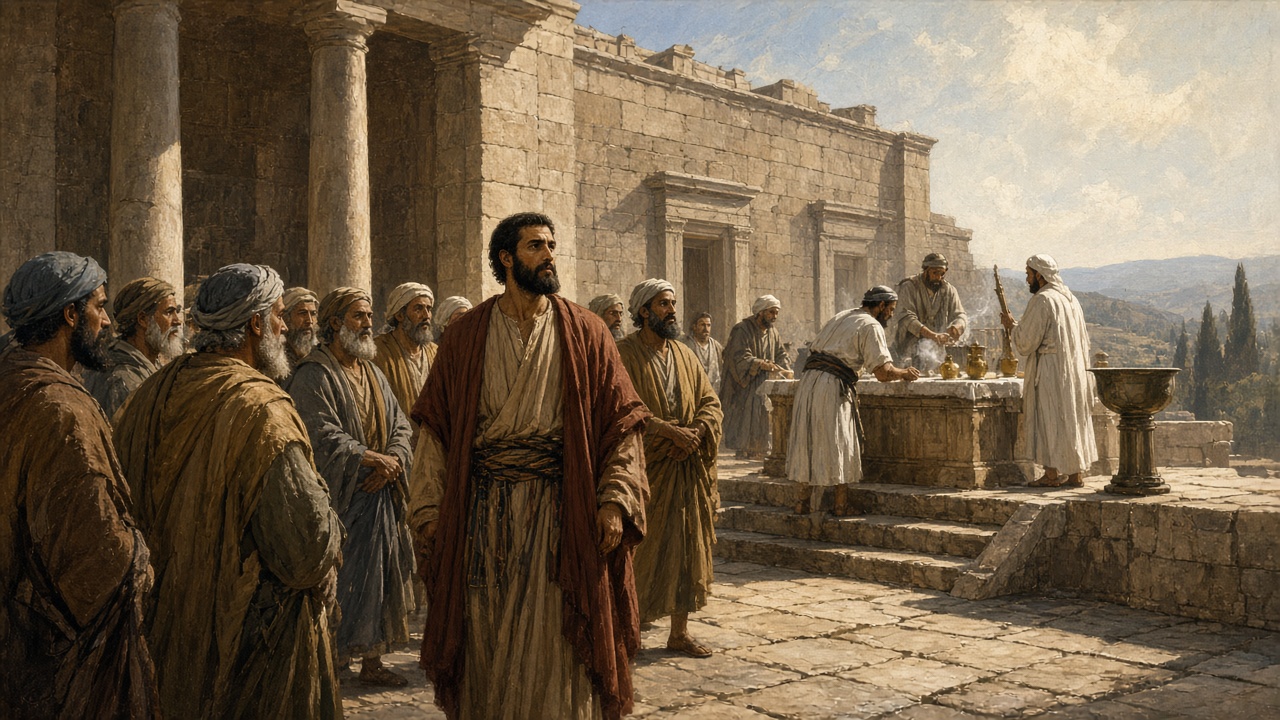
- The priests are rebuked for offering blind, lame, and diseased animals on the altar rather than unblemished livestock. Malachi exposes their disrespect by asking whether a civil governor would accept such inferior gifts.Sources: the Bible text itself
Notes written with AI assistance from open sources (Theographic Bible Metadata, CC BY-SA 4.0; Easton’s Bible Dictionary, public domain) and reviewed before publishing.
Places in this chapter
- Edom · 30.746, 35.604 · verse 4
Only places identified with high confidence are shown (90% or more according to the scholarly sources compiled by OpenBible). Period map: DARE (Digital Atlas of the Roman Empire), CC BY 4.0; modern map: © OpenStreetMap contributors; places: OpenBible.info (CC BY 4.0).
Credits and license for this translation
Yi Antiw Bible / Yi Ac'aj Testament
Bible in Aguacateco (GT:agu:Aguacateco)
copyright © 2011 Wycliffe Bible Translators, Inc.
Language: Aguacateco
Translation by: Wycliffe Bible Translators, Inc.
Copyright Information
© 2011-02-18, Wycliffe Bible Translators, Inc. All rights reserved.
This translation text is made available to you under the
terms of the Creative Commons License: Attribution-Noncommercial-No Derivative Works.
( http://creativecommons.org/licenses/by-nc-nd/3.0/ )
In addition, you have permission to port the text to different file formats, as long as you
do not change any of the text or punctuation of the Bible.
You may share, copy, distribute, transmit, and extract portions
or quotations from this work, provided that you include the above copyright
information:
You must give Attribution to the work.
You do not sell this work for a profit.
You do not make any derivative works that change any of the actual words or punctuation of the Scriptures.
Permissions beyond the scope of this license may be
available if you contact
us with your request.
The Bible
in Aguacateco
© 2011-02-18, Wycliffe Bible Translators, Inc. All rights reserved.
This translation is made available to you under the terms of the
Creative Commons Attribution-Noncommercial-No Derivatives license 4.0.
You may share and redistribute this Bible translation or extracts from it in any format, provided that:
You include the above copyright and source information.
You do not sell this work for a profit.
You do not change any of the words or punctuation of the Scriptures.
Pictures included with Scriptures and other documents on this site are licensed just for use with those Scriptures and documents.
For other uses, please contact the respective copyright owners.
2014-04-21
Source: http://ebible.org/aguBl/ · eBible.org