Genesis 8
Yi Antiw Bible / Yi Ac'aj Testament · Tap a verse to see its cross-references.
Yi makxe'n yi jun chun wutzile'n a'bal nin yi taje'n cu'n yi a'
1Poro Noé scyuch' yi e' txuc yi ate' tc'u'l yi barc, quinin e' el te c'u'l Ryos. Cha'stzun te xtxumul i' tan saje'n jun cyek'ek' tan tajse'n cu'n yi a'. 2Ncha'tz yi a'bal, makxe'n nintzun bantz. Nin ncha'tz qui'ct a' je'ul mulk'uj xe mar. 3Yi makxe'n e'ch ẍchun a' nsken el xkanca'p cient k'ej cyak'un Noé tul barc, nintzun xe'tij yi a' tan taje'n cu'n. 4Juklaj tajlal yi juki'n xaw ya'stzun yi cwe'n pone'n lajpuj yi barc tibaj jun scyeri e'chk wutz cwent luwar yi na bi'aj Ararat. 5Jun tzunin taje'n cu'n yi a'. Ej nin yi tucumule'n yi bajx k'ej te yi lajuji'n xaw sken tzun lajluchax wi'ak wutz.
6Ẍch'iwal tzun Noé ca'wunakt k'ej. Kalena's tzun je'n jakol yi wentanu'il yi barc. 7Yi jakxe'n yi wentanu' nintzun eltzaj stzakpul jun joj. Poro tunin na xicy'in cuntunin i'-tz tcya'j, tan ẍch'iwe'n jalen yi skeje'n wuxtx'otx'. 8Yi sken eltzaj yi joj, ncha'tz nin eltzaj stzakpul Noé jun slu'k tan tele'n xtxum i' tetz yi ko sken skej yi wuxtx'otx'. 9Poro tan paj yi iẍnin pi'lij yi a' wuxtx'otx', cya'l nin jale't ama'l tan yi slu'k tan tujewe'n. Cha'stzun te nin opont junt tir kale eltzit tzakpu'n. Ej nin list Noé tan xtxoble'n quen junt tir tul barc.
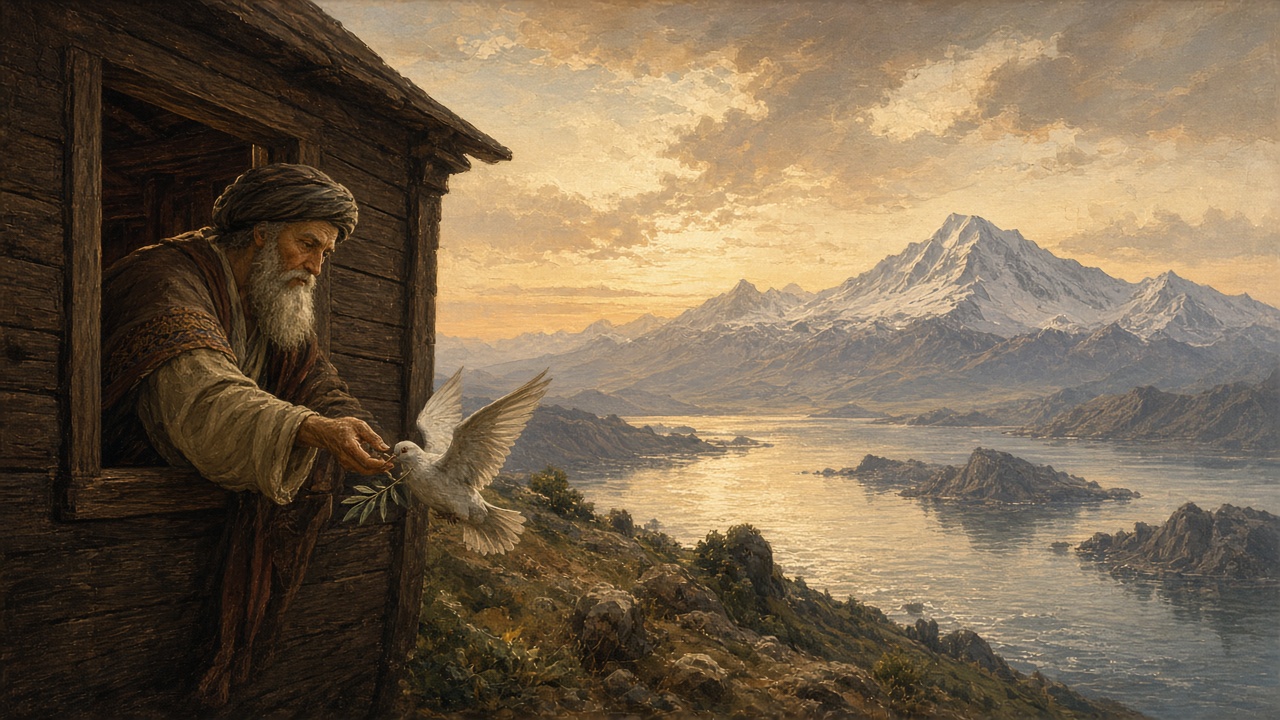
10Nintzun ẍch'iw Noé jukt k'ej, kalena's tzun tele'nt stzakpul junt tir yi tal slu'ka'tz. 11Yi tele'nt stzakpul sken nintzun cu k'ej yi pakxe'nt junt tir. Cy'a'n jun tal xak oliw ta'n yi tocompone'n. Nin tan tu' yi cy'a'n yi xak tze'a'tz ta'n, nin el xtxum Noé tetz yi tzan skeje'n wuxtx'otx'. 12Itzun te yi nsken ocopon junt tir yi tal slu'k, nintzun ẍch'iw Noé jukt k'ej, kalena'tz tzun tele'nt tzakpultz, poro qui't pakxij yi tal slu'ka'tz.
13Itzun bantz yi na xon tzaj Noé tul kak cient tu jun yob, yi bajx k'ej te ac'aj yob, tele'n tzun tcy'al i' mu'ẍ wi' yi barc. Yi tele'n ta'n nintzun tiltz yi sken skej yi wuxtx'otx'.
14Itzun le junak juk tajlal te yi ca'p xaw teri yoba'tz, nternin chin skejt ban yi wuxtx'otx'. 15Nintzun tal Kataj Ryos tetz Noé: 16“Ba'n cxe'lwok le barc jalu'. Ba'n tz'el awuxkel nin e' anitxa' scyuch' e' awulib. 17Ncha'tz ba'n che'l yi e' txuc yi ate' tzawe'j le barc. Ba'n che'l chicyakil yi e' yi ba'n chixiquin, scyuch' yi e' yi ba'n tetz awuna'n, nin ba'n che'l yi e' yi tu na chijut nin quib wuxtx'otx'. Tajwe'n tan cyele'n chicyakil bantz chibene'n bene'n tzi'n wuxtx'otx', na yi wajbil i'tz tan chipuc'une'n,” stzun Ryos bantz tetz Noé.
18Cyele'n tzaj tzun Noé le barc. Xome'l tzaj yi txkel, cyuml yi e' cy'ajl scyuch' e' tlib. 19Ncha'tz yi e' txuc yi ba'n tetz awuna'n, e' baj eltzaj. Ncha'tz e' smaron txuc e' baj eltzaj. Ej nin e' baj eltzaj yi e' txuc yi tu na chijut nin quib, scyuch' yi e' txuc yi na chixicy'in. Chicyakil cu'n e' baj eltzaj.
20Toque'n tzun Noé tan wekle'n cobox c'ub tetz patbil chitx'ixwatz. Yi bnixe'n nintzun e' baj saj stz'amol Noé jujun scyeri e' txuc yi ba'n tetz chitx'ixwatz. Ej nin pat Noé yi e' txuca'tz tetz toy tetz Ryos. 21Itzun yi topone'n yi c'o'cal yi toy i' swutz Kataj, nintzun tal Kataj tetz: “Qui't no'c tan sotzaje'n cyakil e'chk takle'n yi at wuxtx'otx' tan a' tan chipaj e' wunak, na yi e' wunak, e' cu'n juchul il yi chijuyil tzaj. Qui't sotz junt tir yi e'chk takle'na'tz wa'n tan a' tan chipaj. Ncha'tz e' txuc, qui't chisotz junt tir wa'n, chi mimban te jun tire'j.
22”Jalen pe'k atite't yi wuxtx'otx',
tz'ocopon ujul nin sjalok cosech.
Sjalok jujun tiemp tz'a',
nin jujun tiemp che'w.
Sjalok jujun tiemp a'bal,
nin jujun tiemp cresum.
Ncha'tz yi sk'ejl tu lak'bal,
ite'n nin sbne' chi tane'n nin,”
chij Ryos bantz tetz Noé.
Did you know?
The Waters Recede
- The ark came to rest on the mountains of Ararat, a name meaning “sacred land” or “high land” for a country on whose mountains the ark settled after the flood. Easton's Bible Dictionary (1897) suggests those mountains were probably the Kurdish range of southern Armenia, though the name is also commonly applied to a high, almost inaccessible peak rising from the plain of the Araxes. In 2 Kings 19:37 and Isaiah 37:38 the Authorized Version renders the name “Armenia” and the Revised Version “land of Ararat,” while Jeremiah 51:27 uses it for central or southern Armenia.Sources: Ararat · the Bible text itself
- Noah’s Hebrew name means “rest,” and in this chapter the ark itself comes to rest as the waters go down. He was the son of Lamech and the grandson of Methuselah, and the father of Shem, Ham, and Japheth. Easton's Bible Dictionary describes him as the connecting link between the old world and the new, and as a second great progenitor of the human family.Sources: Noah · the Bible text itself
- Chronological notes place the Great Flood in 2347 BC, lasting one year; the subsiding of the waters in 2346 BC, over 220 days; and the leaving of the ark in 2346 BC, as a single day. In the chapter itself, the waters have gone down after 150 days and the ark rests on the seventeenth day of the seventh month; on the first day of the first month of Noah’s six hundred and first year the waters have dried up, and by the twenty-seventh day of the second month the earth is fully dry.Sources: The Great Flood · The flood subsides · Leaving the Ark · the Bible text itself
Notes written with AI assistance from open sources (Theographic Bible Metadata, CC BY-SA 4.0; Easton’s Bible Dictionary, public domain) and reviewed before publishing.
Places in this chapter
- Ararat · Today: Urartu · 39.703, 44.300 · verse 4
Only places identified with high confidence are shown (90% or more according to the scholarly sources compiled by OpenBible). Period map: DARE (Digital Atlas of the Roman Empire), CC BY 4.0; modern map: © OpenStreetMap contributors; places: OpenBible.info (CC BY 4.0).
Credits and license for this translation
Yi Antiw Bible / Yi Ac'aj Testament
Bible in Aguacateco (GT:agu:Aguacateco)
copyright © 2011 Wycliffe Bible Translators, Inc.
Language: Aguacateco
Translation by: Wycliffe Bible Translators, Inc.
Copyright Information
© 2011-02-18, Wycliffe Bible Translators, Inc. All rights reserved.
This translation text is made available to you under the
terms of the Creative Commons License: Attribution-Noncommercial-No Derivative Works.
( http://creativecommons.org/licenses/by-nc-nd/3.0/ )
In addition, you have permission to port the text to different file formats, as long as you
do not change any of the text or punctuation of the Bible.
You may share, copy, distribute, transmit, and extract portions
or quotations from this work, provided that you include the above copyright
information:
You must give Attribution to the work.
You do not sell this work for a profit.
You do not make any derivative works that change any of the actual words or punctuation of the Scriptures.
Permissions beyond the scope of this license may be
available if you contact
us with your request.
The Bible
in Aguacateco
© 2011-02-18, Wycliffe Bible Translators, Inc. All rights reserved.
This translation is made available to you under the terms of the
Creative Commons Attribution-Noncommercial-No Derivatives license 4.0.
You may share and redistribute this Bible translation or extracts from it in any format, provided that:
You include the above copyright and source information.
You do not sell this work for a profit.
You do not change any of the words or punctuation of the Scriptures.
Pictures included with Scriptures and other documents on this site are licensed just for use with those Scriptures and documents.
For other uses, please contact the respective copyright owners.
2014-04-21
Source: http://ebible.org/aguBl/ · eBible.org