Genesis 47
Yi Antiw Bible / Yi Ac'aj Testament · Tap a verse to see its cross-references.
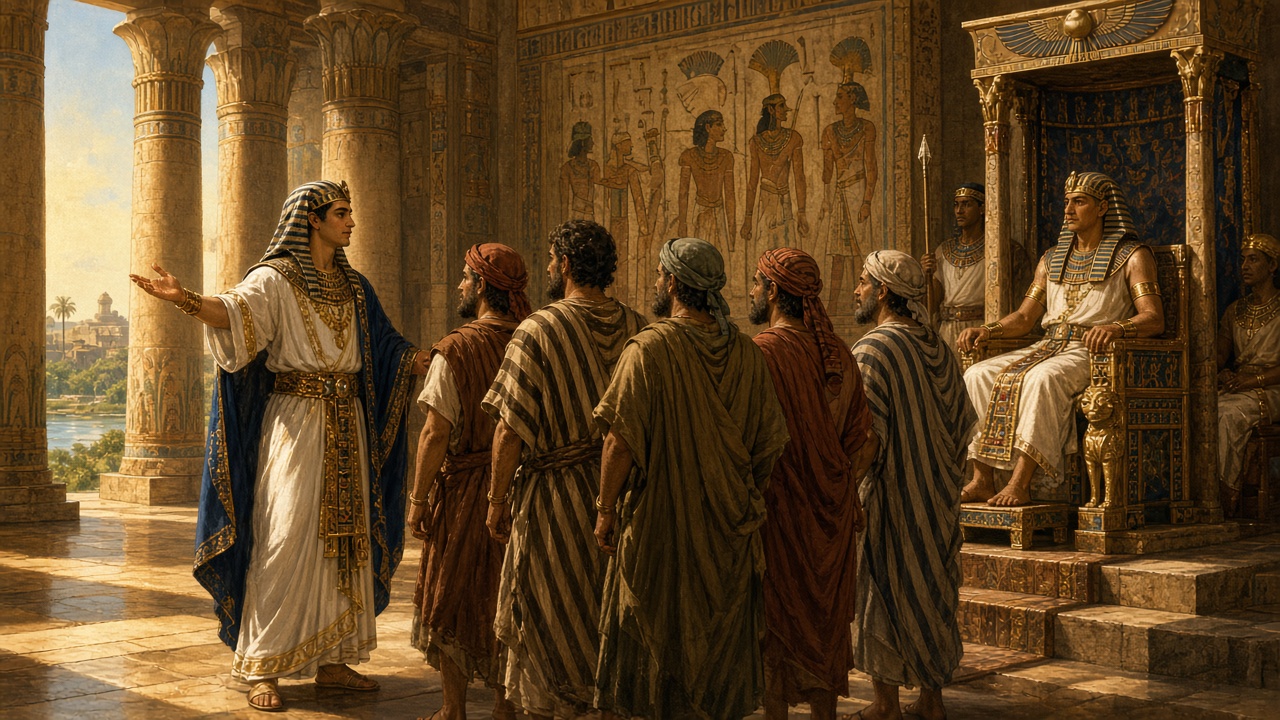
1Nintzun ben Ẍeptz tan talche'n stziblal tetz faraón. Nin taltz tetz: “Ja chu'l intaj scyuch' wutzicy yi najlche' Canaán. Ja wi't chu'l le ama'l Gosén. Cy'a'n len cyakil chime'bi'l cya'n. Ej nin xomche' cyawun scye'j,” stzun i' bantz. 2Nintzun e' je' xtxa'ol o' scyeri e' stzicy tan tajskel faraón chiwutz. 3Ma yi cyopone'n nintzun oc faraón tan jakle'n scyetz:
—¿Mbi jilwutz ak'unil na a'w ita'n?
—Ta', yi ketz, yi o' ẍchakumu', o' len pstor cneru' chi chisajle'n e' kamam kate'. 4Cha'stzun te ja ku'l tan kanajewe'n tzone'j, na qui'ct kawa' Canaán. Ej nin qui'ct mu'ẍt tal ch'im tetz chiwa' yi e' kawun. Cha'stzun te elk k'ajabu' ske'j nink tak'u' ama'l sketz tan kanajewe'n tul yi ama'l Gosén, che'ch e' bantz tetz faraón.
5Bene'n tzun tlol faraón tetz Ẍep:
—Ma jalu' Ẍep, ja bin chu'l yi ara taj scyuch' yi e' awutzicy tzawe'j. 6Ba'n bin chinaje' tul alchok luwaril cwent Egipto. Poro ba'n tzawak' ama'l scyetz tan chinajewe'n cyen le ama'l Gosén na i'tz yi luwar mas balaj tzone'j Egipto. Ej nin ko at cobox chixo'l yi chin list nin e', ba'n cho'c awa'n tan chiq'uicy'le'n yi e' wetz wawun, stzun faraón bantz.
7Ncha'tz ben tcy'al Ẍep yi taj tan tajskel faraón wutz. Itzun yi cyocompone'n swutz nintzun k'ajlan Jacow tetz nin tak' banl tibaj. 8Jakol tzun faraón tetz Jacow.
—¿Jatna' yobu' ta'?
9—Yi mero bintzij Ta', ja chinxon bene'n tzi'n wuxtx'otx' mas jun cient tu junaklajix yob. Poro qui nin mben xcon mas intiemp ẍchiwutz yi e' inmam inte'. Ej nin te yi cobox yoba'tz at balaj nin at ploj yi ja noj quen tzinwutz, stzun Jacow bantz.
10Yi tlol Jacow yi xtxolbila'se'j nintzun e' jatx quib tu faraón. 11Inin tzun tulej Ẍeptz quib yi tal faraón tetz. Nintzun tak' yi balaj ama'l tetz taj scyuch' yi e' stzicy. Cho'n tzun chinajewe'n swutz yi ama'la'tz yi na bi'aj Ramsés. 12Ncha'tz toy Ẍep ixi'n triw tetz chiwa' yi wutzile'n taj, scyuch' yi e' stzicy, tu cyakil yi e' xonl i'.
Yi tajtza'kl Ẍep tan jale'n me'bi'l faraón
13Itzun bantz bene'n nintzun ban lo'on yi we'j. Nin cya'l nin na jale't triw. Wi'nin tzun wunak e' quimtz tan we'j Egipto. Ej nin ncha'tz nk'e'tz ntin Egipto, ma na ncha'tz Canaán. 14Ma yi triw yi nsken wi't chamxij tan Ẍep nintzun baj c'ayiltz. Itzun yi jamel yi triwa'tz cho'n tzun tk'ol Ẍep tetz faraón. 15Itzun yi baje'n chipu'k yi e' aj Egipto tu yi e' aj Canaán, nintzun e' opontz tan talche'n tetz Ẍep.
—Ta', elk k'ajabu' ske'j. Tak'u' kawa'. ¿Nxac ltak'u' ama'l tan kaquime'n tan we'j tan paj tu yi qui'ct ketz kapu'k tan lok'che'n mas triw?
16—Ba'n, stzun Ẍep. —Ko qui'c ipu'k cy'ajwok tzaj yi itawun. Tzintx'exe' tu triw.
17Cyopone'n tzun e' aj Egipto tu Ẍep cy'a'n len yi cyawun cya'n. At e' cy'a'n chej cya'n, cy'a'n wacẍ cya'n, cy'a'n cne'r cya'n, cy'a'n buru' cya'n, tan xtx'exe'n tu triw. Nin tak' Ẍep ixi'n triw scyetz tetz yi jun yoba'tz. 18Itzun yi ticy'e'n yi jun yoba'tz nintzun e' opont junt tir swutz Ẍep tan cu'swutzil, nintzun cyaltz:
—Ilu' kajcaw, quil kajal cu'n wikak' tan talche'n yi skachoje' yi triw, na qui'ct kapu'k. Ej nin ncha'tz qui'ct kawun tan katx'exul tu triw. Na ja wi't kak' cyakil kame'bi'l teru'. Qui'c junt takle'n lkak' tetz jamel yi triw, jalt yi o' tu yi katx'otx'. 19Cujk tanu' ta' tan kac'ayil kib teru' tu yi katx'otx', na jalta'tz at skuch'. Ej nin list o' tan koque'n tetz esclaw yi patrónu'. Ej nin ba'n kak'uj swutz yi katx'otx' cwent i'. Ntin nink tak'u' kasemiy tan koque'n tan ak'un, bantz qui tx'akxe'n yi katx'otx', che'ch tzun e' bantz tetz Ẍep.
20Nintzun cujij Ẍeptz. Nin lok' i' cyakil yi chitx'otx' yi e' aj Egipto. Nintzun octz tetz cwent faraón. Tan paj yi jun chin we'j yi ate' cu'nt, ja chic'ay yi e' aj Egipto cyakil yi chitx'otx' tetz faraón. 21Itzun yi baje'n chic'ayil yi chitx'otx', nintzun e' octz chicyakil cu'n yi e' aj Egipto tetz esclaw faraón. 22Jalt chitx'otx' yi e' pale' qui lok' Ẍep, na na tak' faraón ixi'n triw scyetz tetz chiwa'. Cha'stzun te qui nchic'ay yi chitx'otx', na at cyetz chiwa'.
23Itzun tal Ẍep scyetz cyakil wunak:
—Yi axwok itetz tu yi itx'otx' ja cxo'c len cwent faraón. Ma jalu' or tzibene'n tan ak'un swutz yi itx'otx', nin cy'ajwoknin yi semiy triwe'j. 24Ej nin yil je' yi cosech tajwe'n tzitak'wok yi to'i'n part te yi cosech tetz faraón. Ma yi cyajt ya'stzun itetz. Ba'n xcon ita'n tetz iwa' nin tetz semiy tetz junt tiemp, stzun Ẍep bantz scyetz.
25—Ilu' kajcaw, tyoẍtu' teru' ta', na chin balaj nin ilu' ske'j, na ja kaclax tanu' tk'ab we'j. Ma jalu' ba'n ko'c tetz esclaw faraón.
26Ej nintzun cawun Ẍep tan telse'n yi jun leya'tz scyetz cyakil wunak cwent Egipto tan cyak'ol yi to'i'n part te yi cosech tetz faraón. Ej nin yi jun leya'tz at nintz jalu'. Poro yi e' pale' qui na cyak' cyetz, na qui nchic'ay chitx'otx' tetz faraón.
27Itzun yi tele'n tiemp cyak'un yi e' xonl Israel le ama'l Goséna'tz puc'une'n nin e' bantz. 28Inti Jacow, a'tij juklaj yob le ama'la'tz. Cho'n stz'ake'n jun cient tu ca'wunak juk yob ta'n.
29Ma yi nachone'n i' yi nsken tijin, nin yi txant tan quime'n, nin cawun i' tan ẍchakle'n Ẍep. Itzun yi topone'n Ẍep nintzun tal tetz:
—Ma jalu' Ẍep, na waj yil tzaban yi june'j, ak'oc tzaj ak'ab jak' incux, tetz jun techl yi cẍelepon cu'n te'j yi cawl yi swale' tzatz. 30Je wajbile'j, yil chinquim: Qui na waj yil chin mukxij tzone'j Egipto na yi wajbil i'tz yil chinmukxij kale e' mukxnake't yi e' inmam inte'. Cha'stzun te na waj yil cẍben tan mukle'n inwankil kale e' mukxnake't cyetz.
—Cuj ta', stzun Ẍep. —Tzimbne' yi teru' tajbilu'.
31—¿Jun cu'n pe' na awal Ẍep?
—Jun cu'n ta', sak swutz Ryos yi nelepon cu'n te'j quib yi tajbilu', stzun Ẍep bantz.
Yi tbital Israel yi yol Ẍep, nintzun aj coyloktz wi xtx'ach.
Did you know?
A Home in Goshen
- Joseph settled his father and brothers in Goshen, the region Pharaoh called the best part of the land. The same district is also called the land of Rameses; it lay east of the Nile, apparently not far from the royal residence, though the region is now desert.Sources: the Bible text itself · Goshen · Rameses
- When Pharaoh asked their occupation, Joseph’s brothers answered that they were shepherds, as their fathers had been, and they asked to stay in Goshen because the famine in Canaan had left no pasture for their flocks. Easton’s Bible Dictionary (1897) identifies the Pharaoh of Joseph’s day as probably Apopi, the last Hyksos king, and notes that shepherds were an abomination to the native Egyptians, while these Asiatic shepherds were welcomed by the Hyksos; some instead place Joseph in the reign of Thothmes III, long after the Hyksos.Sources: the Bible text itself · Pharaoh (of Joseph)
- As the famine exhausted Egypt and Canaan, Joseph took payment first in money, then in livestock, and finally in land, so that the fields became Pharaoh’s and the people were reduced to servitude. He did not take the priests’ land, since Pharaoh already supplied their rations, and he established that a fifth of the produce belonged to Pharaoh.Sources: the Bible text itself
Notes written with AI assistance from open sources (Theographic Bible Metadata, CC BY-SA 4.0; Easton’s Bible Dictionary, public domain) and reviewed before publishing.
Places in this chapter
- Canaan · 32.767, 35.333 · verses 1, 4, 13, 14, 15
- Goshen · Today: Goshen 1 · 30.799, 31.834 · verses 1, 4, 6, 27
- Egypt · 30.129, 31.308 · verses 4, 6, 11, 13, 14, 15, 20, 21, 26, 27, 28, 29, 30
Only places identified with high confidence are shown (90% or more according to the scholarly sources compiled by OpenBible). Period map: DARE (Digital Atlas of the Roman Empire), CC BY 4.0; modern map: © OpenStreetMap contributors; places: OpenBible.info (CC BY 4.0).
Credits and license for this translation
Yi Antiw Bible / Yi Ac'aj Testament
Bible in Aguacateco (GT:agu:Aguacateco)
copyright © 2011 Wycliffe Bible Translators, Inc.
Language: Aguacateco
Translation by: Wycliffe Bible Translators, Inc.
Copyright Information
© 2011-02-18, Wycliffe Bible Translators, Inc. All rights reserved.
This translation text is made available to you under the
terms of the Creative Commons License: Attribution-Noncommercial-No Derivative Works.
( http://creativecommons.org/licenses/by-nc-nd/3.0/ )
In addition, you have permission to port the text to different file formats, as long as you
do not change any of the text or punctuation of the Bible.
You may share, copy, distribute, transmit, and extract portions
or quotations from this work, provided that you include the above copyright
information:
You must give Attribution to the work.
You do not sell this work for a profit.
You do not make any derivative works that change any of the actual words or punctuation of the Scriptures.
Permissions beyond the scope of this license may be
available if you contact
us with your request.
The Bible
in Aguacateco
© 2011-02-18, Wycliffe Bible Translators, Inc. All rights reserved.
This translation is made available to you under the terms of the
Creative Commons Attribution-Noncommercial-No Derivatives license 4.0.
You may share and redistribute this Bible translation or extracts from it in any format, provided that:
You include the above copyright and source information.
You do not sell this work for a profit.
You do not change any of the words or punctuation of the Scriptures.
Pictures included with Scriptures and other documents on this site are licensed just for use with those Scriptures and documents.
For other uses, please contact the respective copyright owners.
2014-04-21
Source: http://ebible.org/aguBl/ · eBible.org