Amos 5
Yi Antiw Bible / Yi Ac'aj Testament · Tap a verse to see its cross-references.
Yi chuna'n yi ban Amós tan paj yi txant tan chimukxe'n yi e' aj Israel
1E'u' aj Israel quibitzaju' inyole'j. Quibit tzaju' yi na chin chunan tan paj yi ẍchiquimok chanu'.
2Lastum e'u' yi chumbalaj nin chitanumu', na chelpon cunu' swutz. Chicopon trimpu' tibaj chiluwaru', nin cya'l jun tz'a'tok tan chixicyleje'nu'.
3“Ej, nin je inyole'j yi in wetz yi in yi in Cawl itetz, yi iTaj yi iRyosil yi axwok aj Israel: Ko at jun tnum yi na ẍchak nin jun mil sanlar tan oyintzi' junte'n cient ẍchipakxok. Nin ko at junt tnum yi na ben jun cient sanlar ta'n tan oyintzi', lajuj te'n ẍchipakxok.”
4Ncha'tz je junt yol Kataj Ryose'j scyetz yi e' aj Israel:
“Kol cxpakxij swe'j, nin ltziban tane'n inyol, qui tzun cxquimtz.
5Qui't cxbenwok junt tir le k'ajbil Betel, tan jakle'n ẍch'eybil itetz, nin qui't cxbenwok junt tir le k'ajbil Gilgal. Nin qui't cxbenwok junt tir jalen Beerseba tan jakle'n ibanl. Na cyakil yi e' aj Gilgal nchiben ticy'le'n pres le junt tnum. Nin jalt e'ch k'uchbe'n ca'l sjalok cyentz Betel,” stzun Kataj.
6Qui't bin chibenu' tul e'chk ama'la'tz, ma na chipakxoku' te'j Kataj, nin chibne'u' tane'n yi yol i'. Qui tzun chiquimu'-tz. Na ko qui', tz'ul jun chin k'ak' tan Kataj scye'ju' nin quil jal jun le tnum Betel yil xcye' tan stzajse'n yi jun chin k'ak'a'tz.
7¡Lastum e'u' yi na chitzanu' tan po'tze'n yi balaj ley yi at ẍchiwutzu', na ntin bis o'kl na jal tan paj!
8Yi jun yi bnol tetz e'chk tx'uml tcya'j, yi Pléyades tu Orión, nin yi na xcye' tan tocse'n yi tz'o'tz tetz tkan skil, nin yi jun yi na xcye' tan tocse'n yi tkan skil tetz ak'bal, yi bi' yi juna'tz i'tz Kataj Ryos. Nin ntin cu'n i' na xcye' tan xtx'ixpe'n yi a'il yi mar tetz sbak' tan toque'n tetz a'bal wi'ak cojbil.
9Ncha'tz na xcye' i' tan chixite'n yi e' yi chin cham nin e' tane'n. Ncha'tz na xcye' i' tan xite'n alchok takle'n, chi tane'n yi e'chk ca'l yi nim wutz tkan kale na chicolwit quib sanlar tan oyintzi'.
10¡Lastum yi e'u' yi na chi'ch chic'u'lu' scye'j yi e' balaj juez, nin yi chin chilab ninu' chiwutz yi e' balaj stiw yi na cyal yi bintzij!
11Lastum yi e'u' yi na chijaku' nim alcawal scye'j yi e' wunak yi na cyaj chic'ay quixi'n. Qui tzun ltak' Ryos ama'l scyeru' tan chinajewe'nu' txe' e'chk balaj ca'l yi ja bnix cyanu', nin quil tak' ama'l scyeru' tan chibajsalu' yi ta'al win te yi uva yi awij cyanu'.
12Na el intxum tetz cyakil itil yi qui nin bajsbe'n tetz, na na cxo'cwok tan xile'n cye'j yi e' balaj wunak, nin na itz'am xo'c. Nin qui na itak' ama'l scyetz yi e' prow me'ba' tan chicambal yi cyetz cyajbil swutz yi pujbil xtisya'.
13Nin na chi'ch ic'u'l scye'j yi e' yi at balaj cyajtza'kl, cha'stzun te ba'nt cu'n yi quil cyal cyetz jun yol tan makle'n iwutz, na chin xo'wbil nin yi e'chk takle'n yi na bajijtz.
14Banwok bin tane'n yi e'chk takle'n balaj, quil tziban yi e'chk takle'n ploj, qui tzun xquimwoktz. Na kol tziban tane'n yi e'chk takle'n balaj, ba'n tzun tzital: “Yi Kataj Ryos, yi cya'l na xcye' quen te'j, ya'stzun yi jun yi na tzan tan kaq'uicy'le'n.”
15¡Labwok wutz yi e'chk takle'n ploj! ¡Nin lok'wok wutz yi e'chk balaj ajtza'kl! Joywok puntil tan jale'n balaj pujul xtisya' tzixo'l, yi ba'n cyajtza'kl. Ko ya'tz tziban, qui cunin batz tz'elpon k'ajab yi Kataj Ryos yi cya'l na xcye' quen te'j, tan quich'eye'n yi e' itanum yi ẍchiclaxok cyen.
16Je yol Kataje'j, yi Ryos yi cya'l na xcye' que te'j: “Wi'nin chuna'n sbajok lakak c'aybil, nin wi'nin bis sbajok lakak be'. Nin tan paj yi jun c'oloj wunak yi ẍchiquimok, at e' ẍchijake' pawor scyetz yi e' prow wunak tan o'kl yil mukxij jun chixonl. Nin ncha'tz ẍchichoje' yi e' yi ntina'tz cyak'un tan chuna'n.
17Yil nu'l tzaj tan chicawse'n, qui't chitzatzin ma na ẍchok'ok len wi'ak chicojbil kale na cyaw wit uva.” Yi xtxolbila'tz i'tz yol Kataj Ryos.
Yi tal Amós yi qui'c na tak' yi e'chk takle'n kale k'ukle't chic'u'l yi e' xonl Israel
18¡Lastum yi e' yi nternin na el cyalma' tan tule'n chan yi k'ejlal yil tz'ul tzaj Kajcaw! ¿Qui pe' na el chitxumu' tetz yi mbi sbajok te yi jun tiempa'tz? Yi jun k'ejlala'tz chin tz'o'tz nin tunin sbne', na qui'c tkan skil sjalok.
19Qui'c rmeril yi nink clax jun, na ni'cu'n sbne' yi tiempa'tz chi nink tz'el ojkuj jun swutz jun león, nin lnojpon tk'ab jun oso. Nin yil tew quen tib xe jun ca'l, nin yil kejbaj quen tib swutz xan tan ujle'n, ta'ste'n nin tz'eltzit jun lu'baj tan biyle'n cu'n.
20Jun cu'n yol chin xo'wbil nin sbne' yil tz'ul tzaj Kajcaw tan tak'le'n chicaws yi e' tetz contr. Chin tz'o'tz nin sbne'. Chin tc'u'l nin sbne' tircu'n.
21“Wi'nin na chi'ch inc'u'l te yi e'chk tzatzi'n yi na icy' ita'n tan tak'le'n ink'ej tane'n. Chin junt len nin tzinwutz. Na icy' impaj te yi e'chk molo'n ib yi na iban tan tak'le'n ink'ej tane'n.
22Qui na waj yi e'chk oy yi na ipat tan tak'le'n ink'ej. Ncha'tz yi e'chk oy yi ixi'n cu'n, qui't na waj. Nin qui't na waj yi wacẍ yi nternin k'ant yi na itoy swetz tan ẍchajle'n yi at tzatzin paz skaxo'l tzituch' tane'n.
23¡Qui't na waj lwit nin yi e'chk ibitz yi na itak' swetz! ¡Qui't na waj lwit nin wi' yi e'chk ima'cl tetz bitz!
24Yi mero wetz wajbil i'tz yi puntil cu'n chiban yi e' pujul xtisya' yi chimunl. Nin yi nink jal jun itajtza'kl ita'n yi jicyuch te'j, cho'nk sban yi ajtza'kla'tz tzixo'l chi na ban jun a' yi nternin na mulk'in.
25”Axwok jun c'oloj xonl Israel, te yi ca'wunak yob yi ncxa'tij le ama'l yi tz'inunin tu', qui tajwe'n mban tan itk'ol e'chk itx'ixwatz tu e'chk itoy swetz tan ẍchajle'n yi cho'n k'uklij ic'u'l swe'j, na yi ax itetz cho'n nin ajlij iteri c'u'l swe'j. 26Poro yi jalu', tan paj yi ja cxo'cwok tan na'wse'n yi teblal yi iryosil Sicut, yi ireyil tane'n, tu yi teblal yi iryosil Quiyún, yi i'tz jun tx'uml, tajwe'n tzun tan bene'n itekal yi teblal yi e'chk iryosila'tz yil cxben ticy'le'n pres joylaj. 27Na nocpon tan ilaje'n len joylaj, jalaj cy'en yi tnum Damasco.” Yi xtxolbila'tz i'tz yol Kataj Ryos, yi jun yi na bi'aj: “Yi Ryos yi cya'l na xcye' quen te'j.”
Did you know?
A Call to Justice and Lamentation
- Amos urged the northern kingdom of Israel not to seek ancient pilgrimage sites such as Bethel, Gilgal, or Beersheba, warning that these sanctuaries would not save them from destruction. Bethel and Gilgal were prominent historical worship centers, while Beersheba lay far to the south, but the prophet insisted that ritual devotion at these locations was worthless without moral obedience.Sources: the Bible text itself · Bethel (of Palestine) · Gilgal · Beersheba
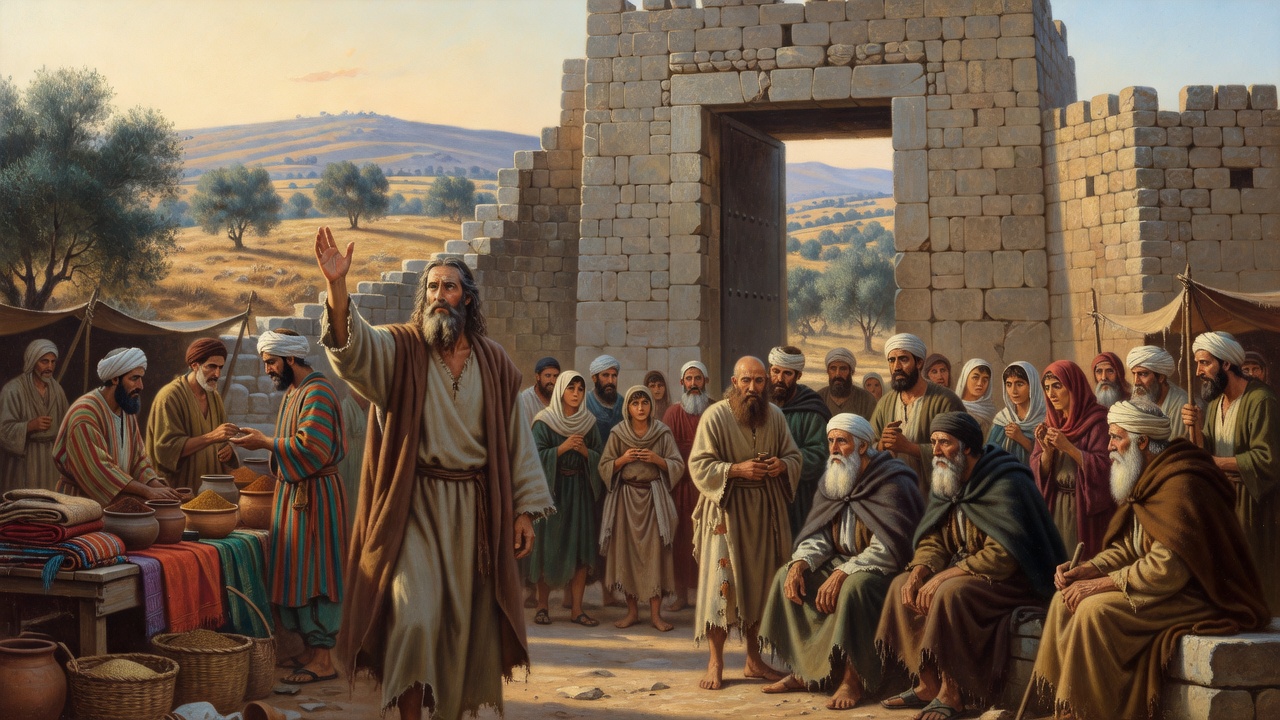
- In ancient Israelite cities, the gate served as the primary civic and judicial center where legal disputes were heard and elders administered justice. Amos condemned the ruling elite for accepting bribes, silencing honest witnesses, and trampling the rights of the poor in these legal assemblies.Sources: the Bible text itself
- The warning that Israel would be exiled beyond Damascus pointed to a coming defeat and deportation far northeast of the ancient Syrian capital. Damascus was a major political and commercial power located north of Jerusalem, marking a key geographical boundary for northern campaigns.Sources: the Bible text itself · Damascus
Notes written with AI assistance from open sources (Theographic Bible Metadata, CC BY-SA 4.0; Easton’s Bible Dictionary, public domain) and reviewed before publishing.
Places in this chapter
- Damascus · 33.511, 36.306 · verse 27
Only places identified with high confidence are shown (90% or more according to the scholarly sources compiled by OpenBible). Period map: DARE (Digital Atlas of the Roman Empire), CC BY 4.0; modern map: © OpenStreetMap contributors; places: OpenBible.info (CC BY 4.0).
Credits and license for this translation
Yi Antiw Bible / Yi Ac'aj Testament
Bible in Aguacateco (GT:agu:Aguacateco)
copyright © 2011 Wycliffe Bible Translators, Inc.
Language: Aguacateco
Translation by: Wycliffe Bible Translators, Inc.
Copyright Information
© 2011-02-18, Wycliffe Bible Translators, Inc. All rights reserved.
This translation text is made available to you under the
terms of the Creative Commons License: Attribution-Noncommercial-No Derivative Works.
( http://creativecommons.org/licenses/by-nc-nd/3.0/ )
In addition, you have permission to port the text to different file formats, as long as you
do not change any of the text or punctuation of the Bible.
You may share, copy, distribute, transmit, and extract portions
or quotations from this work, provided that you include the above copyright
information:
You must give Attribution to the work.
You do not sell this work for a profit.
You do not make any derivative works that change any of the actual words or punctuation of the Scriptures.
Permissions beyond the scope of this license may be
available if you contact
us with your request.
The Bible
in Aguacateco
© 2011-02-18, Wycliffe Bible Translators, Inc. All rights reserved.
This translation is made available to you under the terms of the
Creative Commons Attribution-Noncommercial-No Derivatives license 4.0.
You may share and redistribute this Bible translation or extracts from it in any format, provided that:
You include the above copyright and source information.
You do not sell this work for a profit.
You do not change any of the words or punctuation of the Scriptures.
Pictures included with Scriptures and other documents on this site are licensed just for use with those Scriptures and documents.
For other uses, please contact the respective copyright owners.
2014-04-21
Source: http://ebible.org/aguBl/ · eBible.org