Acts 19
Yi Antiw Bible / Yi Ac'aj Testament · Tap a verse to see its cross-references.
Yi toque'n Pawl tan txoli'n le tnum Efeso
1Itzun bantz te yi at Apolos le tnum Corint nintzun ben tetz Pawl tan xtxole'n yol Kataj lakak e'chk luwar cwent Asia. Ma yi wi't baje'n xo'mbel cyakil e'chk luwara'tz, nin bentz Efeso. Nintzun cu quilol quibtz tu cobox creyent yi ate'-tz le tnuma'tz, nin ben jakol scyetz:
2—¿Cu'ul pe' yi Espíritu Sant scye'ju' yi cyocsal cunu'?
Saje'n tzun chitza'weltz:
—Cya'l cunin na kubitwit yi ko at Espíritu Sant, —che'ch bantz.
3—¿Mbi tzun jilwutz bautismil bajij scye'ju'? —chij Pawl scyetz.
—I bin yi bautism yi na ẍchaj yi na kaxom te yi ẍchusu'n k'ajtzun Wa'n Bautist, —che'ch.
4Bene'n tzun tlol Pawl scyetz:
—Yi bautism yi banak Wa'n, i'tz jun bautism yi na ẍchaj yi ja xtx'ixpuj jun yaj yi tajtza'kl tan qui't juchul mas til. Poro ncha'tz xtxolnak i' scyetz wunak yi ba'n k'uke' chic'u'l te yi jun yi txant tan tule'n. I'tz yi Jesús, yi jun yi bixba'nt tan Ryos tan kacolpe'n.
5Yi quibital yi yol Pawl yi tal scyetz, nintzun je' a' ẍchiwi' tan bi' Kajcaw Jesús. 6Ej nin yi je'n tk'ol Pawl yi k'ab ẍchiwi', cwe'n mule'n tzun yi Espíritu Sant scye'j. Apart tzun yol baj chiyolol. Ej nin baj chitxolil yi yol Kataj. 7Coblaj lo' chixone'n yi e' yaja'tz yi cu'ul yi Espíritu Sant scye'j.
8Ma tetz Pawl, ilenin na benak le sinagoga tan xtx'olche'n xo'l yol Kataj. Qui na xob yi na oc tan xtxole'n. Ox tzun xaw ban i'-tz ẍchixo'l tan xtx'olche'n xo'l yol Kataj scyetz. Yi tajbil i' i'tz yi nink xom chiwi' te yi chusu'n yi na tal yi ẍe'n sban Ryos tan cawu'n. 9At tzun e' yi quinin cyocsaj yol Pawl, nin ẍchiwutz cunin cyakil wunak yi na chitzan tan talche'n yi qui'c xac yi ẍchusu'n Kajcaw. Tele'n tzaj tzun jatxol tib Pawl ẍchixo'l yi e'a'tz. Itzun yi e' yi nsken k'uke' chic'u'l, nin e' xome'l tzaj te Pawl. Cho'n tzun toque'n Pawl le jun scwe'lbil tan xtxole'n yol Kataj. Yi jun scwe'lbila'tz i'tz tetz jun yaj yi na bi'aj Tirano. Cyakil nintzun k'ej na benak Pawl tan txoli'n le yi jun scwe'lbila'tz. 10Cob tzun yob ban i'-tz tan txoli'n le jun ama'la'tz. Cha'stzun te quibital cyakil wunak yi yol Kajcaw. Ncha'tz quibit cyakil yi e' judiy yi najlche' lakak e'chk luwar cwent Asia. 11Wi'nin e'chk chin wutzile'n milawr baj bnol Pawl ẍchixo'l wunak tan porer Ryos, 12na nin baj ben quicy'al e'chk su't, nin e'chk xbu'k tan toque'n cyak'ol te Pawl. Nin na chicy'aj nintz tan toque'n scye'jak yabi'ẍ tan tule'n yos scyuch'. Ej nin at e'chk espíritu cachi' na el le chiwankil wunak tan tu' yi na oc yi e'chk xbu'ka'tz scye'j.
13At tzun cobox judiy yi na chixon lakak e'chk tnum bene'n tzi'n yi na chixcye' tan laje'n len e'chk espíritu cachi' le chiwankil wunak. Cyoque'n tzun tan pile'n tan na'wse'n yi bi' Kajcaw Jesústz tan laje'n len klo' yi e'chk espíritu cachi' le chiwankil wunak. Itzun cyaltz:
—Chincawunk nin tzatz tan bi' Jesús, yi jun yi na tzan Pawl tan xtxole'n: ¡Cawle'n le wankil yaje'j! —che'ch.
14At tzun juk yaj yi xcon yi jun yola'tz cya'n. E' cu'n cy'ajl jun wi'tz chipale'il yi e' judiy yi na bi'aj Esceva. 15Stza'wel tzun yi espíritu cachi' scyetz:
—Wajske'n wutz Jesús, nin wajske'n wutz Pawl, poro yi axwok itetz, qui wajske'n iwutz, —chij yi espíritu cachi' ban scyetz.
16Itzun yi jun yaja'tz yi at yi espíritu cachi' twankil, nin ben balk'ujtz scye'j yi e' yaja'tz, nin e' octz tan biy ib. Poro xcye' yi jun yaja'tz yi at espíritu cachi' twankil scye'j yi juka'tz na nin e' el ojkuj. Tx'anl che' cuntu', nin q'uixpnake' yi cyele'n ojk. 17Yi quibital cyakil yi e' judiy, scyuch' yi e' yi nk'e'tz e' judiy yi najlche' Efeso, wi'nin tzun chixobe'n cyakil yi wunaktz yi ate'-tz, nin cyak' k'ej Kajcaw Jesús.
18Itzun yi e' yi nsken cho'c creyent, e' ultz tan xtxole'n yi e'chk takle'n cachi' yi banake' cyen. 19Ncha'tz yi e' yi e' aj cun banake' cyen, nin baj saj quicy'al yi chiliwr yi txconak cya'n yi ẍe'n e' ban tan jale'n quipisyo'. Ej nin ẍchiwutz cunin cyakil wunak yi toque'n chipatil tk'ak'. Yi tele'n cyajal te yi jamel e'chk liwra'tz, jepon te nicy' cient mil sakal. 20Wi'nin tzun bene'n lo'on yi yol Kajcaw le jun tnuma'tz.
21Itzun yi baje'n yi e'chk takle'na'se'j, cwe'n tzun xtxumul Pawltz tc'u'l cuntu' tan bene'n Jerusalén, poro jalen cu'n xo'mbel cyakil yi e'chk tnum cwent Macedonia tu Acaya. “Yil baj inxajsal Jerusalén, cho'n tzun chimben jalen Roma,” chij Pawl bantz tc'u'l cuntu'. 22Che' bene'n tzun ẍchakol cob scyeri yi e' ẍch'eyum jalen Macedonia. Timoteo tu Erasto, ya'stzun e' ben ẍchakol. Cho'n tzun cyaje'n cyen coboxt k'ej tetz Pawl le luwar cwent Asia.
Yi baje'n yi oyintzi' Efeso
23Itzun te yi at Pawl le tnum Efeso cwent Asia, xe'te'n tzun jun chin wutzile'n oyintzi' tan paj yi yol Kataj yi na tzan xtxole'n. 24At tzun jun yaj yi na bi'aj Demetrio. I' jun txak'ol ch'ich' sakal. I' bnol e'chk tal ne'ẍ teblal yi ca'l Diana, yi chiryosil wunak. Wi'nin tx'aco'n ate't yi e' ak'unwil te yi jun jilwutz ak'una'tz. 25Itzun bantz, yi nsken chicham quib yi e' ak'unwila'tz, itzun ben tlol Demetrio scyetz:
—Elnak chitxumu' tetz yi cho'n na jal yi kariquil te kak'une'j. 26Ej nin ja quibitu', nin sak ẍchiwutzu' yi wi'nin wunak yi ja xcye' nocx Pawl tan xtx'ixpe'n cyajtza'kl. Ej nin nk'e'tz ntin e' aj Efeso yi ja chitx'ixpuj cyajtza'kl, ma na ncha'tz cyakil yi e' aj Asia. Na i na talx: ‘Yi e'chk takle'n yi banij quitane'n, nk'e'tz e' Ryos cyera'tz,’ chij nocx Pawla'tz. 27Ma jalu', tz'elepon lo' c'u'la'tz yi kak'un. Poro nk'e'tz ntin lo' yi kak'un poro ncha'tz lo' yi ca'l yi wutzile'n karyosil Diana. Qui'ct lo' xac sbne', nin chocopon lo' tan telse'n yi k'ej yi juna'tz yi na chilo'k cyakil e' aj Asia scyuch' cyakil wunak wi munt, —stzun Demetrio bantz scyetz yi e' ak'unwil.
28Yi quibital yi yol yi tal Demetrio scyetz, ẍchi'che'n tzun chic'u'ltz, nin chin chiwi' nin bantz tan yol. Itzun cyaltz:
—Wi'nin k'ej yi ketz karyosil Diana, —che'ch cyakil.
29Baje'n tzun suk'ul tib cyajtza'kl cyakil yi e' aj tnum, nin e' ben quicy'al yi cob aj Macedonia, yi tamiw Pawl yi na chibi'aj Gayo tu Aristarco. Cho'n chibene'n ticy'le'n le ama'l kale na baje't e'chk chitxumu'n. 30Nin klo' ben Pawl tan yol ẍchiwutz cyakil wunak tan chicolpe'n yi cob tamiwa'tz, poro yi e' mas creyent quinin cyak' ama'l tetz tan bene'n. 31Ncha'tz cobox e' wi' banl wi' tetz Asia, yi cyamiw quib tu Pawl, nin ben chichakol jun tan talche'n tetz Pawl tan qui bene'n i' le jun ama'la'tz. 32Inti cyakil yi e' wunak, at e' wi'nin chiẍch'ine'n. Poro aparchklen chiyol, na nsken baj suk'ul tib cyajtza'kl. Ej nin at wi'nin e' quinin el chitxum tetz yi mbi chichamo'n quib te'j. 33Tele'n tzaj tzun chipitol yi jun judiy yi na bi'aj Alejandro ẍchiwutz e' wunak. Je'n tzun tk'ol Alejandro yi k'abtz tan chicwe'n klo' numlok. I klo' taj yi nink jilon i' scyetz tan colol tib. 34Poro yi cyechal wutz yi i' jun judiy, cob tzun or e' bantz tan sich'. Chin chiwi' nin bantz. Tu nin na chiẍch'in tunintz:
—¡Wi'nin k'ej katxu' Diana, yi karyosil! —che'ch tzun cyakil yi e' aj Efesoja'tz.
35Poro yi wi't chicwe'n numlok yi e' wunak tak'un yi aj tz'ib, bene'n tzun tlol scyetz:
—E'u' aj Efeso, ¿na' scyetz jun yi qui na el xtxum tetz yi i' q'uicy'lom tetz ca'l katxu' Diana, tu yi tetz teblal yi cho'n sajnak tcya'j? 36Cya'l nin jun yi nink xcye' tan talche'n yi nk'e'tzk bintzi yi xtxolbile'j. Cha'stzun te, chin tajwe'n cunin tan chinumewe'nu'. Quil chipok' tu' quibu'. 37¿Nxac nsaj quicy'alu' yi e' yaje'j? Iẍkaj na tzunk chitzan tan talk'e'n e'chk takle'n yi at xe ca'l katxu'. Nin qui na chitzan tan jisle'n. 38Ko na choyintzin Demetrio cyuml yi e' ak'unwil yi ate' tuch' te junt wunak, ate' cu'n yi e' wi' banl wi' tetz tnum tan chibanle'n tane'n. Ba'n cyak' len chipart. 39Poro ko apart na icy' chic'u'l, ba'n tzun che' kacham cyakil yi e' nim juy tan xtx'ajle'n te'j. 40Na at xtxintxal yi mbi cu'n na chibanu' jalu'. Qui cunin batz tz'a'lchij yi kajbil i'tz tan xite'n yi gobierum, na ¿mbil kal scyetz yil chijak sketz yi xe' yi jun molo'n iba'tze'j?
41Yi wi't baje'n tlol yi yole'j, nintzun ben stzajsal wi' chicmontz.
Did you know?
Paul, the Way, and Artemis in Ephesus
- Ephesus was the capital of proconsular Asia, the Roman province covering the western part of Asia Minor, and in Roman times it bore the title of the first and greatest metropolis of Asia. The city was distinguished for the temple of Artemis, whom the Romans called Diana, built outside the walls and reckoned one of the seven wonders of the ancient world. At its center stood an ancient image of the goddess, reputed to have fallen from the sky.Sources: Ephesus · Diana · Asia
- Demetrius, a silversmith at Ephesus, made silver shrines of Artemis, models of her temple or of her statue, which sold readily to visitors from all over Asia Minor. Acts says this trade was the craftsmen's source of prosperity, and that Demetrius warned them of danger to their business and to the honor of the temple of Artemis, the goddess he said was worshiped throughout the province of Asia and the whole world.Sources: Demetrius · the Bible text itself
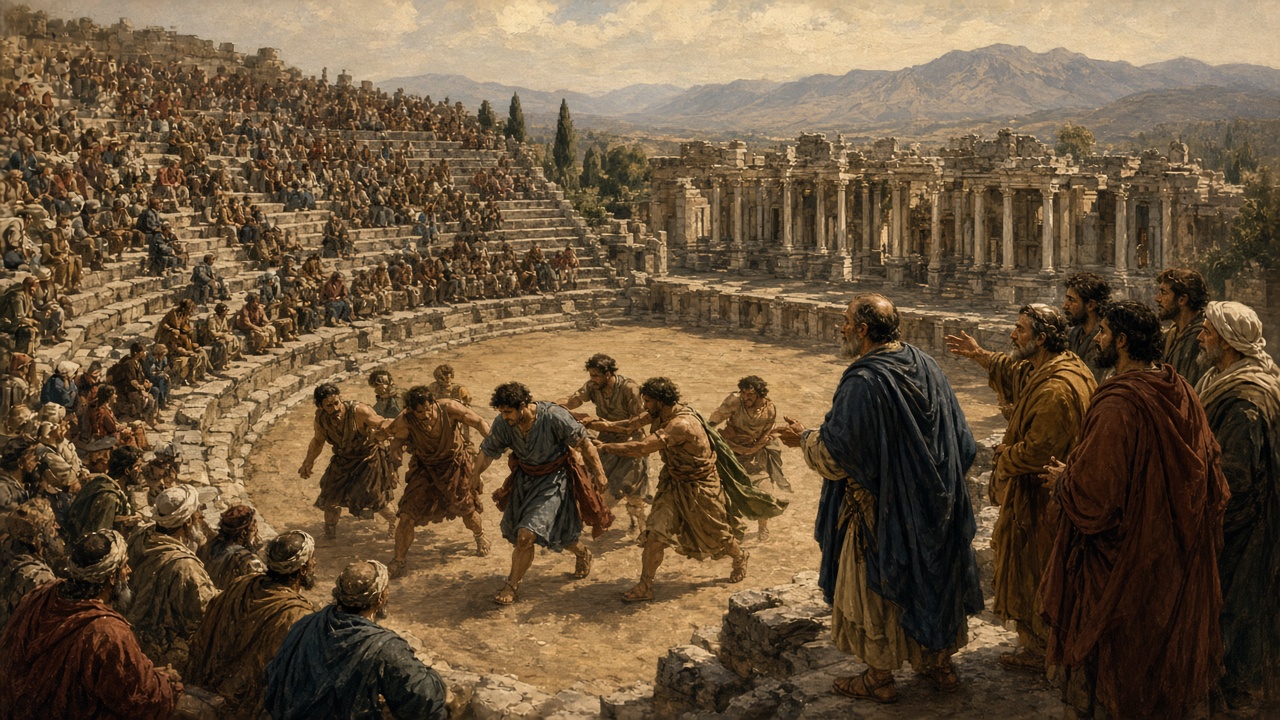
- The crowd rushed into the theatre of Ephesus, which Easton's Bible Dictionary (1897) describes as the largest in the world, open to the sky and able to hold 50,000 spectators. Friends of Paul among the chiefs of Asia, wealthy citizens elected each year to preside over the games and religious festivals of their cities, begged him not to go in. The city clerk then reminded the assembly that Ephesus was guardian of the temple of the great Artemis and of her image, said to have fallen from heaven.Sources: Ephesus · Asia · the Bible text itself
Notes written with AI assistance from open sources (Theographic Bible Metadata, CC BY-SA 4.0; Easton’s Bible Dictionary, public domain) and reviewed before publishing.
Places in this chapter
- Corinth · 37.906, 22.879 · verse 1
- Ephesus · 37.939, 27.341 · verses 1, 17, 23, 26, 35
- Asia · 38.400, 28.300 · verses 10, 22, 26, 27, 31
- Achaia · 38.720, 22.540 · verse 21
- Jerusalem · 31.777, 35.234 · verse 21
- Macedonia · 41.600, 22.540 · verses 21, 22, 29
- Rome · 41.892, 12.485 · verses 21, 40
Only places identified with high confidence are shown (90% or more according to the scholarly sources compiled by OpenBible). Period map: DARE (Digital Atlas of the Roman Empire), CC BY 4.0; modern map: © OpenStreetMap contributors; places: OpenBible.info (CC BY 4.0).
Credits and license for this translation
Yi Antiw Bible / Yi Ac'aj Testament
Bible in Aguacateco (GT:agu:Aguacateco)
copyright © 2011 Wycliffe Bible Translators, Inc.
Language: Aguacateco
Translation by: Wycliffe Bible Translators, Inc.
Copyright Information
© 2011-02-18, Wycliffe Bible Translators, Inc. All rights reserved.
This translation text is made available to you under the
terms of the Creative Commons License: Attribution-Noncommercial-No Derivative Works.
( http://creativecommons.org/licenses/by-nc-nd/3.0/ )
In addition, you have permission to port the text to different file formats, as long as you
do not change any of the text or punctuation of the Bible.
You may share, copy, distribute, transmit, and extract portions
or quotations from this work, provided that you include the above copyright
information:
You must give Attribution to the work.
You do not sell this work for a profit.
You do not make any derivative works that change any of the actual words or punctuation of the Scriptures.
Permissions beyond the scope of this license may be
available if you contact
us with your request.
The Bible
in Aguacateco
© 2011-02-18, Wycliffe Bible Translators, Inc. All rights reserved.
This translation is made available to you under the terms of the
Creative Commons Attribution-Noncommercial-No Derivatives license 4.0.
You may share and redistribute this Bible translation or extracts from it in any format, provided that:
You include the above copyright and source information.
You do not sell this work for a profit.
You do not change any of the words or punctuation of the Scriptures.
Pictures included with Scriptures and other documents on this site are licensed just for use with those Scriptures and documents.
For other uses, please contact the respective copyright owners.
2014-04-21
Source: http://ebible.org/aguBl/ · eBible.org