Leviticus 10
Awajún [Aguaruna] · Tap a verse to see its cross-references.
About this book
About Leviticus
- Easton's Bible Dictionary (1897) presents Leviticus as the third book of the Pentateuch and as the third book of Moses. The name, used in the Vulgate following the LXX, reflects the book's chief concern: the Levitical service.Sources: Easton: Leviticus
- Easton states that every ordinance in the book was delivered within one month, the first month of the second year after the Exodus. His entry on Sinai, also called Horeb, says the Hebrews reached that mountain district in the third month after the Exodus and remained encamped for about a whole year, and that the whole of Leviticus records what occurred there.Sources: Easton: Leviticus · Mount Sinai
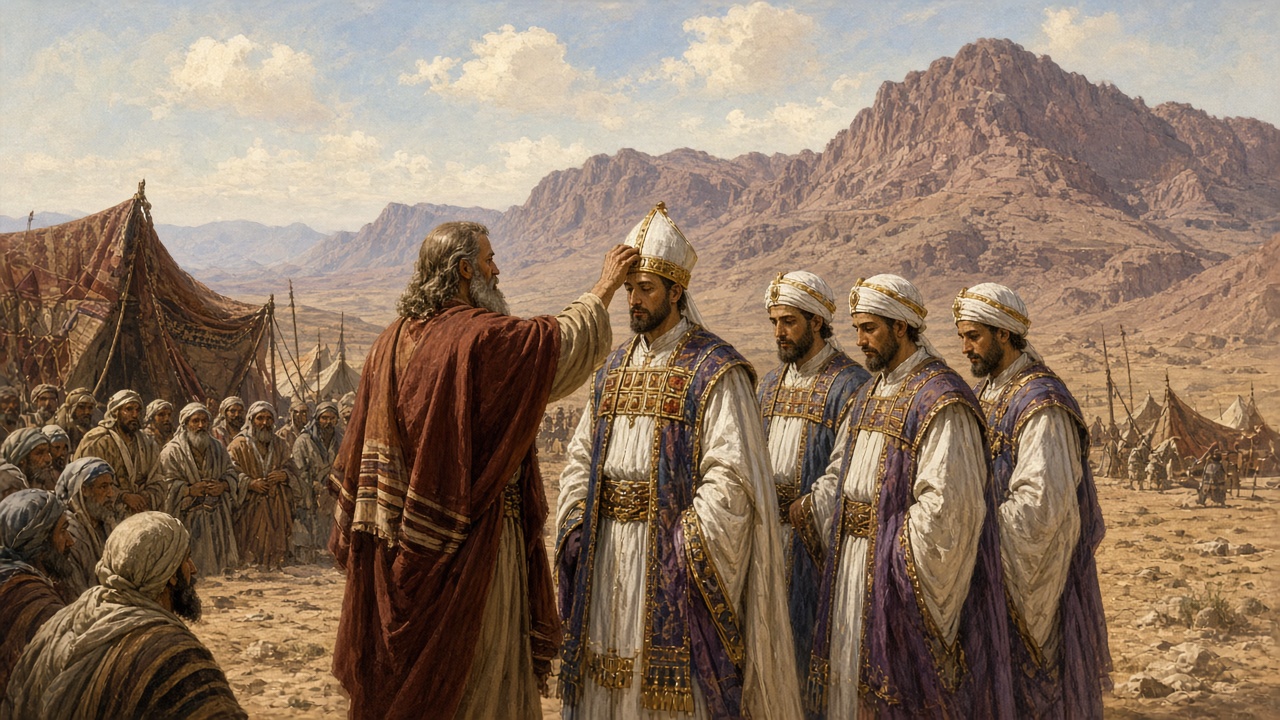
- Chapters 1–7 give laws for burnt offerings, meat offerings, and thank offerings, then for sin offerings and trespass offerings, and for the priests' duties in offering sacrifice. Chapters 8–10 recount the consecration of Aaron and his sons, Aaron's first offering for himself and the people, and the death of Nadab and Abihu, who were struck dead and buried outside the camp after offering strange, or common, fire not taken from the great brazen altar. Chapters 11–16 concern purity and the sacrifices and ordinances for putting impurity away.Sources: Easton: Leviticus · Nadab · Abihu
- Easton describes chapters 17–20 as laws marking the separation between Israel and other peoples. Further laws concern the priests' personal purity and their eating of holy things, offerings without blemish, and the due celebration of the great festivals in chapters 23 and 25. Promises and warnings about obedience follow, the book closes with a section on vows, and Easton notes that God is the direct speaker through almost the whole of it.Sources: Easton: Leviticus
- In the rites of chapter 16, one goat is associated with Azazel, which the Authorized Version renders scapegoat and the Revised Version leaves as Azazel. Easton reports that some Jewish interpreters take it as a place in the wilderness about twelve miles east of Jerusalem, while others take it as an evil spirit or even Satan, and he also notes a root meaning of separation.Sources: Azazel
Notes written with AI assistance from open sources (Theographic Bible Metadata, CC BY-SA 4.0; Easton’s Bible Dictionary, public domain) and reviewed before publishing.
Nadab Abiújai pegkegchaun takamsamu
1Aarógka uchiji Nadab Abiújai kugkuin incienso chimpia apetain jukiag, nuwi jii ekemakag incienson chimpiawag Tuke Pujuu dutikatajum tichamu aig, aak pegkejam Apajuíjai chichatai aakmakbaunum wayawag nuna apeawajui. 2Dutikiagtai chicham umiktin agagbau Apajuínu egketunmaya jii keeka jiinak apeam mai jakajui. 3Nunikagmatai Moisés Aarógkan chichajak:
“Juna pachis Tuke Pujuu chichaak:
“ ‘Wi pujamunum taidaunak
mina pegkegmajun iwaintukagtatjai.
Tuja ashí Israel aents aina nunak
mina imanjun iwaintukagtatjai’ tujamayi”, tiuwai.
Nuna Aarón antuk, chichatsuk wajasui.
4Nuna tusa Moisés Aarógka apaji yachi Usiel aajakua nuna uchiji aidaun: Misaelan Elzafánjai untsuka chichajak: “Atumi yatsum aidau aak pegkegmanum wayawag jinawaja nunú jiikjum, ii batsatag nunú ukumtikijum imau ejeentajum ukuktajum”, tiuwai.
5Tusa tima shimutuk jiiki jukiag Moisés tibaunak imatiksag dita batsatbaun ukumtikiag imau ejegan ukukiajui.
Did you know?
Unauthorized Fire and Priestly Conduct
- Nadab and Abihu, the eldest sons of Aaron, offered unauthorized fire contrary to God's command and died before the sanctuary. Moses then summoned their cousins Mishael and Elzaphan, the sons of Aaron's uncle Uzziel, to carry the bodies outside the camp while still dressed in their priestly tunics.Sources: the Bible text itself · Nadab · Abihu · Uzziel
- Moses commanded Aaron and his surviving sons, Eleazar and Ithamar, not to tear their garments, dishevel their hair, or leave the entrance of the Tent of Meeting to mourn, because the Lord's anointing oil was upon them.Sources: the Bible text itself · Eleazar · Ithamar
- God directly commanded Aaron that priests must refrain from drinking wine or fermented drink when entering the Tent of Meeting. This restriction ensured they remained clear-minded to distinguish between the sacred and the common, and between the clean and the unclean.Sources: the Bible text itself · Aaron
Notes written with AI assistance from open sources (Theographic Bible Metadata, CC BY-SA 4.0; Easton’s Bible Dictionary, public domain) and reviewed before publishing.
Credits and license for this translation
Awajún [Aguaruna]
Aguaruna: Awajún [Aguaruna] (Bible)
copyright © 2020 Wycliffe Bible Translators, Inc.
Language: Aguaruna
Translation by: Wycliffe Bible Translators
Contributor: Wycliffe Bible Translators, Inc.
Aguaruna
agr
Peru
Copyright Information
© 2008, Wycliffe Bible Translators, Inc. All rights reserved.
This translation text is made available to you under the
terms of the Creative Commons License: Attribution-Noncommercial-No Derivative Works.
( http://creativecommons.org/licenses/by-nc-nd/3.0/ )
In addition, you have permission to port the text to different file formats, as long as you
do not change any of the text or punctuation of the Bible.
You may share, copy, distribute, transmit, and extract portions
or quotations from this work, provided that you include the above copyright
information:
You must give Attribution to the work.
You do not sell this work for a profit.
You do not make any derivative works that change any of the actual words or punctuation of the Scriptures.
Permissions beyond the scope of this license may be
available if you contact
us with your request.
The New Testament
in Aguaruna
This translation is made available to you under the terms of the
Creative Commons Attribution-Noncommercial-No Derivatives license 4.0.
You may share and redistribute this Bible translation or extracts from it in any format, provided that:
You include the above copyright and source information.
You do not sell this work for a profit.
You do not change any of the words or punctuation of the Scriptures.
Pictures included with Scriptures and other documents on this site are licensed just for use with those Scriptures and documents.
For other uses, please contact the respective copyright owners.
2025-04-26
Source: http://ebible.org/agr/ · eBible.org