Judges 2
Awajún [Aguaruna] · Tap a verse to see its cross-references.

About this book
About Judges
- The book is called Judges because it contains the history of Israel's deliverance and government by the men who bore that title. Easton's Bible Dictionary (1897) sets their story in repeated times of servitude under neighboring peoples and of deliverance by the judges, and it states that the chronology of the whole period is uncertain.Sources: Easton: Judges, Book of
- Easton's Bible Dictionary (1897) holds that the author was most probably Samuel, and that the book was probably composed during Saul's reign or at the very beginning of David's reign. Easton notes that the words in Judges 18:30–31 imply a date after the Philistines took the ark and after it was set up at Nob, whereas in David's reign the ark was at Gibeon.Sources: Easton: Judges, Book of
- As Easton outlines it, the book has an introduction (1–3:6) linking it with the narrative in Joshua, a history of thirteen judges (3:7–16:31) in four periods, and an appendix (chapters 17–21) with no formal connection to what goes before. If Eli and Samuel are included, Easton counts fifteen judges.Sources: Easton: Judges, Book of
- Easton's outline presents the setting as a succession of servitudes: under Chushan-rishathaim of Mesopotamia, under Eglon of Moab, under Jabin of Hazor in Canaan, under Midian with Amalek and the children of the east, under the Ammonites together with the Philistines, and again under the Philistines. Gideon, also called Jerubbaal, begins what Easton calls the second period; Jephthah, brought from Tob by the elders of Gilead, judged Israel for six years after delivering the people from the Ammonites; Samson, son of Manoah of Zorah, was a Nazirite to God from birth.Sources: Easton: Judges, Book of · Gideon · Jephthah · Samson
- The appendix records the conquest of Laish by a portion of the tribe of Dan, and the near extinction of Benjamin at the hands of the other tribes because Benjamin had assisted the men of Gibeah. Easton places these events only a few years after Joshua's death and says they show the people's religious and moral degeneracy. Easton also notes that Ruth originally formed part of Judges and was separated from it about A.D. 450, then placed in the Hebrew scriptures immediately after the Song of Solomon.Sources: Easton: Judges, Book of · Gibeah
Notes written with AI assistance from open sources (Theographic Bible Metadata, CC BY-SA 4.0; Easton’s Bible Dictionary, public domain) and reviewed before publishing.
Apajuí ángel tumain Boquim nugkanum Israel aents aidaun wantintukbau
1Apajuí ángel tumain Guilgalnumia juwaki Boquimnum weuwai. Nunik jegaa Israel aents aidaun chichajak:
“Atumnak Egipto nugkanum batsatutigmin wi jiigmaijime. Dutikan juju nugka juna atumi muunjum aidaun anagkuakun, atumi uchijum wegantu aidaun susatnaitjai, tiuwaitag nuwi itajime. Ditan chichajuinakun: ‘Wi atumjai chichaman umikag nunak tuké umiktinaitjai’, tiuwaitjai.
2“ ‘Tuja untsu atum aidautigmek juju nugkanmaya aents aina nujaig makichkish chichamak umikaigpa. Ayatak dita apajuímtaiji dakumkamu aina nunú tsaigka utsankatajum’, tiuwaitjime. Tujash atumek duka umigtukchauwaitjume. ¡Yamaikish juju umikugmek, aniau asajum umigtukchau ainagme! 3Nuadui yamai tajime: ‘Au aents aidau atumjai batsata nunak jiignuk utsagchattajai. Nuadui dita apajuímtai aidaujai atumin tsanupajagtatui’ ”, tiuwai.
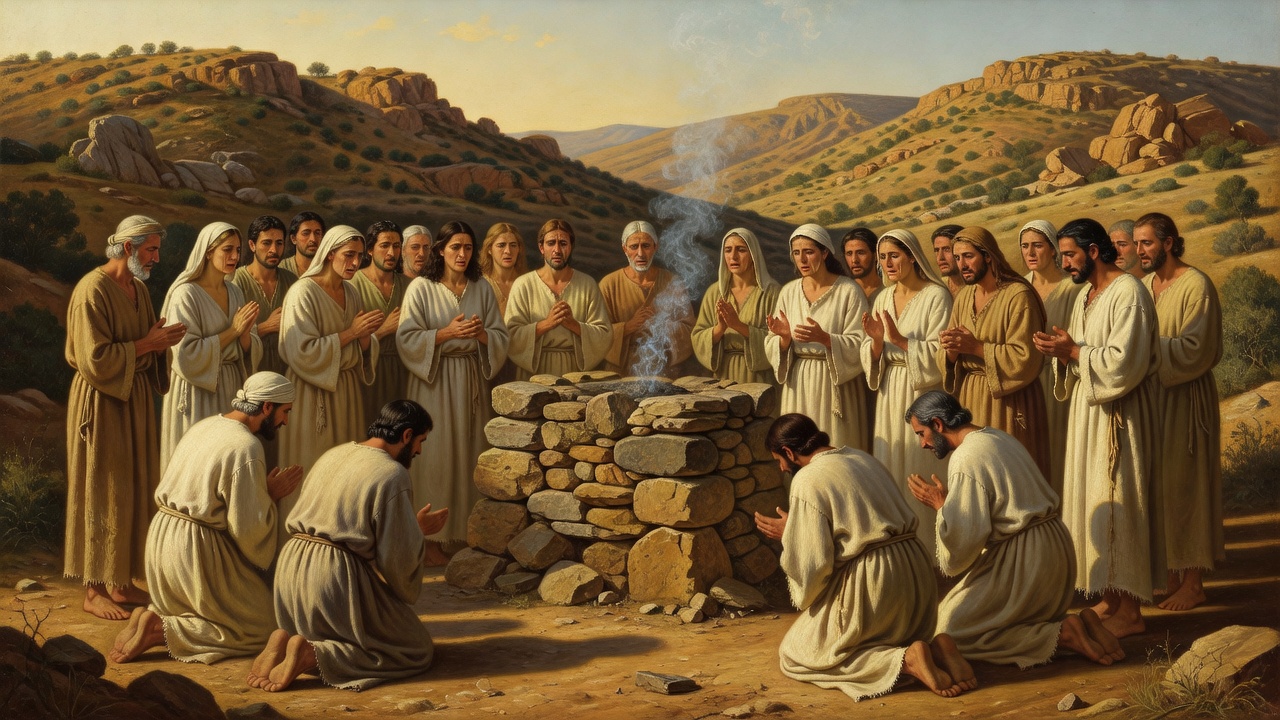
4Tusa nunú Apajuí ángel tumain chichaka inagnakmatai, ashí Israel aents aidauk shiig senchi buutuidau. 5Nuadui nunú nugka daajin Boquim adaikau ainawai. Tuja nuwi kuntinun maawag apeenak Tuke Pujuun emematiajui.
Josué jakamu
6Nuna Josué tusa inagnakmatai, Israel aents aidau maki makichik ditá nugken waketjajui. 7Tuja Josué pujusmataig Israel aents aidauk ima Tuke Pujuunak umijujaku ainawai. Nuigtushkam Israel aentsu apuji múun aidau Tuke Pujuu ditan yayaak kuashat dutikauwa nuna wainajaku aidau batsamsamtaishkam, ima Apajuínak umijujaku ainawai.
8Tuja Josuék ciento diez mijan ejeyi pujus jakauwai. 9Nunik jakamtai, muja Gaash tutainum, Efraígka nugken niina nugke Timnat-Sérah tutai awa, nuwi ukusajui. 10Tuja Josuéjai betek batsamajaku aina dushakam múun waigkag jinawajui. Nunú jinawaju ai batsamas akiinkau aidauk Tuke Pujuunak dekajakchau ainawai. Tuja Apajuí ditan ayamjak wainchatai aidaun kuashat iwainajua nunakesh dekachaju ainawai.
Israel aents aidau Apajuí ememattan idaisagbau
11Israel aents aidaun uchiji aidauk Tuke Pujuu diismak shiig pegkegchaun takajaku ainawai. Nuniau asag wainka apajuímtai Baal aajakua nuna emematujaku ainawai. 12Nuninak ditá muunji aidau Egipto nugkanum batsatun Tuke Pujuu jiijua nunak kajimatki idaisajui. Nuninak nuwiya aentsu apajuímtai aidaun emematuidau. Nuniagtai Tuke Pujuu ditan senchi kajegkauwai. 13Aatus Israel aents aidauk Baal, Astartéjai dakumka najanamu aidaun emematuinak Apajuí ememattanak kajimatki idaisajui.
14Nuadui Tuke Pujuu Israel aents aidaun kajejuk dita wajiji aidaun shiwag aidau kasajug yajutkatnume tusa idaisauwai. Nuigtushkam Israel aents aidau batsatbaunum nuna yantamen ditá shiwaaji aidau batsata nunú jetekag depetuk amuktinme tusa idaisauwai. Nuadui Israel aents aidauk ayamjumamainchau wajasui. 15Tuja maaniawagtatus shimiagtaish, Tuke Pujuu ditanak yaijakchauwai. Dutika yayachbau asag maaninakush depetmajakchau ainawai, Apajuí tibaunak imatiksag.
Tuke Pujuu ditanak maaninakush kakaag iikmamainchau awajsauwai, 16nuna dutikakush Israel aents aidaun kasajuidaun ayamjuktinun apu chichama epegkin aidaun adaitujui. 17Tujash Israel aents aidauk apu chichama epegkin aidau adaijamunash umigkachaju ainawai. Nunidau asag Apajuínak umigtsuk tikich wainka apajuímtai aidaun emematujaku ainawai. Untsu ditá muunji aajaku aina duka Apajuí chichamen umijujaku ainawai. Tujash ditak Tuke Pujuu chichame umigtanak dakitug idaisau ainawai.
18Tuke Pujuu apu chichama epegkin atinun adaikag tuké yaijakui. Nunú apu aidau batsamsamtaig, Israel aents aidaunak ditá shiwaaji waitkagtaish Tuke Pujuu ayamjujakui, wagki waituinak chichainamun antuju asa. 19Untsu nunú apu adaikamu aidau jakamtaig, ataktushkam nunisag Apajuí ememattan kajimatkiag wainka apajuímtai aidaun emematujaku ainawai. Ditak yaunchuk ditá apachji aajaku aina nuna nagkaesau pegkegchau aajaku ainawai. Nunidau asag aents antakchaujai betek ima pegkegchaunak takajaku ainawai. 20Nuadui Tuke Pujuu ditan kajejuk chichajak:
“Juju aents aina juka wi yaunchuk ditá apachji aidaujai chichaman umikuitag nunak uminatsui. Nunidau asag minak umigtuinatsui. 21Nuadui juju nugkanmaya aents aidaun Josué jiija utsag emau nii jak ukukbau batsata nunak wishakam jiignuk utsagchattajai”, tiuwai. 22Nuna tiuwa nunak: “Juna antukajash yaunchuk ditá muunji aidau Tuke Pujuun emematujaku aina nunisag ditash Tuke Pujuun emematchajaintash tusa dekapsatatus”, tiuwai.
23Nuna tau asa nuwiya aents aidaun Josué eke jiigchauwa nunak Tuke Pujuushkam jiigchauwai, ayatak idaisauwai batsamsatnume tusa.
Did you know?
Israel's Cycle of Disobedience and the Judges
- The name Bochim means "weepers." The site, likely situated between Gilgal and Shiloh, received this name after the Israelites wept aloud when the angel of the Lord rebuked them for making compromises with the inhabitants of the land.Sources: Bochim · the Bible text itself
- Joshua was buried at Timnath-heres, which means "portion of the sun," located north of the hill of Gaash in the hill country of Ephraim. He had led the Israelites following the death of Moses and died at the age of 110.Sources: Timnath-heres · Gaash · Joshua · the Bible text itself
- The term Baalim is the plural form referring to local manifestations of Baal, the principal male deity of the Phoenicians. Judges 2 establishes the book's recurring cycle: Israel abandons the Lord for regional gods, suffers under enemies, and is delivered when God raises up a judge.Sources: Baal · the Bible text itself
Notes written with AI assistance from open sources (Theographic Bible Metadata, CC BY-SA 4.0; Easton’s Bible Dictionary, public domain) and reviewed before publishing.
Places in this chapter
Only places identified with high confidence are shown (90% or more according to the scholarly sources compiled by OpenBible). Period map: DARE (Digital Atlas of the Roman Empire), CC BY 4.0; modern map: © OpenStreetMap contributors; places: OpenBible.info (CC BY 4.0).
Credits and license for this translation
Awajún [Aguaruna]
Aguaruna: Awajún [Aguaruna] (Bible)
copyright © 2020 Wycliffe Bible Translators, Inc.
Language: Aguaruna
Translation by: Wycliffe Bible Translators
Contributor: Wycliffe Bible Translators, Inc.
Aguaruna
agr
Peru
Copyright Information
© 2008, Wycliffe Bible Translators, Inc. All rights reserved.
This translation text is made available to you under the
terms of the Creative Commons License: Attribution-Noncommercial-No Derivative Works.
( http://creativecommons.org/licenses/by-nc-nd/3.0/ )
In addition, you have permission to port the text to different file formats, as long as you
do not change any of the text or punctuation of the Bible.
You may share, copy, distribute, transmit, and extract portions
or quotations from this work, provided that you include the above copyright
information:
You must give Attribution to the work.
You do not sell this work for a profit.
You do not make any derivative works that change any of the actual words or punctuation of the Scriptures.
Permissions beyond the scope of this license may be
available if you contact
us with your request.
The New Testament
in Aguaruna
This translation is made available to you under the terms of the
Creative Commons Attribution-Noncommercial-No Derivatives license 4.0.
You may share and redistribute this Bible translation or extracts from it in any format, provided that:
You include the above copyright and source information.
You do not sell this work for a profit.
You do not change any of the words or punctuation of the Scriptures.
Pictures included with Scriptures and other documents on this site are licensed just for use with those Scriptures and documents.
For other uses, please contact the respective copyright owners.
2025-04-26
Source: http://ebible.org/agr/ · eBible.org