1 Kings 1
Awajún [Aguaruna] · Tap a verse to see its cross-references.

About this book
About 1 Kings
- Easton's Bible Dictionary (1897) treats the authorship of the books of Kings as uncertain. A tradition that Jeremiah wrote them is, in Easton's view, supported by passages almost identical with parts of Jeremiah and by events Jeremiah knew personally, yet Easton thinks it more probable that Ezra, after the Captivity, compiled the books from earlier documents, perhaps written by David, Solomon, Nathan, Gad, and Iddo. Easton dates the composition between 561 B.C., when Jehoiachin was released from captivity by Evil-merodach, and 538 B.C., the decree of Cyrus.Sources: Easton: Kings, The Books of
- Easton says these books contain the annals of the kingdom from Solomon's accession until Nebuchadnezzar and the Babylonians subdued it, a period he estimates at about 453 years. 1 Kings opens while David is dying: Adonijah, his fourth son, who had become heir-apparent to the throne after the deaths of Amnon and Absalom, has himself proclaimed king, but Nathan and Bathsheba persuade David to enthrone Solomon at once. Solomon, David's son by Bathsheba, whose history is recorded in 1 Kings 1-11, came to the throne, Easton suggests, at about sixteen or eighteen.Sources: Easton: Kings, The Books of · Adonijah · Solomon
- In the Hebrew Scriptures the two books of Kings originally formed one book; the Septuagint first divided them and, with the Vulgate, numbers them as the third and fourth books of Kings, the books of Samuel being the first and second. Easton notes that Chronicles gives greater prominence to the priestly or Levitical office, while Kings gives greater prominence to the royal office, and that in the threefold division of the Scriptures by the Jews these books are ranked among the Prophets. The narrative points to earlier sources: the book of the acts of Solomon and the chronicles of the kings of Judah and of Israel.Sources: Easton: Kings, The Books of
- After Solomon's death the ten tribes revolted and invited Jeroboam, son of Nebat, to be their king; Easton calls him the first king of those tribes and dates his reign from 976 to 945 B.C. He had fled to Egypt under the protection of Shishak I, and later moved his residence from Shechem, his first capital, to Tirzah, which remained the chief residence of Israel's kings until Omri bought the hill of Shomeron from Shemer for two talents of silver and built Samaria. The later narrative includes Ahab, Omri's son and the seventh king of Israel, whose wife was Jezebel: to the calf worship introduced by Jeroboam he added the worship of Baal, and he was severely admonished by the prophet Elijah.Sources: Jeroboam · Tirzah · Samaria · Ahab
Notes written with AI assistance from open sources (Theographic Bible Metadata, CC BY-SA 4.0; Easton’s Bible Dictionary, public domain) and reviewed before publishing.
David takas inagnakmatai nuwi nagkama Salomón takasbau
Abisag Davitan kuitamkamu
1Apu Davitak muumpakiu asa senchi tsetsemak waitiau asamtai, jáanchin kuashat yajutuk asekedau. Imatikamash kukukutuk dekapeachu. 2Nunitai niina kuitamin aidau chichajuinak:
“Apuh, dekas amina kuitamjamkatin makichik nuwa muntsujut egaka itaami. Nunú aminí ayaumas kanakui, kukukut kanagminum”, tuidau.
3Aatus tusag Israel aents aidau nugkenian nuwa shigmauchin etegkatag tusa ashí egakajui. Dutikawag yaakat Sunemnum nuwa Abisag daagtinun wainkajui. Dutikawag nuna jukiag apu Davitan ejetuawajui. 4Abisagkak muntsujut shigmauch aajakui. Nunú apu Davitan kuitamajakui. Tujash apu Davitak nunú nuwauchijaig makichkish tsanijinachui.
Adonías apu atajai tibau
5Nunú tsawantin Davita uchiji Adonías, Haguit aajakua nuwi akiamu, wi Israel aents aidaun apuji atajai tusa, carro maaniaku jutai aidaun, caballo maanitai aidaun, nuigtu cincuenta aents niina kuitamkatin aidaun aatus etegkeg ijumjauwai. 6Adoníasnak Davitak tsakat asamtaigkish, pegkegchau takamsaipa tusag makichkish chichagkachui. Nuigtushkam Adoníasak shigmauch yantsaptin, niina yachi Absalógka awaan akiinau aajakui. 7Tuja Seruiá uchiji Joab aajakua nujai, nuigtu sacerdote Abiatar aatus Adonías chichaman umikui. Nuadui dita aidau yaijaku ainawai. 8Tujash sacerdote Sadokkesh, Benaías Joiadá uchijigkesh, nuniachkush profeta Natágkesh, tuja Davitan kajittsa anentai Simí aajakua dukesh Adoníasnak yaigchajui. Tuja Davita suntaji yacha aina dukesh Adoníasnak yaigchajui.
9Makichik tsawantai Adonías chichaak:
“Jiistamku yuwatin uwig aidau, baka aidau, toro tsakat duwejam aidau kajegjum inagka umiktajum”, tusa inamjauwai. Nunak Roguel nugkanum yumi pukuni jiinbaunum ijus, Zohéletnum kaya múun pujujakua nuwi dutikauwai. Dutika umika apu Davita uchiji niina yachi aidaun, Judá wegantu aidaun, tuja apu Davita takajin aidaun aatus ashí ipauwai. 10Untsu profeta Natágnak, Benaíasnak, Davitan maawainum tusa, suntag kuitamajaku aina nujaig ipachui. Tuja niina yachi Salomógnakesh ipachui. 11Nunikmatai Natán Salomógka dukuji Betsabén chichajak:
“Apu David dekatsaig Adonías apu wajasa duka ¿amek dekatsmek? 12Nunú dekachkumek juwi taata, wi amesh amina uchijum Salomógjaish wajuk ayamjumaktatme nuna ujaktagme. 13Nijah, apu David jegajua chichagkum:
“Apuh, ame umiktinjum mina chichagtakum:
“ ‘Wi jakamtaig, mina uchig Salomón apu wajas inamjattawai’ tusa tujutmayum nuniaish ¿wagka Adoníasash apush wajase? tita. 14Tusa niijai chichamin wi wayakun, nunak dekas tawai tusan titajai”, tiuwai.
15Tusa tima Betsabé apu Davidjai chichastatus weuwai. Tuja apu Davitak shiig muumpakiu asamtai, Sunemnumia nuwa Abisag niina kuitamak pujau. 16Nuniai Betsabé apu pujamunum jeganta niina eme anentus tsuntsuma nijayin nugka antig pujusui. Nunitai apu David iniak:
“¿Waji atsumame?”, tau. 17Tama nii ayaak:
“Apujuh, amina Apajuíjum Tuke Pujuu tutaya nunú adaisam chichagtakum: ‘Amina uchijum Salomón apu wajas inamjattawai’ tujutmayume. 18Nunú umintsaig Adonías apu wajase, tujash duka amek eke dekatsme. 19Nunik apu wajasu asa, jiistamku yuwami tusa toro múun aidaun, toro tsakat aidaun, nuigtu kuashat uwig maajum inagkatajum tusa niina inake aidaun inaje. Dutikak amina tikich uchijum aidaun ipae. Tuja nuigtushkam sacerdote Abiataran, nuigtu Joab suntag aidaun apujiya nuna aatus ipae. Tujash amina uchijum Salomógnak ipache. 20Nuadui ashí Israel aents aidau apu Davitash yanak dekas apu atinnash etegkeati tusa dekatatus yamai dakamainawai. 21Tuja nunú ame etsegkachaminig, ame jakamin minak mina uchig Salomógjai Adonías mantuattawai”, tiuwai.
22Tusa aujak pujai, profeta Natán jegauwai. 23Nunikmatai Davita inake aidau Natán tae tusa ujakajui. Tusa ujakam wayati tima, Natán apu pujamunum wayauwai. Nunik niina eme anentus tsuntsuma nijayin nugka antig pujusui. Natán wayamtai, Betsabék jiinki weuwai. 24Nunikmatai Natán Davitan iniak:
“¿Apujuh, ame jakamin Adonías apu ati tusamesh ameka timaum? 25Tichamaitkush ¿wagka Adoníasash Sojelet jegaash, toro múun aidaunash, tsakat aidaujaish, nuigtu uwig aidaujai maatajum tusa inamjash amina uchijum aidaun, suntaja apuji aidaun, nuigtu sacerdote Abiataran aatus ipash ijumag nuna ditajai yuwak, umutain umuinak batsamas untsumainakush:
“ ‘¡Adoníasai iina apujig!’ wajainawa? 26Nuninakush minak, tuja sacerdote Sadoknak, Joiadá uchiji Benaíasnashkam ipapachaje. Tuja amina uchijum Salomógnakesh ipachaje. 27¿Tuja ame jakaminish, yaki apush ati dusha ameka mina ujattsuk, Adonías apu adaikatajum tusam inamjamum?” tiuwai.
Salomón apu atatui tusa David etsegkamu
28Tusa timatai apu David Betsabé untsuktajum tiuwai. Timatai untsukam apu Davitai jeganta wajasui. 29Nunikmatai apu David niina chichajak:
“Tuke Pujuu wi waitiamujun diigtus agkanmitkajuauwa nuna adaisan tajame: 30Tuke Pujuu Apajuí jutii Israel aents aidauti emematin ainag nuna adaisan, wi yaunchuk amina timaijam nunak yamai betek umiktatjai:
“¡Wi jakamtaig, amina uchijum Salomón apu wajas inamjattawai!” tiuwai.
31Tusa tima Betsabé tsuntsuma nijayin nugka antig pujus senchi jiika chichaak:
“¡Mina apujuh Davita, kuashat tsawan iwaku pujusam inamjatin ata tajame!” tiuwai. 32Tusa tima apu David sacerdote Sadokan, profeta Natágkan, Benaías Joiadá uchijin aatus ujaka utitajum tusa inamjauwai. Tusa timatai ujakam kampatuma duka betek kaunawajui. 33Nunikagmatai apu ditan chichajak:
“Mina atunitaig apu aina nunú ujaktajum. Dutikajum atumjai ijunjajum mina uchig Salomón burro mina entsamtaijua nuwi ekeni jukijum, Guihón ematajum. 34Nuwi ejegajum aceiteyai buuknum nijakjum, Israel aents aidaun apuji ematajum. Dutikajum yamajam apu ekenji tusajum makichik aents uwija kachuji umpuagta titajum. Nuna umpuakui senchi untsumkajum:
“ ‘¡Salomógkah, yamaik ametme iina apujig, kuashat mijan inamjatin ata!’ titatjume. 35Dutikajum atum kuitamkajum Jerusalén itaatajum. Dutikam nii mina pujusa inamtaijui waya ekemsati. Nunik nuwi pujus inamjati, wagki wi niinak Israel aents aidaun, Judá wegantu aidaujai apuji ati tusan tijai”, tiuwai.
36Tusa tutai Joiadá uchiji Benaías apu Davitan ayaak:
“¡Ame tame duke ati! ¡Tuja ame tame duka Tuke Pujuu amina Apajuíjum tujabau tau asamin imanisag uminkati! 37Tuja nuigtushkam Tuke Pujuu amina yaimpakua dutiksag Salomógnashkam yaigti. Dutikamu asa ame apu wajasa inamjauwaitam, aan nagkaemas niina takatjig pegkeg ati”, tiuwai.
38Tusa timatai sacerdote Sadoc, profeta Natán, Benaías Joiadá uchiji, quereteo aents aidau, nuigtu peleteo aents aidau aatus ijunag apu Davita burrojin Salomógkan ekeniag juki Guihón emajui. 39Dutika ejegawagmatai, sacerdote Sadoc aak pegkejam Apajuíjai chichatai aakmakbaunum chicham umiktin agagbau egkeamu arca aajakua nuwiyan uwija kachujin aceitejai jukiuwai dutika nunú aceiteyai Salomógka buuknum nijak apu emauwai. Dutikamtai uwija kachuji jukimun umpuajajui. Nuna antukag ashí aents aidau untsumainak:
“¡Salomógka, ametme iina apujig, kuashat mijan inamjatin ata!” wajaidau. 40Tusa imatuinak Salomógka saetus shimak shiig aneasag pigkuinak umpui umpuinakua shimuidau. Tuja shiig aneenak senchi untsumaidau asagmatai, nugkak jimaitukes puunatai tumain wajau.
41Tuja Adoníasak niina ipake aidaujai yujumkan yuwawag inagnainai, pampaidaun antukajui. Tuja kachu shinaun Joab antuk chichaak:
“¿Wagka yaaktanmash imanikash pampainawa?” tau. 42Tusa chichá wajaig, Jonatán Abiatara uchiji aajakua nunú jegauwai. Nunikmatai Adonías chichajak:
“Wayata amek eme anentsa diitaiyaitme, chicham pegkeg etsegkatasa taachumek”, tiuwai. 43Tama Jonatán Adoníasan ayaak:
“Atsa, chichamak pegkegchauwai. Iina apuji David Salomógkan apu adaikae. 44Dutika sacerdote Sadokan, profeta Natágkan, Joiadá uchiji Benaíasan, tuja quereteo aents aidaun, peleteo aents aidaujai Salomón uyuntsatajum tusa tine. Tusa tima apu Davita burrojin ekeniag emaje. 45Dutikawag entsa pukuni jiinu Guihón tutaya nuwi ejegawag sacerdote Sadoc profeta Natágjai aceiteyai buuknum nijakag apu emaje. Dutikawag shiig aneasag waketjaje. Nuadui yaaktanum aents pampaina nunak imatuinawai. Nunú imatuinamu atumek antukugme. 46Tuja nuigtushkam Salomógkak apu pujusa inamtaiya nuwi waya ekemsae. 47Nunikmatai apu Davitan atuwe suntaja apuji aidau shiig anentuinak Davitan nagkaesau Apajuí yaigti, dutikam shiig takasti tusa tiagtatus shimutkaje. Tuja Davidchakam Apajuín emematak niina pegajinig tsuntsuma tepese. 48Nunik tepes chichaak:
“ ‘Israel aents aidaun ememattai Apajuí Tuke Pujuu tutaya duke ememattai ati, wagki nii tibaunak betek umiak, yamai mina uchig aina nuwiyan makichik apu awajsae. Dutika mina pujusa inamtaijua nuwi pujus inamjati tusa apusa nuadui. Tuja minashkam eke jatsuk wainkati tujutiu asamtai wainkajai’, tusa Apajuín aujak timae”, tiuwai.
49Nuna antukag Adonías ipaamu aidauk sapigmainak kujaidau. Nuninak maki makichik shiig wamak jiinag shiyakag megkaejajui. 50Nunikagmatai Adoníaschakam Salomón mantuawai tusa ishamak aak pegkejam Apajuíjai chichatai aakmakbaunum wayauwai. Nunik nuwi kuntin maa patai apetai altar aajakua nuna kachujin achimak pujusui.
51Nunikmatai makichik aents Salomógkan ujaktatus wejiuwai. Nunik jegaa ujaak:
“Adonías amina ishamjamak aak pegkegmanum waya altarnum achimak pujus chichaak:
“ ‘Apu Salomón mina mantuashtinaitkug, Apajuín adayas dekas mashtatjai tusa tujutti’ tujamui”, tiuwai. 52Tusa ujakam Salomón chichaak:
“Niish aents shiig anentaimkauwaitkug, niina buukeniag makichik intashigkesh iyagchattawai. Untsu niina pegkegchauji dekagnamtaig, tuke mantamnattawai”, tiuwai. 53Tusa tamawaik suntaja apuji aidaun jiiktajum tusa ishitkauwai.
Tusa tima shimutkag jiiki juki ejegawajui. Dutika ejegam Adonías apu Salomógkan eme anentus niina emtin tsuntsuma wajasui. Nunikmatai Salomón, ¡wetá jemin! tusa awemauwai.
Did you know?
The Succession to David's Throne
- As David's oldest surviving son after the deaths of Amnon and Absalom, Adonijah claimed the royal succession, backed by the military commander Joab and the high priest Abiathar. However, David chose his younger son Solomon, who was supported by the prophet Nathan, the priest Zadok, and the royal bodyguard under Benaiah.Sources: Adonijah · Solomon · the Bible text itself
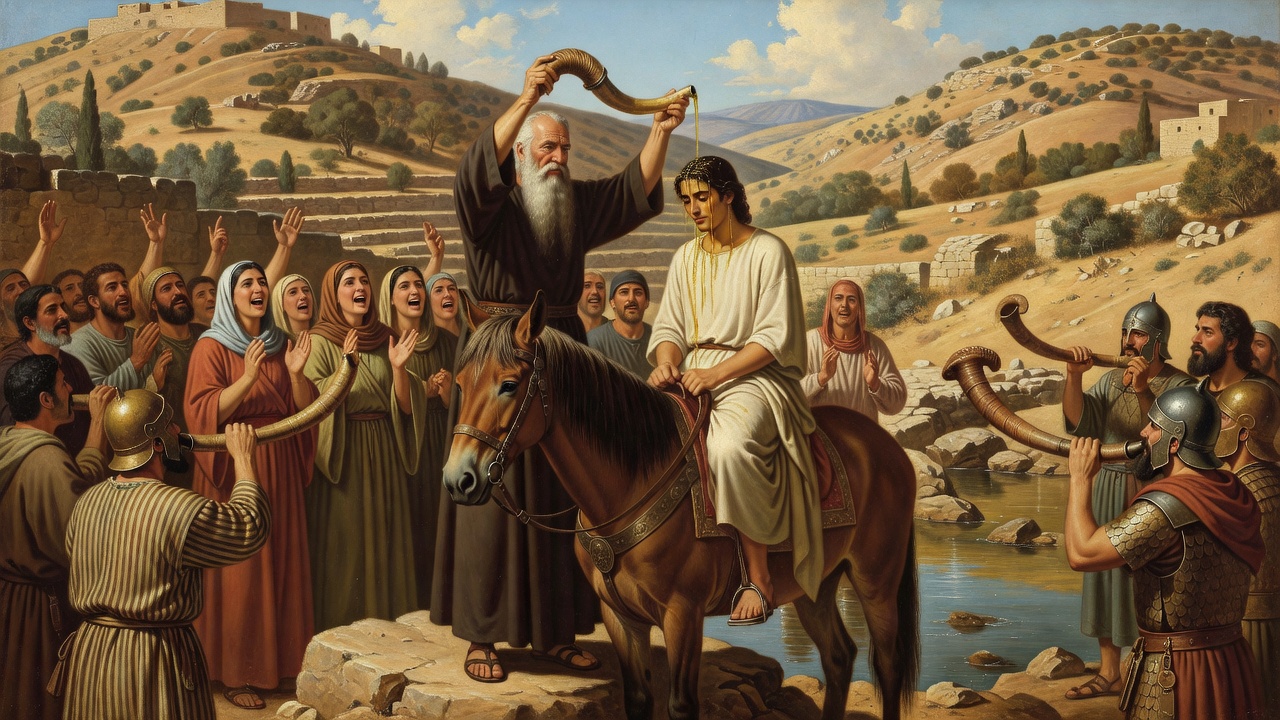
- Riding the king's own mule was a decisive public declaration of royal authority. By David's explicit instruction, Solomon was escorted down to the spring of Gihon, where Zadok anointed him king with oil taken from the tabernacle to the sound of ram's horns and popular celebration.Sources: Gihon · Zadok · the Bible text itself
- Upon hearing of Solomon's public coronation, Adonijah fled in terror and sought asylum by taking hold of the horns of the sacrificial altar. Solomon granted him conditional clemency, sparing his life so long as he proved himself a worthy man.Sources: Adonijah · the Bible text itself
Notes written with AI assistance from open sources (Theographic Bible Metadata, CC BY-SA 4.0; Easton’s Bible Dictionary, public domain) and reviewed before publishing.
Places in this chapter
- Shunem · Today: Sulam · 32.606, 35.334 · verse 3
- Serpent’s Stone · Today: within 100 m of Bir Ayub · 31.767, 35.236 · verse 9
- Gihon · Today: Gihon Spring · 31.773, 35.236 · verses 33, 38, 44, 45
- Jerusalem · 31.777, 35.234 · verse 40
Only places identified with high confidence are shown (90% or more according to the scholarly sources compiled by OpenBible). Period map: DARE (Digital Atlas of the Roman Empire), CC BY 4.0; modern map: © OpenStreetMap contributors; places: OpenBible.info (CC BY 4.0).
Credits and license for this translation
Awajún [Aguaruna]
Aguaruna: Awajún [Aguaruna] (Bible)
copyright © 2020 Wycliffe Bible Translators, Inc.
Language: Aguaruna
Translation by: Wycliffe Bible Translators
Contributor: Wycliffe Bible Translators, Inc.
Aguaruna
agr
Peru
Copyright Information
© 2008, Wycliffe Bible Translators, Inc. All rights reserved.
This translation text is made available to you under the
terms of the Creative Commons License: Attribution-Noncommercial-No Derivative Works.
( http://creativecommons.org/licenses/by-nc-nd/3.0/ )
In addition, you have permission to port the text to different file formats, as long as you
do not change any of the text or punctuation of the Bible.
You may share, copy, distribute, transmit, and extract portions
or quotations from this work, provided that you include the above copyright
information:
You must give Attribution to the work.
You do not sell this work for a profit.
You do not make any derivative works that change any of the actual words or punctuation of the Scriptures.
Permissions beyond the scope of this license may be
available if you contact
us with your request.
The New Testament
in Aguaruna
This translation is made available to you under the terms of the
Creative Commons Attribution-Noncommercial-No Derivatives license 4.0.
You may share and redistribute this Bible translation or extracts from it in any format, provided that:
You include the above copyright and source information.
You do not sell this work for a profit.
You do not change any of the words or punctuation of the Scriptures.
Pictures included with Scriptures and other documents on this site are licensed just for use with those Scriptures and documents.
For other uses, please contact the respective copyright owners.
2025-04-26
Source: http://ebible.org/agr/ · eBible.org