Genesis 8
BAL CEHEC JE HAUN · Tap a verse to see its cross-references.
Wa sil ben hedon
1Qa Anut uqa Noaca dool cusca dool mananca wagna bileinnu dahig qee celel. Eunu uqa odocob fufu oso mahana hon. Odocob wa sil seleldon. 2Odocob wa ben cehec maha dunuhnadecca saonadecca eu calena cebec eu cufa qon. Odocob wa sao ohisdec nen eu gatidon. 3Wa mahana nijen eu cebitnana seleldon. Odocob deel 150 hedocob wa toni non. 4Deel 17na jagel eben naha gic lecisca docna wag eu Ararat aluh osona toni bilen. 5Odocob wa haun cebitnana seleldodon li jagel eben nahanahaca on. Odocob jagel eu uqana deel sanan mecna aluh agena igoc camasac mein.
6Odocob deel 40 hedocob Noa fufu cebec uqa muden eu huden. 7Odimei uqa alog oso u suldocob nuen. Nuimei qa qee ceseli hol. Uqa fululi cocobon li wa mahana cunug sidon. 8Oodonqa Noa uqa cuhudid oso umei suldocob nuen. Uqa wa mahana seleldonfo qeefo eu dugiannu suldon. 9Qa wa maha cunugna nijen. Eunu cuhudid eu cudun oso hewi bibili jaen mudecnu qee fimei uqa haun wagna ceseli hon. Odocob Noa eben maha gumu leceb uqana cuhudid u wag dunuh ehi li muden. 10Odocob Noa uqa deel eben naha gic lecisca haun wa seleldugiannu sumuden. Odocob uqa cuhudid wagnadec haun u suldon. 11Wesu memen cuhudid eu ceseli uqaca hon. Uqa cona na oso, ijan oliw, eu bagac cebac u qada qu ahon. Odocob Noa uqa wa wele hidon eu don. 12Odocob Noa uqa deel eben naha gic lecisca hedocob uqa cuhudid haun suldon qa cuhudid eu uqaca qee ceseli hol.
13Saen Noa uqana cabi gel 601na jagel sanan mec eu uqana deel sanan mecna wa mahana cunug hidu qee men. Odocob Noa uqa wag ohis jahuldoc eu qosocdon. Noa meciimei maha tatacdec eu galalec ninijen fen. 14Saen deel 27na jagel lecis docna maha galal bahic en.
15Odocob Anut Noa madon, 16“Wag culimeig caleiga. Hinaca hina melemenelca hina aidenca hina melemenel aidagailca caleiga. 17Ceteteh cunug mahana cebac coboginaca man fululecca doolca mamanig cunug mahana coboginaca age agena sihul eu mahana geh bahic fulusdoqagannu cedadecem hina gami maha gumu caleiga. Odimeig maha cunug ihoc loqagan,” don. 18Eunu Noa uqa maha gumu calen. Uqaca uqa melahulca uqa aidegca uqa melahul aidagailca age maha gumu calein. 19Dool cunug mamanig cunug man fululec cunug ceteteh cunug mahana cobogina eu cunug agena sihulnana qagocqagoc wag dunuhdec calein.
Noa uqa Tibud ihandon
20Odocob Noa uqa Tibud ihandugia bili meenna ihanec cabal oso gualen. Odimei uqa dool qagoc eundecca man fululec qagoc eundecca osahicosahic cedadimei ihanec cabal euna Tibud ihandudu bili manen. 21Odocob Tibud uqa dedeman eu tinca don. Eunu uqadodoc waugna maden, “Dana age melnadec agena qisol cisdoc eu gaid odi nijina. Eunu hibna ija dananu maha haun qee geldugaun. Ceteteh cunug mahana cobogina eu qila fadaladiga odiwe haun qee fadaladigaun. 22Mahana saen eu odi nijigian cehec saenca sab oc saenca duan saenca cam saenca san saenca wa saenca cahinegca witicca eu cunug qee qee meiaun,” en.
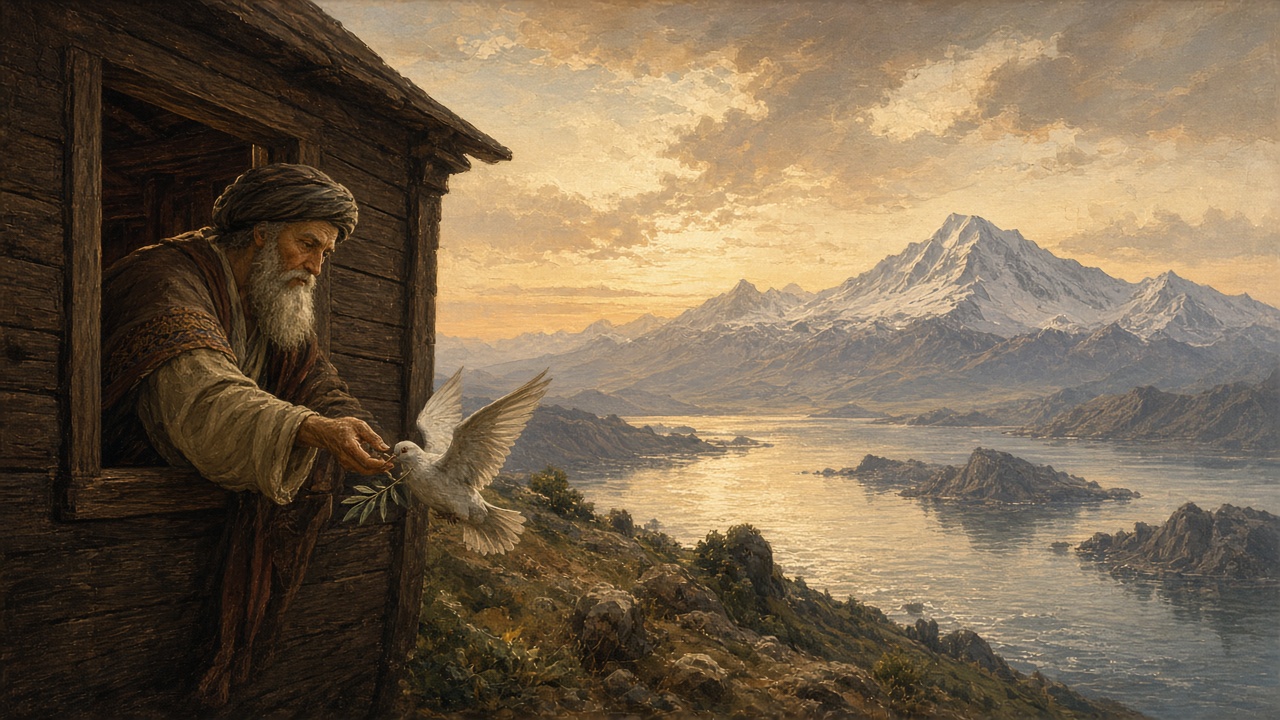
Did you know?
The Waters Recede
- The ark came to rest on the mountains of Ararat, a name meaning “sacred land” or “high land” for a country on whose mountains the ark settled after the flood. Easton's Bible Dictionary (1897) suggests those mountains were probably the Kurdish range of southern Armenia, though the name is also commonly applied to a high, almost inaccessible peak rising from the plain of the Araxes. In 2 Kings 19:37 and Isaiah 37:38 the Authorized Version renders the name “Armenia” and the Revised Version “land of Ararat,” while Jeremiah 51:27 uses it for central or southern Armenia.Sources: Ararat · the Bible text itself
- Noah’s Hebrew name means “rest,” and in this chapter the ark itself comes to rest as the waters go down. He was the son of Lamech and the grandson of Methuselah, and the father of Shem, Ham, and Japheth. Easton's Bible Dictionary describes him as the connecting link between the old world and the new, and as a second great progenitor of the human family.Sources: Noah · the Bible text itself
- Chronological notes place the Great Flood in 2347 BC, lasting one year; the subsiding of the waters in 2346 BC, over 220 days; and the leaving of the ark in 2346 BC, as a single day. In the chapter itself, the waters have gone down after 150 days and the ark rests on the seventeenth day of the seventh month; on the first day of the first month of Noah’s six hundred and first year the waters have dried up, and by the twenty-seventh day of the second month the earth is fully dry.Sources: The Great Flood · The flood subsides · Leaving the Ark · the Bible text itself
Notes written with AI assistance from open sources (Theographic Bible Metadata, CC BY-SA 4.0; Easton’s Bible Dictionary, public domain) and reviewed before publishing.
Places in this chapter
- Ararat · Today: Urartu · 39.703, 44.300 · verse 4
Only places identified with high confidence are shown (90% or more according to the scholarly sources compiled by OpenBible). Period map: DARE (Digital Atlas of the Roman Empire), CC BY 4.0; modern map: © OpenStreetMap contributors; places: OpenBible.info (CC BY 4.0).
Credits and license for this translation
BAL CEHEC JE HAUN
Genesis and the New Testament in the Amele language of Papua New Guinea
Buk Stat na Nupela Testamen long tokples Amele long Niugini
copyright © 1997 Wycliffe Bible Translators, Inc.
Language: Amele
Contributor: Wycliffe Bible Translators
This translation is made available to you under the terms of the
Creative Commons Attribution-Noncommercial-No Derivatives license 4.0.
You may share and redistribute this Bible translation or extracts from it in any format, provided that:
You include the above copyright and source information.
You do not sell this work for a profit.
You do not change any of the words or punctuation of the Scriptures.
Pictures included with Scriptures and other documents on this site are licensed just for use with those Scriptures and documents.
For other uses, please contact the respective copyright owners.
1997-01-01
Source: http://png.bible/aey/ · eBible.org