Genesis 3
BAL CEHEC JE HAUN · Tap a verse to see its cross-references.
Dana cajaca Anutna je wooldosin
1Aria man sononec uqa fanindocnu du cuhadon. Uqa dool cunug wooladec Tibud Anut maden. Odocob uqa caja sisildon, “Anut ale cehelo aig cunug cabina nijia eu cain jowasin ec maalen eu melefo?” don.
2Odocob caja uqa man sononec jejeg hewi madon, “Cehelo aig osooso cabina nijeiga eu ele jecnu ihocqa 3na gemo taweia eunu Anut uqa ale eundec aig eu cain jowasin o cain qududu fowasin. Eu odifesi ale cal mowasan ec malen,” don.
4Odocob man sononec caja madon, “Qeeo! Ale qee cal mowasin! 5Ale aig eu jifesi alena cisdoc fogo docob ceteteh meca me qeecanu dowasan. Ale Anut cinigwe calowasan. Eu Anut uqa dona. Eunu uqa odi maalen,” don.
6Eunu caja uqa aig eu feceb galeca bahic ameg qon. Eu jecnu me bahic fen. Uqa doc meca me qeeca ocnu ha gale don. Eunu uqa cehelo eundec aig umei jen. Odimei gemug uqaca tawesin euha uteceb jen. 7Odocob ale amala fogo don. Odocob ale bical eu dosin. Eunu ale dan bagac gisimesi taqesin.
8Aria wesu maha daec saenna Tibud Anut uqa cabina cocobon ale hutan dosin. Odimesi ale cabina na gemo Tibud Anut amegnu jahundosin. 9Euqa Tibud Anut dana utadu madon, “Hina ai?” don.
10Odocob uqa jejeg hewi madon, “Ija hina cabina cocobogan hutain dugaqa ija bical. Eunu ija cucuiimig jahuniga,” don.
11Odocob Anut uqa sisildon, “Hina bical ec eu indec maheia? Hina cehelo aig ale cain jowasin ec mahem eundec u jagafo?” don.
12Odocob dana jejeg hewi madon, “Caja ijaca bilewannu item eu uqa cehelo eundec aig iteceb ija jiga,” don.
13Odocob Tibud Anut caja sisildon, “Eu celnu odoga?” don.
Odocob caja jejeg hewi madon, “Man sononec qauteceb ija jiga,” don.
Anut wadacdoc je maaden
14Odocob Tibud Anut man sononec madon, “Hina eu odi odoganu dool cunug mananca cusca gemo hina himec gelihigina. Qila hina wawinna dih sononi cobogan. Hina eu odi mahana cocobi li hinana cal mec deelna calegan. 15Ija odocomin hina cajaca qocobqocob owasan. Uqana sihulca hinana sihulca gaid cad biluwasan. Hibna caja uqana mel oso uqa ilom tulohdocob hina uqa jaih bisoc qu jegan,” don.
16Odimei uqa caja madon, “Ija hina mel basecnu dain hec saen eu ben bahic tubduhigen. Hina ben dain heheb mel basegan qa hina gemunnu gale hec eu odi nijigian. Euqa uqa hinana ilo biligian,” don.
17Odimei uqa dana madon, “Hina aiden jejeg dah mimeg cehelo aig ija cain jowasin ec mahem eu jaga. Hina eu odi odoganu ija maha geldugina. Hina gagadic odocca dain hecnaca u jegan. Eu odi himec oodi li cal megan. 18Husca gagalitca hinana cabina cajoqagan. Odocob hina sab bahudec u jegan. 19Hina musul heheb sab u jegan. Oodi li haun maha ibuldogan. Hina mahana mihem. Hina maha eunu haun ceseli maha ibuldogan,” don.
20Aria Adam uqa aideg eu uqa dana cajaca cunug agena anaga calen. Eunu uqa ijan Iw qon. 21Odocob Tibud Anut uqa dool ganacna lotoc mudimei Adam aidegca aleceb taqesin.
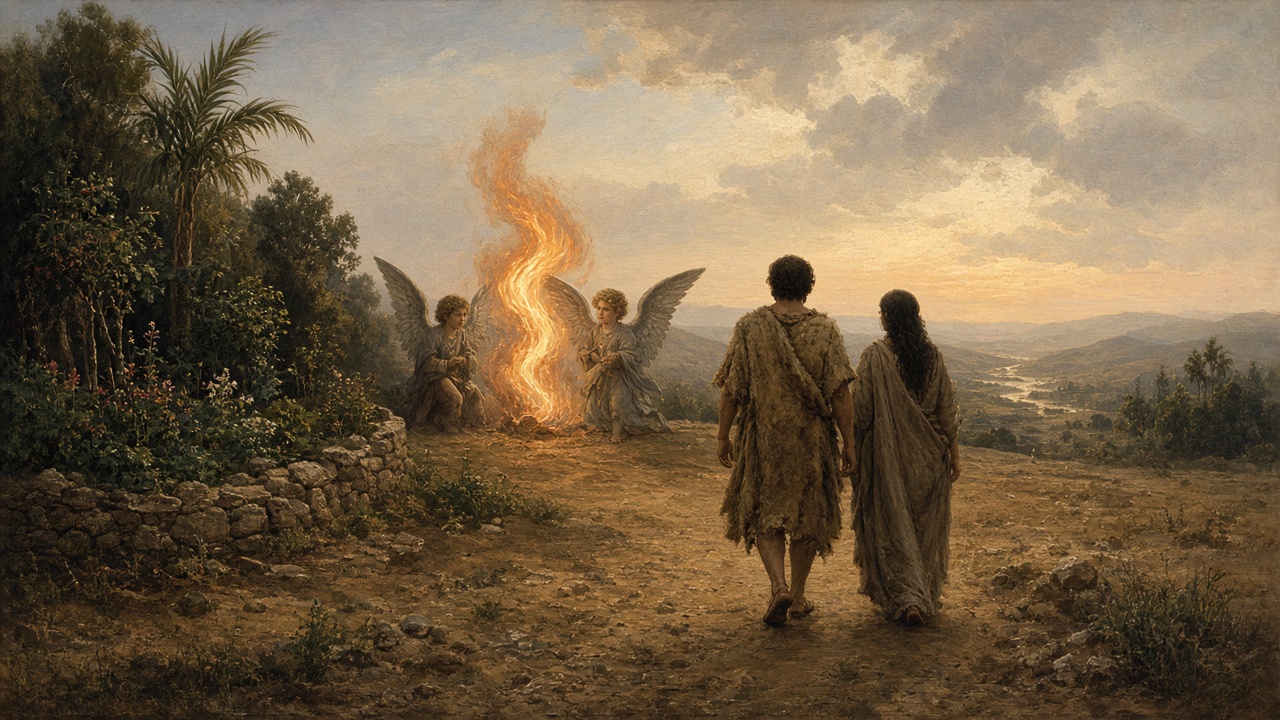
Anut Iden cabinadec dana caja ititacalen
22Odocob Tibud Anut maden, “Qila dana ege oso cinigwe caleia. Ceteteh meca me qeeca dona. Euqa uqa eben mimei cebac bilec na aigha u jimei cebac bileceb catanecdain. Eunu ege cahacdoc bahic cahacdoqan,” en. 23Eunu Tibud Anut uqa dana caja Iden cabinadec ititacalen. Maha dana muden euna sab cehigiannu eunadec malen. 24Ititacali hedocob cali lesin. Odimei Iden cabi cam tobi becna isec uqa han qali dana gagadic, ijan Kerub, ono maden. Odimei sigin aig ja belicanca eu hagen cunugna isec walwaldudu tawena euna muden. Eu cebac bilec catanec uqana jic cahacdoc.
Did you know?
The Fall and Exile from Eden
- A traditional reference explains Adam as “red,” a Babylonian word used as the generic name for man, with the same meaning in Hebrew and Assyrian, and links the name to his being formed from the dust of the earth. In this chapter that origin returns in the judgment: he will toil for his food until he returns to the ground, for he is dust and to dust he will return, and he is sent to work the soil from which he was taken.Sources: Adam · the Bible text itself
- In this chapter Adam gives his wife the name Eve, meaning “life” or “living,” because she would be the mother of all the living.Sources: Eve · the Bible text itself
- The site of the garden of Eden, from which the man is driven in this chapter, has been much discussed and placed in Armenia, west of the Caspian Sea, in Media, near Damascus, in Palestine, in southern Arabia, and in Babylonia. A traditional geographical note looks for it along the Tigris and the Euphrates, in the land of Shinar, or Babylonia.Sources: Eden · the Bible text itself
Notes written with AI assistance from open sources (Theographic Bible Metadata, CC BY-SA 4.0; Easton’s Bible Dictionary, public domain) and reviewed before publishing.
Credits and license for this translation
BAL CEHEC JE HAUN
Genesis and the New Testament in the Amele language of Papua New Guinea
Buk Stat na Nupela Testamen long tokples Amele long Niugini
copyright © 1997 Wycliffe Bible Translators, Inc.
Language: Amele
Contributor: Wycliffe Bible Translators
This translation is made available to you under the terms of the
Creative Commons Attribution-Noncommercial-No Derivatives license 4.0.
You may share and redistribute this Bible translation or extracts from it in any format, provided that:
You include the above copyright and source information.
You do not sell this work for a profit.
You do not change any of the words or punctuation of the Scriptures.
Pictures included with Scriptures and other documents on this site are licensed just for use with those Scriptures and documents.
For other uses, please contact the respective copyright owners.
1997-01-01
Source: http://png.bible/aey/ · eBible.org