Genesis 26
BAL CEHEC JE HAUN · Tap a verse to see its cross-references.
Aisak uqa Gera bilen
1Aria saen osona cahel saen me qee oso calen. Eu Ebrahamna saenna calen eu odi we haun calen. Eunu Aisak uqa Abimelek Filistia agena king Gera ono bilina uqaca nuen. 2Wele Tibud uqa Aisakca camasac mimei madon, “Hina Isip cain nogaun. Maha ija mahigen euna biliga. 3Maha ina nag odi biliga. Odocom ija hinaca biligen. Odimig ija eelhigen. Hinaca hinana sihulca ija maha i cunug adigen. Bal cehec je ija wele Ebrahamca madi cagoh eu ija hinaca ha madi cagowan. 4Odimig ija hinana sihul eu odocomin age malaqa saona nijia eu odiwe caloqagan. Odimig hinana sihul eu maha i cunug adigen. Odocomin hatuhatu cunug hinana sihul jabajabna age ha eeldoc oqagan. 5Ebraham uqa ijana loo jeca cunug ija madom eu ha uqa toodu odon. Eunu hina eelhigen,” don.
6Odocob Aisak uqa Gera ono bilen. 7Saen dana jobon eunadec age uqa aidegnu sisildocobil uqa ija cebinami ec maaden. Rebeka uqa caja jaca bahic. Eunu uqa odi cisdon, “Dana jobon inadec age Rebekanu ija qagatecebil cal migaun,” en. Eunu uqa cucuiimei eu odi maaden.
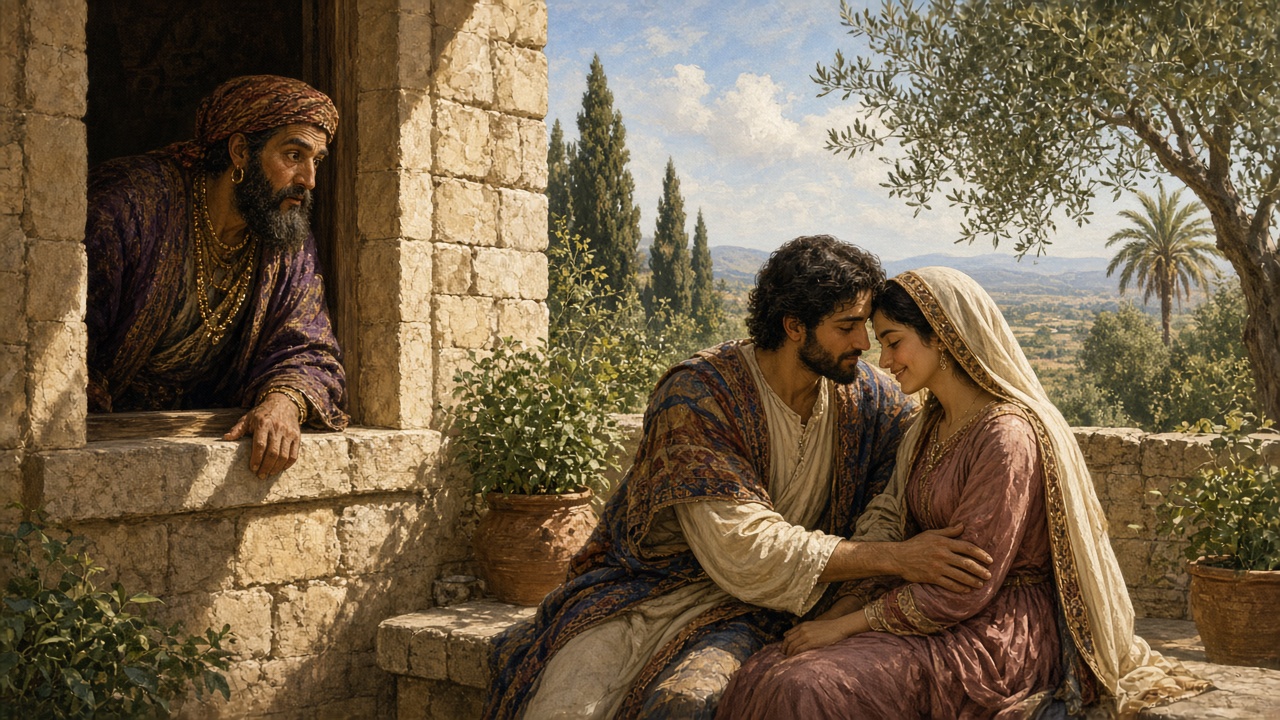
8Aisak uqa ono bibilen gieceb saen osona Filistia agena king Abimelek uqa fufu oc cebecna meciimei Aisak uqa Rebeka deweg losdodon fen. 9Eunu king Abimelek uqa Aisak utadocob leceb madon, “Faga. Uqa hina aiden! Eu adinu hina uqa ija cebinami ec matem?” don.
Odocob Aisak uqa jejeg hewi madon, “Uqanu ija qagatecebil cal migaun imig odi mahem,” don.
10Odocob Abimelek madon, “Hina eeta odigiga? Ijana dana oso hina aidenca nijoubmiqa eu hinanu Anut ege wadacgoub,” don. 11Eunu Abimelek uqa dana cunug je gagadic maaden, “Dana oso dana ifo uqa aidegfo qudualifei mele bahic qocomun cal migian,” aden.
12Aria Aisak uqa maha euna sab cehen. Odocob Tibud uqa eeldon. Eunu cabi gel euna himec uqa sab eu wal meceb on eu mati bahic on. Uqa aig osol cehen eunadec aig 100 haun on. Eu odiodi on. 13Odocob Aisak uqa cabi gaid odi oodon li uqa cehewan eu ben bahic men. 14Uqa ceteh mati bahicca. Uqa sipsip, bulmakau, cabi dana amca. Filistia danaqa age uqana cehewan fecebil gale aden. 15Eunu Filistia age wa tut hunec uqa memegna cabi dana age Ebrahamna saenna hunein eu age eu cunug maha tacitaci belein.
16Odocob Abimelek uqa Aisak madon, “Hina egena hatu culdimeg nuuga. Hina gagadicca. Hinana gagadic odoc eu egeca ihoc qee,” don. 17Odocob Aisak uqa eunadec cajimei nui Gera maha asouna ono cudun hewen. Odimei uqa ono bilen. 18Odocob wa tut uqa memeg Ebrahamna saenna hunadein eu Filistia age tacalein eu Aisak haun hunaden. Odimei wa tut eu uqa memeg Ebraham ijanaga aqaden eu haun ijanaga aqen.
19Odocob Aisakna cabi dana age maha asouna wa tut oso hunein. Odimeig age wa fifiji beben gulucdoin. 20Eu hunein qa Geradec sipsip cofadec dana age Aisakna sipsip cofadec dana age wa tutnu gonagona mimeig maadein, “Wa tut eu egena,” adein. Eunu Aisak uqa wa tut eu ijan “Gona Gona Mec” qon. 21Odocob Aisakna dool cofadec dana age wa tut oso haun hunein. Odocobil eunu ha age gonagona madein. Eunu uqa eu ijan “Cadec” qon. 22Odocob Aisak uqa cudun eu culimei ono wa tut oso hunen. Odonqa age wa tut eunu qee gonagona mudelein. Eunu uqa wa tut ijan “Jeca Qee” qon. Uqa odi maden, “Qila Tibud uqa cudun ihoc igia. Eunu ege maha ina danaca doolca cehewanigeca fulusdugian,” en.
23Odocob onodec uqa Biasiba ono ten. 24Odocob witic euna Tibud uqaca camasac men. Odimei uqa madon, “Ija hina memen Ebraham uqana Anut. Cain cucuiagaun. Ija hinaca biligina. Ija eelhimig odocomin hinana sihul fulusdugian. Euqa ijana cabi dana Ebrahamnu cisdumig odigen,” don. 25Eunu Aisak uqa cudun euna ihanec meen cabal oso gualen. Odimei uqa Tibud binan sulen. Odocob uqa ono uqana lotoc talah cecehen uqana cabi dana age wa tut oso hunein.
Aisak Abimelekca qel qetec je madesin
26Odon saen euna Abimelek uqaca uqana cisdoc utec dana Ahusatca uqana han dana ilo, Fikol, uqaca age Gera onodec Aisakca hoin. 27Odocobil Aisak uqa sisiladen, “Age ija me qee oditein. Odimeig agena hatunadec ititactein. Eunu age celnu ijaca hoiga?” aden.
28Odocob age jejeg madoin, “Qila ege camasac doqona. Tibud uqa hinaca bilina ege doqona. Eunu ege odi cisdom, ‘Ege gemo gabandocnu je oso cagu madecnu euqa hinaca egeca gemonu madecnu,’ om. Qel qeti madecnu eu i edi madecnu. 29Hina ege me qee qee odigigaun. Eu odiwe ege hina me qee mihecnu qee odi quduhilom. Egeqa gaid hina me eelhimeb sulhocomun wawin malolca nuem. Qila Tibud hina eelhen eu camasac doqona,” doin. 30Odocob Aisak uqa sab ben cilimei adeceb jein. 31Odocobil qasil bahic cajimeig age qel qeti madein eu agedodoc age gemo madocobmadocob imeig Aisak uqa suladeceb wawaga malolca belein.
32Aria deel euna himec Aisak uqana cabi dana age humeig wa tut oso hunein eunu madoin, “Ege wa gulucdoqa,” doin. 33Eunu uqa wa tut eu ijan “Qel Qetec” qon. Eunu taun eu ijan Biasiba eu qila saen ina ha odi madegina. Biasiba je eu gug “Qel Qeti Madec Uqana Wa Tut.”
Isona jab caja
34Odocob Iso uqana cabi gel 40na uqa caja lecis Hetdec cedalen. Caja oso eu ijan Judit, uqa Beri ateg. Caja oso eu ijan Basemat, uqa Elon ateg. 35Iso aidegul lecis ale Aisak Rebekaca wawala dain calec alolosi.
Did you know?
Isaac in Gerar
- During a famine, Isaac sought refuge with Abimelech, king of Gerar, an ancient town and district on the southern border of Palestine. Easton's Bible Dictionary (1897) notes that Isaac acted toward his wife Rebekah much as his father Abraham had acted toward Sarah there: he said she was his sister. Abimelech later rebuked him when the deception was discovered.Sources: Abimelech (King of Gerar) · Gerar · the Bible text itself
- The names of wells in the Valley of Gerar recall the disputes over them. Esek means “quarrel,” because the herdsmen of Gerar claimed the water, and Sitnah means “strife.” Isaac also reopened wells that his father Abraham’s servants had dug and that the Philistines had stopped up, and he gave them the same names his father had given them.Sources: Esek · Sitnah · the Bible text itself
- Beersheba means “well of the oath” or “well of seven.” According to Easton's Bible Dictionary (1897), Abraham dug a well there and named it after a compact with Abimelech, and Isaac gave it the same name when he reopened it. The dictionary also identifies Phicol—“great”—as chief captain of Abimelech’s army, and says he took part in Abraham’s alliance over that well.Sources: Beersheba · Phichol · the Bible text itself
Notes written with AI assistance from open sources (Theographic Bible Metadata, CC BY-SA 4.0; Easton’s Bible Dictionary, public domain) and reviewed before publishing.
Places in this chapter
- Egypt · 30.129, 31.308 · verse 2
- Valley of Gerar · Today: about 3 km around Tel Haror · 31.382, 34.606 · verses 17, 19
Only places identified with high confidence are shown (90% or more according to the scholarly sources compiled by OpenBible). Period map: DARE (Digital Atlas of the Roman Empire), CC BY 4.0; modern map: © OpenStreetMap contributors; places: OpenBible.info (CC BY 4.0).
Credits and license for this translation
BAL CEHEC JE HAUN
Genesis and the New Testament in the Amele language of Papua New Guinea
Buk Stat na Nupela Testamen long tokples Amele long Niugini
copyright © 1997 Wycliffe Bible Translators, Inc.
Language: Amele
Contributor: Wycliffe Bible Translators
This translation is made available to you under the terms of the
Creative Commons Attribution-Noncommercial-No Derivatives license 4.0.
You may share and redistribute this Bible translation or extracts from it in any format, provided that:
You include the above copyright and source information.
You do not sell this work for a profit.
You do not change any of the words or punctuation of the Scriptures.
Pictures included with Scriptures and other documents on this site are licensed just for use with those Scriptures and documents.
For other uses, please contact the respective copyright owners.
1997-01-01
Source: http://png.bible/aey/ · eBible.org