Genesis 10
BAL CEHEC JE HAUN · Tap a verse to see its cross-references.
Noa melahul agena sihul
1Aria Noa melahul Sem, Ham, Jafetca agena sihul je i edi. Wa sil cajen eu hedocob melamagail eu age aidagail mel haun basadein.
2Jafet melahul eu Gome, Megog, Madai, Jawan, Tubal, Mesek, Tirasca. 3Gome melahul eu Asigenas, Rifat, Togamaca. 4Jawan melahul eu Elisa Tasisca. Dana sihul i age Kit Dodanica ageha Jawannadec. 5Sihul eunadec dana age bilisadumeig age lannaca nuinaca belein. Age bilisadumeig agena jobon medeh filfilnana hatu filfilnana je filfilnana qaguqagu belein.
6Ham melahul eu Kus, Isip, Put, Kenanca. 7Kus melahul eu Seba, Hawila, Sabta, Rama, Sabtegaca. Rama melahul eu Siba Dedanca.
8Aria Kus uqa melah oso ijan eu Nimrod. Nimrod mahana han cadecnu gelehinca calen. 9Uqa Tibud amegna dool qocnu ijanca calen. Eunu je oso odi madegina, “Nimrod cinigwe dool qoc dana ijanca Tibud amegna,” egina. 10Hahawan bahic uqa taun benben hewaden eu Sina mahana taun eu Bebel, Erek, Akadca. 11Maha eunadec uqa cajimei Asiria nuen. Odimei uqa ono Niniwa, Rehobot-ia, Kala, 12Resenca cehaden. Resen eu Niniwa Kalaca gemo bilen. Kala eu taun ben bahic.
13Isip uqa dana sihul Lud, Anam, Lehab, Naftu, 14Patrus, Kaslu, Kaptoca asaga calen. Filistia age Kaptona sihulnadec calein.
15Kenan uqa melah matu eu Saidon. Kenan uqa melahul haun eu Het, 16Jebus, Amo, Girgas, 17Hiwi, Aki, Sini, 18Awad, Sema, Hamatca. Agena sihul age asagail calein. Hibna Kenan uqana sihul age jobon medeh filfilnadec age bilisadumeig belein. 19Odocob Kenan agena maha gadac eu Saidondec sanan mimei nui Gasa gadac eu Gera isec euha Sodom, Gomora, Atma, Seboimca leceb Lasa gadac. 20Aria eu age Ham melahul. Age agena sihulnana agena jenana agena mahanana agena hatunana odi qaguqagu bilein.
21Sem ha melahulca. Uqa waliag matu eu Jafet. Hibru dana cunug age asaga eu Sem. 22Sem melahul eu Ilam, Asur, Apaksad, Lud, Aramca. 23Aram melahul eu Us, Hul, Geta, Masca. 24Sela memeg eu Apaksad. Ebe memeg eu Sela. 25Ebe uqa melahul lecisca. Oso ijan eu Peleg. Uqana saenna maha gadac qatani mati bahic calen. Eunu ijan odi qon. Uqa waliag ijan eu Joktan. 26Joktan melahul eu Almodad, Seleb, Hasamawet, Jera, 27Hadoram, Usal, Dikla, 28Obal, Abimel, Siba, 29Ofia, Hawila, Jobabca. Dan eu age eu Joktan melahul. 30Maha age bilein eu Mesa sanan mimei leceb Sefa gadac. Eu hatu aluh mati bahic cam tobi becna isec. 31Aria dana eu age eu Semna sihul. Age agena sihulnana agena jenana agena mahanana agena hatunana odi qaguqagu bilein.
32Aria eu age eu Noana sihul. Agena jobon medeh filfil. Age agena sihulnana agena hatunana odi qaguqagu bilein. Wa sil hedocob Noana sihulnadec dana cajaca mahana cunug bilegina eu calein.
Did you know?
The Nations after the Flood
- Genesis 10 follows the families of Noah’s three sons, Shem, Ham, and Japheth, and says that after the flood the nations of the earth spread out from them, grouped by clans, languages, lands, and nations. Japheth’s line is linked with peoples of eastern Europe and northern Asia: Gomer is generally regarded as an ancestor of the Celts and the Cimmerians, who in early times settled north of the Black Sea, and Javan became the Hebrew name that the peoples of the East used for the Greeks, especially those of Ionia.Sources: the Bible text itself · Japheth · Gomer (son of Japheth) · Javan
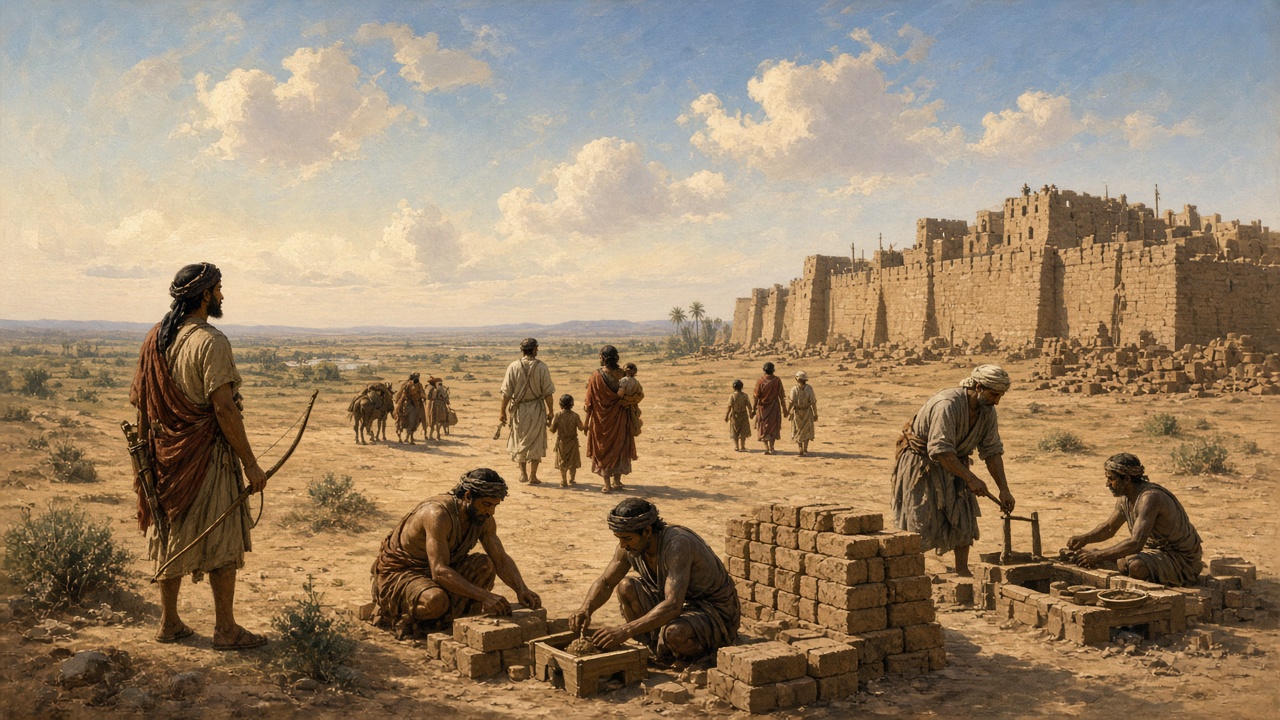
- Cush, a son of Ham, was the father of Nimrod, remembered as a mighty hunter before the Lord, whose kingdom began at Babylon, Erech, Accad, and Calneh in the land of Shinar, probably Babylonia or southern Mesopotamia. From that land he went into Assyria and built Nineveh, Rehoboth-Ir, Calah, and Resen; Calah’s site is probably the Nimrud ruins on the left bank of the Tigris.Sources: the Bible text itself · Shinar · Nineveh · Calah
- Mizraim, the dual form of a Hebrew word for a mound or fortress, may point to Upper and Lower Egypt and is the name the Hebrews usually gave that country; Arabic still calls it Muzr. Shem is called the older brother of Japheth and the forefather of all the sons of Eber, regarded as the founder of the Hebrew people, while an Arab tradition remembers Eber’s son Joktan, Kahtan in Arabic, as the ancestor of tribes of central and southern Arabia.Sources: the Bible text itself · Mizraim · Eber (Heber) · Joktan
Notes written with AI assistance from open sources (Theographic Bible Metadata, CC BY-SA 4.0; Easton’s Bible Dictionary, public domain) and reviewed before publishing.
Places in this chapter
- Erech · Today: Uruk · 31.322, 45.636 · verse 10
- Shinar · Today: Babylonia · 32.543, 44.422 · verse 10
- Assyria · 36.359, 43.153 · verse 11
- Calah · Today: Nimrud · 36.098, 43.329 · verses 11, 12
- Nineveh · 36.359, 43.153 · verses 11, 12
- Canaan · 32.767, 35.333 · verse 19
- Gaza · Today: Tell Harube · 31.504, 34.464 · verse 19
- Sidon · Today: Sandikli archaeological site in Sidon · 33.561, 35.372 · verse 19
Only places identified with high confidence are shown (90% or more according to the scholarly sources compiled by OpenBible). Period map: DARE (Digital Atlas of the Roman Empire), CC BY 4.0; modern map: © OpenStreetMap contributors; places: OpenBible.info (CC BY 4.0).
Credits and license for this translation
BAL CEHEC JE HAUN
Genesis and the New Testament in the Amele language of Papua New Guinea
Buk Stat na Nupela Testamen long tokples Amele long Niugini
copyright © 1997 Wycliffe Bible Translators, Inc.
Language: Amele
Contributor: Wycliffe Bible Translators
This translation is made available to you under the terms of the
Creative Commons Attribution-Noncommercial-No Derivatives license 4.0.
You may share and redistribute this Bible translation or extracts from it in any format, provided that:
You include the above copyright and source information.
You do not sell this work for a profit.
You do not change any of the words or punctuation of the Scriptures.
Pictures included with Scriptures and other documents on this site are licensed just for use with those Scriptures and documents.
For other uses, please contact the respective copyright owners.
1997-01-01
Source: http://png.bible/aey/ · eBible.org