Exodus 1
Angkentye Mwerre · Tap a verse to see its cross-references.
About this book
About Exodus
- Easton's Bible Dictionary (1897) dates Israel's departure from Egypt to about 1490 B.C., four hundred and eighty years before Solomon's temple was built. How long they had sojourned there is disputed: Exodus 12:40 gives four hundred and thirty years, Genesis 15 speaks of about four hundred, and the Greek and Samaritan versions also count the years in Canaan, so some reckon only two hundred and fifteen years in Egypt.Sources: Easton: Exodus
- Easton's Bible Dictionary (1897) does not name the author of Exodus. The entry on Moses says Jacob and his sons went down into Egypt, probably about three hundred and fifty years before Moses was born, and that a Hyksos king, from a pastoral Semitic people of Asia who then ruled Egypt, settled them in Goshen. Moses later spent forty years in Midian, where that people pastured flocks on the Sinai peninsula, and became the son-in-law of Jethro, priest of Midian.Sources: Moses · Easton: Exodus · Midian · Jethro
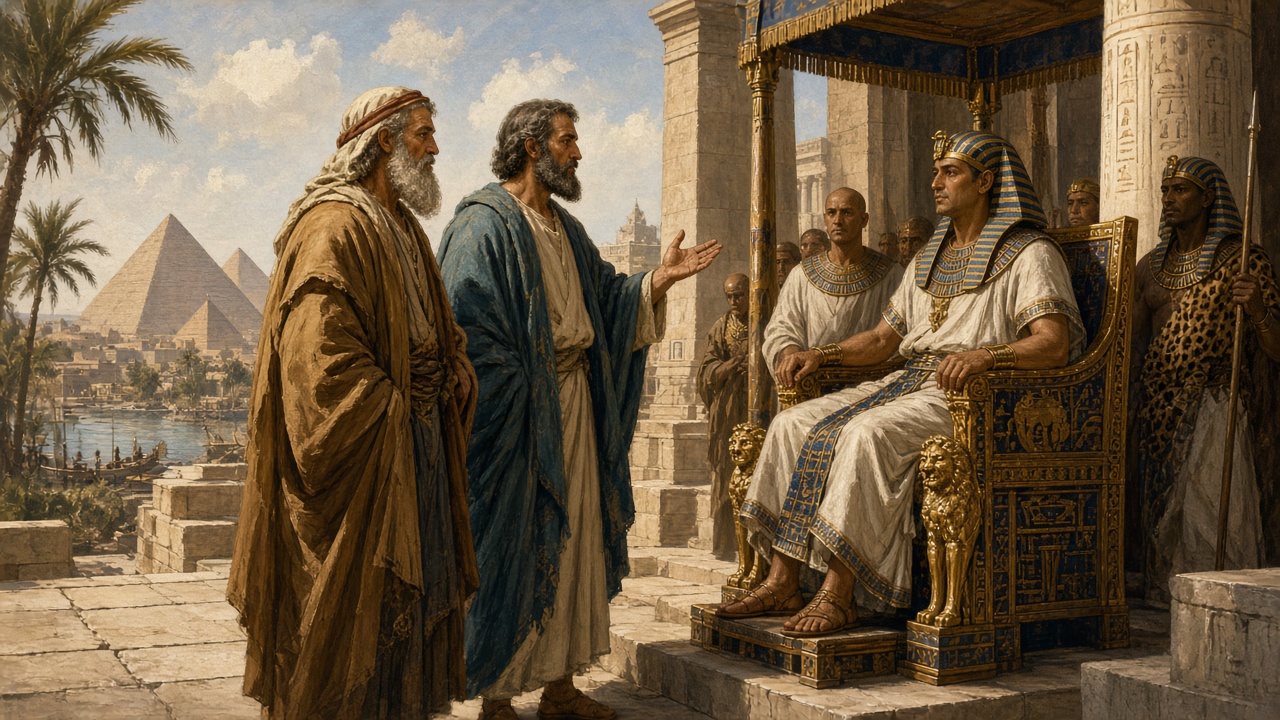
- Who was Pharaoh at the departure is also disputed. Easton's Bible Dictionary (1897) calls him probably Menephtah I, the fourteenth and eldest surviving son of Rameses II, who lived at Zoan and met Moses and Aaron there, while noting that some favor Seti II, whose reign began peacefully and ended in sudden disaster.Sources: Pharaoh (of the Exodus)
- The plagues, Easton writes, loosened Pharaoh's hold, and the Passover was instituted as a perpetual memorial, with the lamb's blood sprinkled on the doorposts. In the third month the people reached Mount Sinai, also called Horeb, about one hundred and fifty miles from the Red Sea, and camped there about a year. The last twenty-two chapters of Exodus record that stay, including the tabernacle, whose Holy Place had no opening for daylight and was lit only by the golden candlestick.Sources: Easton: Exodus · Mount Sinai · Holy Place
- Aaron, eldest son of Amram and Jochebed, was born in Egypt three years before Moses and was sent to meet him so the two could work together. At Rephidim, Joshua, also born in Egypt, commanded Israel's fighters when the Amalekites, a pastoral people living between the Dead Sea and the Red Sea, tried to bar their way.Sources: Aaron · Joshua · Amalek
Notes written with AI assistance from open sources (Theographic Bible Metadata, CC BY-SA 4.0; Easton’s Bible Dictionary, public domain) and reviewed before publishing.
Jacob ikwere-artweye areye-akerte apmere Egypt-werne alheme
1Artwe ampwe nhenge Jacob, arritnye arrpenhe ikwerenhe aneke Israel. Nhenge re Canaan-engentyele impemele apmere Egypt-werne alhetyeke re alerikwe areye akngeke itne-kenheke-artweye areye-arlke, itnenhe ingkirreke 70 anteme. Nhenhe alerikwe arritnye areye-kenhe aneme: Reuben, Simeon, Levi, Judah, Issachar, Zebulun, Benjamin, Dan, Naphtali, Gad, Asher uthene. Kenhe alerikwe arrpenhe akenhe Joseph, re Egypt-nge kele-arle aneke, re apmere yanhe ikwerele ahinpe-ngentyele anetyarte.
6Joseph apmere Egypt-nge uyerreke. Alerikwe areye-arlke itne-kenheke-artweye areye-arlke, Jacob-enge-arle apmere Egypt-werne apetyewarrekeke, itne ingkirreke anthurre uyerreke anteye. Itnekenhe kartweyekartweye apmere Egypt-nge arlenge-ulkere anetyarte uterne 400-eke-atwetye. 7Tyerrtye Israel-arenye areye atningke-ame-atningke anthurre irreke. Itne lterrke anthurre irreke, ikwere-ipenhe atningke arrpenhe apmere arrpe-anenhele Egypt-nge anerrirreke.
Tyerrtye Egypt-arenye areye Israel-arenye areyeke ahentye-anetyakenhe anerrirretyarte itnenhe atwetyarte anteye
8Arrule ikwerenge-ntyele artwe arrpenhe anteme Pharaoh aneke Egypt-arenye areyeke. Re ayeye Joseph-akerteke akutne aneke arrule anthurre-arle anetyarteke. 9Arlte anyentele re akngerrepate government-kenhe areyeke angkeke, “Ayekaye, Israel-arenye areye arerrirraye! Itne kwenhe atningke anthurre, lterrke anthurre irrerlenge! Itne kwenhe anwernekenge lterrke anthurre ulkere! Itne apeke anwernenhe irrerlknge atweme-ketye! 10Tyerrtye apmere arrpenhe-arenye areye apeke nhenhe-werne apetyeme anwernenhe atwerrerlenge-artaye? Nthakenhe-ame anwerne irretyenhe? Tyerrtye Israel-arenye areye apeke itnekenge apurte-irreketyenge, itne anteme apeke anwernekenge atwerreme anwernenhe irrerlknge atweme anteye! Itne apmere arrpenhe-werne anteme alwirreme! Nthakenhe-ame anwerne itnenhe atningke-irreketyenge ayakeye?”
11Arratye-arle, Pharaoh uthene akngerrepate government-kenhe uthene areyele Israel-arenye areye warrke-irretyeke uternetyarte ayernentye akngerre areye-arteke. Itne artwe areye akngakeke Israel-arenye areye arnterre anthurre warrke-irretyeke uternetyeke itne apurrke-irretyenhenge atwerretyeke itirretyakenhe anetyenhenge. Itne itnenhe uterneke tantyipe akngerre atherre Pharaoh-eke artetyeke apmere Pithom uthene apmere Rameses uthene. Kele imernte Egypt-arenye areyele arne ingkirreke antelhe-iletyarte tantyipe nhenhe atherreke arrernemele. 12Yewe, itne Israel-arenye areye akwetethe anthurre warrke-irretyeke uternetyarte. Itne itnenhe atwetyarte rlkerte-iletyarte, itne itnenhene ayene-iletyarte ampe akweke awethe atnyeneme-ketye, arrangkwe-arle akenhe. Israel-arenye areyele akwetethe anthurre ampe atningke atnyenewarretyarte. Itne atningke-ame-atningke-irreke irrarnpe-irreremele Egypt ikwerenge. Alakenhe ikwerenge anteme Egypt-arenye areye itne-ketyenge atere-irrereke. 13Itne Israel-arenye areye atwemele itnenhe akwete anthurre warrke-irretyeke uternetyame Israel-arenye areyeke akurne anthurre anteme irrerlenge. 14Itne itnenhe apmere brick areyele artetyeke uternetyame. Israel-arenye areyele ahelhe urrknge uthene atherrke uthene anyente-iletyeke brick areye mpwaretyeke anteye apmere artetyeke. Itne kwenhe uternetyarte ahelhe atyete-ilemele tnyetyeke arne ngkernetyenhenge, annge ntange areye lyapetyeke. Egypt-arenye areye itneke alhwarrpe awelhetyakenhe aneke nhenge itne arnterre anthurre warrke-irretyartenge.
15Yanhele aneke arelhe Hebrew atherre apmere yanhe ikwerele arelhe arrpenhe areye-arle mwerre-ilemeke nhenge itne ampe akweke mwerre mpwaretyenhenge. Arritnye ikwere-atherrenhe aneke Shiphrah uthene Puah uthene. Urreke arelhe Israel-arenye areyele ampe akweke atnyenetyenhenge arelhe nhenhe atherre arelhe atnerte-atnerte areyenge anerle-anerretyarte. Arlte anyentele Pharaoh angkeke arelhe nhenhe atherreke, 16“Mpwele apeke arelhe Hebrew areyenge aneme, nhenge itne ampe akweke itnekenhe atnyenemenge, kele itne apeke marle atnyeneme renhe impe, irrerlknge atwetyale. Itne akenhe ampe urreye akweke apeke atnyeneme, urreye yanhe areye irrerlknge atwe!” 17Kenhe arelhe yanhe atherrele akenhe Pharaoh awetyakenhele aneke ratherre-arle Ngkarte apentemele, Renhe-ante ware mwantyele awetyartele. Kele ratherre anteme urreye akweke areye irrerlknge atwetyakenhe aneke nhenge itne akweke interlenge. 18Kele imerte Pharaoh-ele anteme warrkene ikwerenhe anyente yerneke arelhe yanhe atherreke antangketyeke. Nhenge ratherre apmere Pharaoh-kenhe-werne apetyemele, rarle ikwere-atherre apayuthnekenge, “Iwenhenge-ame mpwele ayenge awetyakenhe aneke? The kwenhe mpwelenhe ileke ampe urreye akweke irrerlknge atwetyeke. Kenhe mpwele akenhe itnenhe itethe-arle atnyenerlenge.”
19Arelhe yanhe atherramele renhe ileke, “Arelhe Israel-arenye areye kwenhe rlterrke anthurre-arle, arelhe Egypt-arenye areye-arteke anetyakenhe. Itne ampe areye iparrpele atnyeneme. Urreke itne ampe akweke atnyenetyenhenge, itne ilernenhe apetyetyeke ileke itnekenge anetyeke. Kenhe itne akenhe ampe iparrpele atnyeneme ilerne yanhe ikwerele anetyakenhele!”
20Yewe, arelhe yanhe atherrele Ngkarte arratye awerle-anerretyarte. Alakenhe ikwerenge anteme Ngkartele arelhe yanhe atherre ampe atningke antheke. Kenhe akwete, arelhe Hebrew areyele akwetethe anthurre ampe atningke awethe atnyeneke.
22Ikwerenge-ntyele anteme, Pharaoh tyerrtye ikwerenhe areyeke angkeke, “Ayenge awerrirraye! Nhenge arelhe Hebrew areyele ampe urreye akweke atnyenemele, itnenhe inaye lhere akngerre Nile-ke-arleke iwerrirraye kwatye urewele itnenhe akngetyeke alhekwarle-iletyeke. Marle akweke areye impaye, irrerlknge atwetyale!”
Did you know?
Israel's Growth and Oppression in Egypt
- Easton's Bible Dictionary (1897) says that the Hebrews in Egypt were under Joseph's protection for about seventy years, and that after his death their condition changed only gradually. It notes that the new king who did not know Joseph was generally supposed to be Aahmes I, whom Josephus calls Amosis, though discoveries of that time led the dictionary to conclude that he was Seti, after the Hyksos were driven out and the former dynasty restored.Sources: Pharaoh · the Bible text itself
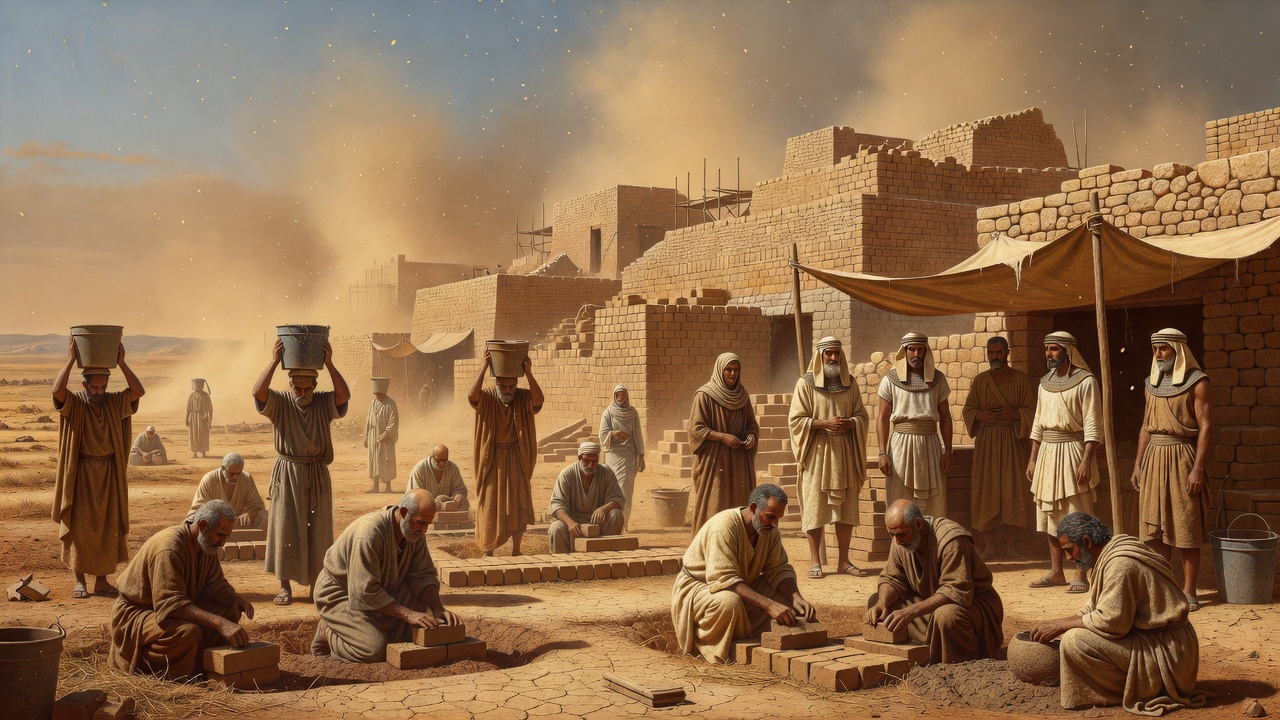
- Set to forced labor, the Israelites built Pithom and Rameses as store cities for Pharaoh. Easton's Bible Dictionary (1897) explains Pithom as Egyptian Pa-Tum, 'house of Tum,' the sun-god, and calls it a treasure city built for Pharaoh Rameses II; it identifies the site with Tell-el-Maskhuta, where ruins of supposed grain-chambers were reported in 1883.Sources: Pithom · Raamses · the Bible text itself
- Pharaoh then commanded that every son born to the Hebrews be thrown into the river. Easton's Bible Dictionary (1897) notes that the name Nile does not appear in Scripture; the Old Testament calls that river Sihor, 'the black stream,' or simply 'the river,' as in Exodus 1:22.Sources: Nile · the Bible text itself
Notes written with AI assistance from open sources (Theographic Bible Metadata, CC BY-SA 4.0; Easton’s Bible Dictionary, public domain) and reviewed before publishing.
Places in this chapter
- Egypt · 30.129, 31.308 · verses 1, 5, 8, 15, 17, 18
- Nile · Today: Nile River · 31.465, 30.367 · verse 22
Only places identified with high confidence are shown (90% or more according to the scholarly sources compiled by OpenBible). Period map: DARE (Digital Atlas of the Roman Empire), CC BY 4.0; modern map: © OpenStreetMap contributors; places: OpenBible.info (CC BY 4.0).
Credits and license for this translation
Angkentye Mwerre
Portions of the Holy Bible in the Central and Eastern Arrente language of Australia
copyright © 2002-2014 Wycliffe Bible Translators
Language: Eastern Arrente (Arrernte, Eastern)
This translation is made available to you under the terms of the
Creative Commons Attribution-Noncommercial-No Derivatives license 4.0.
You may share and redistribute this Bible translation or extracts from it in any format, provided that:
You include the above copyright and source information.
You do not sell this work for a profit.
You do not change any of the words or punctuation of the Scriptures.
Pictures included with Scriptures and other documents on this site are licensed just for use with those Scriptures and documents.
For other uses, please contact the respective copyright owners.
2019-05-14
Source: http://ebible.org/aer/ · eBible.org