Luke 5
I 'utz laj tzij re i dios · Tap a verse to see its cross-references.
Wach i qui chapic uqʼuial car
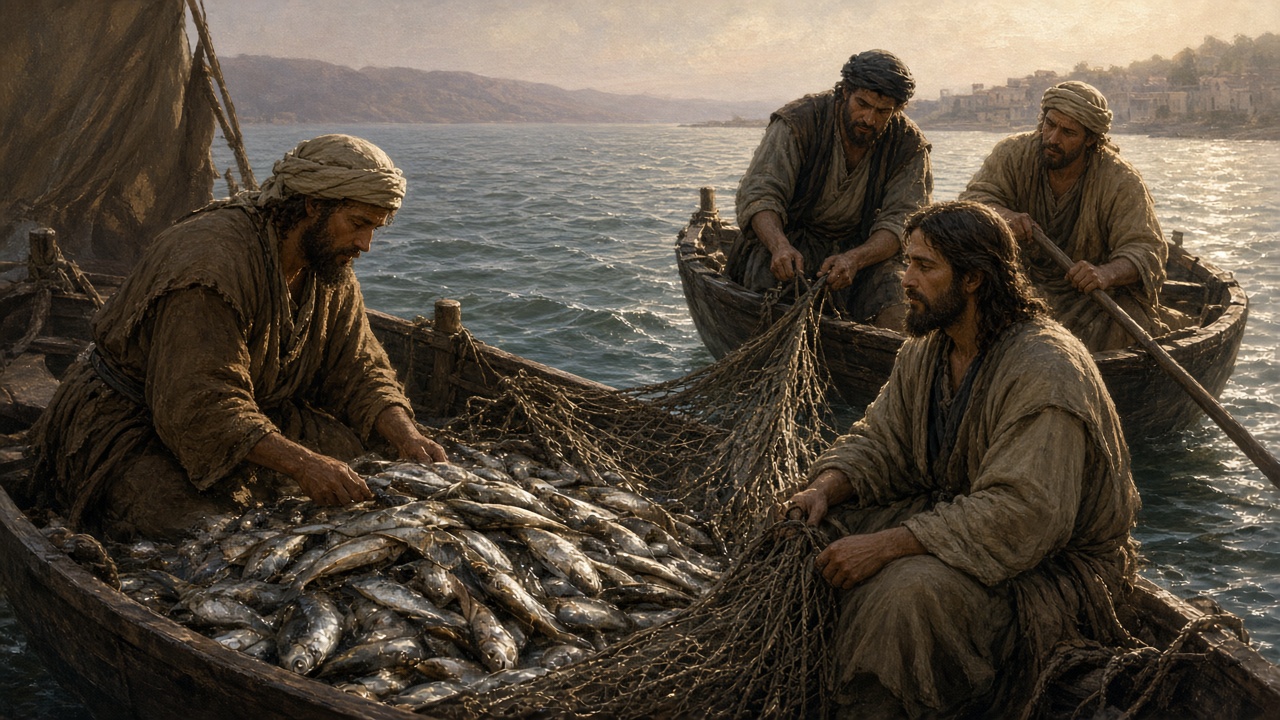
1I Jesus tacʼal chiya, Genesaret u bi. Lic je qʼui i winak xe uponic, lic quiqui tacpuj chic quib, man cacaj quiqui ta u tzij i Dios. 2I Jesus xril queb bárco, ʼo chu chiʼ i ya, pa xqui canaj wi can i aj chapol car. Ique que tijin chu chʼajic i cataraya. 3I Jesus xoc chupam jun bárco chi re i ma Simon. Teʼuri xu tzʼonoj pawor che i rajaw chi cocsax pan jubiʼ pa ya. Are ʼuri i Jesus xcubi chupam i bárco y xoc chu cʼutic chique i winak. 4Are xutzin u chʼaʼatic cuʼ i winak, xu bij che i ma Simon:
—Cha binsaj bi a bárco pa cho, teʼuri cha cʼaka bi awataraya chila y ʼo ca riko —xu bij.
5I ma Simon xu bij che:
—Nim laj winak, lic coj tijinic jun aʼab, péro n-ti xka riko. Xui-ri, we queje ca bij yet ile, quin ʼan na —xu bij.
6Teʼuri xqui cʼak bi i cataraya. Lic qʼui i car xu jecʼ li ataraya; xu ticba u rakcrijic rumal. 7Xqui ʼan pan séña chique i cachiʼil ruʼ chic jun bárco, chi que ol qui to na ruʼ i cataraya. I juban xe cʼunic y xe qui to i cachiʼil; xnoj i queb bárco che i car, laj xe muktaj pa ya rumal. 8I ma Simon Pédro, are xril ile, xuqui chuwach i Jesus y xu bij che:
—¡Chat el chinwach, Kajwal, man yin xa in ajmac laj achi! —xcha.
9Queje xu bij i ma Simon ile, man lic xu xij rib. Xak niʼpa i je ʼo ruʼ ʼis xe oc ʼil rumal ni uqʼuial car xqui chapo. 10Xak i juban cachiʼil xqui xij quib, chi je are i ma Jacóbo i ma Wan, chi je u cʼojol i mam Zebedéo. I Jesus xu bij che i ma Simon:
—Ma xij awib; woʼor quin ʼan chawe at aj tzucul-que i winak pacha ca ʼan chique i car —xu bij che.
11Teʼuri xquesaj li qui bárco chu chiʼ i ya; ronojel ʼis xqui canaj canok y xe terej bi chirij.
Wach i rutzirsaxic i achi ʼo yobil lépra che
12Xoʼon panok, i Jesus, are ʼo che jun tinimit, xupon jun achi ruʼ, ʼo itzel laj yobil che, lépra ca bixic. Ire, are xril i Jesus, xuqui chuwach y xu kajsaj u jolom cʼa chuwach ulew; lic xu tzʼonoj utzil chomal che. Xu bij:
—Nim laj winak, we ta cawaj, cat tiqui chi relsaxic itzel laj yobil ʼo chwe —coʼono.
13Teʼuri i Jesus xu chap ruʼ u ʼab;
—Cwaj —xu bij—. ¡Chat utzirok!
Are xu bij ile che, juntir xchomar chic u chʼacul i achi. 14I Jesus xu bij che:
—Mi jun ma lap che wach in ʼanom. Xui-ri, jat, ja cʼutu awib che i sacerdóte chi at utzirnak, cha sujuj a sipon chuwach i Dios, pacha u bim can i mam Moises. Queje cha ʼana ile, man caquetamaj conojel i winak chi at utzirnak chic, chʼam chic a chʼacul —xu bij che.
15Teʼuri i Jesus, mas xpax u tzijol wach ca tijin chu ʼonquil. I winak lic quiqui tzucuj; je qʼui xe moltaj chu tayic u tzij; xak chu tzʼonoxic che, chi que utzirsaxic. 16Xui-ri, ire ʼolic ca ʼe pa tak jyub tzʼinilic chu tzʼonoxic che i Dios.
Wach i rutzirsaxic jun sic
17Xoʼon panok, i Jesus ca tijin chu cʼutic chique i winak. Xak chila je cul juban aj Fariséo, xak jujun chique i tijonel re i ujer ʼatbal tzij. Ique je petnak pa ronojel tak i aldéa re i jyub Galiléa, xak i re i jyub Judéa, xak ʼo jujun je petnak cʼa pa tinimit Jerusalen. I Jesus, lic ʼo u choʼab i Dios ruʼ, che i cutzirsaxic iwabib. 18Are ʼuri, xe upon juban achiab, cucʼam bi jun achi chuwa chʼat, lic siquirnak u chʼacul. Cacaj que oc bi pa ja, quiqui yabej-re chuwach i Jesus. 19N-xqui rik taj pa que oc wi, cumal i winak lic je qʼui. Rumal ʼuri, xe ʼel chuwi ja y xquesaj i xot. Teʼuri xqui kajsaj bi iwab chuwa chʼat cʼa paja. Lic chiquixol i winak xqui kajsaj wi, mer chuwach i Jesus xqui ya wi. 20I Jesus xrilo, chi i achiab-le lic qui cubam qui cʼux che. Rumal ʼuri, xu bij che i iwab:
—Wacʼal, niʼpa i a mac ya cuytajnak chic —xu bij.
21Are ʼuri, i tijonel re i ujer ʼatbal tzij, xak i aj Fariséo xe oc chu chʼobic piqui cʼux: “¿Bi ruxic i achi-le? I tzij xu bij-le, cu kajsaj u ʼij i Dios ruʼ. Mi jun ʼo puʼab cu cuy i qui mac i winak; ¡xui i Dios!” xe cha.
22Xui-ri, i Jesus retaʼam wach quiqui chʼobo. Rumal-i xu bij chique:
—¿Wuchac qui chʼob ile pi cʼux? 23Ile n-cʼax tu bixquil chi “Ya xcuytaj a mac.” Are i cʼax u bixquil are iri: “Chat walijok, y chat binok,” are ile cʼax u ʼonquil che jun winak. 24Xui-ri yin chi in Achi aj Chicaj quin ʼalijinsaj na chiwe chi ʼo pinʼab quin cuy ni qui mac i winak waral chuwach i jyub taʼaj —xu bij chique.
Teʼuri xu bij che i achi chi siquirnak:
—Chatapeʼ, chat walijok, cha yaca bi a soc, y jat chi awachoch —xu bij.
25Juntir xwalij i iwab chiquiwach i winak. Xu yac bi u soc chi cotzʼol te chuwach, y xa ʼe chi rachoch, ca tijin chu cojic u ʼij i Dios. 26Conojel lic xqui bisoj, y xe oc chu bixquil u ʼij i Dios. Lic je ocnak ʼil, xqui bij: “I kilom woʼor, lic jun milágro,” xe cha.
I sicʼbal re i ma Lewi
27Are xu ʼan ile, i Jesus xa ʼec. Are ca tijin chi be, xril jun aj tzʼonol alcawal cul pu qʼuijibal. I achi-le, ma Lewi u bi. I Jesus xu bij che:
—Chat terej chwij —coʼono.
28I ma Lewi juntir xwalijic, ʼis xu canaj can ubitak-re, y xterej chirij.
29Xoʼon panok i ma Lewi xu ʼan jun nim laj cenar che rachoch, cojbal u ʼij i Jesus. Je qʼui i aj tzʼonol alcawal je ʼo cuʼ chi mexa, xak je ʼo chic juban winak cuʼ. 30I aj Fariséo chila, je cachiʼilam i qui tijonel, chi je ajʼatzil re i ujer ʼatbal tzij. Ique xe oc chi qui chʼachʼaxic u tijoxelab i Jesus. Y xqui bij:
—¿Wuchac queje qui ʼan yix ile? Xa qui tij i wa y qui tuʼ i yaʼ cuʼ i aj tzʼonol alcawal, xak i juban ne te ʼutz laj tak winak —xe cha chique.
31I Jesus xu laʼ u wach chique:
—Quin ʼan iri, man are i je iwab craj jun ajcun chique; i ʼutz qui wach, n-tu chac jun ajcun chique. 32Yin in cʼun-nak chi qui siqʼuixic i je ajmaquib, man quiqui rik ni u jalwachixic i qui cʼaslemal. Niʼpa i je ʼutz, n-tu chac quin ʼat in pen cuʼ —xu bij chique.
I costúmbre re ujer n-cumaj taj cocsax ruʼ i cʼutunic cʼacʼ
33Teʼuri ique xe oc chu tzʼonoxic che i Jesus:
—¿Wuchac i a tijoxelab yet n-cacoʼtaj ta jun ʼij queb ʼij i qui waʼim chuwach i Dios, pacha caka ʼan yoj? —xqui bij—. I u tijoxelab i ma Wan quiqui ʼano; xak queje caka ʼan yoj oj aj Fariséo. Xui-ri, i awe yet n-quiqui ʼan taj; ʼij ʼij que waʼic y que tuʼunic —xqui bij che.
34I Jesus xu bij chique:
—I winak, we que ʼe pa nimaʼij re jun achi ya ca cʼuliʼic, ¿xataba yix qui ʼan chique we n-quiqui tij ti wa ruʼ? Quiqui tijo pues. 35Xui-ri, we xu rik i ʼij chi ʼelsam chic i achi chiquixol, teʼuri quiqui mayij i waʼim. Queje i tijojbal tzij ile xu bij i Jesus chique. 36Xak ʼo jun chic tijojbal tzij xu bij chique; are iri:
—Jun, we craj cu cʼojoj jun u ʼuʼ ʼel chic, n-cu cʼatzij ti chʼakap che u ʼuʼ cʼacʼ, cu cʼoj-bej re u ʼuʼ ʼel. Mi jun ca ʼanaw ile. We ta queje cu ʼan ile, cu ʼan mal che u ʼuʼ cʼacʼ; xak queje i chʼakap cʼacʼ, n-ʼus ta cu ʼan che u ʼuʼ ʼel. (Queje xu bij i Jesus ile chique, cʼutbal-re chique chi i costúmbre re ujer, n-cu chʼij taj coc ruʼ i cʼutunic cʼacʼ.)
37—Xak queje ile, mi jun cu coj víno cʼacʼ chupam i ʼel tak surum. N-quiqui ʼan taj man i víno cʼacʼ xa cu rakchʼij i surum. Queʼelok, coʼon mal i surum, xak ca sach i víno. 38Rumal-i ʼo u chac qui cʼol i víno cʼacʼ chupam i surum cʼacʼ. Queje ile, ca totaj ni víno, xak i surum. Queje ile xu bij i Jesus chique. Xak xu bij:
39Jun, we ʼax cu tuʼ wi i ujer víno, n-craj ta tan cu tuʼ i cʼacʼ. Cu chʼob ire, “Mas ʼutz i ujer víno,” cu bij ire. (Queje i tijojbal tzij ile xu bij i Jesus chique, cʼutbal-re chique chi cʼax u jalwachixic qui costúmbre re ujer.)
Did you know?
Calls, Healings, and New Wine
- Jesus taught the people from Simon’s boat on the Lake of Gennesaret while the crowd pressed in along the shore. The name comes from a town of Naphtali on the western shore, earlier called Chinnereth; the plain beside the lake, noted for its fertility and beauty, was called “the Paradise of Galilee.”Sources: Gennesaret · the Bible text itself
- Simon, also called Peter, grew up in Bethsaida, on the western coast of the Sea of Galilee, and was trained as a fisherman. James and John, his partners in the other boat, were sons of Zebedee, a Galilean fisherman; Easton's Bible Dictionary (1897) infers that Zebedee had some position in Capernaum, because he had two boats and hired servants.Sources: Simon Peter · James (Son of Zebedee) · Zebedee · the Bible text itself
- The man Jesus called from the tax booth is named Levi in this chapter; in other accounts he is Matthew, son of Alphaeus, a tax collector at Capernaum. Easton's Bible Dictionary (1897) suggests that he may have taken the name Matthew in grateful memory of his call, and describes the great banquet he gave that same day as a farewell feast.Sources: Matthew · the Bible text itself
Notes written with AI assistance from open sources (Theographic Bible Metadata, CC BY-SA 4.0; Easton’s Bible Dictionary, public domain) and reviewed before publishing.
Places in this chapter
- Gennesaret · Today: El Ghuweir · 32.861, 35.507 · verse 1
- Galilee · 32.760, 35.527 · verse 17
- Jerusalem · 31.777, 35.234 · verse 17
- Judea · Today: Judea 1 · 31.777, 35.234 · verse 17
Only places identified with high confidence are shown (90% or more according to the scholarly sources compiled by OpenBible). Period map: DARE (Digital Atlas of the Roman Empire), CC BY 4.0; modern map: © OpenStreetMap contributors; places: OpenBible.info (CC BY 4.0).
Credits and license for this translation
I 'utz laj tzij re i dios
New Testament in Achi (I 'utz laj tzij re i dios)
copyright © 2009 Wycliffe Bible Translators, Inc.
Language: Achi
Dialect: Cubulco
Translation by: Wycliffe Bible Translators, Inc.
Achi, Cubulco
Achi' is a Mayan language very
closely related to K'iche' (Quiché in the older orthography). It is spoken by the
Achi people, primarily in the area of Baja Verapaz in Guatemala. There are two Achi'
dialects. Cubulco Achi' is spoken by approximately 48,000 people in the Cubulco area
west of Rabinal area. Rabinal Achi' is spoken by approximately 37,000 people in the
Rabinal area.
El Nuevo Testamento
en el idioma Achí de Cubulco de
Guatemala
Ediciones anteriores
Segunda edición
©2009, Wycliffe Bible
Translators
Primera edición
Publicado por
©1984, Sociedad Bíblica
Internacional
Copyright Information
© 2009, Wycliffe Inc. All rights reserved.
This translation text is made available to you under the terms of the Creative
Commons License: Attribution-Noncommercial-No Derivative Works. ( http://creativecommons.org/licenses/by-nc-nd/3.0/ ) In addition, you have
permission to port the text to different file formats, as long as you do not change
any of the text or punctuation of the Bible.
You may share, copy, distribute, transmit, and extract portions or quotations from
this work, provided that you include the above copyright information:
You must give Attribution to the work.
You do not sell this work for a profit.
You do not make any derivative works that change any of the actual words or
punctuation of the Scriptures.
Permissions beyond the scope of this license may be available if you contact us
with your request. If you want to revise a translation, use a translation in an
adaptation, or use a translation commercially, we will consider your request.
NT:segunda edición
The New Testament
in Achi
© 2009, Wycliffe Inc. All rights reserved.
This translation is made available to you under the terms of the
Creative Commons Attribution-Noncommercial-No Derivatives license 4.0.
You may share and redistribute this Bible translation or extracts from it in any format, provided that:
You include the above copyright and source information.
You do not sell this work for a profit.
You do not change any of the words or punctuation of the Scriptures.
Pictures included with Scriptures and other documents on this site are licensed just for use with those Scriptures and documents.
For other uses, please contact the respective copyright owners.
2013-01-05
Source: http://ebible.org/acr-acc/ · eBible.org