Luke 22
I 'utz laj tzij re i dios · Tap a verse to see its cross-references.
Wach u chapic i Jesus xqui chʼob i nimak tak mamʼib.
1Ya xnakajab i nimaʼij páscua, are ʼij chi ca tijaw wi i caxlanwa chi n-ta cunbal ocnak che. 2I je cajʼatzil i sacerdóte, junam cuʼ i je tijonel re i ujer ʼatbal tzij, quiqui tzucuj wach u camsaxic i Jesus quiqui ʼano, man quiqui xij quib chique i winak. 3Are ʼuri xoc i itzel pu cʼux i ma Júdas, chi ucab u bi, Iscarióte, are jun chique i cablajuj u tijoxelab i Jesus. 4Ire xa ʼe cuʼ i cajʼatzil i sacerdóte, xak i nimak qui patan pa rachoch i Dios; xe u ʼijla wach u jachic i Jesus cu ʼan chique. 5Ique xe quicotic, y xqui bij che chi quiqui ya mer che. 6Rumal ʼuri i ma Júdas xu junamsaj u wach cuʼ; xoc chu tzucuxic wach i jachbal re i Jesus cu ʼano, xui-ri xa aliʼal chiquiwach i winak.
I qʼuisbal waʼim xu tij i Jesus cuʼ u tijoxelab
7Xu rik i ʼij re i nimaʼij páscua, chi are i ʼij re u tijawic i caxlanwa pacha xec (chi n-ta levadúra che), xak are i ʼij wi chi ʼo u chac que camsax i ral tak chij chuwach i Dios. 8Chupam i ʼij-le, i Jesus xu bij chique i ma Pédro y ma Wan:
—Je i yijba i ka cenar re i nimaʼij páscua, —coʼono.
9Ique xqui bij che:
—¿Pa i cawaj wi caka yijba? —xe cha.
10Xu bij chique:
—Chitapeʼ: are quix oc pa tinimit, qui cʼulaj ni jun achi rucʼam jun ʼekbala ʼo ya chupam. Chix terej chirij pa coc wi che jun ja. 11Chi bij che i rajaw ja:
—I Tijonel xoj u tak li chu tzʼonoxic chawe, “¿Pa ʼo wi i cuárto pa quin tij wi i waʼim re i páscua cuʼ in tijoxelab? xu bij lok,” chix chok che. 12Teʼuri ire cu cʼut chiwe jun nim laj cuárto pu caleja, yij chic; chila chi yijba wi i ka waʼim —xu bij i Jesus chique. 13I u tijoxelab xe ʼec; are xe upon pa tinimit, ʼis xqui riko pacha u bim i Jesus chique. Teʼuri xqui yijba qui waʼim re i nimaʼij páscua.
14Are xu rik i ʼor, i Jesus xcubi chi mexa, junam cuʼ i rapostelab. 15Xu bij chique:
—Lic in rayim na quin tij i waʼim-i re i páscua iwuʼ, tzʼakat cʼa maja quin camic. 16Katzij i tzij-i quin bij chiwe: yin n-quin tij ta chic i waʼim-i cʼa ca tzʼakatsax ni u wach in patan pa ʼutz laj ʼatbal tzij re i Dios —xu bij i Jesus chique.
17Teʼuri xu chap i tuʼbal ya y xu tioxij che i Dios. Teʼuri xu bij chique:
—Chi chapa iri, chi jacha chiwach. 18Quin bij chiwe: n-quin tij ta chic u waʼal úva, cʼa ca cʼun ni ʼutz laj ʼatbal tzij re i Dios —xu bij chique.
19Teʼuri xu chap i caxlanwa, y xu tioxij che i Dios; xu piro, y xu jach chique. Are ʼuri xu bij chique:
—Are iri are in chʼacul chi quin jach na puʼab i camic, tobal iwe yix. Are qui ʼan tak iri, chi ʼana cuxtabal we yin —xu bij.
20Are xquelej i waʼim, queje tan chic xu ʼan che i tuʼbal ya; xu bij:
—I vin-i chi caka tij na, are in quiqʼuel ca turuw na, tobal iwe yix; rumal in quiqʼuel-le ca tzʼakat u wach i trat cʼacʼ ruʼ i Dios (queje ile, i trat cʼacʼ ʼo ni u choʼab) —xu bij. 21I Jesus xak xu bij:
—Chitapeʼ: i jun chi quin jachaw na, ʼo chi wuʼ chi mexa. 22Katzij, yin chi in Achi aj Chicaj, quin cam na pacha ʼax u chʼobom wi i Dios, xui-ri, toʼ u wach i achi chi quin jachaw na piquiʼab i je aj chʼoʼoj chwij —xu bij chique.
23Teʼuri xqui jek u tzʼonoxic chiquiwach pachin chique ique ca ʼanaw nawi ile.
I je nimak chuwach i Dios quiqui ʼan che quib xa je ajchac chiquij i cachiʼil
24I u tijoxelab i Jesus, xe oc chu chapic quib chi tzij chi pachin nawi chique ique nim ni u ʼij chiquiwach i rachiʼil. 25Are ʼuri i Jesus xu bij chique:
—I je ʼatol tzij re u wach i jyub taʼaj, ique lic que rajawin piquiwi i winak, xak ca bix chique chi je aj ʼanol ʼutz chique. Queje ile quiqui ʼan i ʼatol tzij re u wach i jyub taʼaj. 26Xui-ri, yix n-ix ta queje ile. Pachin i nim u ʼij chixol yix, chu ʼana ʼuri chʼutin che rib; pachin iwajʼatzil yix, chu ʼana pacha mocom che rib chiwij. 27Cwaj quin tzʼonoj jun tzij chiwe: ¿Pachin i nim u ʼij? ¿Are nawi i jun chi ca cubi chi waʼim? ¿O are i ca yaw i wa chuwi mexa? Katzij, are i ca cubi chi mexa, are i nim u ʼij. Xui-ri, yin in ʼo iwuʼ pacha in aj yol i wa chuwi mexa. (Queje u tijojbal tzij ile, cʼutbal-re chique chi niʼpa je nimak chuwach i Dios, je are i je ajchac chiquij i cachiʼil.)
28—Yix ʼut, n-in ta iwoʼtam can chuwach tak i cʼax in tijom; 29rumal-i, yin quin ya jun i ʼatbal tzij piʼab yix pacha u yom in Kajaw pinʼab yin. 30Qui tij i wa, qui tuʼ i yaʼ chuwi in mexa pa in ʼatbal tzij yin. Quix cubi na pi qʼuijibal ʼo u ʼij, y qui ʼan ʼatbal tzij chique i cablajuj tzobajil je qui muk qui xiquin i cablajuj u cʼojol i mam Israel —xu bij i Jesus chique.
I Jesus xu bij che i ma Pédro chi cruwaj ni u wach
31I Kajwal xak xu bij che i ma Simon Pédro:
—¡Ay, a-Simon! ¡Chatapeʼ! I itzel u tzʼonom chi ca yaʼ puʼab cu ʼan cʼax chiwe, ʼilbal-re we quix u tzaksaj na. Craj ire coʼon chiwe, pacha ca ʼani che i aros are ca chʼayic. 32Xui-ri, yin in tzʼonom che i Dios pawi, chi n-ca sach tu cubibal a cʼux chwe. Y yet, we xicʼaw ile, are ca cʼun chic u cowil a cʼux, che a cowij awachalal —xu bij. 33Teʼuri i ma Simon xu bij che:
—Wajwal, yin in yij chic quin ʼe awuʼ cʼa pa cárcel; o xak we pa camic, quin ʼe awuʼ —xcha.
34I Jesus xu bij che:
—A-Pédro, chatapeʼ, woʼor mísmo, are maja ca chʼaw i teren re u sakirbal, ca bij na oxmul chi n-awetaʼam ti in wach —xu bij.
I u tzij i Jesus chique u tijoxelab are ya ca pe i cʼax puwi
35Teʼuri i Jesus xu bij chique u tijoxelab:
—Are xix in tak bi chu bixquil u tzij i Dios pa tak aldéa, n-xin ya ta chiwe we qui cʼam bi i teb, mi tene yabal i mer, mi tene i xajab. Are xi ʼan yix ile, ¿ʼo nawi xoʼon palt chiwe? —xu bij.
—N-taj —xe cha che.
36Are ʼuri xu bij chique:
—Woʼor, n-queje ta chic ile qui ʼano. Are i chi ʼana, pachin i ʼo u teb, chu cʼama bic; xak queje i yabal u mer, chu cʼama bic. Pachin jun n-tu chʼichʼ, chu cʼayij u chaquet, loʼbal re u chʼichʼ. (Man ca pe ni chʼoʼoj chiwij wumal yin.) 37Katzij i quin bij chiwe, ʼo u chac ca ʼani chwe pacha i tzʼibtal can ujer chupam u wuj i Dios. Cu bij i ujer tzij: “Quiqui bij ni winak chi ire xa aj ʼanol n-ʼus taj, xa cu kel i ʼatbal tzij, quiqui bij na.” Queje ile i tzij tzʼibtal can ujer. Chwij yin tzʼibtal wi ile; y ronojel i tzʼibtal chwij yin, ca ʼani na —xu bij i Jesus chique.
38Teʼuri xqui bij:
—Kajwal, chawilapeʼ, chi ʼo queb espáda —xe cha.
—Coʼon ile —xu bij chique.
I Jesus xu tzʼonoj che i Dios pa Getsemani
39Teʼuri i Jesus xel pa tinimit, xa ʼe chuwi jyub Olívos pacha ʼax coʼon wi. I u tijoxelab xe ʼe ruʼ. 40Are xupon chila, xu bij chique:
—Chi tzʼonoj che i Dios man n-quix tzak ta chupam i mac —xu bij.
41Xu jach pan jubiʼ rib chique, teʼuri xuquiʼic, y xu tzʼonoj che i Dios. 42Xu bij:
—Ta, we cawaj, chawesaj i cʼax ʼo chinwach. Xui-ri, ma ya chwe pacha i toʼ cwaj yin; are, cha ʼana pacha i cawaj yet chwe —xu bij.
43Teʼuri, xwinakir jun ángel chicaj, xol u ya mas u cowil u cʼux. 44I Jesus lic nim i bis ʼo chu cʼux, rumal-i xu cowij u tzʼonoxic che i Dios, y xel u cʼatanal pacha quicʼ ca tzʼujuw pulew.
45Are xwalij chu tzʼonoxic che i Dios, xa ʼe chic cuʼ u tijoxelab. Xe u riko xa que waric; lic je cosnak rumal qui bis. 46Xu bij chique:
—¿Wuchac quix waric? Chix walijok, chi tzʼonoj che i Dios chi n-quix tzak ta chupam i mac —coʼon chique.
Wach u chapic i Jesus xqui ʼano
47I Jesus cʼa ca tijin chi tzij are xe upon uqʼuial winak ruʼ. ʼO jun achi nabe chiquiwach: are i ma Júdas, chi jun chique i cablajuj u tijoxelab. Ire xtejeb pan ruʼ i Jesus, tzʼubal-re. 48I Jesus xu bij che:
—A-Júdas, ¿Ruʼ bari jun tzʼubanic ca ʼan-na, ca jach ni Achi aj Chicaj piquiʼab i aj chʼoʼoj chirij? —xu bij che.
49I u tijoxelab, are xquilo wach quiqui ʼan i je rachiʼilam i ma Júdas, ique xqui tzʼonoj che i Jesus:
—Kajwal, ¿ʼutz nawi caka coj chʼichʼ chique? —xe cha che.
50Y ʼo jun chique xresaj li u chʼichʼ y xu soc i takon re i ʼatz laj sacerdóte; xresaj u xiquin wikabim. 51Xui-ri, i Jesus xe u ʼatij:
—Coʼon ile —xu bij chique.
Teʼuri xu chap u xiquin i takon y xrutzirsaj bic. 52Ique chi je cʼun-nak chu chapic i Jesus je are i ajwab sacerdóte, xak i je cajʼatzil i policía re i rachoch i Dios, xak i nimak tak mamʼib. I Jesus xu bij chique:
—¿Wuchac quix cʼun yix ruʼ chʼichʼ, xak ruʼ cheʼ, pacha qui ʼan che jun iliʼom? 53Yin ʼij ʼij, xin upon iwuʼ pa rachoch i Dios, y yix mi tene xi cowij i cʼux che in chapic. Xui-ri, ya xu rik i ʼor yatal chiwe yix; are i ʼor iri chi qui ʼano pacha i nojim na. Are ʼor iri, yatal che i rajaw i ʼekumal —xu bij chique.
Wach i ruwaxic u wach i Jesus xoʼon i ma Pédro
54Teʼuri xqui chap i Jesus y xqui cʼam bi pa rachoch i ʼatz laj sacerdóte; i ma Pédro toʼ chi naj xterej bi chiquij. 55Are xe oc chila, ʼo jujun xqui nucʼ qui ʼaʼ chu nicʼajal uwaja y xe cubi chu chiʼ; xak i ma Pédro xa ʼe cubi cuʼ. 56Jun ixok ajchac pa rachoch i cajʼatzil i sacerdóte xril i ma Pédro cul chi ʼaʼ; xu maj u takexic y xu bij:
—Xak i achi-ri are rachiʼil i jun chi xchaptajic —xcha.
57I ma Pédro xruwaj u wach i Jesus; xu bij:
—Ixok, yin n-wetaʼam tene u wach —coʼono.
58Xoʼon pan jubiʼ, jun achi xril i ma Pédro y xu bij che:
—Xak yet at cachiʼil ique —xu bij.
I ma Pédro xu laʼ u wach che:
—¡N-in ta cachiʼil! —xu bij.
59Colo jun ʼor u bixquil, ʼo jun chic lic xu bij:
—¡Katzij i achi-ri, lic rachiʼil ire, man xak aj Galiléa! —xcha.
60I ma Pédro xu bij:
—Achi, n-wetaʼam taj wach i ca bij —coʼono.
Cʼa ca tijin chi tzij, juntir xchʼaw jun teren. 61Are ʼuri i Kajwal xu pisquilij u jolom y xu cʼam u takexic i ma Pédro. Are ʼuri i ma Pédro xcʼun u tzij i Kajwal pu jolom, wach u bim che: “Woʼor mísmo, are maja ca chʼaw i teren, quin awuwaj oxmul,” u bim che. 62I ma Pédro xel chila. Lic cʼax xu na u cʼux; lic xoʼ rumal wach i xu ʼano.
Wach i u yoʼyaxic i Jesus xqui ʼano
63I achiab chi je aj chajal re i Jesus, xqui yoʼya y xqui chʼayo. 64Xqui tzʼapij u wach che cʼul y xqui chʼay chu palaj. Teʼuri xqui bij:
—Cha bij chake pachin xat chʼayawic —xe cha che.
65Lic qʼui i tzij xqui bij che, toʼtabal-re.
Wach xqui ʼan i aj nucʼbal tʼisbal che i Jesus
66Are xel li ʼij, xqui mol quib i nimak tak mamʼib re i tinimit, xak i je cajʼatzil i sacerdóte, xak i tijonel re i ujer ʼatbal tzij. Teʼuri xqui cʼam bi i Jesus pa qui nucʼbal. Are ʼo chiquiwach, xqui tzʼonoj che:
67—Cha bij chake ¿at are nawi yet i Crísto, i Tolke chi koyʼem? —xe cha. Ire xu bij chique:
—We quin bij chiwe, n-qui coj taj. 68Xak we ʼo jun tzij quin tzʼonoj chiwe, yix n-quix chʼaw taj. 69Xui-ri, woʼor mísmo i Achi aj Chicaj coc pu qʼuijibal pu wikabim i Dios chi ʼatz u choʼab —xu bij i Jesus chique.
70Are ʼuri conojel xqui tzʼonoj che:
—¿Yet nawi ʼut, at u Cʼojol i Dios? —xe cha che.
I Jesus xu bij:
—Sak laj tzij i xi bij —coʼon chique.
71Are ʼuri xqui bij:
—¿Wach chic tzij cakaj? N-ta chic u chac we ʼo juban chic winak col qui bij u mac, ¡Yoj mísmo xka ta! Ire ruʼ u chiʼ xu bij —xe cha.
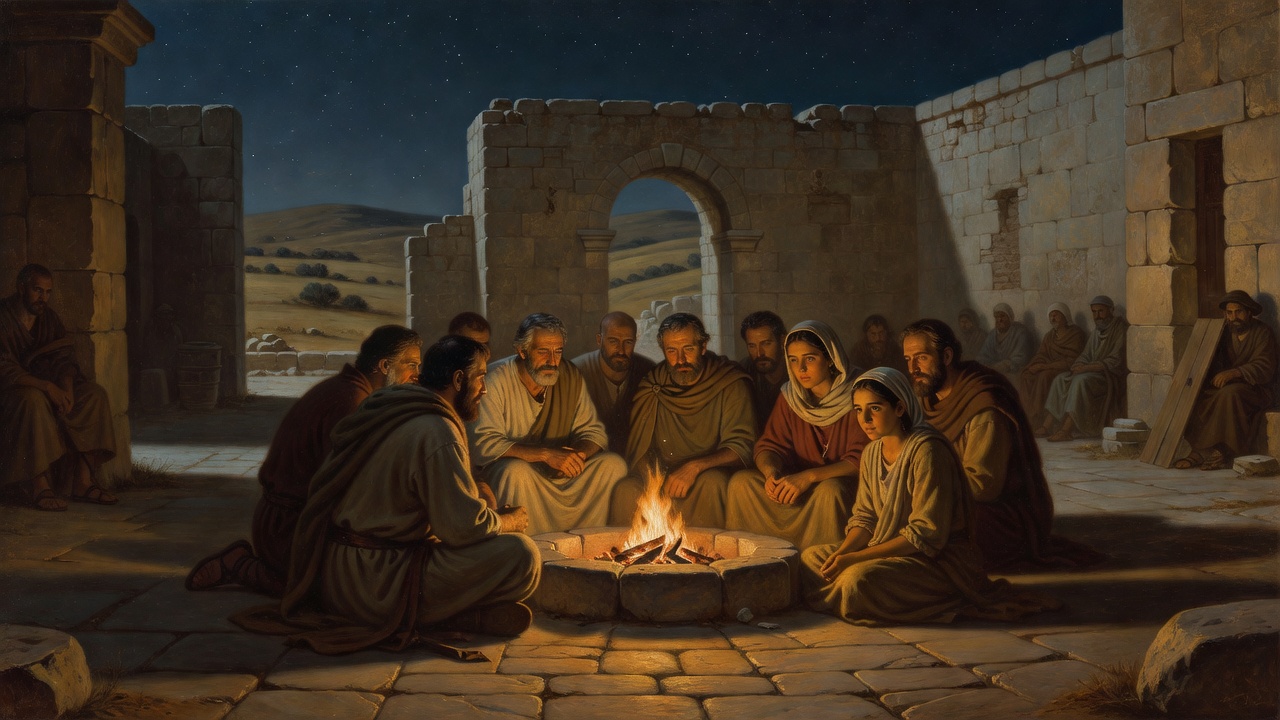
Did you know?
The Passover Meal and the Arrest
- The chapter calls the approaching Feast of Unleavened Bread the Passover and places the meal on the day the Passover lamb was to be sacrificed. Jesus sent Peter and John, both from Bethsaida and both fishermen, to prepare it; they found a large furnished upper room, and when the hour came he reclined at the table with the apostles.Sources: the Bible text itself · Simon Peter · John the Apostle
- Judas, one of the Twelve, is called Iscariot, a surname explained as meaning a man of Kerioth, and he is identified as the son of Simon. The chapter says that Satan—a name meaning adversary or accuser—entered him; Judas then agreed with the chief priests and temple officers to hand Jesus over for money, away from the crowd.Sources: the Bible text itself · Judas Iscariot · Satan
- After the meal Jesus went, as usual, to the Mount of Olives, a ridge east of Jerusalem named for the olive trees covering its slopes and separated from the city by the Kidron valley. He withdrew about a stone’s throw beyond the disciples, knelt, and prayed; then a crowd led by Judas arrived, and Jesus was taken to the high priest’s house.Sources: the Bible text itself · Mount of Olives
Notes written with AI assistance from open sources (Theographic Bible Metadata, CC BY-SA 4.0; Easton’s Bible Dictionary, public domain) and reviewed before publishing.
Places in this chapter
Only places identified with high confidence are shown (90% or more according to the scholarly sources compiled by OpenBible). Period map: DARE (Digital Atlas of the Roman Empire), CC BY 4.0; modern map: © OpenStreetMap contributors; places: OpenBible.info (CC BY 4.0).
Credits and license for this translation
I 'utz laj tzij re i dios
New Testament in Achi (I 'utz laj tzij re i dios)
copyright © 2009 Wycliffe Bible Translators, Inc.
Language: Achi
Dialect: Cubulco
Translation by: Wycliffe Bible Translators, Inc.
Achi, Cubulco
Achi' is a Mayan language very
closely related to K'iche' (Quiché in the older orthography). It is spoken by the
Achi people, primarily in the area of Baja Verapaz in Guatemala. There are two Achi'
dialects. Cubulco Achi' is spoken by approximately 48,000 people in the Cubulco area
west of Rabinal area. Rabinal Achi' is spoken by approximately 37,000 people in the
Rabinal area.
El Nuevo Testamento
en el idioma Achí de Cubulco de
Guatemala
Ediciones anteriores
Segunda edición
©2009, Wycliffe Bible
Translators
Primera edición
Publicado por
©1984, Sociedad Bíblica
Internacional
Copyright Information
© 2009, Wycliffe Inc. All rights reserved.
This translation text is made available to you under the terms of the Creative
Commons License: Attribution-Noncommercial-No Derivative Works. ( http://creativecommons.org/licenses/by-nc-nd/3.0/ ) In addition, you have
permission to port the text to different file formats, as long as you do not change
any of the text or punctuation of the Bible.
You may share, copy, distribute, transmit, and extract portions or quotations from
this work, provided that you include the above copyright information:
You must give Attribution to the work.
You do not sell this work for a profit.
You do not make any derivative works that change any of the actual words or
punctuation of the Scriptures.
Permissions beyond the scope of this license may be available if you contact us
with your request. If you want to revise a translation, use a translation in an
adaptation, or use a translation commercially, we will consider your request.
NT:segunda edición
The New Testament
in Achi
© 2009, Wycliffe Inc. All rights reserved.
This translation is made available to you under the terms of the
Creative Commons Attribution-Noncommercial-No Derivatives license 4.0.
You may share and redistribute this Bible translation or extracts from it in any format, provided that:
You include the above copyright and source information.
You do not sell this work for a profit.
You do not change any of the words or punctuation of the Scriptures.
Pictures included with Scriptures and other documents on this site are licensed just for use with those Scriptures and documents.
For other uses, please contact the respective copyright owners.
2013-01-05
Source: http://ebible.org/acr-acc/ · eBible.org