John 6
I 'utz laj tzij re i dios · Tap a verse to see its cross-references.
Wach qui tzukic u qʼuial winak xoʼon i Jesus
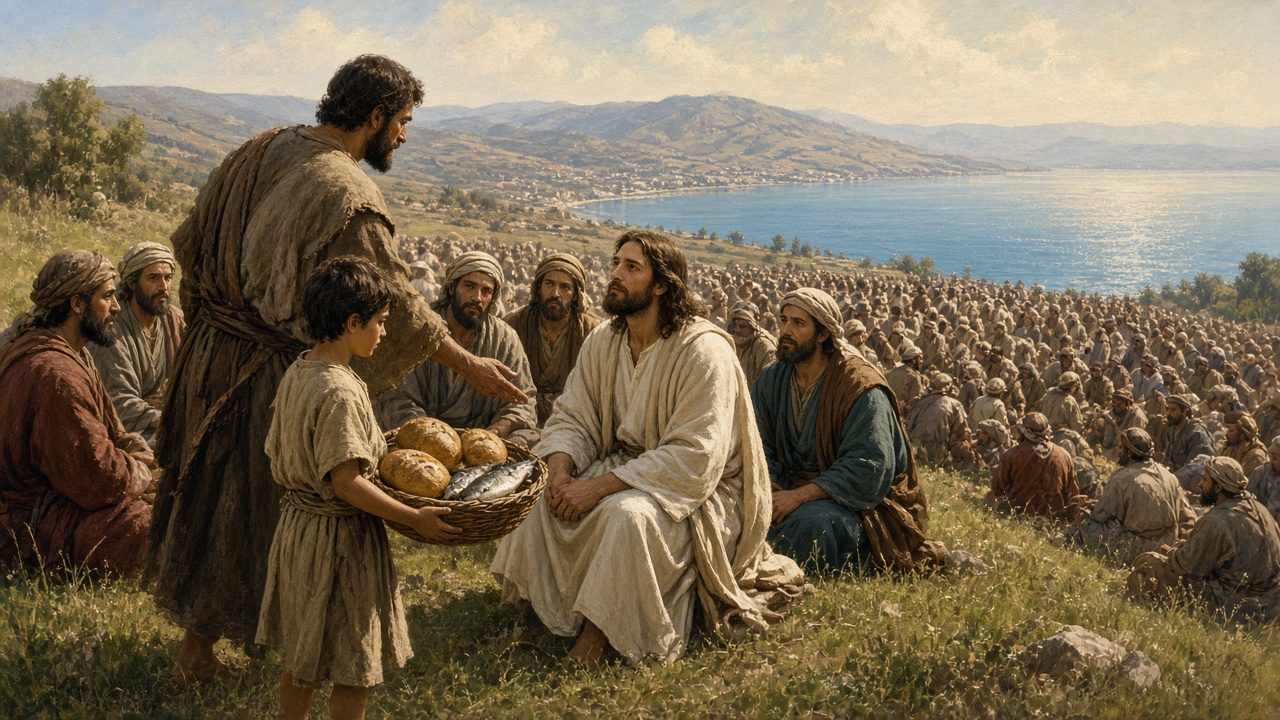
1Teʼuri i Jesus xu ʼaxuj i alagun, Galiléa u bi, chi xak Tibérias ca bix che. 2Je qʼui i winak xe terej bi chirij, man quilom chic i milágro u ʼanom are xe rutzirsaj i iwabib. 3Teʼuri i Jesus xel bi che jun jyub cuʼ u tijoxelab y xe cubi chila. 4Ya ca nakajab i niraaʼij chi are i páscua que i aj Israel winak. 5I Jesus cul chila, xe ril u qʼuial winak ca tijin cuponic ruʼ. Xu bij che i ma Felípe:
—¿Pa caka loʼ wi i wa quiqui tijbej re conojel i winak-i?
6Queje ile xu bij, xa ilbal-re wach cu bij i ma Felípe, man i Jesus u chʼobom chic wach coc chu ʼonquil. 7I ma Felípe xu bij che:
—Mi tene queb ciénto quetzal n-coʼon taj, loʼbal-re i caxlanwa ca yaʼ chique; mi tene we xa jutak biʼ caka ya chique, n-que u ʼon taj —xu bij.
8Teʼuri xchʼaw i ma Andres chi jun chic chique u tijoxelab i Jesus, chi xak ratz u chaʼ i ma Simon Pédro. Xu bij che i Jesus:
9—ʼO jun acʼal chi, rucʼam queb car xak joʼob caxlanwa ʼantal che cebáda. Péro we xui ile, n-coʼon taj man je qʼui i winak —xu bij.
10I Jesus xu bij chique:
—Chi bij chique i winak chi que cubiʼic —xu bij.
Pa i je ʼo wi-le, chom i qʼuim ʼo che, y conojel xe cubiʼic; colo je joʼob mil achiab. 11Teʼuri i Jesus xu cʼam i caxlanwa; are ʼuri xu cʼamwaj xu tioxij che i Dios, y xu ya chique u tijoxelab. Ique xqui jach chique conojel i winak chi je culic. Xak queje xoʼon che i car, xu ya chique niʼpa u nimal cacaj. 12Are xe noj i winak conojel, i Jesus xu bij chique u tijoxelab:
—Chi molo ronojel i chʼakatak chi n-xqʼuis taj, n-ʼus taj toʼ ca ʼani cʼax che —xu bij.
13Are xqui molo, xnoj cablajuj coban che. Ile are i chʼakatak chi n-xqʼuis ta che i joʼob caxlanwa re cebáda. 14Teʼuri i winak, are xquil i milágro-le chi xoʼon i Jesus chiquiwach, xqui bij:
—Katzij, iri are i ajbil u tzij i Dios chi koyʼem u cʼunic chuwach i jyub taʼaj —xe cha.
15I Jesus xu nabej chi i winak-le cacaj quiqui ʼan pen che, chi quiqui cʼam bic, y quiqui ʼan qui ʼatol tzij che. Rumal-i, xel chiquixol, y xel chubi mas che i jyub utuquel.
Wach u binic i Jesus chuwi ya
16Are ya coc aʼab, i u tijoxelab i Jesus xe kaj li chu chiʼ i alagun. 17Teʼuri xe oc chupam jun bárco, y xqui maj bi qui be chuwi ya, ʼenam-que cʼa pa tinimit Capernaum. Ya ocnak chic aʼab, i Jesus cʼa maja ca kaj li che i jyub. 18Are je ʼo chic chuwi ya, xpe jun tew, nim u choʼab; i uwi ya lic xu ticba silabic rumal i tew. 19Ique je bin-nak chic chuwi ya, colo jun légua ruʼ nicʼaj. Xak teʼet xquilo chi Jesus ca tijin u tejebic ruʼ i bárco; lic ca bin chuwi ya. Are xquilo, xqui xij quib che. 20Are ʼuri i Jesus xu bij chique:
—¡Mi xij iwib! Xa yin —coʼon chique.
21Rumal-i xcubi qui cʼux, y xqui cʼulaj i Jesus cuʼ pa bárco. Juntir, xe upon che i lugar pa ʼenam-wi que.
Je ʼo u qʼuial winak xqui tzucuj i Jesus
22Chucab ʼij, i winak chi xe canaj can chila pa xqui tij wi i caxlanwa, quetaʼam chi xa jun bárco ʼo teʼek chu chiʼ i ya. Xqui nabej chi i u tijoxelab i Jesus xe ʼe chupam i bárco-le, xak xquetamaj chi Jesus n-xa ʼe ta cuʼ. 23Tzʼakat je ʼo chila, xe upon juban bárco je aj pa tinimit Tibérias. Xe qʼuiji chu nakaj i lugar pa qui tijom wi i caxlanwa, are xutzin i Kajwal chu tioxixic che i Dios. 24I winak, are xquilo chi Jesus, tak i u tijoxelab, je n-ta chic chila pa xqui tij wi i wa, xe oc chupam tak i bárco-le; teʼuri xe ʼax chʼakap cʼa Capernaum chu tzucuxic i Jesus.
Are i Jesucrísto are i wa re i cʼaslemal
25I winak-le, are xe upon chʼaka alagun, xqui rik i Jesus.
—Tijonel, ¿umpa xat ʼax li chi? —xe cha che.
26I Jesus xu bij chique:
—Katzij i quin bij chiwe, yix quin i tzucuj xa rumal xix in tzuku. Xa rumal xix nojic quin i tzucuj; n-are ta rumal xi ta u be i nimak tak milágro chi in ʼanom. 27Mi ya i cʼux chu chʼaquic i wa chi xa ca qʼuisic; are chi ya i cʼux chu chʼaquic i wa chi n-ca qʼuis taj; chi chʼaca i wa chi cu ya i cʼaslemal chi n-ca qʼuis ta chic. I wa-le chi quin bij chiwe, ca yaʼ chiwe wumal yin chi in Achi aj Chicaj. Quin tiqui chu yaʼic chiwe man i Dios, chi i Ta Chicaj, u cʼutum chi u yom pinʼab quin ʼan ile —xu bij i Jesus chique.
28Teʼuri xqui tzʼonoj che:
—¿Wach nawi caka ʼano ʼanbal re i chac chi craj i Dios? —xe cha.
29I Jesus xu bij chique:
—I chac yix chuwach i Dios are iri: chi cuba i cʼux chwe yin, man i Dios in u takom lok.
30Xqui tzʼonoj chic che:
—¿Wach i cʼutbal re a choʼab ca ʼan na chakawach, caka cojbej-re a tzij? ¿Wach i nim laj séña ca ʼan na? 31I katit ka mam ujer, are je ʼo pa jyub tzʼinilic, xe tzuk che i wa aj chicaj, mana u bi. Ketaʼam ile man chuwach i wuj re i Dios, queje iri cu bij: “Xu ya i wa chique chi xpe chicaj, tzukbal que.” Queje ile tzʼibtalic —xqui bij.
32I Jesus xu bij chique:
—(Qui bij yix chi are i mam Moises xyaw i wa-le chique.) Katzij i quin bij chiwe, n-are ti mam Moises xyaw i wa aj chicaj chique; are i Dios. Xui-ri, i wa-le n-xu ya ti qui cʼaslemal chi n-ca qʼuis taj. Péro woʼor in Kajaw cu ya i sakil wa aj chicaj chiwe. 33Are i sakil wa chi cu ya i Dios, are i Jun chi kajnak li chicaj. Ire cu ya i sakil cʼaslemal chique i winak chuwach i jyub taʼaj —xu bij i Jesus chique.
34Teʼuri xqui bij che:
—Kajwal, cha ya na chake i wa-le ronojel tak ʼij.
35I Jesus xu bij chique:
—Yin i wa-le chi cu ya i sakil cʼaslemal; pachin jun ca cʼun wuʼ, n-ca pe ta chic u numic; pachin cu cuba u cʼux chwe n-ca pe ta chic i cʼatic pu cʼux. 36Xui-ri yix, pacha xin bij ʼut, n-quix cojon taj, tupu iwilom chic in wach. 37Conojel niʼpa i que yaʼ chwe rumal in Kajaw, que cʼun wuʼ. Niʼpa i cacaj que terej chwij, n-que in tzalijsaj tubic. 38Man yin xin pe chicaj, n-are ta col in ʼana pacha i cwaj yin; xa are col in ʼana pacha i craj i Jun chi in takawnak lok. 39Are i craj in Kajaw chi xin u tak lok are iri: chi mi jun quin sach chique i je u yom chwe; queje ile, que in walijsaj na chiquixol i camnak pa qʼuisbal ʼij. 40Man are i craj i xin takaw lok are iri: conojel niʼpa i quiquil u be in pachin yin, chi in u Cʼojol i Dios, xak quiqui cuba qui cʼux chwe, ca yaʼ ni cʼaslemal chique chi n-tu qʼuisic. Xak quin cʼunsaj sak chiquiwach chiquixol i camnak pa qʼuisbal ʼij —xu bij i Jesus chique.
41Are ʼuri i qui nimakil i aj Israel winak xpe coywal che y xe oc chu chʼachʼaxic chiquiwach, man xu bij chique, “Yin i wa chi xpe chicaj,” xu bij. 42Ique xqui bij:
—I achi-ri xa are i ma Jesus, u cʼojol i ma Jose; lic ketaʼam qui wach u kajaw u chuch. ¿Wuchac ʼut cu bij woʼor chi kajnak li chicaj? —xe cha.
43I Jesus xu bij chique:
—Chi mayij in chʼachʼaxic chiwach. 44N-ta jun ca cʼun wuʼ yin, we n-are ti in Kajaw ca cʼamaw lok, chi in u takom li yin. Xak quin cʼunsaj sak chuwach chiquixol i camnak pa qʼuisbal ʼij. 45I ajbil u tzij i Dios ujer xqui tzʼibaj i tzij-i: “I Dios que u tijoj na conojel.” Queje ile tzʼibtalic. I tzij-le queʼelok chi conojel niʼpa i quiqui ta u be wach cu bij i Ta, y xak que naw che ire, que cʼun ʼuri wuʼ yin. 46Katzij mi jun winak rilom u wach i Ta, xa jun ilawnak u wach, xui yin, man in petnak chila ruʼ ire. 47Sak laj tzij i quin bij chiwe: pachin jun cu cuba u cʼux chwe yin, ʼo u cʼaslemal chi n-ca qʼuis ta chic. 48Are yin i wa chi cu ya i sakil cʼaslemal. 49Iwatit i mam ujer, are xe bin pa jyub tzʼinilic, xqui tij i mana chi xpe chicaj; xui-ri i wa-le n-xu ya ti sakil cʼaslemal chique, man are xu rik i ʼij, xe camic. 50Xui-ri ʼo jun wa petnak chicaj, chi pachin jun cu tijo, lic n-ca cam taj. 51Yin i wa-le chi petnak chicaj, are yin i wa chi lic cʼaslic. Pachin jun cu tij i wa-ri, i u cʼaslemal n-tu qʼuisic ʼuri. I wa chi quin ya yin are in chʼacul, quin ya wib piqui qʼuexel i winak, yabal-re qui cʼaslemal chuwach i jyub taʼaj —xu bij i Jesus chique.
52Rumal i tzij-le, i aj Israel winak xe oc chu chapic quib chi tzij chiquiwach:
—¿Wach u ʼonquil ile, chi cu ya u chʼacul caka tijo? —xe cha.
53I Jesus xu bij chique:
—Sak laj tzij i quin bij chiwe: we yix n-qui tij ti u chʼacul i Achi aj Chicaj, xak we n-qui tuʼ ti u quiqʼuel, n-ti i cʼaslemal ʼuri. 54Pachin jun cu tij in chʼacul y cu tuʼ in quiqʼuel, ʼo u cʼaslemal ʼuri chi n-ca qʼuis ta chic. Xak quin cʼunsaj sak chuwach chiquixol i camnak pa qʼuisbal ʼij. 55Queje ile quin bij, man in chʼacul are i sakil wa; xak in quiqʼuel are i sakil ya. 56Pachin jun cu tij in chʼacul, xak cu tuʼ in quiqʼuel, ca qʼuiji ʼuri wuʼ yin, xak yin quin qʼuiji ruʼ ire. 57I Ta chi xin u tak lok, ire cʼaslic; rumal ire, xak yin in cʼaslic. Xak queje ile, we jun cu tzuk rib chwe yin, ca cʼasi na wumal yin. 58Queje i wa ile chi kajnak li chicaj; i wa-le n-are ta pacha i mana chi xqui tij iwatit i mam, man ique xak xe camic are xu rik qui ʼij. Are i cu tij i wa-ri chi quin ya yin, cu rik u cʼaslemal chi n-ca qʼuis ta chic —xu bij.
59Are i tzij-le xu bij i Jesus, are xe u tijoj wi i winak pa molbalʼib que i aj Israel pa tinimit Capernaum.
I u tzij i Jesucrísto cu ya i sakil cʼaslemal
60I je teren chirij, are xqui ta i tzij-le, je qʼui chique xqui bij:
—Cʼax u tayiquil i tzij-le; ¿pachin ca chʼijaw u tayic ile? —xe cha.
61I Jesus xu nabej wach quiqui bij chiquiwach. Rumal-i xu tzʼonoj chique:
—¿Tzel qui ta i xin bij-le? 62¿Wach nawi qui bij we quin iwilo quin ʼel chubi chicaj pa in ʼo wi teʼek, yin chi in Achi aj Chicaj? 63Are i ranima jun winak, are i ca yaw u cʼaslemal i u chʼacul; i toʼ chʼaculaj n-ta cu chacuj. Xak queje i tzij ile chi xin bij chiwe, are i ca yaw i sakil cʼaslemal, are i ca yaw i u Tewal i Dios pi cʼux. 64Xui-ri, cʼo jujun chiwe yix chi n-qui coj taj —xu bij chique.
I Jesus retaʼam chu xebal pachin n-cacaj ta que cojonic, xak retaʼam pachin i jun chi ca jachaw na che i camic. 65Xu bij chic:
—Rumal-i, in bim chiwe n-ta jun toʼ ca cʼun wuʼ yin, we n-are ta in Kajaw ca cʼamaw lok —xu bij chique.
66I je teren chirij, are xqui ta ile, je qʼui xcoʼtaj canok; n-xe terej ta chic chirij. 67Teʼuri xu bij chique i cablajuj u tijoxelab:
—Y yix, ¿mok xak quiwaj ʼenam? —xu bij.
68Are ʼuri i ma Simon Pédro xu bij che:
—Kajwal, ¿Pachin ruʼ coj ʼe wi? Mi jun; xui yet ca bij i tzij chake chi cu ya i cʼaslemal n-tu qʼuisic. 69Yoj ka cubam chic ka cʼux chawe; ketaʼam chi yet at Crísto, u Cʼojol i Dios chi lic cʼaslic —coʼono.
70I Jesus xu bij chique:
Xix in cha yix, ix cablajuj; tupu yin xix in cha, xui-ri ʼo jun chiwe chi xa itzel —xu bij.
71I tzij xu bij-le, re i ma Júdas chi u cʼojol i ma Simon Iscarióte. Man i ma Júdas-le, are i ca jachaw na che i camic, tupu are jun chique i cablajuj tijoxelab je chatal rumal i Jesus.
Did you know?
The Bread of Life
- In this chapter John calls the lake both the Sea of Galilee and the Sea of Tiberias. Easton's Bible Dictionary describes it as twelve and a half miles long and from four to seven and a half miles wide, with its surface 682 feet below the Mediterranean. Tiberias, on the western shore, is said to have been founded by Herod Antipas in A.D. 16 and named for the emperor Tiberius; some boats from that city landed near the place where the people had eaten the bread.Sources: the Bible text itself · Sea of Galilee · Tiberias
- That evening the disciples set out by boat for Capernaum, and the next day the crowd crossed and found Jesus there. He delivered the teaching about the bread of life in the synagogue at Capernaum. Easton's Bible Dictionary notes that the city, not mentioned in the Old Testament, became Jesus' own city after his expulsion from Nazareth and was the scene of many episodes in his ministry.Sources: the Bible text itself · Capernaum
- As the crowd drew near, Jesus asked Philip where they could buy bread, a question the narrative says was meant to test him, for Jesus already knew what he would do. Philip, like Andrew and Peter, was from Bethsaida; he answered that two hundred denarii would not buy enough for each person to have a small piece. Andrew, Peter's brother, then pointed out a boy with five barley loaves and two small fish, and Easton's Bible Dictionary, citing this exchange among other passages, says Philip seems to have held a prominent place among the apostles.Sources: the Bible text itself · Phillip the Apostle · Andrew · Simon Peter
Notes written with AI assistance from open sources (Theographic Bible Metadata, CC BY-SA 4.0; Easton’s Bible Dictionary, public domain) and reviewed before publishing.
Places in this chapter
Only places identified with high confidence are shown (90% or more according to the scholarly sources compiled by OpenBible). Period map: DARE (Digital Atlas of the Roman Empire), CC BY 4.0; modern map: © OpenStreetMap contributors; places: OpenBible.info (CC BY 4.0).
Credits and license for this translation
I 'utz laj tzij re i dios
New Testament in Achi (I 'utz laj tzij re i dios)
copyright © 2009 Wycliffe Bible Translators, Inc.
Language: Achi
Dialect: Cubulco
Translation by: Wycliffe Bible Translators, Inc.
Achi, Cubulco
Achi' is a Mayan language very
closely related to K'iche' (Quiché in the older orthography). It is spoken by the
Achi people, primarily in the area of Baja Verapaz in Guatemala. There are two Achi'
dialects. Cubulco Achi' is spoken by approximately 48,000 people in the Cubulco area
west of Rabinal area. Rabinal Achi' is spoken by approximately 37,000 people in the
Rabinal area.
El Nuevo Testamento
en el idioma Achí de Cubulco de
Guatemala
Ediciones anteriores
Segunda edición
©2009, Wycliffe Bible
Translators
Primera edición
Publicado por
©1984, Sociedad Bíblica
Internacional
Copyright Information
© 2009, Wycliffe Inc. All rights reserved.
This translation text is made available to you under the terms of the Creative
Commons License: Attribution-Noncommercial-No Derivative Works. ( http://creativecommons.org/licenses/by-nc-nd/3.0/ ) In addition, you have
permission to port the text to different file formats, as long as you do not change
any of the text or punctuation of the Bible.
You may share, copy, distribute, transmit, and extract portions or quotations from
this work, provided that you include the above copyright information:
You must give Attribution to the work.
You do not sell this work for a profit.
You do not make any derivative works that change any of the actual words or
punctuation of the Scriptures.
Permissions beyond the scope of this license may be available if you contact us
with your request. If you want to revise a translation, use a translation in an
adaptation, or use a translation commercially, we will consider your request.
NT:segunda edición
The New Testament
in Achi
© 2009, Wycliffe Inc. All rights reserved.
This translation is made available to you under the terms of the
Creative Commons Attribution-Noncommercial-No Derivatives license 4.0.
You may share and redistribute this Bible translation or extracts from it in any format, provided that:
You include the above copyright and source information.
You do not sell this work for a profit.
You do not change any of the words or punctuation of the Scriptures.
Pictures included with Scriptures and other documents on this site are licensed just for use with those Scriptures and documents.
For other uses, please contact the respective copyright owners.
2013-01-05
Source: http://ebible.org/acr-acc/ · eBible.org