Hebrews 5
I 'utz laj tzij re i dios · Tap a verse to see its cross-references.
1I ʼatz laj aj cojol qʼuexelaj que i aj Israel are jun achi chatal chiquixol i winak. Ire, are yatal chic u patan, cu coj qui tzij i winak chuwach i Dios, cu coj qui qʼuexel, cu sujuj chicop chi cu poroj chuwach i Dios, tojbal re qui mac i winak. 2I aj cojol qʼuexelaj-le, lic winak, n-ta kas u choʼab; rumal-i ʼo u nimal u cʼux chique i winak chi que macunic, chi n-kas ta quetaʼam i sak laj tzij, xa je sachnak. 3I aj cojol qʼuexelaj-le, xa winak, rumal-i ʼo u chac cu sujuj u qʼuexel ire mísmo chuwach i Dios, tojbal re u mac; queje u cojic u qʼuexel cu ʼano pacha cu ʼan chique i juban winak.
4Mi jun toʼ coʼon ʼatz laj aj cojol qʼuexelaj che rib; n-ca majaw taj. Xui i Dios ca yaw i nim laj patan-le, pacha xu ya che i mam Aaron ujer. 5Xak queje i Jesucrísto. Ire n-toʼ ta xu min rib che i patan-le, are i Dios xyaw i nim laj u patan-le che, man u bim che:
Yet at in Cʼojol; woʼor in yom a cʼaslemal.
(Queje ile xu bij.)
6Xak ʼo jun chic tzij chupam i wuj re i Dios chi cu bij queje iri:
Yet at aj cojol qui qʼuexel i winak chinwach chi n-tu qʼuisic a patan.
Xak jun a patan pacha re i mam Melquisedec ujer.
(Queje ile tzʼibtalic.)
7Oʼonom lok, i Jesucrísto are ʼo chi chuwach i jyub taʼaj, retaʼam chi i Dios ʼo puʼab cu to chuwach i camic. Rumal-i, xoʼic xu tzʼonoj u tobal che; co xchʼawic are xu tzʼonoj che. I Dios lic xu ta wach i xtzʼonox che, man i Jesucrísto u yom rib puʼab, wach craj i Dios. 8N-rumal ta che we u Cʼojol i Dios, lic xu tij ni uyej chi chuwach i jyub taʼaj; xoʼon cas che i Dios, tupu xu tij uyej chu ʼanic ile. 9Queje ile, i Jesucrísto xeʼelok jun Tolke chi lic n-ta palt che, rumal-i, ire rajaw i quelbal i winak chi sak. Niʼpa i quiqui coj u tzij ire, quiqui rik jun qui cʼaslemal n-tu qʼuisic. 10Rumal-i, i Dios xu ya u patan chi ʼatz laj aj cojol qui qʼuexel i winak chuwach ire, pacha u patan i mam Melquisedec ujer.
Chi ʼana cwent mokxa quiwoʼtaj can i Jesucrísto
11Cʼo te mas cwaj quin bij chiwe che ile, xui-ri, n-quin bij taj; cʼax u ʼalijinsaxic chiwe, man cʼax u majic usucʼ qui ʼano. 12Ujer tan, quix tijin chu tayic u tzij i Dios; ca majawic ix aj cʼutunel chic-re. Xui-ri, n-queje ti ile; xa ʼo u chac ca jek tan chal u cʼutic chiwe niʼpa tak i n-cʼax ta ca ʼanic. Ix pacha ix ral tak acʼalab chi cʼa que tzʼumanic, chi cʼa maja quiqui tij wa. 13Ique chi cʼa maja quiqui ta u be pachique i ʼutz chuwach i Dios, cʼa pacha que tzʼumanic, n-ti qui noʼoj. 14We quiqui tij chic i wa, ya je nimak chic, ʼo chic ʼuri qui noʼoj. Ya ujer tan u cʼamom chic rib chique chi quiqui cha i ʼutz; n-cacaj ta chic i mal.
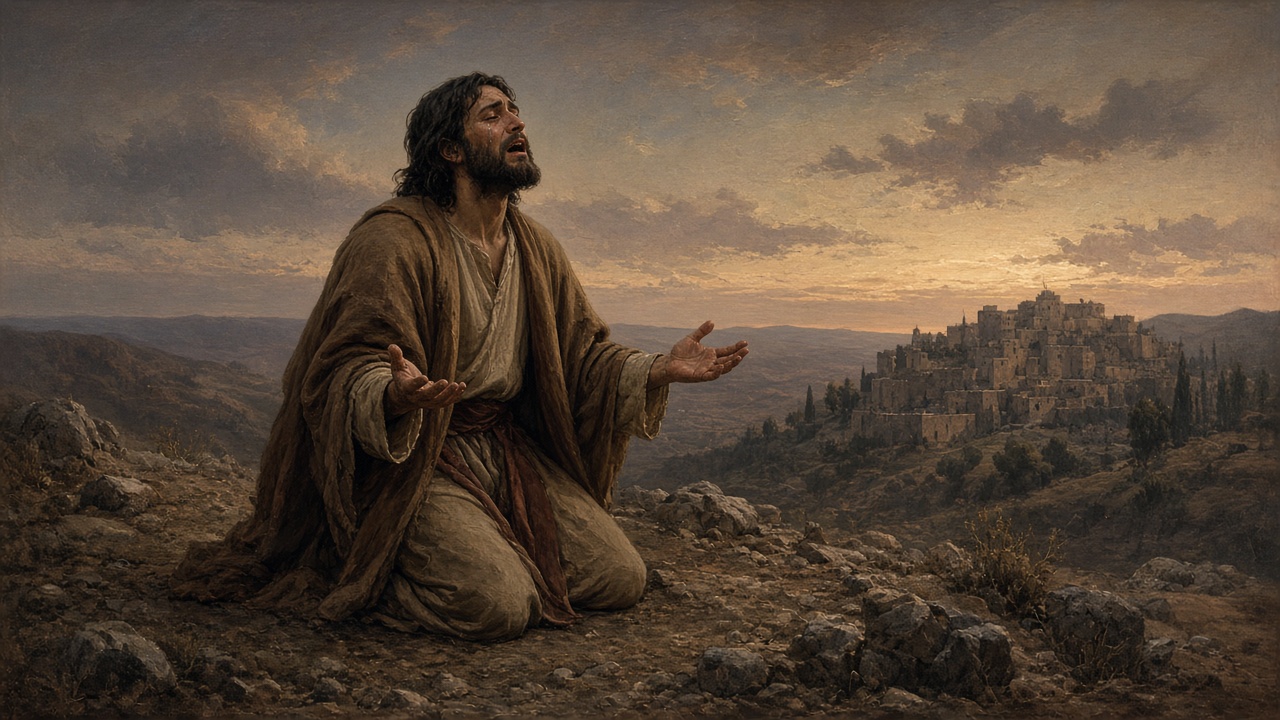
Did you know?
A High Priest Called by God
- Hebrews 5 presents Aaron as the pattern of a high priest who does not take the honor upon himself but is called by God. Aaron, eldest son of Amram and Jochebed, was born in Egypt three years before his brother Moses. When the time drew near for Israel’s deliverance from Egypt, God sent him to meet his long-absent brother so that they might work together toward the Exodus.Sources: the Bible text itself · Aaron
- Melchizedek, whose name Easton's Bible Dictionary (1897) explains as “king of righteousness,” was king of Salem. All that the Old Testament records of him is in Genesis 14:18–20, and he is mentioned only once more, in Psalm 110:4. Hebrews 5 applies to Christ the words “You are a priest forever in the order of Melchizedek,” and the same dictionary says that Hebrews 7 sets out the significance of his story in detail and presents his priesthood as superior to Aaron’s, noting that Abraham paid him tithes and that Melchizedek blessed Abraham.Sources: the Bible text itself · Melchisedec
Notes written with AI assistance from open sources (Theographic Bible Metadata, CC BY-SA 4.0; Easton’s Bible Dictionary, public domain) and reviewed before publishing.
Credits and license for this translation
I 'utz laj tzij re i dios
New Testament in Achi (I 'utz laj tzij re i dios)
copyright © 2009 Wycliffe Bible Translators, Inc.
Language: Achi
Dialect: Cubulco
Translation by: Wycliffe Bible Translators, Inc.
Achi, Cubulco
Achi' is a Mayan language very
closely related to K'iche' (Quiché in the older orthography). It is spoken by the
Achi people, primarily in the area of Baja Verapaz in Guatemala. There are two Achi'
dialects. Cubulco Achi' is spoken by approximately 48,000 people in the Cubulco area
west of Rabinal area. Rabinal Achi' is spoken by approximately 37,000 people in the
Rabinal area.
El Nuevo Testamento
en el idioma Achí de Cubulco de
Guatemala
Ediciones anteriores
Segunda edición
©2009, Wycliffe Bible
Translators
Primera edición
Publicado por
©1984, Sociedad Bíblica
Internacional
Copyright Information
© 2009, Wycliffe Inc. All rights reserved.
This translation text is made available to you under the terms of the Creative
Commons License: Attribution-Noncommercial-No Derivative Works. ( http://creativecommons.org/licenses/by-nc-nd/3.0/ ) In addition, you have
permission to port the text to different file formats, as long as you do not change
any of the text or punctuation of the Bible.
You may share, copy, distribute, transmit, and extract portions or quotations from
this work, provided that you include the above copyright information:
You must give Attribution to the work.
You do not sell this work for a profit.
You do not make any derivative works that change any of the actual words or
punctuation of the Scriptures.
Permissions beyond the scope of this license may be available if you contact us
with your request. If you want to revise a translation, use a translation in an
adaptation, or use a translation commercially, we will consider your request.
NT:segunda edición
The New Testament
in Achi
© 2009, Wycliffe Inc. All rights reserved.
This translation is made available to you under the terms of the
Creative Commons Attribution-Noncommercial-No Derivatives license 4.0.
You may share and redistribute this Bible translation or extracts from it in any format, provided that:
You include the above copyright and source information.
You do not sell this work for a profit.
You do not change any of the words or punctuation of the Scriptures.
Pictures included with Scriptures and other documents on this site are licensed just for use with those Scriptures and documents.
For other uses, please contact the respective copyright owners.
2013-01-05
Source: http://ebible.org/acr-acc/ · eBible.org