Acts 27
I 'utz laj tzij re i dios · Tap a verse to see its cross-references.
I ma Páblo ca tak bi pa Róma
1Xoʼon panok, are xnucʼtajic chi quiqui tak bi i ma Páblo pa Róma (chi u cwenta i jyub Itália), xqui yijba i ka ʼenam pa bárco. Xqui jach i ma Páblo, junam cuʼ juban chic aj prexil, puʼab jun capitan, ma Júlio u bi. Ire cajʼatzil jutzobaj soldádo chi “re i ʼatz laj ʼatol tzij” ca bix chique. 2Xoj ʼe che jun tinimit chu chiʼ i mar, u bi Adramítio. Are xoj uponic, ʼo jun bárco ya quel bic, ʼenam-re che jujun tinimit pa jyub Asia. Xoj ʼan bi chupam, y xoj ʼec. Xak ʼo i kachalal, ma Aristárco kuʼ chi aj Tesalónica, u cwenta i jyub Macedónia. 3Chucab ʼij, xoj upon pa tinimit Sidon, chi ʼo chu chiʼ i ya. I capitan, ma Júlio, lic ʼutz che i ma Páblo; xu ya che chi que ʼe u solij i retaʼam qui wach, man quiqui ya che, wach i rajwaxic che. 4Teʼuri xoj ʼan chic pa bárco, y xoj el pa Sidon. N-xoj ʼe ta sucʼulic rumal jun nim laj tew xpe chakawach; are u ʼonquil xoj icʼaw chirij i jyub Chípre, chi setel chuwi mar pa ka moxim. 5Xoj bin chuwi mar chuwach i jyub Cilícia, xak chuwach i jyub Panfília, y xoj upon pa tinimit Míra, u cwenta i jyub Lícia.
6Chila, i capitan que i soldádo xu rik jun bárco aj pa tinimit Alejandría, ʼenam-re pa jyub Itália. Xu bij chake chi coj ʼan bi chupam, caka majbej tan chic re i ka be. 7Qʼuial ʼij coqʼuil xoj binic: cʼax kuponic chuwach i tinimit Nído. I tew cʼa ca tijin chakawach, rumal-i xka ʼat ka be, y xoj icʼaw chuwach i tinimit Salmon. Teʼuri xoj icʼaw chu cʼulel i jyub Créta, chi setel chuwi mar. 8Cʼax ka binic xka ʼan chu cʼulel i jyub-le, cʼa xoj upon che jun ral tinimit, Buénos Puértos u bi, chu nakaj che i tinimit Laséa.
9Qʼuial ʼij icʼawnak chic che i ka be, y cʼax chic coj bin chuwi mar man ya xpe i ʼalaj. Rumal-i i ma Páblo xu ya qui noʼoj; xu bij chique:
10—Achiab, cwil yin che i ka ʼenam-i, lic xibinʼib ruʼ; ʼo chuwach caka sach ni ekan, xak caka sach ni ka bárco, xak ʼo ne chuwach coj cam yoj —xu bij.
11Xui-ri i capitan que i soldádo n-xu coj ta retalil che wach xu bij i ma Páblo; xa are xu coj retalil che wach xu bij i rajaw i bárco, xak wach xu bij i ca ucʼaw i bárco. 12I ral tinimit chu chiʼ i mar, pa i oj ʼo wi, n-kas ta ʼutz we cakoyʼej chila cʼa quicʼaw ni ʼalaj. Rumal-i, laj conojel xqui chʼobo chi ʼutz coj el chila, caka maj chubi i ka be. Cacaj ique coj upon pa tinimit Feníce, we coj tiqui che. I Feníce-le, jun tinimit re i jyub Créta, ʼo chu chiʼ i mar; ʼo queb ocbal bic che, jun pa noroéste, y jun chic pa suroéste. Cacaj ique chila coj canaj wi, cʼa quicʼaw ni ʼalaj.
Xqui tij uyej pa tew jab chuwi mar
13Xu jek walijic i tew coqʼuil pa sur, rumal-i xqui jek u ʼanic pacha i xqui chʼobo. Are u ʼonquil xqui maj bi qui be, xe bin chuwi mar chu chiʼ i jyub Créta. 14Xa jubiʼ ka binic, xpe jun nim laj tew, xjekan li pa wikabim jubiʼ re i relbal li ʼij; lic tij u choʼab chirij i bárco. 15Lic xu charej bic. N-xoj tiqui ta chu binsaxic i bárco sucʼulic, rumal-i xka ya che, xoj cʼam bi rumal i tew. 16Xoj icʼaw chirij jun ral jyub setel chuwi mar, u bi Cláuda; chila, n-kas ta nim u choʼab i tew. ʼO jun canuw chi ca charex li chirij i bárco; xak pa chalo xoj tiqui chu jeqʼuic kuʼ. 17Teʼuri xka yaco y xka ʼansaj chupam i bárco; teʼuri, ruʼ juban laso, nimak u pam, xqui batzʼcatij chirij i bárco man n-ca pax ta rumal i tew. Xqui xij quib che, mokxa i tew cu min bi i bárco pa seneb chu chiʼ i mar chila che i lugar “Sírte” ca bix che. Rumal ʼuri xqui kajsaj i nimak tak cʼul riptal puwi i bárco. Teʼuri xqui ya che i tew pa xraj xe u cʼam wi bic. 18Chucab ʼij, cʼa nim u choʼab i tew; rumal-i xqui jek u cʼakic bi i ekan chuwi ya, ʼobsabal re i ralil i bárco. 19Churox ʼij, ique mísmo xqui jek u toric u pam i bárco, y xqui cʼak bi chuwi ya. 20Qʼuial ʼij, n-xa ʼiltaj tu wach i ʼij, xak mi ne i chʼumil. I tew, lic nim u choʼab. Xeʼelok, xka sach u cubibal ka cʼux chi coj totajic. 21Xak n-ta chic wa caka tijo, rumal-i, i ma Páblo xtaqʼui ʼan chakaxol y xu bij:
—Achiab, we tene xi ʼano pacha i xin bij, ma ta xoj el li pa jyub Créta, n-queje tene caka tij i cʼax-i, xak i uyej-i. 22Xui-ri, chi cowij i cʼux; mi jun chiwe ca camic, xui i bárco ca sach u wach. 23Chaʼab, i Dios xu tak li jun ángel wuʼ; are i Dios-le chi in ʼo puʼab, xak quin ʼan u chac. 24I ángel xu bij chwe: “Ma xij awib, a-Páblo, man ʼo u chac cat ʼe cʼa Róma; cat upon chuwach i ʼatz laj ʼatol tzij chila. I Dios, awumal yet, que u to ni niʼpa i je ʼo awuʼ pa bárco.” Queje ile xu bij i ángel chwe. 25Rumal-i achiab, chi cowij i cʼux man cul in cʼux che i Dios chi cu ʼan na pacha i bital chwe. 26Xui-ri, i ka bárco que u mina rib pa seneb chu chiʼ jun ral jyub setel chuwi ya. (Queje ile xu bij i ma Páblo chique i rachiʼil.)
27Xicʼaw queb seman chi xka chʼij i cʼax chuwi ya. Oj ʼo chic pa mar, Adriático u bi, y xa coj retzʼbej i tew. Colo tiqʼuil aʼab, i que ucʼaw i bárco xqui nabej chi ya coj upon chu chiʼ jun jyub. 28Rumal-i, xqui paj u pam i ya; are xqui pajo, xeʼel treintiséis métros che u choyil i ya. Jubiʼ chupanok, xqui paj chic u pam i ya; xeʼelok xa veintisiéte métros chic u choyil. 29Quiqui xij quib, mokxa que qui mina quib chuwach abaj, rumal-i xquesaj li cajib nimak chʼichʼ xoc u tzam, xak ʼo laso che u ʼab. Xqui cʼak pa mar, tacʼbal re i bárco pa ya; ʼutz n-ca bin ta chic. Lic qui xim quib, xqui tzʼonoj che i Dios chi weʼ ca sakiric. 30Xui-ri, i que ucʼaw i bárco xqui chʼobo que ʼanmajic. Xqui jek u kajsaxic i canuw chuwi ya. Xqui ʼan pacha quiqui cʼak chubi juban chic chʼichʼ pa ya chu tzam i bárco; xui-ri, xa chu ʼonquil quiqui ʼano. 31I ma Páblo xu nabej wach que tijin chu ʼanic, y xu bij che i capitan, xak chique i u soldádo:
—I achiab-le, we n-que canaj ta pa bárco, n-quix totaj ta ʼuri yix —xu bij.
32Teʼuri i soldádo xqui caʼij i laso re i canuw y xtzak bi pa ya. (Queje ile, n-xe ʼanmaj ta chic i que ucʼaw i bárco.)
33Are ya ca sakiric, i ma Páblo xu bij chique chi quiqui tij qui wa. Xu bij:
—Yix, ya coʼon queb seman chi n-ta wa qui tijo, xak n-ix warnak taj. 34Lic quin tzʼonoj pawor chiwe, chi tija i wa; ile ʼo u chac we quiwaj quix cʼasʼic. Mi jun chiwe ca sachic, mi tene jun i wi che i jolom —xu bij chique.
35Are xu bij ile, i ma Páblo xu chap jun caxlanwa, y xu tioxij che i Dios chiquiwach conojel. Xu piro, y xu jek u tijawic. 36Teʼuri, conojel xpe u cowil qui cʼux, y xak xe oc chu tijawic. 37Niʼpa i oj ʼo pa bárco, oj dosciéntos seténta y séis. 38Conojel xqui tijo niʼpa i rajwaxic chique; are xquelej, xqui cʼak bi i trígo pa ya, ʼobsabal re i ralil i bárco.
I bárco xpax rumal i tew y xsach u wach
39Are xsakiric, i que ucʼaw i bárco xquil pan jun jyub, xui-ri n-xquetamaj taj pa i je ʼo wi. Xquilo chi ʼo jun rocbal ya chu chiʼ, y xqui chʼobo quiqui min i bárco chila we que tiqui che. 40Rumal-i, xqui caʼij i laso re i chʼichʼ chi xoc u tzam, yukbal re i bárco; xak xqui tor i laso ximbal re i tzʼalam pa tak u tzal. (I u chac i tzʼalam-le, cʼambal re u wach i bárco.) Xak xqui yac ʼan i cʼul chicaj, cʼambal bi u wach i bárco rumal i tew. Are ʼuri, i bárco xu jek tejeb bic chu chiʼ i ulew, 41xui-ri ʼo juban seneb tʼubul chuxeʼ i ya, cʼamtal li rumal queb u be ya. Are xupon i bárco pa ʼo wi i seneb-le, xchʼapi u tzam chupam, lic n-cu yin ta chic rib; i chirij i bárco, xu ticba paxic rumal u wi i ya chi xu ya u choʼab chuwach. 42I soldádo xqui chʼob qui camsaxic i aj prexil, man mokxa ʼo i que muxic y que ʼanmaj bic, quiqui chʼob ique. 43I capitan que i soldádo n-xu ya ta chique quiqui ʼan ile, man xril tobal u wach i ma Páblo. Xu bij ire chi niʼpa i quetaʼam que muxinic, chi qui cʼaka bi quib chuwi ya, ʼaxbal-que chuwach ulew. 44Xak xu bij chi niʼpa i n-quetaʼam ti mux, chiqui chapa juban tak tzʼalam, o xak chʼaka tak cheʼ re i bárco, y che ʼax puwi. Queje ile xka ʼano, y konojel xoj totajic; xka rik i ulew n-ta cʼax chake.
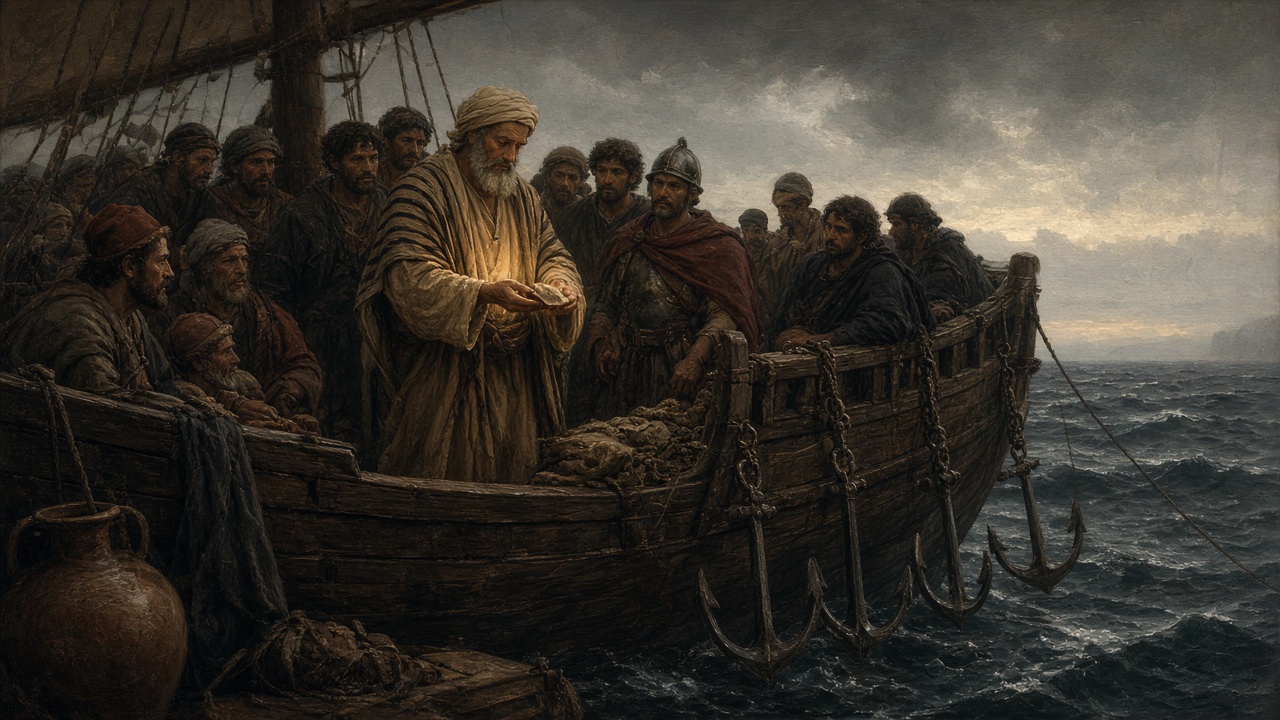
Did you know?
Storm and Shipwreck on the Way to Rome
- Paul and the other prisoners did not sail straight to Italy. At Caesarea they boarded a ship of Adramyttium, a city on the coast of Mysia in Asia Minor, bound for ports along the coast of Asia, a name Easton's Bible Dictionary takes in this verse as probably Asia Minor, and that ship carried them only as far as Myra in Lycia. There the centurion put them aboard an Alexandrian ship sailing for Italy; the dictionary notes that it was rare for a ship to sail from any port of Palestine direct to Italy.Sources: Adramyttium · Asia · the Bible text itself
- The prisoners were handed over to Julius, a centurion of the Imperial Regiment. Easton's Bible Dictionary identifies him as centurion of the Augustan cohort, or the emperor's body-guard, and describes his courteous regard for Paul. At Sidon, about twenty-five miles north of Tyre, he let Paul visit friends and receive care; later he blocked the soldiers' plan to kill the prisoners so that Paul's life would be spared.Sources: Julius · Sidon · the Bible text itself
- After Cnidus the ship worked along Crete, one of the largest islands in the Mediterranean, about 140 miles long and 35 broad, which Paul visited on this voyage to Rome. The account says the voyage had already become dangerous because it was after the Fast, and Fair Havens was unsuitable for wintering. One chronology dates the start of the journey to Rome to AD 56 and the shipwreck in the storm to AD 57.Sources: Crete · Journey to Rome begins · Paul is shipwrecked by a storm · the Bible text itself
Notes written with AI assistance from open sources (Theographic Bible Metadata, CC BY-SA 4.0; Easton’s Bible Dictionary, public domain) and reviewed before publishing.
Places in this chapter
- Italy · 41.892, 12.485 · verses 1, 6
- Adramyttium · Today: Oren · 39.501, 26.933 · verse 2
- Asia · 38.400, 28.300 · verse 2
- Thessalonica · Today: Thessaloniki · 40.638, 22.946 · verse 2
- Sidon · Today: Sandikli archaeological site in Sidon · 33.561, 35.372 · verse 3
- Cyprus · 35.000, 33.000 · verse 4
- Cilicia · 36.913, 34.892 · verse 5
- Lycia · 36.733, 29.900 · verse 5
- Myra · 36.259, 29.985 · verse 5
- Pamphylia · 37.000, 31.000 · verse 5
- Alexandria · 31.183, 29.896 · verse 6
- Cnidus · 36.686, 27.375 · verse 7
- Crete · 35.310, 24.893 · verses 7, 8, 12, 13, 14, 21
- Salmone · Today: Cape Sideros · 35.316, 26.312 · verse 7
- Fair Havens · Today: Kaloi Limenes · 34.930, 24.800 · verses 8, 12
- Lasea · Today: Lasaea · 34.941, 24.811 · verse 8
- Cauda · Today: Gavdos · 34.833, 24.083 · verse 16
- Syrtis · Today: Sidra · 31.500, 18.000 · verse 17
- Adriatic Sea · Today: Adriatic and Ionian Seas · 38.000, 19.000 · verse 27
Only places identified with high confidence are shown (90% or more according to the scholarly sources compiled by OpenBible). Period map: DARE (Digital Atlas of the Roman Empire), CC BY 4.0; modern map: © OpenStreetMap contributors; places: OpenBible.info (CC BY 4.0).
Credits and license for this translation
I 'utz laj tzij re i dios
New Testament in Achi (I 'utz laj tzij re i dios)
copyright © 2009 Wycliffe Bible Translators, Inc.
Language: Achi
Dialect: Cubulco
Translation by: Wycliffe Bible Translators, Inc.
Achi, Cubulco
Achi' is a Mayan language very
closely related to K'iche' (Quiché in the older orthography). It is spoken by the
Achi people, primarily in the area of Baja Verapaz in Guatemala. There are two Achi'
dialects. Cubulco Achi' is spoken by approximately 48,000 people in the Cubulco area
west of Rabinal area. Rabinal Achi' is spoken by approximately 37,000 people in the
Rabinal area.
El Nuevo Testamento
en el idioma Achí de Cubulco de
Guatemala
Ediciones anteriores
Segunda edición
©2009, Wycliffe Bible
Translators
Primera edición
Publicado por
©1984, Sociedad Bíblica
Internacional
Copyright Information
© 2009, Wycliffe Inc. All rights reserved.
This translation text is made available to you under the terms of the Creative
Commons License: Attribution-Noncommercial-No Derivative Works. ( http://creativecommons.org/licenses/by-nc-nd/3.0/ ) In addition, you have
permission to port the text to different file formats, as long as you do not change
any of the text or punctuation of the Bible.
You may share, copy, distribute, transmit, and extract portions or quotations from
this work, provided that you include the above copyright information:
You must give Attribution to the work.
You do not sell this work for a profit.
You do not make any derivative works that change any of the actual words or
punctuation of the Scriptures.
Permissions beyond the scope of this license may be available if you contact us
with your request. If you want to revise a translation, use a translation in an
adaptation, or use a translation commercially, we will consider your request.
NT:segunda edición
The New Testament
in Achi
© 2009, Wycliffe Inc. All rights reserved.
This translation is made available to you under the terms of the
Creative Commons Attribution-Noncommercial-No Derivatives license 4.0.
You may share and redistribute this Bible translation or extracts from it in any format, provided that:
You include the above copyright and source information.
You do not sell this work for a profit.
You do not change any of the words or punctuation of the Scriptures.
Pictures included with Scriptures and other documents on this site are licensed just for use with those Scriptures and documents.
For other uses, please contact the respective copyright owners.
2013-01-05
Source: http://ebible.org/acr-acc/ · eBible.org