Acts 2
I 'utz laj tzij re i dios · Tap a verse to see its cross-references.
I u cʼunic i u Tewal i Dios chuwach i jyub taʼaj
1Are xu rik i nimaʼij Pentecostes, conojel i creyent qui molom quib chupam jun ja. 2Xak teʼet xqui ta pacha jun nim laj tew coʼ upam, xpe chicaj. Lic xchʼaw chupam i ja pa i je cul wi. 3Are ʼuri xwinakir pacha tak u rep ʼaʼ xjacher bi piquiwi chi qui jujunal. 4Teʼuri i u Tewal i Dios xrajawin piquiwi conojel, y xqui jek chʼawic pa qui chʼawbal juban chic winak ne te cach aj tinimit. Are u Tewal i Dios xa ʼanaw chique chi xe tiqui chi chʼawic re i jalajuj tak chʼawbal.
5Che i tinimit Jerusalen-le, xak je ʼo aj Israel winak je petnak naj nakaj re u wach i jyub taʼaj. Ique qui yom qui cʼux chu cojic u ʼij i Dios. 6Are xqui ta i que chʼokowic, xqui mol la quib. Xsach qui nojbal che, man ʼis xqui ta chi xe tiqui chi chʼawic piqui chʼawbal ique chi qui jujunal. 7Xe oc ʼil che; lic xqui bisoj. Xqui bij chiquiwach:
—¿Wach u ʼonquil ile? I que chʼaʼatic-i, ʼis je aj Galiléa, ne te kach aj tinimit. 8¿Wach u ʼonquil ʼuri chi caka ta chi quiqui rik i ka chʼawbal chaka jujunal yoj? 9ʼIs jalajuj ka chʼawbal chaka jujunal; ʼo jujun chake oj aj Pártia, xak ʼo i je aj Média, ʼo i je aj Elam, ʼo i je aj Mesopotámia, aj Judéa, aj Capadócia, aj Pónto, aj Asia; 10xak ʼo i je aj Frígia, aj Panfília, aj Egípto, xak ʼo i je aj Africa cʼa naj chuwach pan i Ciréne. Xak ʼo i je cʼun-nak naj cʼa pa Róma; jujun chique je aj Israel chi calaxic pacha yoj, i juban xak je aj Israel, man qui yom qui wach kuʼ, wach u cojic u ʼij i Dios. 11Xak je ʼo jujun chi je aj Créta, xak ʼo i je aj Arábia. Lic n-xa ta jun tinimit oj petnak wi, ¿wuchac ʼuri woʼor ʼis caka ta pa ka chʼawbal chaka jujunal, wach i nim laj ʼanic cu ʼan i Dios? —que cha.
12Conojel lic quiqui bisoj, xsach qui nojbal che.
—¿Wach usucʼ ile? —xqui bij.
13Xak ʼo jujun que yoʼyanic:
—Ile xa je ʼabarelab —que cha.
I u tzij i ma Pédro chique i winak
14Teʼuri i cablajuj apostelab xe taqʼui ʼanok; i ma Pédro co xchʼaw chiquixol:
—Yix chi ix aj Judéa winak, yix chi ix jekel waral Jerusalen, ¡chitape wach usucʼ iri! ¡Chi ta na wach i quin bij chiwe! 15Qui bij yix, i achiab-i je ʼabarelab, péro ne te ʼabarel. Woʼor cʼa weʼ na, maja a las nuéve, ne te ʼabarel ʼuri. 16Are i quix tijin yix chi rilíc woʼor, are i u bim can i mam Joel, chi ajbil u tzij i Dios ujer. Queje iri u bim canok:
17I Dios cu bij: Are ca cʼun tak i qʼuisbal ʼij,
quin tak bi in Tewal piquiwi i winak conojel;
teʼuri i miʼal iwalcʼwal quiqui bij na chique i winak wach in tzij yin chique.
I alabom chixol yix, quin cʼut na chique piqui wach, wach in chʼobom chi quin ʼan na;
xak i rijab chixol, quiquil na pa cachicʼ wach i quin ʼan na.
18Che tak i ʼij-le, xak quin tak bi in Tewal piquiwi i je ajchaquib we yin, chi ixokib chi achiab,
teʼuri quiqui lap na, niʼpa i quin ʼalijinsaj chique.
19Ajsic, chuwach i caj, quin cʼut ni nimak tak ʼil chiwe;
Iquem, chuwach i jyub taʼaj, quin ʼalijinsaj ni nimak tak séña chiwe.
Quiwil quicʼ, quiwil ʼaʼ, quiwil sib pacha sutzʼ ca bukukic.
20I ʼij ca ʼekumaric; i icʼ coʼon cak pacha quicʼ.
Queje ile coʼono chu xeʼel i ʼij re i Kajwal;
I ʼij are ca cʼun ire, are jun nim laj ʼij chiquiwach i winak;
21Chupam i ʼij-le pachin cu tzʼonoj che i Kajwal, ca totaj ʼuri.
(Queje ile u tzʼibam can i mam Joel ujer.)
22Achiab ix aj Israel, chi cojo retalil wach quin bij na chiwe: i Jesus aj Nazaret, lic ruʼ i Dios petnak wi; i Dios lic u cʼutum na ile chiwe. Ire, ruʼ u ʼab i Jesus, qʼui i milágro xu ʼano, cʼutbal re u ʼij i Jesus chiwe. Iwetaʼam chic yix ile; lic chiwach yix xu ʼan wi niʼpa tak ile. 23Nim i xu ʼano, péro are xjach piʼab, xa xi camsaj. Xjach chiwe pacha u chʼobom i Dios ujer; retaʼam ire wach ca ʼani che. Yix xi chap i Jesus, xi jach piquiʼab itzel tak winak; y xa iwumal yix xqui rip chuwach cruz y xqui camsaj. 24Péro i Dios xu cʼunsaj sak chuwach; xresaj puʼab i camic. I camic, n-ta módo ca canaj i Jesus puʼab. 25I mam David ujer u bim chi Dios cu cʼunsaj sak chuwach i Jesus. Xu tzʼibaj i tzij-i chi pacha are i Jesus ca chʼaʼatic; xu bij:
Xwil yin, i Kajwal ʼo wuʼ, pacha ʼax ʼo wi;
ʼo pin wikabim man mi jun quin u tzaksaj.
26Rumal ʼuri, in cʼux lic ca quicotic; ruʼ in chiʼ xin bij in quicotemal.
N-quin cʼachir taj man we xin camic, yet quin a cʼastaj.
27Yet n-ca canaj ti wanima pa ʼo wi i canima i je camnak;
n-ca ya ta che in chʼacul ca jaric, man lic in awe yet, lic in loʼlaj Awacʼal.
28A cʼutum i be chwe re i cʼaslemal sakil; lic nim in quicotemal man at ʼo wuʼ.
(Queje ile tzʼibtal can rumal i mam David ujer.)
29Ix wachalal, quin sakij na iri chiwe: i tzij chi xu bij i ka mam, mam David, n-re ti ire wach i xu bij. I mam David xcamic, xmukic, n-xwalij taj; cʼa ʼalaj pa muktal wi. 30Xui-ri, ire ajbil u tzij i Dios; xu na pu cʼux wach cu ʼan i Dios coʼon panok. Retaʼam ire chi Dios u bim chi katzij cu ʼan na chi jun chique u muk u xiquin i mam David coc pu qʼuijibal ire; coʼon panok, i Crísto, chi are i Chatal rumal i Dios, coc pu patan chi ʼAtol Tzij pacha ire. 31I mam David pacha rilom chic wach cu ʼan ni Dios, rumal-i xu bij wach u cʼastajbal i Crísto coʼon panok. Xu bij chi i ranima i Crísto n-ca canaj ta cuʼ i que i camnak, xak i u chʼacul n-ca jar taj. 32Are i Jesus-le chi Dios xu cʼunsaj sak chuwach, y konojel yoj kilom u wach. 33Teʼuri xcʼam bi chicaj pu wikabim i Dios. Are ʼo chic chila, xyaʼ i u Tewal i Dios che rumal u Kajaw, pacha u bim oʼonom lok. Woʼor, niʼpa i quiwil yix waral, niʼpa i qui ta chi, xa rumal i Jesus, chi u takom li u Tewal i Dios kuʼ. 34N-are ti ka mam, mam David, xel bi chicaj; are i Jesus xel bi chicaj, man i mam David xu bij:
I Kajwal Dios xu bij che i Wajwal:
“Chat cul na pin wikabim,
35cʼa cu rik ni ʼij que in ya na pawakan niʼpa i je aj chʼoʼoj chawij.”
(Queje ile xu bij i Dios che i Kajwal Jesus.)
36Rumal ʼuri iwonojel yix chi ix aj Israel winak, chiwetamaj chi lic katzij iri: i Jesus-i chi xi camsaj yix chuwach cruz, i Dios u yom pa Kajwal, xak u yom pa Tolke. (Queje u tzij i ma Pédro ile chique.)
37Are xqui ta ile, lic ca ʼutut pa canima. Xqui tzʼonoj che i ma Pédro xak chique i juban apostelab:
—Kachalal, ¿wach caka ʼan ʼut? —xe cha.
38I ma Pédro xu bij chique: —Chi jalwachij u wach i nojbal chuwach i Dios, xak chi ya iwib chu kajsaxic ya piwi, cʼutbal-re chi i yom chic iwib che i Jesucrísto. Te ʼuri i Dios cu cuy na i mac, xak cu tak li u Tewal piwi, chi are u sipon chiwe. 39Ile, cu ya na chiwe pacha u bim ujer, y n-xui ta chiwe yix cu yaʼo, xak chique i muk i xiquin yix, xak chique i naj je ʼo wi. Conojel niʼpa i que u siqʼuij i Kajwal Dios ruʼ ire, ʼis ʼo que che wach i u sujum —xu bij.
40Queje xu bij i ma Pédro ile chique; xak ʼo juban chic u tzij chique, yabal-re i qui nojbal. Xu bij chique: —Chi jalwachij i cʼaslemal; chix el chiquixol i winak-i chi je sachnak chupam i qui mac —coʼono.
41Xeʼelok, niʼpa i xqui coj u tzij i ma Pédro xqui ya quib chu kajsaxic ya piquiwi. Che i ʼij-le, colo oxib mil winak xqui ya qui wach cuʼ i jutzobaj creyent. 42Conojel lic xqui ya quib chu ʼanic pacha i qui cʼutunic i apostelab. Xai ʼan che quib lic je cachiʼil quib; junam qui ʼan qui tzʼonoxic che i Dios; junam xui ʼan qui waʼim ʼij ʼij.
Lic nam qui wach i creyent
43Qʼui i nilágro, qʼui i nimak tak ʼanic xqui ʼan i apstelab ruʼ u choʼab i Dios; i winak lic xqubisoj rumal. 44Conojel niʼpa xqui cuba qucʼux che i Jesus lic je jutzobaj qui ʼanom che quib; xak junam qui wach puwi ubitak-ue. 45ʼOlic quiqui cʼayij i culew xak i pitak-que, tobal-que pachin ʼo rajwaxic chiqe. 46ʼIj ʼij quiqui mol quib pa rachoch i Dios, xak xqui tij qui wa junam chi tak cachch. Que quicotic xqui tij qui wa, n-ta jun xoʼon nim che rib. 47Xqui coj u ʼij i Dios yconojel i winak xqui bij chi i creyent je ʼu; laj tak winak. ʼIj ʼij ca tijin qui qʼuiaric iutzobaj creyent man i Kajwal ca tijin chi ui toʼic i winak, ʼelsabal que chupam i quinac.
Did you know?
The Spirit Comes at Pentecost
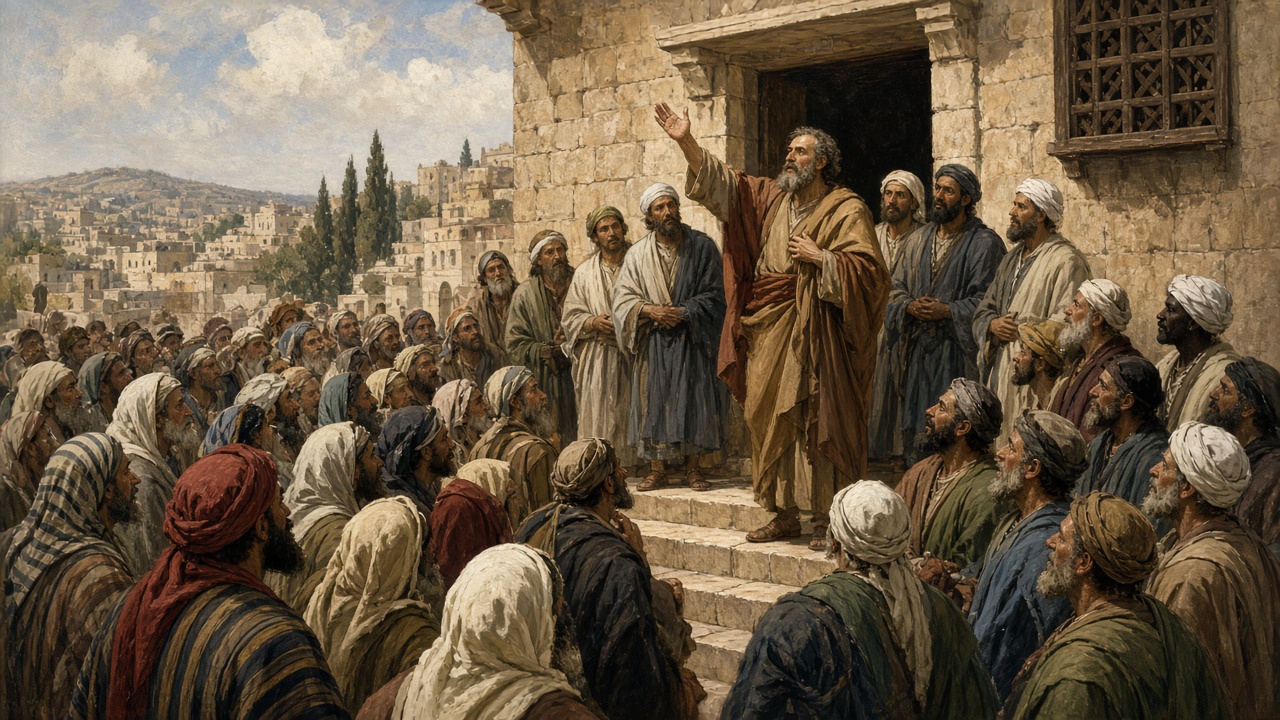
- God-fearing Jews from every nation under heaven were already living in Jerusalem when a sound like a mighty rushing wind came from heaven and filled the house, and the speakers began to declare God’s wonders in other languages. In this chapter, “Asia” is the Roman province of Proconsular Asia, in the western part of Asia Minor, whose capital was Ephesus—not the continent of that name. Pontus, along the southern coast of the Euxine Sea, was a Roman province in the apostles’ time and a resort of many Jews of the Dispersion; Cappadocia was the easternmost and largest province of Asia Minor.Sources: the Bible text itself · Asia · Pontus · Cappadocia
- The crowd was amazed that the speakers were Galileans. The one who stood with the Eleven and addressed them was Simon Peter, originally called Simon—that is, Simeon, meaning “hearing”—a fisherman from Bethsaida, on the western coast of the Sea of Galilee, whom his younger brother Andrew first brought to Jesus.Sources: the Bible text itself · Simon Peter
- Peter said this was what the prophet Joel had spoken. Joel, the second of the twelve minor prophets, was the son of Pethuel, and his personal history is known only from his book. Peter also quoted David, the eighth and youngest son of Jesse of Bethlehem, and told the crowd that this patriarch had died and been buried, and that his tomb was still with them in Jerusalem.Sources: the Bible text itself · Joel · David
Notes written with AI assistance from open sources (Theographic Bible Metadata, CC BY-SA 4.0; Easton’s Bible Dictionary, public domain) and reviewed before publishing.
Places in this chapter
- Jerusalem · 31.777, 35.234 · verses 5, 14
- Galilee · 32.760, 35.527 · verse 7
- Asia · 38.400, 28.300 · verse 9
- Cappadocia · 38.671, 34.839 · verse 9
- Judea · Today: Judea 1 · 31.777, 35.234 · verses 9, 14
- Mesopotamia · Today: Aram-naharaim · 36.864, 39.033 · verse 9
- Pontus · 40.680, 37.830 · verse 9
- Cyrene · 32.821, 21.851 · verse 10
- Egypt · 30.129, 31.308 · verse 10
- Libya · 32.821, 21.851 · verse 10
- Pamphylia · 37.000, 31.000 · verse 10
- Phrygia · 39.000, 31.000 · verse 10
- Rome · 41.892, 12.485 · verse 10
- Nazareth · 32.702, 35.298 · verse 22
Only places identified with high confidence are shown (90% or more according to the scholarly sources compiled by OpenBible). Period map: DARE (Digital Atlas of the Roman Empire), CC BY 4.0; modern map: © OpenStreetMap contributors; places: OpenBible.info (CC BY 4.0).
Credits and license for this translation
I 'utz laj tzij re i dios
New Testament in Achi (I 'utz laj tzij re i dios)
copyright © 2009 Wycliffe Bible Translators, Inc.
Language: Achi
Dialect: Cubulco
Translation by: Wycliffe Bible Translators, Inc.
Achi, Cubulco
Achi' is a Mayan language very
closely related to K'iche' (Quiché in the older orthography). It is spoken by the
Achi people, primarily in the area of Baja Verapaz in Guatemala. There are two Achi'
dialects. Cubulco Achi' is spoken by approximately 48,000 people in the Cubulco area
west of Rabinal area. Rabinal Achi' is spoken by approximately 37,000 people in the
Rabinal area.
El Nuevo Testamento
en el idioma Achí de Cubulco de
Guatemala
Ediciones anteriores
Segunda edición
©2009, Wycliffe Bible
Translators
Primera edición
Publicado por
©1984, Sociedad Bíblica
Internacional
Copyright Information
© 2009, Wycliffe Inc. All rights reserved.
This translation text is made available to you under the terms of the Creative
Commons License: Attribution-Noncommercial-No Derivative Works. ( http://creativecommons.org/licenses/by-nc-nd/3.0/ ) In addition, you have
permission to port the text to different file formats, as long as you do not change
any of the text or punctuation of the Bible.
You may share, copy, distribute, transmit, and extract portions or quotations from
this work, provided that you include the above copyright information:
You must give Attribution to the work.
You do not sell this work for a profit.
You do not make any derivative works that change any of the actual words or
punctuation of the Scriptures.
Permissions beyond the scope of this license may be available if you contact us
with your request. If you want to revise a translation, use a translation in an
adaptation, or use a translation commercially, we will consider your request.
NT:segunda edición
The New Testament
in Achi
© 2009, Wycliffe Inc. All rights reserved.
This translation is made available to you under the terms of the
Creative Commons Attribution-Noncommercial-No Derivatives license 4.0.
You may share and redistribute this Bible translation or extracts from it in any format, provided that:
You include the above copyright and source information.
You do not sell this work for a profit.
You do not change any of the words or punctuation of the Scriptures.
Pictures included with Scriptures and other documents on this site are licensed just for use with those Scriptures and documents.
For other uses, please contact the respective copyright owners.
2013-01-05
Source: http://ebible.org/acr-acc/ · eBible.org