Acts 19
I 'utz laj tzij re i dios · Tap a verse to see its cross-references.
Wach i xu ʼan i ma Páblo pa Efeso
1Tzʼakat i ma Apólos ʼo pa tinimit Corínto (chi u cwenta i jyub Acáya), i ma Páblo ca solin pa tak jyub ca tijin ruponic pa tinimit Efeso. Are xupon chila, xe u rik juban creyent. 2Xu tzʼonoj chique:
—Yix, are xi coj u tzij i Dios, ¿xi naʼo we xix ucʼax rumal i u Tewal i Dios? —xu bij.
Ique xqui bij:
—Yoj n-ketaʼam tene-ri we ʼo u Tewal i Dios —xe cha.
3Are ʼuri i ma Páblo xu tzʼonoj chique:
—¿Wach i cʼutunic ʼuri xi cojo are xi tzʼonoj u kajsaxic ya piwi? —xu bij.
Ique xqui bij:
—Are i cʼutunic chi xu ʼan i ma Wan aj Kajsanel ya —xqui bij.
4I ma Páblo xu bij chique:
—I ma Wan xu kajsaj ya piquiwi niʼpa i xqui jalwachij qui cʼaslemal, xui-ri, xak xu bij chique chi chiqui cuba qui cʼux che i Jun chi ca cʼun chirij ire; i jun-le are i Jesucrísto —xu bij i ma Páblo.
5Are xqui ta ile, xqui tzʼonoj u kajsaxic ya piquiwi, cʼutbal-re chi je re chic i Kajwal Jesus. 6Teʼuri i ma Páblo xu ya u ʼab piquiwi, are ʼuri i u Tewal i Dios xe u rajawij, y xqui jek chʼawic che jun chʼawbal cʼacʼ; xak xqui jek u bixquil wach u chʼobom i Dios, chi u ʼalijinsam chique. 7Colo je cablajuj achiab.
8Che tak i uxlambal ʼij re i oxib icʼ, i ma Páblo n-xu mayij tiʼenam pa qui molbalʼib i aj Israel. Lic co u wach xu cʼut u tzij i Dios chique; ʼolic xqui chap quib chi tzij rumal usucʼ. Lic xu tij u ʼij chu cʼutic chique wach i ʼatbal tzij re i Dios. 9Xui-ri, je ʼo jujun chique lic je buy, n-xcaj ta xqui cuba qui cʼux che i Jesus. Xa xe oc chu bixquil chiquiwach conojel i winak chi n-ʼus ti u tzij i ma Páblo chique re u be i Dios. Rumal ʼuri i ma Páblo xel cuʼ, y xe u cʼam bi ruʼ niʼpa i xqui cuba qui cʼux che i Jesus. Xe ʼe chi rachoch jun mayes, chi ma Tiráno u bi; chila i ma Páblo xoc chu cʼutic ʼij ʼij chique i winak. 10Queb junab u wach, queje ile xu ʼano. Xeʼelok chi conojel niʼpa i je ʼo pa jyub Asia xqui ta i tzij chirij i Kajwal Jesucrísto. N-xui ti je aj Israel winak xqui ta, xak xqui ta i ne te aj Israel. 11I Dios xu ya puʼab i ma Páblo chi cu ʼan nimak tak milágro. 12ʼOlic i winak xqui tzʼonoj pawor che i ma Páblo chi cu chiʼmaj u sut chique, o xi n-taj, u relantar, que ʼe quicʼawsaj chique i iwabib, ʼelsabal re i yobil chique. Xak queje xqui ʼan ile, ʼelsabal-re itzel tak tew.
13ʼO jujun aj Israel winak que bin pa tak tinimit chi relsaxic itzel tak tew chique i winak. Xak xcaj ique quiqui cuxtaj u bi i Kajwal Jesus chi relsaxic pacha cu ʼan i ma Páblo. Are xqui ʼano, xqui bij chique i itzel tak tew:
—I Jesus chi cu cuxtaj i ma Páblo, ruʼ u bi i Jesus-le quin bij chiwe, chix el che i achi-le. (Queje ile quiqui bij.)
14ʼO jun aj Israel, cajʼatzil i sacerdóte, ma Escéva u bi. Ire je ʼo wukub u cʼojol, xak ique-le queje quiqui ʼan ile. 15Are xqui ʼan ique ile, i itzel tew xu laʼ u wach chique; xu bij:
—Wetaʼam u wach i Jesus, xak wetaʼam pachin i ma Páblo, xui-ri, ¿yix ix pachinok? —xu bij chique.
16Are ʼuri, i achi chi ʼo itzel tew che, xa ʼe chiquij; lic xe u chapo, y xe u chʼayo. Teʼuri i achiab xe ʼanmaj bi che i rachoch i achi, je chʼanalic, lic ʼantal cʼax chique. 17Conojel i winak je jekel pa tinimit Efeso, niʼpa i aj Israel, xak i ne te aj Israel, ʼis xqui ta rason. Lic xqui xij quib rumal, y xqui bij chi lic nim u ʼij i Kajwal Jesus.
18Xak je qʼui chique i creyent xe cʼunic xol qui tzʼonoj cuybal mac; xqui bij chiquiwach i winak niʼpa i n-ʼus taj qui ʼanom. 19Je qʼui chique ique que nanic, xak qui ʼanom pacha tak milágro, péro n-are taj. Ique-le xqui cʼam li qui wuj chi n-ʼus taj pa qui nawsam wi quib che i nanic. Teʼuri xqui poroj chiquiwach conojel i winak. Are xcajlaj niʼpa rajil i wuj-le, xeʼel colo cincuénta mil quetzáles. 20Queje ile, ʼalaj chi u tzij i Dios lic ʼo u choʼab, ca tijin u paxsaxic u tzijol, xak je qʼui i winak que tijin chu cojic.
21Are xa ʼantaj ile, i ma Páblo xu chʼobo chi ca ʼe chi qui solixic i tinimit pa jyub Macedónia, xak i jyub Acáya. Xak xu chʼobo we xrelej ile, ca ʼe cʼa Jerusalen. Xak n-xui ti ile, xak xu chʼob ʼenam cʼa pa tinimit Róma. 22Rumal ʼuri xe u tak bi i queb rachiʼil pa jyub Macedónia; ique je are i a-Timotéo xak i ma Erásto. I ma Páblo xnajtin jubiʼ chic pa jyub Asia.
I ma Demétrio cu yac chʼoʼoj chirij i ma Páblo pa Efeso
23Che tak i ʼij-le, ʼo jun achi pa Efeso lic cʼax xchʼaw chirij i u tzij i Kajwal. Xe u tun i winak, rumal-i lic xe chʼujeric. 24I achi-le, ma Demétrio u bi, aj chʼayol re i chom laj chʼichʼ pláta. Are i mas u chac i achi-le, are u ʼonquil ral tak u qʼuexwach jun rachoch tiox chi ʼo pa qui tinimit. I rachoch tiox-le, cojbal u ʼij i ati Diána, chi qui tiox ique. Che i chac-le, niʼpa que chacun ruʼ i ma Demétrio lic nim i quiqui chʼaco. 25I achi-le xe u mol qui chiʼ i je rachiʼil, xak i juban chic chi que chacun che i chac-le, y xu bij chique:
—Achiab, yix iwetaʼam chi, che i kopis-i, lic coj chʼacan chirij. 26Xak iwilom, i tom wach ca tijin chu bixquil i ma Páblo-le. Ire cu bij chique i winak, niʼpa tak i tiox chi xa je ril ʼantalic n-ta qui ʼij; ne te sakil dios cu bij ire. Y je qʼui chic i winak qui cojom wach ca tijin chu cʼutic. N-xui ti chi, pa Efeso, u cʼutum wi, xak laj ronojel i jyub Asia chikij chakawach queje ile u ʼanom. 27Ile, lic xibinʼib ruʼ, man i winak que oc-i chu chʼachʼaxic chi n-ʼus ti kopis yoj, y n-ca ʼax ta chic i ka cʼay. N-xui ta la ile, xak i rachoch i ka nim laj tiox ati Diána ca kaj li u ʼij, xak queje ire, ca kaj u ʼij. Ca sach-i u wach u ʼij i ka tiox-le chi lic ʼo u ʼij cumal i winak ronojel i jyub Asia, xak ronojel u wach i jyub taʼaj. (Queje ile xu bij i ma Demétrio.)
28I winak, are xqui ta ile, lic xpe coywal, y xe siqʼuin chu bixquil:
—¡Nim u ʼij i ati Diána! ¡Nim u ʼij i ka tiox yoj oj aj Efeso! —xqui bij.
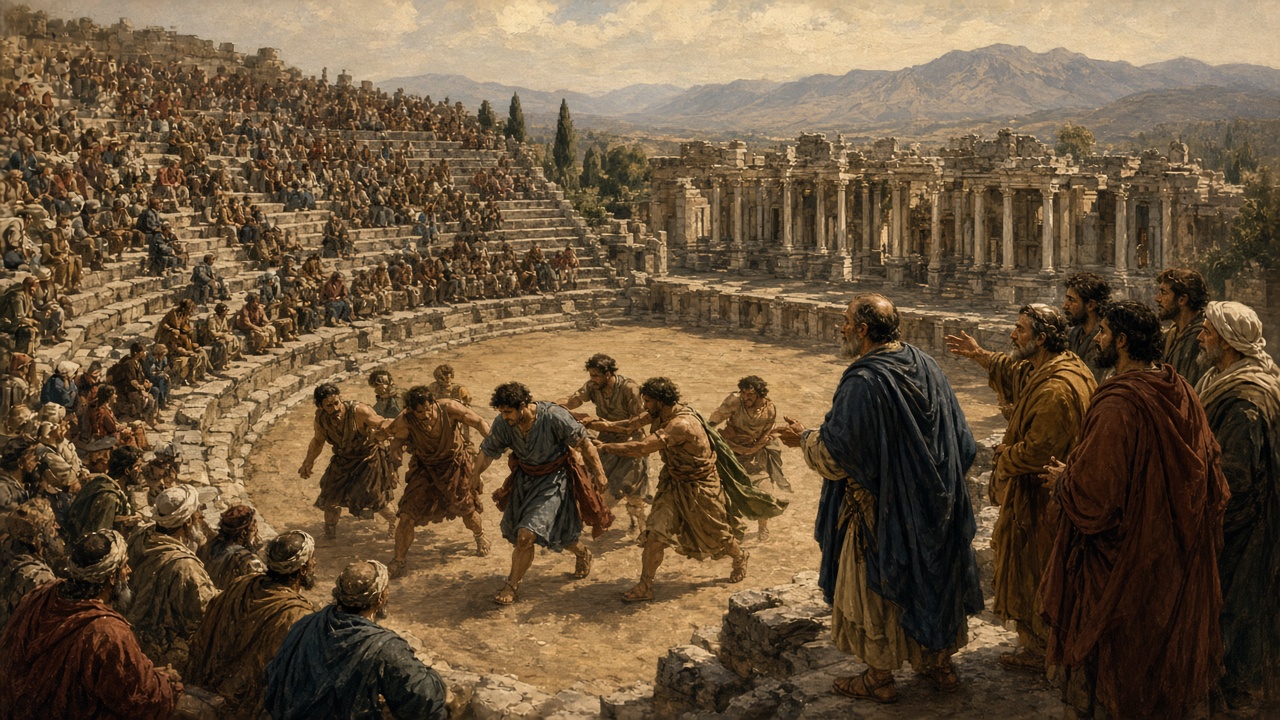
29Are ʼuri, lic xpaxtaj i chʼokowic pa tinimit. I u qʼuial winak xe qui chap i queb achiab je rachiʼil i ma Páblo, jun, ma Gáyo u bi, y jun chic, ma Aristárco; ique je aj Macedónia. Are ʼuri i winak xe qui charej bi cʼa ruʼ i ja pa qui molbal quib. 30I ma Páblo craj te oquic cuʼ, que u ʼijla i winak cu bij ire, xui-ri i creyent n-xqui ya ta che. 31Je ʼo jujun rakan u ʼab i ʼatbal tzij re i jyub Asia chi je ramig i ma Páblo; xak ique xqui tak bi u bixquil che, chi ma oc bi pa ja cuʼ i winak. 32Niʼpa i winak je ʼo paja, ʼis que chʼokowic. Conojel que siqʼuinic, xui-ri, ʼis junwi i tzij quiqui bij. Katzij je qʼui chique n-quetaʼam tene-ri wach tak rumal qui molom quib. 33ʼO jun achi chiquixol i winak, ma Alejándro u bi; ire aj Israel. I je rach aj Israel xqui bij che wach usucʼ qui molom quib chila; xqui ʼan pen che, chi ca taqʼui chiquiwach i winak. Ire xu cʼut chique ruʼ u ʼab chi quiqui mayij chʼokowic; xraj ire cu bij jun tzij chique, tobal-que i aj Israel winak. 34Xui-ri, are xquil u be chi ire xak aj Israel, mas xe oc chi sicʼ, colo queb ʼor xe siqʼuinic.
—¡Nim u ʼij i ati Diána! ¡Nim u ʼij i ka tiox yoj oj aj Efeso! —xqui bij.
35Teʼuri i aj tzʼib re i tinimit xtiqui chi qui ʼatixic i winak, are ʼuri xu bij chique:
—Achiab ix aj Efeso, conojel i winak re u wach i jyub taʼaj ʼis quetaʼam chi yoj, chi oj aj Efeso, ʼo chakakul u chajixic i rachoch i nim laj tiox ati Diána, xak i u qʼuexwach chi xtzak li chicaj. 36Ile, mi jun cu bij chi n-katzij taj. Rumal-i, chix uxlanok; lic chi chʼobo u be wach i qui ʼano, mokxa ca pe jun cʼax piwi rumal. 37I achiab-i chi yix i cʼamom lok, n-ta jun cʼax qui ʼanom che i tiox-le, xak n-ta cʼax qui bim chirij. 38I ma Demétrio xak i juban aj ʼanol tiox, we cacaj quiqui coj u mac jun winak, are u chac-i je ʼo i juez, xak ʼo i ʼatbal tzij; we cacaj, che ʼe qui cojo qui mac chiquiwach i que ʼataw tzij; chila ca ʼiltaj wi pachin aj mac. 39Y we n-are ti ile qui tzʼonoj, yix chi jacha ʼuri chiquiwach i ʼatbal tzij are quiqui mol quib ique. 40Queje ile chi ʼana, man mokxa quiqui bij xa oj aj chʼoʼoj chirij i ʼatbal tzij rumal tak iri chi ka ʼanom woʼor. Katzij, i ka ʼanom-i, n-ta rumal; y we ca tzʼonox chake, ¿wach u laʼic u wach caka ʼano? —xu bij chique.
41Are xrelej u bixquil ile, xe u ʼijla bic.
Did you know?
Paul, the Way, and Artemis in Ephesus
- Ephesus was the capital of proconsular Asia, the Roman province covering the western part of Asia Minor, and in Roman times it bore the title of the first and greatest metropolis of Asia. The city was distinguished for the temple of Artemis, whom the Romans called Diana, built outside the walls and reckoned one of the seven wonders of the ancient world. At its center stood an ancient image of the goddess, reputed to have fallen from the sky.Sources: Ephesus · Diana · Asia
- Demetrius, a silversmith at Ephesus, made silver shrines of Artemis, models of her temple or of her statue, which sold readily to visitors from all over Asia Minor. Acts says this trade was the craftsmen's source of prosperity, and that Demetrius warned them of danger to their business and to the honor of the temple of Artemis, the goddess he said was worshiped throughout the province of Asia and the whole world.Sources: Demetrius · the Bible text itself
- The crowd rushed into the theatre of Ephesus, which Easton's Bible Dictionary (1897) describes as the largest in the world, open to the sky and able to hold 50,000 spectators. Friends of Paul among the chiefs of Asia, wealthy citizens elected each year to preside over the games and religious festivals of their cities, begged him not to go in. The city clerk then reminded the assembly that Ephesus was guardian of the temple of the great Artemis and of her image, said to have fallen from heaven.Sources: Ephesus · Asia · the Bible text itself
Notes written with AI assistance from open sources (Theographic Bible Metadata, CC BY-SA 4.0; Easton’s Bible Dictionary, public domain) and reviewed before publishing.
Places in this chapter
- Corinth · 37.906, 22.879 · verse 1
- Ephesus · 37.939, 27.341 · verses 1, 17, 23, 26, 35
- Asia · 38.400, 28.300 · verses 10, 22, 26, 27, 31
- Achaia · 38.720, 22.540 · verse 21
- Jerusalem · 31.777, 35.234 · verse 21
- Macedonia · 41.600, 22.540 · verses 21, 22, 29
- Rome · 41.892, 12.485 · verses 21, 40
Only places identified with high confidence are shown (90% or more according to the scholarly sources compiled by OpenBible). Period map: DARE (Digital Atlas of the Roman Empire), CC BY 4.0; modern map: © OpenStreetMap contributors; places: OpenBible.info (CC BY 4.0).
Credits and license for this translation
I 'utz laj tzij re i dios
New Testament in Achi (I 'utz laj tzij re i dios)
copyright © 2009 Wycliffe Bible Translators, Inc.
Language: Achi
Dialect: Cubulco
Translation by: Wycliffe Bible Translators, Inc.
Achi, Cubulco
Achi' is a Mayan language very
closely related to K'iche' (Quiché in the older orthography). It is spoken by the
Achi people, primarily in the area of Baja Verapaz in Guatemala. There are two Achi'
dialects. Cubulco Achi' is spoken by approximately 48,000 people in the Cubulco area
west of Rabinal area. Rabinal Achi' is spoken by approximately 37,000 people in the
Rabinal area.
El Nuevo Testamento
en el idioma Achí de Cubulco de
Guatemala
Ediciones anteriores
Segunda edición
©2009, Wycliffe Bible
Translators
Primera edición
Publicado por
©1984, Sociedad Bíblica
Internacional
Copyright Information
© 2009, Wycliffe Inc. All rights reserved.
This translation text is made available to you under the terms of the Creative
Commons License: Attribution-Noncommercial-No Derivative Works. ( http://creativecommons.org/licenses/by-nc-nd/3.0/ ) In addition, you have
permission to port the text to different file formats, as long as you do not change
any of the text or punctuation of the Bible.
You may share, copy, distribute, transmit, and extract portions or quotations from
this work, provided that you include the above copyright information:
You must give Attribution to the work.
You do not sell this work for a profit.
You do not make any derivative works that change any of the actual words or
punctuation of the Scriptures.
Permissions beyond the scope of this license may be available if you contact us
with your request. If you want to revise a translation, use a translation in an
adaptation, or use a translation commercially, we will consider your request.
NT:segunda edición
The New Testament
in Achi
© 2009, Wycliffe Inc. All rights reserved.
This translation is made available to you under the terms of the
Creative Commons Attribution-Noncommercial-No Derivatives license 4.0.
You may share and redistribute this Bible translation or extracts from it in any format, provided that:
You include the above copyright and source information.
You do not sell this work for a profit.
You do not change any of the words or punctuation of the Scriptures.
Pictures included with Scriptures and other documents on this site are licensed just for use with those Scriptures and documents.
For other uses, please contact the respective copyright owners.
2013-01-05
Source: http://ebible.org/acr-acc/ · eBible.org