Acts 13
I 'utz laj tzij re i dios · Tap a verse to see its cross-references.
I Dios xe u cha i ma Bernabe i ma Sáulo chu ʼonquil u chac
1Che i jutzobaj creyent re i tinimit Antioquía, je ʼo jujun ajbil u tzij i Dios, xak je ʼo jujun aj tijonel que i creyent: je are i ma Bernabe, i ma Simon chi xak ma ʼEk ca bix che; xak ʼo i ma Lúcio chi aj tinimit Ciréne; ʼo i ma Manaen (chi xe qʼuitsax junam ruʼ i ma Heródes, chi gobernador pa Galiléa); xak ʼo i ma Sáulo. 2Xu rik jun ʼij, ique que tijin chu cojic u ʼij i Kajwal, coʼtam qui waʼim rumal u tzʼonoxic che i Dios. Are ʼuri i u Tewal i Dios xe u ʼijla:
—Che i jacha i ma Bernabe i ma Sáulo chwe, man ʼo jun qui chac quin yaʼo —coʼono.
3Are xquelej u tzʼonoxic che i Dios, xak xqʼuis i tiémpo chi coʼtam can i qui waʼim, are ʼuri xqui ya i qui ʼab piquiwi i ma Bernabe, i ma Sáulo, y xe qui ʼijla bi che qui chac.
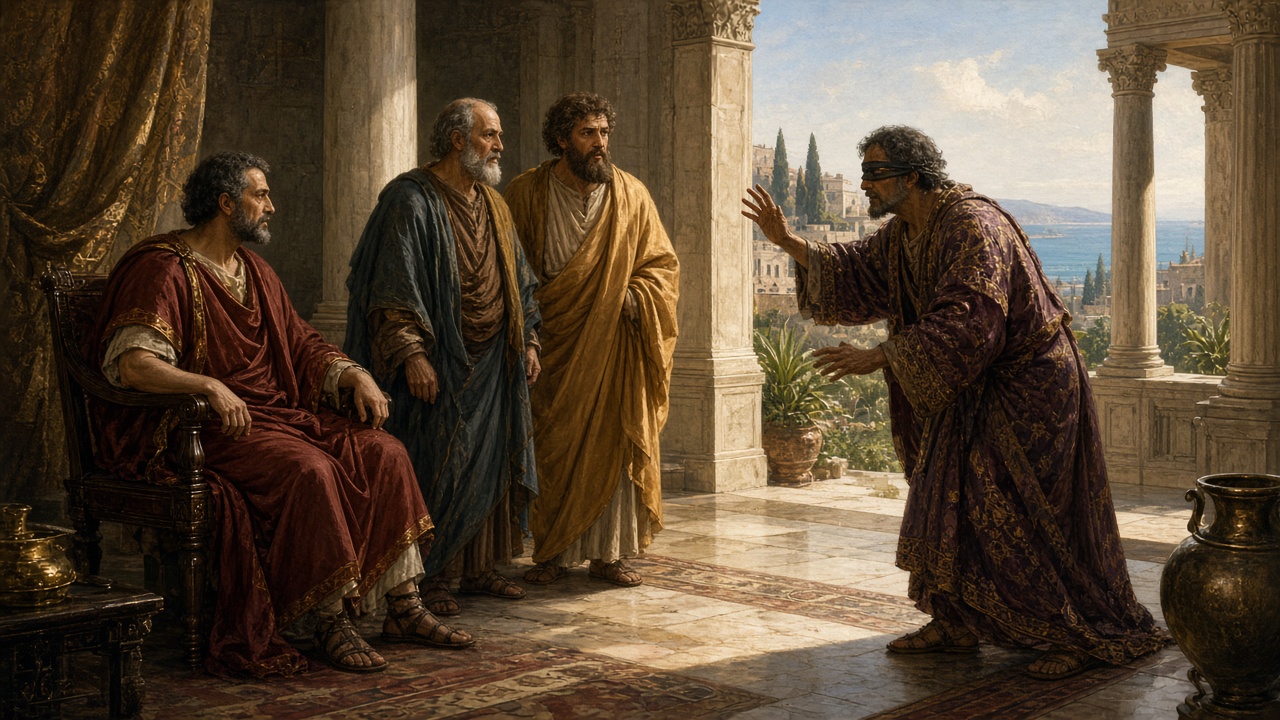
Jun ajʼitz xoʼon potzʼ rumal u mac
4Teʼuri i ma Bernabe i ma Sáulo xe ʼe che qui viáje, je taktal bi rumal u Tewal i Dios. Nabe xe ʼe pa tinimit Seléucia. Chila xe oc wi pa bárco, ʼenam que cʼa pa Chípre, jun ral jyub setel chuwi mar. 5Are xe upon pa Chípre, xe kaj che i tinimit Salamína, pa que cʼun wi i bárco pa mar. Are ʼuri xqui jek u bixquil i u tzij i Dios pa tak molbalʼib que i aj Israel winak. Xak i a-Wan xa ʼe cuʼ, aj tolque. 6Xe bin pa tak tinimit cʼa xe upon che i tinimit Páfos, chi ʼo chi ya. Chila xqui rik wi jun aj Israel, ma Barjesus u bi, (chi xak ma Elímas ca bix che). I achi-le, ajʼitz; ire xa aj tʼoronel, cu bij chi ajbil u tzij i Dios péro n-are taj. 7Ire ʼo ruʼ i gobernador, ma Sérgio Páulo, chi lic ʼo u noʼoj. I gobernador xu tak qui siqʼuixic i ma Bernabe i ma Sáulo, man craj cu ta u tzij i Dios. 8I ajʼitz xu jek u laʼic u wach i qui tzij i ma Bernabe i ma Sáulo; craj ire chi n-cu coj ti gobernador u tzij i Dios. 9I ma Sáulo (chi xak ma Páblo ca bix che) lic ʼo u Tewal i Dios ruʼ. Xu maj u takexic i ajʼitz; 10xu bij che:
—¡At tʼoronel; lic at mal; at racʼal itzel; at aj chʼoʼoj chirij i ʼutz! ¿Wuchac xa ca jechʼabsaj i sak laj tzij re i Kajwal? 11Woʼor i Kajwal cat u ya na pa cʼax. Cat potzʼir na; n-cawil ti sak, queb oxib ʼij —coʼono.
Juntir xoc i ʼekum che u baʼwach; pacha pa ʼekum ʼo wi. Teʼuri xu tzucuj pachin ca chʼelew bic, man n-ca tzun ta chic. 12I gobernador, are xril ile, xu coj u tzij i Dios; lic xu bisoj che i cʼutunic re i Kajwal.
I u tzij i ma Páblo xutux cumal i aj Israel re i jyub Pisídia
13I ma Páblo cuʼ i rachiʼil xe ʼel pa Páfos; xe oc bi pa bárco, xe ʼe cʼa pa tinimit Pérge, u cwenta i jyub Panfília. Xui-ri, i a-Wan (chi xak a-Márcos u bi) n-xa ʼe ta cuʼ; ire xtzalij chic Jerusalen. 14I juban xe ʼel pa Pérge, xe ʼe che jun chic Antioquía, chi u cwenta i jyub Pisídia. Are xu rik i ʼij chi uxlambal ʼij, xe oc pa ja re i molbalʼib, y xe cubi chila. 15Xqui coj retalil are xa ʼajlax u wach i wuj pa tzʼibtal wi i ujer ʼatbal tzij xak i qui tzij i ujer ajbil u tzij i Dios. Are xutzin i rajlaxic-le, i cajʼatzil i molbalʼib xqui tak u tzʼonoxic chique i apostelab:
—Kachalal, mokxa ʼo jun tzij quiwaj qui bij, pixbal que i winak. ʼUtz qui bij na —xbix chique.
16Are ʼuri i ma Páblo xwalijic, xu cʼut u ʼab chique chi n-que chʼaw ta chic. Teʼuri xu bij chique i winak:
—Ix wach aj Israel, xak yix chi n-ix ta aj Israel chi qui coj u ʼij i Dios, chi ta na peʼ. 17I ka Dios yoj oj aj Israel, xe u cha i katit i ka mam ujer, cu yabej re i ʼutz piquiwi. Cʼa are je ʼo pa Egípto, naj che i qui tinimit, i Dios xe u qʼuiarsaj, teʼuri ruʼ u choʼab xe resaj pa jyub Egípto. 18Are xe ʼel pa Egípto, i Dios xu chʼijo wach i xqui ʼano are xe bin pa jyub tzʼinilic cuarénta junab u wach. 19Xu sach qui wach wukub tinimit, cu yabej re i jyub chique i katit ka mam. Are i jyub-le, are i Canaan. 20Teʼuri, cajib ciénto cincuénta junab u wach, i Dios xu ya juban aj cʼamol u tzam chique; ique xqui ʼat tzij piquiwi i winak cʼa are xicʼaw i qʼuisbal-re, chi are i nim laj ajbil u tzij i Dios, mam Samuel. 21Teʼuri i katit ka mam n-xcaj ta chic ile, xqui tzʼonoj jun qui ʼatol tzij piquiwi. I Dios xu ya ʼuri chique wach i xqui tzʼonoj. Cuarénta junab u wach, ʼo jun qui ʼatol tzij, ma Saul u bi. I ma Saul-le, u cʼojol i mam Sis; i mam Sis, jun canok chique u muk u xiquin can i mam Benjamin. 22Xoʼon panok, i Dios xresaj i ma Saul che u patan, y xu ya can i ma David pu qʼuexel. Xu bij ʼuri: “I a-David le, chi u cʼojol i ma Isai, kus cwil yin u cʼux; cu ʼan na ire ronojel pacha i cwaj yin.” Queje xu bij i Dios ile. 23Bay, are jun canok chique u muk u xiquin can i mam David-le chi Dios xu cha, tobal ke yoj oj aj Israel, pacha u bim ujer. Ire are i Jesus chi quin bij chiwe woʼor. 24Are maja cu jek u chac i Jesus, i ʼetz ma Wan xoj u pixbaj yoj oj aj Israel, chi caka jalwachij i ka nojbal chi n-ʼus taj, xak ca kajsax ya pakawi. 25I ʼetz ma Wan, are ya mer cu rik i ʼij ca qʼuis u cʼaslemal, xu bij: “Qui bij yix mok yin ne i toliwe, péro n-yin taj. Ire ca cʼun cʼa chwijil yin, lic nim ni u ʼij. N-nim ti in ʼij yin chuwach ire, n-ca majaw ta chwe quin ʼan mocom che wib chirij, mi tene quin tor u wach u xajab.” Queje ile xu bij i ʼetz ma Wan.
26Ix wachalal, chi ix u muk u xiquin can i mam Abraham, xak yix chi n-ix ti aj Israel chi xak qui coj u ʼij i Dios, chiwe yix, i Dios cu tak i tzij-i, man quiwetamaj wach iwelbal chi sak. 27I aj Jerusalen winak, xak i cajʼatzil ique chi xqui camsaj i Jesus, n-quetaʼam taj chi ire ruʼ i Dios petnak wi. N-xqui ta ti usucʼ i tzij chi cacajlaj pa molbalʼib pa tak uxlambal ʼij. Xeʼelok chi je are ique xe ʼanaw ile pacha i tzʼibtal can ujer; queje ile xeʼelok are xqui tak u camsaxic i Jesus. 28Ire lic n-tu mac; tupu n-xqui rik tu mac chirij, xqui tzʼonoj che i ma Piláto chi cu tak u camsaxic. 29Are xqui qʼuis u ʼonquil che, ronojel pacha i tzʼibtal can ujer, teʼuri xqui kajsaj li chuwach i cruz y xqui muku. 30Xui-ri, i Dios xu cʼunsaj sak chuwach. 31Teʼuri i Jesus qʼuial ʼij xa ʼiltaj u wach cumal i u tijoxelab. Je are ique-le chi je rachiʼil oʼonom lok. Je teren chirij are xu jek u patan pa Galiléa, cʼa are ʼo wi are xe u qʼuisa pa Jerusalen. Y woʼor, je are ique-le que tijin chu bixquil chique i winak wach xu ʼan i Jesus.
32Woʼor, yoj oj ʼo chi, chu bixquil i ʼutz laj tzij chiwe, chi are iri: i Dios ca tijin chu ʼonquil wach i u bim ujer chique i katit ka mam. 33Yoj oj qui muk qui xiquin canok; i Dios ca tijin chu ʼonquil pacha i u bim chique ique ujer (chi cu cʼunsaj sak chuwach i Jesus). Xeʼelok pacha cu bij u tzij i Dios tzʼibtal can chupam i wuj Sálmos. Xu bij: “Yet at in Cʼojol; woʼor in yom a cʼaslemal.” (Queje ile tzʼibtal canok.) 34I Dios u bim ujer chi cu cʼunsaj sak chuwach i Jesus; u bim chi u chʼacul n-ca jar taj, man xu bij chupam u wuj: “Quin ya ni utzil chomal chiwe pacha xin bij che i mam David ujer.” (Queje ile tzʼibtal canok.) 35ʼO jun chic tzij pa wuj Sálmos cu bij: “Yet n-ca ya ta che, chi ca jar u chʼacul i loʼlaj a takon,” coʼono. 36(Mix sachic, i tzij-i n-chirij ti mam David tzʼibtal wi; chirij i Jesus tzʼibtal wi.) Katzij, i mam David xcamic are xutzin u patan pacha i u chʼobom i Dios. Xcamic, xmuk chiquixol i ratit u mam, y u chʼacul xjaric. 37Xui-ri, i Jesus, chi cʼastam rumal i Dios, i u chʼacul ire n-xoʼon ta mal. 38Wachalal, ʼo u chac chi ta u be chi rumal i Jesus xoj cʼun chu bixquil chiwe wach u rikic i cuybal mac. 39Niʼpa i winak quiqui cuba i qui cʼux che i Jesus, ca cuy ni qui mac rumal. Rumal ire ʼo i cuybal mac chi oʼonom lok n-cuytajnak ta rumal i ʼatbal tzij chi tzʼibtal can rumal i mam Moises. 40Chi ʼana cwent mi petsaj i roywal i Dios piwi, pacha qui tzʼibam can i ajbil u tzij i Dios ujer: (I Dios xu bij):
41¡Chiwilapeʼ, yix chi ix yoʼyanel che in tzij!
Cha sach i nojbal che, cha sachsax i wach rumal i nimak tak ʼanic, rumal i nimak tak xibinʼib,
quin ʼan ni yin, in Dios, che tak i ʼij-i, che tak i icʼ-i.
N-qui ta ti u be, n-qui coj taj wach i quin ʼan na,
tupu ʼo i ca lapaw chiwe.
(Queje u tzij i Dios ile chi tzʼibtalic, xu bij i ma Páblo chique.)
42Teʼuri xel i ma Páblo pa molbalʼib junam cuʼ i rachiʼil. I winak chi ne te aj Israel chi calaxic, lic xqui tzʼonoj chique chi que cʼun chic cuʼ pa wukub ʼij, chi are tan chic i uxlambal ʼij. Cacaj ni u tayic tan chic i qui tzij. 43Are xe utzinic, xe ʼel li conojel pa molbalʼib, je qʼui xe terej chiquij i ma Páblo i ma Bernabe. Je ʼo i aj Israel winak, xak ʼo i juban chi ne te aj Israel, xui-ri lic xqui coj u ʼij i Dios junam cuʼ. I ma Páblo i ma Bernabe xe qui pixbaj chi quiqui jicba qui cʼux che i rutzil u cʼux i Dios.
44Che chic i wukub ʼij, xe u rika i ʼij re chic jun uxlambal ʼij. Xqui mol quib laj conojel i winak re i tinimit chu tayic u tzij i Dios. 45I aj Israel, are xquilo xe moltaj i winak je qʼui, xpe coywal. Xe oc chu laʼic u wach che i ma Páblo, xak xqui yoʼya. 46I ma Páblo i ma Bernabe, co qui cʼux xqui bij chique:
—ʼO u chac xka bij u tzij i Dios chiwe yix nabe, ix aj Israel winak. Xui-ri, cakil yoj chi yix n-quiwaj ti qui cojo; cakil yoj chi qui bij yix n-ca majaw ta chiwe we qui rik i cʼaslemal chi n-ca qʼuis ta chic. Rumal-i coj ʼec; coj ʼe cuʼ i winak ne te aj Israel. 47Man queje ile xoj u tak i Kajwal chu ʼonquil; ire xu bij can i tzij-i:
At in cojom pacha jun ʼaʼ quiquilbej re qui be niʼpa i ne te aj Israel;
at in cojom tobal que i winak ronojel u wach i jyub taʼaj chu rikic i quelbal chi sak.
(Queje u tzij i Dios ile chi tzʼibtalic, xqui bij i ma Páblo i ma Bernabe chique.)
48I ne te aj Israel winak, are xqui ta ile, lic xe quicotic. Xe oc chu bixquil chi u tzij i Kajwal lic ʼutz. Are ʼuri niʼpa i je chatal rumal i Dios chi quiqui rik qui cʼaslemal n-tu qʼuisic, ique ʼis xqui coj u tzij i Kajwal. 49Queje ile xu ʼan i u tzij i Kajwal, lic xpax u wach che i jyub-le. 50Xui-ri, i aj Israel xe ʼe cuʼ i nimak qui patan pa tinimit, quiqui cojbej re qui mac i ma Páblo i ma Bernabe. Xak xe ʼe cuʼ juban ixokib ʼo qui ʼij chi lic qui yom qui cʼux che i ʼatbal tzij tzʼibtal can rumal i mam Moises. ʼIs xe oc ʼuri chi chʼoʼoj chiquij i ma Páblo i ma Bernabe, y xe quesaj bi che i jyub-le. 51Ique, are xe ʼel chila xqui su can i ulew che i cakan, cʼutbal re chique chi cʼo can i qui mac chiquij. Teʼuri xe ʼe che i tinimit Icónio. 52Xui-ri, i creyent chi je ʼo pa Antioquía, lic que quicotic rumal i Kajwal; xak i u Tewal i Dios lic ʼo cuʼ.
Did you know?
The mission sent from Antioch
- Easton's Bible Dictionary (1897) describes Antioch in Syria as ranking third, after Rome and Alexandria, among the cities of the Roman empire; the church there set Barnabas and Saul apart. Among its prophets and teachers were Simeon called Niger, a surname meaning black, perhaps from a dark complexion, and Lucius of Cyrene, in North Africa.Sources: Antioch (Syria) · the Bible text itself · Simeon · Lucius
- At Paphos, the capital of Cyprus and the residence of the Roman governor, a Jewish sorcerer named Bar-Jesus, also called Elymas, an Arabic name meaning magician or sorcerer, tried to turn the proconsul Sergius Paulus from the faith. It is here that Saul is also called Paul; Easton's Bible Dictionary (1897) says the name Paul was probably given to him in infancy for use in the Gentile world, while Saul was his Hebrew home-name.Sources: Paphos · Elymas · Paul · the Bible text itself
- Sent from Antioch, they went down to Seleucia, the city's seaport near the mouth of the Orontes, and sailed to Cyprus; later they landed at Perga, the capital of Pamphylia, on the river Cestrus. There John left them and returned to Jerusalem; his Roman name, Mark, gradually came to replace his Jewish name, and he was a cousin of Barnabas.Sources: Seleucia · Perga · John Mark · the Bible text itself
Notes written with AI assistance from open sources (Theographic Bible Metadata, CC BY-SA 4.0; Easton’s Bible Dictionary, public domain) and reviewed before publishing.
Places in this chapter
- Antioch · Today: Antioch on the Orontes · 36.227, 36.172 · verse 1
- Cyrene · 32.821, 21.851 · verse 1
- Cyprus · 35.000, 33.000 · verse 4
- Seleucia · Today: Seleucia Pieria · 36.124, 35.922 · verse 4
- Salamis · 35.185, 33.902 · verse 5
- Paphos · Today: New Paphos · 34.756, 32.404 · verses 6, 13
- Jerusalem · 31.777, 35.234 · verses 13, 27, 31
- Pamphylia · 37.000, 31.000 · verse 13
- Perga · 36.960, 30.854 · verses 13, 14
- Antioch · Today: Antioch in Pisidia · 38.306, 31.189 · verse 14
- Pisidia · 38.306, 31.189 · verse 14
- Egypt · 30.129, 31.308 · verse 17
- Canaan · 32.767, 35.333 · verse 19
- Galilee · 32.760, 35.527 · verse 31
- Iconium · Today: Konya · 37.872, 32.492 · verse 51
Only places identified with high confidence are shown (90% or more according to the scholarly sources compiled by OpenBible). Period map: DARE (Digital Atlas of the Roman Empire), CC BY 4.0; modern map: © OpenStreetMap contributors; places: OpenBible.info (CC BY 4.0).
Credits and license for this translation
I 'utz laj tzij re i dios
New Testament in Achi (I 'utz laj tzij re i dios)
copyright © 2009 Wycliffe Bible Translators, Inc.
Language: Achi
Dialect: Cubulco
Translation by: Wycliffe Bible Translators, Inc.
Achi, Cubulco
Achi' is a Mayan language very
closely related to K'iche' (Quiché in the older orthography). It is spoken by the
Achi people, primarily in the area of Baja Verapaz in Guatemala. There are two Achi'
dialects. Cubulco Achi' is spoken by approximately 48,000 people in the Cubulco area
west of Rabinal area. Rabinal Achi' is spoken by approximately 37,000 people in the
Rabinal area.
El Nuevo Testamento
en el idioma Achí de Cubulco de
Guatemala
Ediciones anteriores
Segunda edición
©2009, Wycliffe Bible
Translators
Primera edición
Publicado por
©1984, Sociedad Bíblica
Internacional
Copyright Information
© 2009, Wycliffe Inc. All rights reserved.
This translation text is made available to you under the terms of the Creative
Commons License: Attribution-Noncommercial-No Derivative Works. ( http://creativecommons.org/licenses/by-nc-nd/3.0/ ) In addition, you have
permission to port the text to different file formats, as long as you do not change
any of the text or punctuation of the Bible.
You may share, copy, distribute, transmit, and extract portions or quotations from
this work, provided that you include the above copyright information:
You must give Attribution to the work.
You do not sell this work for a profit.
You do not make any derivative works that change any of the actual words or
punctuation of the Scriptures.
Permissions beyond the scope of this license may be available if you contact us
with your request. If you want to revise a translation, use a translation in an
adaptation, or use a translation commercially, we will consider your request.
NT:segunda edición
The New Testament
in Achi
© 2009, Wycliffe Inc. All rights reserved.
This translation is made available to you under the terms of the
Creative Commons Attribution-Noncommercial-No Derivatives license 4.0.
You may share and redistribute this Bible translation or extracts from it in any format, provided that:
You include the above copyright and source information.
You do not sell this work for a profit.
You do not change any of the words or punctuation of the Scriptures.
Pictures included with Scriptures and other documents on this site are licensed just for use with those Scriptures and documents.
For other uses, please contact the respective copyright owners.
2013-01-05
Source: http://ebible.org/acr-acc/ · eBible.org