2 Corinthians 10
I 'utz laj tzij re i dios · Tap a verse to see its cross-references.
Are i Dios yawnak u patan i ma Páblo
1Yin, chi in a-Páblo, ʼo jun pawor quin tzʼonoj chiwe chuwach i Crísto. Yix iwetaʼam chi ire lic nim u cʼux, lic ʼo i cʼaxnabal u cʼux. ʼO jujun chiwe quiqui bij chi yin lic n-ta quin bij chiwe are in ʼo iwuʼ, xui-ri, are naj in ʼo wi, lic in cʼan chiwe, quiqui bij. 2Bay, quin tzʼonoj pawor chiwe, mi ʼan chwe chi quin ʼan cʼan che wib chiwe. ʼO jujun chiwe quiqui bij chi wach quin tijin chu ʼanic, xui chwe yin i ʼutz, pacha tak quiqui ʼan i winak toʼ je re u wach i jyub taʼaj. Miqui bij ile, mokxa coʼon na cʼan chwe are quin upon iwuʼ. We cacaj ʼut, quiquil na chi ʼo ni u cowil in cʼux chi qui yajic, péro lic quin tzʼonoj chiwe, mi petsaj ile pakawi. 3Katzij oj ʼo chuwach i jyub taʼaj, xui-ri, i chʼoʼoj chi caka ʼan yoj n-are ta pacha i quiqui ʼan i toʼ je re u wach i jyub taʼaj. (I chʼoʼoj caka ʼan yoj, chirij i mac atzalal caka ʼan wi.) 4Are caka ʼan i chʼoʼoj-le, n-ruʼ ti ka nojbal yoj, n-ruʼ ti ka choʼab yoj, caka ʼan wi; are ruʼ u choʼab i Dios, rumal-i, coj tiqui na che qui choʼab niʼpa i je aj chʼoʼoj chirij i Dios. 5Coj tiqui bi chu ʼatixic tak i tzij chi xa ruʼ winak petnak wi; xak cakesaj ronojel tak i n-ca yaw ta chique i winak chi caquetamaj u be i Dios. Xak niʼpa tak i nojbal chi xa ruʼ winak petnak wi, ʼis caka ʼatsaj puʼab i Crísto, man cu ʼan na che pacha craj ire. 6Teʼuri, are cakilo chi yix qui ʼan chic pacha i cu bij i Dios, are ʼuri oj yij chic que ka ya pa tojbal mac niʼpa i n-cacaj ta que cojonic.
7Jun rajchac i Dios, chi takej che, wach i ʼo pa ranima; n-are ta toʼ qui takej wach i ca tzunic. We ʼo jun chila chi cu bij: “Yin lic in re i Crísto,” bay, xak chu chʼobo ʼuri chi yin xak in re i Crísto. Pacha oʼonom ire, chi re chic i Crísto, xak queje in ʼanom yin, lic in re i Crísto. 8Mok qʼuialmul in bim chiwe chi yin in ʼo piwi yix; xui-ri, n-quin qʼuix ta chu ʼonquil ile, man are i Kajwal yawnak pinʼab, tobal iwe yix che i cʼaslemal chuwach ire; n-in ta ʼo piwi we xa tzaksabal iwe quin ʼano. 9N-cwaj ti yin mok qui chʼob yix, chi tak i wuj quin tzʼibaj bi chiwe toʼ xib-bal iwe quin ʼano. 10ʼO jujun quiqui bij: “Niʼpa tak i u wuj i ma Páblo, lic co i ca chʼaw chake, lic ʼo u choʼab, ca ta yet; péro are ʼo ire chakawach y ca chʼaʼat kuʼ, n-tu choʼab, xak i u tzij n-ta coʼon re.” Queje ile quiqui bij. 11Niʼpa i quiqui bij ile, chiqui ta u be ʼuri: are quin upon iwuʼ, quiquil na ʼuri chi ʼo in choʼab; quiquil nu wach in choʼab pacha in bim chupam in wuj chi in tzʼibam are naj in ʼo wi.
12Niʼpa i tijonel je ʼo iwuʼ, lic quiqui coj qui ʼij quib. N-quin bij ti yin we ʼo mas in ʼij chiquiwach ique; n-quin junamsaj ti in ʼij yin cuʼ ique. Xui-ri, i u pajic qui ʼij chi quiqui ʼan ique, toʼ quiqui takej quib chiquiwach, xui quiqui ʼan-i. Niʼpa i quiqui ʼan queje ile, n-ta qui nojbal. 13Yin n-quin coj ti in ʼij wib che i chac chi n-we ti yin; xui-ri, are i Dios u yom chwe pa quin chacun wi; are ire yawnak chwe chi quin chacun chixol yix chila pa Corínto. 14Rumal-i, ʼo we che, chi quin lap na wib wach in ʼanom chiwe yix; ma ta in upon-nak iwuʼ, n-ta we ʼuri che. Xui-ri, yin in upon-nak nabe chu yaʼic i ʼutz laj tzij re i Crísto chiwe yix. 15Yin n-cwaj ta quin coj in ʼij che u chac jun chic pa chacun-nak wi ire, xui-ri, ʼo we chiwe yix. Are i cwaj yin, are u cowiric u cubibal i cʼux yix che i Crísto, teʼuri quin tiqui na chu ʼanic mas in chac chixol; xui-ri, xui quin ʼano pacha u yom i Dios chwe.
16We xutzin in chac chixol yix, teʼuri quin ʼe chic chu bixquil i ʼutz laj tzij re i Crísto mas cʼa naj chuwach ix ʼo wi yix. Xui-ri, n-que in mina ta wib che u chac jun chic, we xa cojbal in ʼij quin ʼan ruʼ u chac ire.
17We ʼo jun craj coʼon nim che rib (rumal jun chac u ʼanom), are chu bij ʼuri wach i nim laj chac u ʼanom i Kajwal. 18We xa cu coj u ʼij utuquel, n-ta queʼel wi; xui-ri, we i Kajwal ca cojow u ʼij, ʼalaj ʼuri chi ʼutz i u ʼanom.
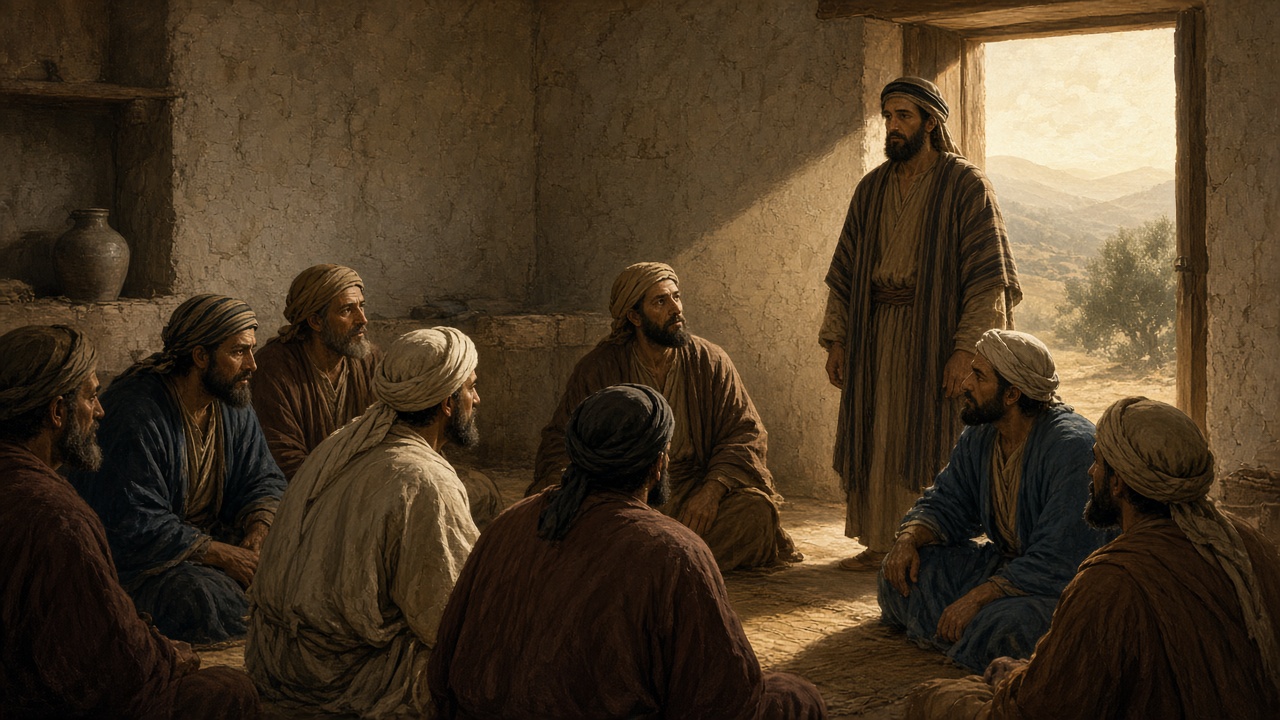
Did you know?
Letters, Presence, and Warfare Not of This World
- Some people measured Paul by appearances and by his speech. They granted that his letters were weighty and forceful, yet called his physical presence unimpressive and his speaking of no account. He replies that what he is in his letters when away, he will be in his actions when he is present.Sources: the Bible text itself
- He casts the conflict in military terms, but not as an ordinary fight. Living in the flesh, he says, does not mean waging war according to the flesh. The weapons he claims are not the world's; they have divine power to pull down strongholds, to dismantle arguments and every presumption set against the knowledge of God, and to bring every thought into obedience to Christ.Sources: the Bible text itself
- Paul will not boast beyond the field of influence God has assigned him, a field that already includes his readers, since he was the first to reach them with the gospel of Christ. Anyone who boasts, he says, should boast in the Lord; approval belongs not to the one who commends himself, but to the one whom the Lord commends.Sources: the Bible text itself
Notes written with AI assistance from open sources (Theographic Bible Metadata, CC BY-SA 4.0; Easton’s Bible Dictionary, public domain) and reviewed before publishing.
Places in this chapter
- Corinth · 37.906, 22.879 · verse 14
Only places identified with high confidence are shown (90% or more according to the scholarly sources compiled by OpenBible). Period map: DARE (Digital Atlas of the Roman Empire), CC BY 4.0; modern map: © OpenStreetMap contributors; places: OpenBible.info (CC BY 4.0).
Credits and license for this translation
I 'utz laj tzij re i dios
New Testament in Achi (I 'utz laj tzij re i dios)
copyright © 2009 Wycliffe Bible Translators, Inc.
Language: Achi
Dialect: Cubulco
Translation by: Wycliffe Bible Translators, Inc.
Achi, Cubulco
Achi' is a Mayan language very
closely related to K'iche' (Quiché in the older orthography). It is spoken by the
Achi people, primarily in the area of Baja Verapaz in Guatemala. There are two Achi'
dialects. Cubulco Achi' is spoken by approximately 48,000 people in the Cubulco area
west of Rabinal area. Rabinal Achi' is spoken by approximately 37,000 people in the
Rabinal area.
El Nuevo Testamento
en el idioma Achí de Cubulco de
Guatemala
Ediciones anteriores
Segunda edición
©2009, Wycliffe Bible
Translators
Primera edición
Publicado por
©1984, Sociedad Bíblica
Internacional
Copyright Information
© 2009, Wycliffe Inc. All rights reserved.
This translation text is made available to you under the terms of the Creative
Commons License: Attribution-Noncommercial-No Derivative Works. ( http://creativecommons.org/licenses/by-nc-nd/3.0/ ) In addition, you have
permission to port the text to different file formats, as long as you do not change
any of the text or punctuation of the Bible.
You may share, copy, distribute, transmit, and extract portions or quotations from
this work, provided that you include the above copyright information:
You must give Attribution to the work.
You do not sell this work for a profit.
You do not make any derivative works that change any of the actual words or
punctuation of the Scriptures.
Permissions beyond the scope of this license may be available if you contact us
with your request. If you want to revise a translation, use a translation in an
adaptation, or use a translation commercially, we will consider your request.
NT:segunda edición
The New Testament
in Achi
© 2009, Wycliffe Inc. All rights reserved.
This translation is made available to you under the terms of the
Creative Commons Attribution-Noncommercial-No Derivatives license 4.0.
You may share and redistribute this Bible translation or extracts from it in any format, provided that:
You include the above copyright and source information.
You do not sell this work for a profit.
You do not change any of the words or punctuation of the Scriptures.
Pictures included with Scriptures and other documents on this site are licensed just for use with those Scriptures and documents.
For other uses, please contact the respective copyright owners.
2013-01-05
Source: http://ebible.org/acr-acc/ · eBible.org