1 Corinthians 7
I 'utz laj tzij re i dios · Tap a verse to see its cross-references.
I pixbanic chique i je cʼulanic, xak chique i ne te cʼulanic
1Woʼor cwaj quin bij chiwe wach i tzʼonom li chwe are xi tak li i wuj. Jun achi, ʼutz queʼel che we n-ta rixokil. 2Xui-ri, je qʼui quiqui ʼan i n-chʼam taj ruʼ i qui chʼacul, rumal-i, mas ʼutz we i achiab chi qui jujunal ʼo i quixokil; xak i ixokib chi qui jujunal, ʼo i cachijil. 3I achi chu ya rib ʼuri che i rixokil pacha usucʼ; xak i ixok chu ya rib che rachijil pacha usucʼ. 4I ixok, n-rajaw ti u chʼacul, are i rachijil are i rajaw; xak queje i achi, n-rajaw ti u chʼacul ire mísmo, are rajaw i u chʼacul are i rixokil. 5Che queb, miqui ʼatij qui rayijbal chiquiwach, xui-ri, mok xqui chʼobo quiqui mayij jubiʼ che, man cacaj quiqui ya mas quib chu tzʼonoxic che i Dios. Ile ʼutz, xui-ri, xa ʼatal ʼij, n-mas taj. Teʼuri, chiqui ya tan chic quib chiquiwach, man mok i itzel coʼon chique que macunic.
6I tak in tzij-le chiwe, xa yabal re i nojbal; we ʼutz qui na yix, chi ʼana ʼuri. N-suʼ ta xin bij we lic ʼo pen qui ʼano. 7ʼUtz quin bij yin we ta iwonojel yix ix pacha yin chi n-ta wixokil. Xui-ri, i Dios u yom chaka jujunal wach caka chʼijo; katzij n-xak ta jun caka ʼano.
8I yix chi ituquel, xak yix chi ix ixokib malcanib, quin bij chiwe, ʼutz quix qʼuiji ituquel pacha yin. 9Xui-ri, we n-quix tiqui ta chu ʼatixic u rayijbal i chʼacul, pues ʼutz chix cʼulanok. N-ʼus taj we toʼ quix cʼachir rumal u rayijbal i chʼacul; mas ʼutz quix cʼuliʼic chuwach ile.
10I yix chi i rikom chic iwib, ʼo u chac chi i ixok mu canaj i rachijil. I tzij-i, n-are ta toʼ in tzij yin, iri lic u bim i Kajwal. 11Xui-ri, we jun ixok xu jach can i rachijil, mu tzucuj chic jun achi. We xi craj tan chic jun rachijil, chiqui chomaj chic quib chiquiwach ruʼ i rachijil. Xak queje jun achi, mu jach i rixokil.
12ʼO chic jupaj tzij quin bij chiwe yix chi i rikom chic iwib. I tzij-i chi quin bij na chiwe n-are ti u tzij i Kajwal; are in tzij yin chiwe. Are iri: we jun kachalal ʼo rixokil chi nu jachom ta rib puʼab i Crísto, we i ixok-le n-craj ta cu jach canok, i achi mu jach i rixokil ʼuri. 13Xak queje jun ixok we kachalal, we i rachijil n-kachalal taj, we i achi n-craj ta cu jach canok, i ixok mu jach i rachijil ʼuri. 14Mu jacho, man i achi-le chi maja cu jach rib che i Crísto, ʼo chic u chomal chuwach i Dios rumal i rixokil. Xak queje jun ixok chi maja cu jach rib che i Crísto, ʼo chic u chomal chuwach i Dios rumal i rachijil chi re chic i Crísto. Queje ile queʼelok, man we n-queje ta ile, xak iwacʼal yix xak jun ʼuri queʼel cuʼ i cacʼal i ne te re i Dios. Xui-ri, i iwacʼal yix ʼo chic qui chomal chuwach i Dios iwumal yix.
15We ʼo jun ixok, chi u yom chic rib puʼab i Crísto, we i rachijil n-kachalal taj, we craj cu jach i rixokil, chu jacha. Xak queje jun achi, we u yom chic rib puʼab i Crísto, we i rixokil craj cu jach i achi, chu jacha. Teʼuri i jun chi xjach canok, n-ta chic re i jun che. Are i craj i Dios, chom oj ʼol chakawach, rumal-i oj u siqʼuim ruʼ. 16I yix ix ixokib, n-iwetaʼam taj mok coʼon panok iwachijil quiqui jach quib puʼab i Jesucrísto iwumal yix. Xak queje yix ix achiab, n-iwetaʼam taj mok coʼon panok iwixokil quiqui jach quib puʼab i Crísto iwumal yix.
17Yix chi jujunal, chix canaj ruʼ wach u yom i Kajwal chiwe; chix canaj che pa ix ʼo wi are xix cojon che i siqʼuixic ruʼ i Dios. Queje ile quin bij chique conojel i tak tzobajil re i Dios. 18Jun chi ʼo retal circuncision che u chʼacul, we i Dios u siqʼuim ruʼ, ma cʼachir chu sachsaxic i retal-le. Xak i jun chi n-ta retal-le che u chʼacul, we xcojon che u siqʼuixic ruʼ i Dios, ma cʼachir chu cojic i retal che u chʼacul. 19N-ta coʼono we jun ʼo retal che u chʼacul, xak we n-taj; are i mer rajwaxic, chix cojon che pacha u bim can i Dios. 20Rumal-i, conojel chi qui jujunal, che canajok pacha oʼonom are xe cojon che i qui siqʼuixic ruʼ i Dios. 21Yet, are xat cojon che a siqʼuixic ruʼ i Dios, we at mocom at ʼo puʼab jun awajaw, mat cʼachir rumal, n-ta coʼon ile chuwach i Dios. Xui-ri, we xu bij a patron chi cat elic, chat el ʼut. 22Jun, n-ta coʼono we ʼo rajaw puwi are xcojon che u siqʼuixic che i Kajwal; xeʼel ʼuri líbre chic chuwach i Kajwal, man n-ajchac ta chic puʼab i mac atzalal. Xak we ʼo jun n-ta rajaw, ire we xcojon che u siqʼuixic che i Kajwal, ʼo rajaw ʼuri queʼelok; are i rajaw are i Crísto. 23Nim i rajil u tojom i Dios, ʼelbal-iwe chi sak; rumal-i mi ya chic iwib puʼab jun chic iwajaw. 24Wachalal, chix canaj che, pacha i ʼanom are xix siqʼuix rumal i Dios, are xi jek i binic ruʼ i Dios.
25Cwaj quin lap jubiʼ chique i cʼa maja que cʼuliʼic. I Kajwal nu bim taj, xui-ri, wach i quin chʼob yin che ile, quin bij chiwe. Quin bij yin, ʼutz we qui cuba i cʼux che in tzij, man nim u chac i Dios oʼonom pin cʼux. 26Quin bij yin, ʼutz we jun achi ca canajic pacha oʼonom, man mas i cʼax coj tijin chi rilic woʼor. 27Yet, we ʼo chic awixokil, ma chʼob u jachic; we xak n-ta awixokil, ma chʼob u tzucuxic. 28We xak cat cʼuliʼic, ile n-mac taj. Xak jun ali, we ca cʼuliʼic, xak n-mac ta ile. Xui-ri, are i que cʼuliʼic, mas quiqui tij ni cʼax piqui cʼaslemal; cwaj yin, chi yix n-qui tij ti uyej-le.
29Wachalal, ʼo jun tzij cwaj quin bij chiwe, are iri: xa ʼatal chic ʼij ʼo chakawach, rumal-i, niʼpa i ʼo quixokil, n-xui ta chic i quixokil quiqui chʼobo, xak chiqui chʼobo i Dios. 30Niʼpa i que oʼic, chiqui ʼana pacha n-ti qui bis; xak niʼpa i que quicotic, miqui ya qui cʼux xui che i quicotemal; xak niʼpa i quiqui loʼ ubitak-que, miqui chʼob xui loʼoj. 31Niʼpa i quiqui chacuj wach tak ʼo chuwach i jyub taʼaj, cha cʼun piqui cʼux, n-xui ta ile ʼo u chac chique, man i jyub taʼaj chi cakil woʼor, ya ca qʼuisic.
32Cwaj yin chi yix, lic n-ta quix cʼachir che. Jun achi chi n-ta rixokil, cu ya mas rib chu ʼonquil u chac i Kajwal, xak chu ʼanic i chom chuwach. 33We cʼulinak chic, ire xui cu chʼob u cʼaslemal chuwach i jyub taʼaj, xui cu chʼob u ʼonquil wach cu maj u wach i rixokil. 34Xak queje chique ixokib: jun ixok we cʼulinak chic, junwi cu chʼob ire chuwach i jun chi n-ta rachijil. I jun chi n-ta rachijil, ire cu ya mas rib chu ʼonquil u chac i Kajwal; craj ire re i Kajwal i u cʼux, xak i u chʼacul. Péro n-queje ta ile che i jun chi ʼo rachijil; ire xui cu chʼob i ropis ruʼ ja, xui cu chʼob u ʼonquil wach cu maj u wach i rachijil.
35Xin bij iri chiwe, ʼanbal ʼutz chiwe yix, n-toʼ ta jecʼbal iwe xin bij. Xui-ri, cwaj yin chi yix ix ʼutz ix chom, lic i yom i cʼux chu ʼonquil wach craj i Kajwal, n-ta quix ʼatiw chu ʼonquil.
36Mok ʼo jun achi, cu bij chi ʼutz ca cʼuli u miʼal man ya quicʼaw u ʼapojil; we cu bij ire ʼo u chac ca cʼuliʼic, chu ʼana pacha cu chʼobo. ʼUtz cha cʼulanok, man ile n-mac taj. 37Xak mok ʼo jun achi cu bij chi n-presis taj ca cʼuli u miʼal. We queje ile cu chʼobo, chu ʼana ʼuri wach i cu bij, we n-ta ca ʼatiwic; chu ʼana ʼut we lic jiquil u cʼux che, wach u chʼobom. ʼUtz i cu ʼan i achi-le. 38Queʼelok, pachin i cu bij we ca cʼuli u miʼal, ʼutz-i, xui-ri we n-ca cʼuli taj, mas ʼutz.
39Jun ixok, we ʼo rachijil, ʼo re i ʼatbal tzij che, tzʼakat je cʼaslic. We xcam i rachijil, ʼo puʼab ʼuri we craj ca cʼuli tan chic; xui-ri, cha cʼuli ruʼ jun achi chi u yom rib puʼab i Kajwal. 40Péro quin bij yin mas ca quicotic we ca canaj utuquel queje ile. Quin na yin ʼo u Tewal i Dios pin nojbal che i xin bij-le.
Did you know?
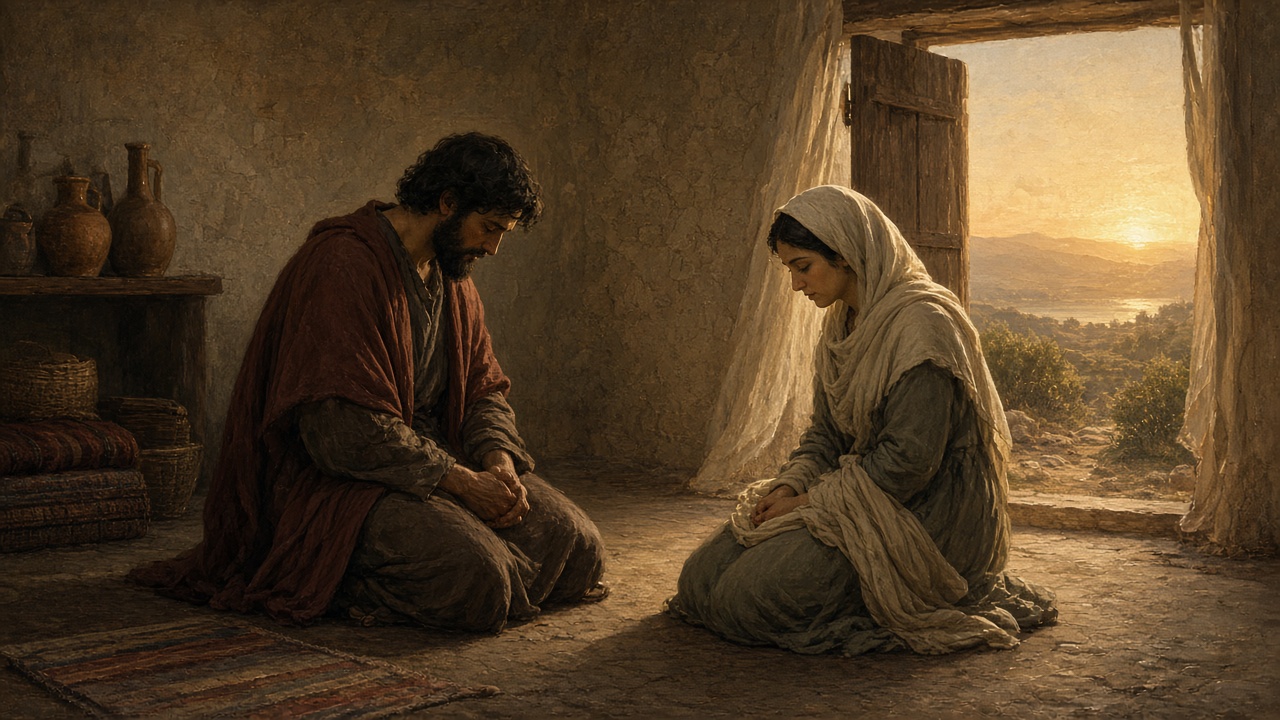
Counsel on marriage and the present crisis
- The chapter opens as a reply to matters the readers had written about. The writer says it is good to abstain from sexual relations, yet, because there is so much sexual immorality, each man should have his own wife and each woman her own husband. He presents this as a concession, not as a command, and says that each person has their own gift from God.Sources: the Bible text itself
- In marriage, the writer says the wife does not have authority over her own body, but the husband does, and likewise the husband does not have authority over his own body, but the wife does. They should not deprive each other except by mutual consent and for a time, so they may devote themselves to prayer, and then come together again, so that Satan will not tempt them through lack of self-control. Easton's Bible Dictionary (1897) presents the name Satan as “adversary” or “accuser,” and notes that he tempted Jesus in the wilderness.Sources: the Bible text itself · Satan
- The writer distinguishes a command he attributes to the Lord—a wife must not separate from her husband, and a husband must not divorce his wife—from his own judgment where he says he, not the Lord, is speaking, including marriages with an unbeliever and questions about virgins. Because of what he calls the present crisis, and because he says the time is short and this world in its present form is passing away, he thinks it good to remain as one is. He adds that to marry is not to sin, though those who marry will face troubles in this life.Sources: the Bible text itself
Notes written with AI assistance from open sources (Theographic Bible Metadata, CC BY-SA 4.0; Easton’s Bible Dictionary, public domain) and reviewed before publishing.
Credits and license for this translation
I 'utz laj tzij re i dios
New Testament in Achi (I 'utz laj tzij re i dios)
copyright © 2009 Wycliffe Bible Translators, Inc.
Language: Achi
Dialect: Cubulco
Translation by: Wycliffe Bible Translators, Inc.
Achi, Cubulco
Achi' is a Mayan language very
closely related to K'iche' (Quiché in the older orthography). It is spoken by the
Achi people, primarily in the area of Baja Verapaz in Guatemala. There are two Achi'
dialects. Cubulco Achi' is spoken by approximately 48,000 people in the Cubulco area
west of Rabinal area. Rabinal Achi' is spoken by approximately 37,000 people in the
Rabinal area.
El Nuevo Testamento
en el idioma Achí de Cubulco de
Guatemala
Ediciones anteriores
Segunda edición
©2009, Wycliffe Bible
Translators
Primera edición
Publicado por
©1984, Sociedad Bíblica
Internacional
Copyright Information
© 2009, Wycliffe Inc. All rights reserved.
This translation text is made available to you under the terms of the Creative
Commons License: Attribution-Noncommercial-No Derivative Works. ( http://creativecommons.org/licenses/by-nc-nd/3.0/ ) In addition, you have
permission to port the text to different file formats, as long as you do not change
any of the text or punctuation of the Bible.
You may share, copy, distribute, transmit, and extract portions or quotations from
this work, provided that you include the above copyright information:
You must give Attribution to the work.
You do not sell this work for a profit.
You do not make any derivative works that change any of the actual words or
punctuation of the Scriptures.
Permissions beyond the scope of this license may be available if you contact us
with your request. If you want to revise a translation, use a translation in an
adaptation, or use a translation commercially, we will consider your request.
NT:segunda edición
The New Testament
in Achi
© 2009, Wycliffe Inc. All rights reserved.
This translation is made available to you under the terms of the
Creative Commons Attribution-Noncommercial-No Derivatives license 4.0.
You may share and redistribute this Bible translation or extracts from it in any format, provided that:
You include the above copyright and source information.
You do not sell this work for a profit.
You do not change any of the words or punctuation of the Scriptures.
Pictures included with Scriptures and other documents on this site are licensed just for use with those Scriptures and documents.
For other uses, please contact the respective copyright owners.
2013-01-05
Source: http://ebible.org/acr-acc/ · eBible.org