1 Corinthians 10
I 'utz laj tzij re i dios · Tap a verse to see its cross-references.
Maka coj qui ʼij i tiox chi xa ril je ʼantalic
1Ix wachalal, cwaj yin quiwetamaj wach xqui ʼan i katit ka mam ujer. Je conojel ique xe bin chuxeʼ i sutzʼ re i Dios; xak conojel ique xe totaj rumal i Dios are xe ʼax che i mar Cak. 2Conojel ʼuri xkajsax ya piquiwi rumal i sutzʼ, xak rumal i mar; rumal-i xeʼel chique je re i mam Moises. 3Xak conojel ique xqui tij i wa chi xwinakir cuʼ rumal i Kajwal. 4Xak i qui yaʼ yatal chique rumal i Kajwal, conojel ique xqui tuʼu. I yale, xel che i abaj chi xbin cuʼ ique pa xe bin wi; i abaj-le, are i Crísto. 5Ique tupu xquil ronojel ile, laj conojel xqui petsaj i roywal i Dios piquiwi. Rumal-i, xe cam can che i jyub tzʼinilic pa i xe bin wi.
6Queje xa ʼani ile, cʼutbal re chake yoj, maka rayij tak i n-ʼus taj, pacha xqui ʼan ique. 7Xak maka coj qui ʼij i tiox chi xa ril je ʼantalic, pacha xqui ʼan jujun chique ique. Xqui ʼan pacha i tzʼibtal can chupam i wuj re i Dios chi cu bij: “I winak xe cubi chu tijawic i qui wa, i qui yaʼ; teʼuri xe walijic, y xe oc chi xajawic (chuwach i qui tiox re óro).” Queje ile tzʼibtal canok. 8Xak maka ʼan i n-chʼam taj ruʼ i ka chʼacul pacha xqui ʼan jujun chique ique, y xe cam je veintitres mil chique che jun ʼij. 9Maka tij u ʼijol i Kajwal cakilbej-re we ca pe roywal; queje ile xqui ʼan jujun chique ique, y xe camsax ʼuri cumal i cumatz. 10Mi bij yix chi n-ʼus ti coʼon i Dios chiwe; queje xqui bij jujun chique ique, y xe camsax ʼuri rumal i ángel aj camsanel.
11Queje xe icʼaw wi i katit ka mam ile ujer, xak tzʼibtal ile chupam u wuj i Dios, cʼutbal-re chake yoj. Are ile, are cuxtabal-re chake yoj chi oj ʼo pa qʼuisbal tak ʼij re u wach i jyub taʼaj. 12Rumal-i, we ʼo jun, cu na ire chi ʼutz ʼolic, chu ʼana cwent che rib, mokxa ca tzak chupam i n-ʼus taj pacha xqui ʼan ique. 13ʼOlic ca pe u tijawic i ʼijol yix, xui-ri, niʼpa ile chi ca pe piwi, ʼis queje que icʼaw wi i winak conojel. Xui-ri, i Dios quix u to na chuwach ile, man queje ile u bim chake. Ire retaʼam u nimal u cowil i cʼux, rumal-i xa ʼatalic wach tak ca pe piwi, ʼilbal re u cubibal i cʼux. Ire xak cu ya na chiwe wach iwelbal chupam, queje ile n-quix tzak ta rumal.
14Yix, chi lic quix waj, iwetaʼam chi i katit ka mam xe tzakic, rumal-i mi ya iwib chu cojic u ʼij jun tiox chi xa ril ʼantalic pacha xqui ʼan ique. 15Quin bij iri chiwe, man yix ix winak chi ʼo i noʼoj; chi chʼobo ʼut wach i quin bij-i, we lic usucʼ. 16Are caka tuʼ i víno chi cuxtabal re u quiqʼuel i Crísto, caka tioxij che i Dios rumal; are caka ʼan ile, queʼel ʼuri ʼo re i Crísto chake. Xak queje i caxlanwa chi caka pir chakawach y caka tijo, cuxtabal re u chʼacul i Crísto, xak queʼel chake chi ʼo re i Crísto chake are caka ʼan ile. 17Xa jun chi caxlanwa caka tij konojel, tupu oj qʼui; rumal-i coj eʼelok xa oj jun chʼaculaj.
18Chiwila ba i aj Israel winak, wach usucʼ chique are quiqui tij che i tiʼ chi sujtal chuwach i Dios; queʼel chique junam qui wach ruʼ i Dios. 19Xak queje i tiʼ chi sujtal che jun tiox. Pues n-are ta xin bij chi ʼo u ʼij jun tiox chi xa ril ʼantalic, xak n-tu ʼij i tiʼ chi qui yom i winak chuwach. 20Are i quin bij are iri: niʼpa i n-quetaʼam ti Dios, are quiqui ya jun sipon che jun tiox chi xa ril ʼantalic, n-che ti Dios quiqui ya wi, xa chique itzel tak tew quiqui ya wi. N-cwaj taj we qui ya i wach cuʼ itzel tak tew-le. 21Yix, chi qui tij i víno cojbal u ʼij i Kajwal, n-camajaw taj we xak qui tuʼ i víno chi cojbal qui ʼij itzel tak tew. Qui tij i caxlanwa re i Kajwal, n-ca majaw ta ʼuri we xak qui tij i caxlanwa que itzel tak tew. 22¿Xataba cakaj ʼuri, caka petsaj roywal i Kajwal chikij rumal i tiox chi xa ril ʼantalic? ¿Xataba mas ʼo ka choʼab yoj chuwach i Dios? Lic n-taj.
Maka ʼan pacha i toʼ cakaj yoj; chaka ʼana wach i ʼutz queʼel chique i kachalal
23Mok ʼo jun cu bij: “ʼIs yatal chic chwe pachique cwaj quin ʼano,” cu bij. Katzij ne-ri, ʼis yatal chic chake, xui-ri mok ʼo i n-ca majaw taj. Katzij ʼis yatal chic chake wach i caka ʼano, xui-ri mok ʼo i caka ʼano chi mi jun ʼo coʼon re che. 24Mi tzucuj xui tak i ʼutz chiwe yix; are, chi ya i cʼux chu ʼonquil wach i queʼel ʼutz chique i iwachiʼil.
25Yix are qui loʼ i tiʼ pa qʼuebal, mi tzʼonoj we xa are sujtal chuwach i tiox, xui-ri, chi tija n-ta xak mu bij i cʼux che. 26Man i jyub taʼaj, xak ronojel niʼpa i ʼo chuwach, ʼis re i Kajwal.
27Xak we ʼo jun chi n-kachalal taj, we xu bij chiwe que i ʼana jun waʼim ruʼ, pues we quiwaj, quix ʼe ruʼ. Chi tija wach cu ya chiwe; mi tzʼonoj che we are i tiʼ sujtal chuwach i tiox. 28Xui-ri, we ʼo jun cu bij chiwe: “I tiʼ-i, are sujum chiquiwach i tiox,” coʼono, mi tij ʼuri i tiʼ-le. Queje chi ʼana ile, mi tijo, rumal re ire, man ʼutz n-ti cu bij u cʼux rumal. 29Are u cʼux ire, xin bij chiwe, man i cʼux yix n-ti cu bij che.
Mok ʼo jun chiwe cu bij: “Bay, ʼo pinʼab yin pachique i cwaj quin ʼano, ¿wuchac ʼuri ʼo i n-quin ʼan taj, xa rumal ʼo cu bij u cʼux i jun? 30I yin, wach i quin tijo, quin tioxij che i Dios rumal, ¿wuchac ʼut quin qui chʼa-chʼa wach i quin tijo?” mok cu bij. 31Ix wachalal, ronojel wach i qui ʼano, chi ʼana cojsabal u ʼij i Dios: wach i qui tijo, wach i qui tuʼu, xak wach i qui ʼano. 32Chi ʼana cwent che wach i qui ʼano, mokxa que i tzaksaj i je re chic i Dios, o xak ique chi cʼa maja je re i Dios; we je aj Israel winak, o we ne te aj Israel. 33Xak queje quin ʼan yin; ronojel wach i quin ʼano, quin ʼan pen chi ʼutz queʼel chique conojel. N-xui ti wach i queʼel ʼutz chwe yin quin tzucuj, xak quin tzucuj wach i queʼel ʼutz chique i juban, quiqui rikbej re i quelbal chi sak.
Did you know?
Wilderness Warnings and the Lord's Table
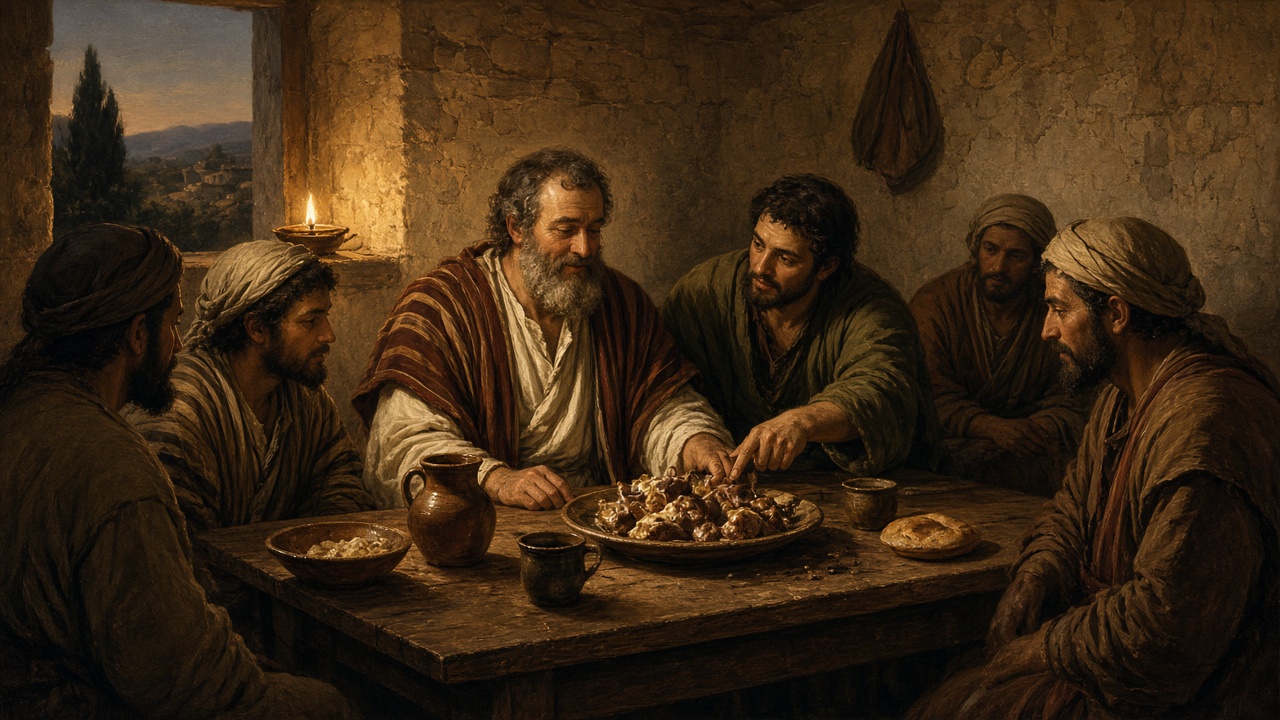
- Paul says he does not want the Corinthians unaware that the forefathers were all under the cloud and all passed through the sea, and that they were baptized into Moses in the cloud and in the sea. They all ate the same spiritual food and drank the same spiritual drink from the spiritual rock that accompanied them, and he says that rock was Christ.Sources: the Bible text itself
- Paul says God was not pleased with most of them, for they were struck down in the wilderness. He lists idolatry, sexual immorality in which twenty-three thousand died in one day, testing Christ, which brought death by snakes, and complaining, punished by the destroying angel, and calls these events examples written down as warnings.Sources: the Bible text itself
- He calls the cup of blessing and the bread that is broken a participation in the blood and body of Christ, and says pagan sacrifices are offered to demons, not to God, so the two tables cannot be shared. Food sold in the meat market may be eaten without raising questions of conscience, for "The earth is the Lord's, and the fullness thereof," but if someone says it was offered to idols, it should be refused for that person's conscience.Sources: the Bible text itself
Notes written with AI assistance from open sources (Theographic Bible Metadata, CC BY-SA 4.0; Easton’s Bible Dictionary, public domain) and reviewed before publishing.
Credits and license for this translation
I 'utz laj tzij re i dios
New Testament in Achi (I 'utz laj tzij re i dios)
copyright © 2009 Wycliffe Bible Translators, Inc.
Language: Achi
Dialect: Cubulco
Translation by: Wycliffe Bible Translators, Inc.
Achi, Cubulco
Achi' is a Mayan language very
closely related to K'iche' (Quiché in the older orthography). It is spoken by the
Achi people, primarily in the area of Baja Verapaz in Guatemala. There are two Achi'
dialects. Cubulco Achi' is spoken by approximately 48,000 people in the Cubulco area
west of Rabinal area. Rabinal Achi' is spoken by approximately 37,000 people in the
Rabinal area.
El Nuevo Testamento
en el idioma Achí de Cubulco de
Guatemala
Ediciones anteriores
Segunda edición
©2009, Wycliffe Bible
Translators
Primera edición
Publicado por
©1984, Sociedad Bíblica
Internacional
Copyright Information
© 2009, Wycliffe Inc. All rights reserved.
This translation text is made available to you under the terms of the Creative
Commons License: Attribution-Noncommercial-No Derivative Works. ( http://creativecommons.org/licenses/by-nc-nd/3.0/ ) In addition, you have
permission to port the text to different file formats, as long as you do not change
any of the text or punctuation of the Bible.
You may share, copy, distribute, transmit, and extract portions or quotations from
this work, provided that you include the above copyright information:
You must give Attribution to the work.
You do not sell this work for a profit.
You do not make any derivative works that change any of the actual words or
punctuation of the Scriptures.
Permissions beyond the scope of this license may be available if you contact us
with your request. If you want to revise a translation, use a translation in an
adaptation, or use a translation commercially, we will consider your request.
NT:segunda edición
The New Testament
in Achi
© 2009, Wycliffe Inc. All rights reserved.
This translation is made available to you under the terms of the
Creative Commons Attribution-Noncommercial-No Derivatives license 4.0.
You may share and redistribute this Bible translation or extracts from it in any format, provided that:
You include the above copyright and source information.
You do not sell this work for a profit.
You do not change any of the words or punctuation of the Scriptures.
Pictures included with Scriptures and other documents on this site are licensed just for use with those Scriptures and documents.
For other uses, please contact the respective copyright owners.
2013-01-05
Source: http://ebible.org/acr-acc/ · eBible.org