Genesis 32
Uisneno In Kabin ma Prenat: Rais Manba'an Fe'u nok Reta' Ahun-hunut · Tap a verse to see its cross-references.
Naiꞌ Yakop namtau neu he nateef nok in tataf naiꞌ Esau
1Rarit naiꞌ Yakop sin nnaon nkonon. Onaim Uisneno In ameupt ein naꞌkon neno tunan neman ma nateef nok ne. 2Oras niit sin on naan ate, in naꞌuab am nak, “Reꞌ bare ia, Uisneno In soraurs ein bare snasat!” Etun sin nakanab bare naan, Mahanaim, (reꞌ in aꞌmoufn ii nak ‘bare snasat manaꞌ nua’).
3Rarit naiꞌ Yakop anreun in ameput tuaf fauk nnaon nahunun neun pah Edom (es reꞌ Seir), he nfee hanaf neu in tataf naiꞌ Esau, nak in he neem. 4Naiꞌ Yakop naꞌuab neu in ameupt ein naan am nak, “Hi mnao meik hanaf meu au tataꞌ naiꞌ Esau mmak, ‘Aam Esau! Ho ate naiꞌ Yakop kau aꞌsonuꞌ haan buseet ma hormaat ꞌeu ko, tua. Naꞌko afi unuꞌ tar antea oras ia, ho ate kau, utua ꞌbi hit baab mone naiꞌ Laban in umi. 5Oras ia, ho ate kau gui, aꞌmuiꞌ bijae, bikaes keledai, ꞌbibi, ma ꞌbib-kase. Au ꞌmuiꞌ ate msaꞌ, et atoniꞌ ma bifee. Au ꞌreek tuaf ein reꞌ ia, he neik ko hanaf, nak au he ꞌuum. Au ufnekan aꞌbi au nekak, henatiꞌ ho mtoup kau ꞌnimaꞌ nua, tua.’ ” Onaim tuaf ein naan annaon.
6Oras sin nfain neman neun naiꞌ Yakop, sin neikin hanaf am nak, “Hai mnao miteef amrair mok ho tataꞌ naiꞌ Esau. Oras ia in neem ma nok tuaf natun haa, he nateef nok ko, tua.”
7Anneen on naan ate, naiꞌ Yakop in ansaon ee tepo-tepo, ma in namtau nmaet. Rarit in nbait in ameupt ein ma muiꞌt ein ok-okeꞌ, anjarin pukan nua. 8In natenab am nak, “Karu naiꞌ Esau neem ma nbaan pukan ahuunt ee, pukan amuint ee naenan he napenin fetin.”
9Rarit naiꞌ Yakop anꞌonen am nak, “Koi, Uisneno! Usiꞌ reꞌ au naꞌi naiꞌ Abraham ma au amaꞌ naiꞌ Isak naꞌruriꞌ ma naꞌbees neu Ko! Amneen maan kau feꞌ, tua. Uisneno, neon goes ii, Ho es reꞌ amreek kau he ꞌfain ꞌuum ꞌeu au umi ma au nonot-asar, ꞌbi pah reꞌ ia. Ho es reꞌ ambaꞌan kau mmak, Ho of amꞌator he murekoꞌ sin ok-okeꞌ. 10Au reꞌ ia, atoin ka masoꞌik fa, mes Ho manekam meu kau nabar-baar. Unuꞌ te, oras au ꞌraak noe Yarden reꞌ ia, au ꞌeiki haa teas. Mes oras ia, au ꞌfain ꞌuum ꞌeik tuaf pukan nua ma muꞌit amsaꞌ. 11Au umtau, kais-kaisaꞌ au tataꞌ naiꞌ Esau neem ma nbaan niis kai. Onaim au ꞌtoit Ko Usiꞌ he mufetin maan kai naꞌko naiꞌ Esau in aꞌniman. Hai arkai es reꞌ: au, ma au fee-anah sin, ma au ate sin ok-okeꞌ. 12Usiꞌ, Ho es ambaꞌan mak, Ho es reꞌ mfee kau tetus anho-hoen, ma mfee kau sufaꞌ-kaꞌuf on reꞌ snaen ein et tais je ninin, reꞌ biak ein ka nsoik nabeiꞌ sin fa, tua.”
13Rarit naiꞌ Yakop antuup anbi bare naan. Nokaꞌ on naan ate, in nabarab muꞌit he nꞌook-soun sin neun in tataf. 14In npiir naan aꞌbib ainaf natun nua, ꞌbib keso boꞌ nua, ꞌbib-kaes ainaf natun nua, ꞌbib-kaes keso boꞌ nua, 15bikaes unta ainaf boꞌ teun reꞌ nasuus ein feꞌ, bijae ainaf boꞌ haa, bijae keso boꞌes, bikaes keledai ainaf boꞌ nua, ma bikaes keledai mone boꞌes. 16Rarit, in nbait muiꞌt ein naan, huum es ate neu puukn es. In nfee pukan es ate nok in atukus. In natonan sin am nak, “Hi mnao mihuun. Au utuin ki ꞌbi hi kotim. Hi mnao, mes pukan es nok pukan es ate sero mmakaꞌroon.”
17Rarit naiꞌ Yakop naprenat aꞌnakat neu pukan ahuunt ee mnak, “Karu au tataꞌ naiꞌ Esau nateef nok ko, ma in nataan am nak, ‘Ho he mnao on mee? Sekau in ameupt ee, es reꞌ ho? Muiꞌt ein reꞌ ia, sekau iin na?’ 18Ho mutaah am mak, ‘Muiꞌt ein reꞌ ia, ho ate naiꞌ Yakop iin na, tua. In nsonuꞌ sin neu in tataf, aam usiꞌ naiꞌ Esau. In et reꞌ munin.’ ” 19In naprenat on reꞌ naan amsaꞌ neu atukus pukan bian am nak, “Karu hi miteef mok au tataꞌ naiꞌ Esau, hi mnoon ee muiꞌt ein reꞌ ia. Rarit hi mitoon ee mak, au et reꞌ munin.” Naiꞌ Yakop natenab am nak, karu in nfee muiꞌt ein reꞌ naan ok-okeꞌ te, naiꞌ Esau of neekn ee nsesuum ma nmuniꞌ. 21Onaim in nsonuꞌ muiꞌt ein naan nahunun. Mes mabeꞌ naan, in ntuup nabaar anbi naan.
Naiꞌ Yakop nok Uisneno anmaboon ein
22Mabeꞌ naan, naiꞌ Yakop anfeen ma nꞌator in fee ngguin nua sin, in aten reꞌ in npanaꞌ sin, ma in aanh ein boꞌes am meseꞌ, he sin nnaon nrakan neun noe Yabok in panin. 23Oras sin arsin antean noe naan in panin, in nsonuꞌ in pusaak ein ok-okeꞌ neun ne.
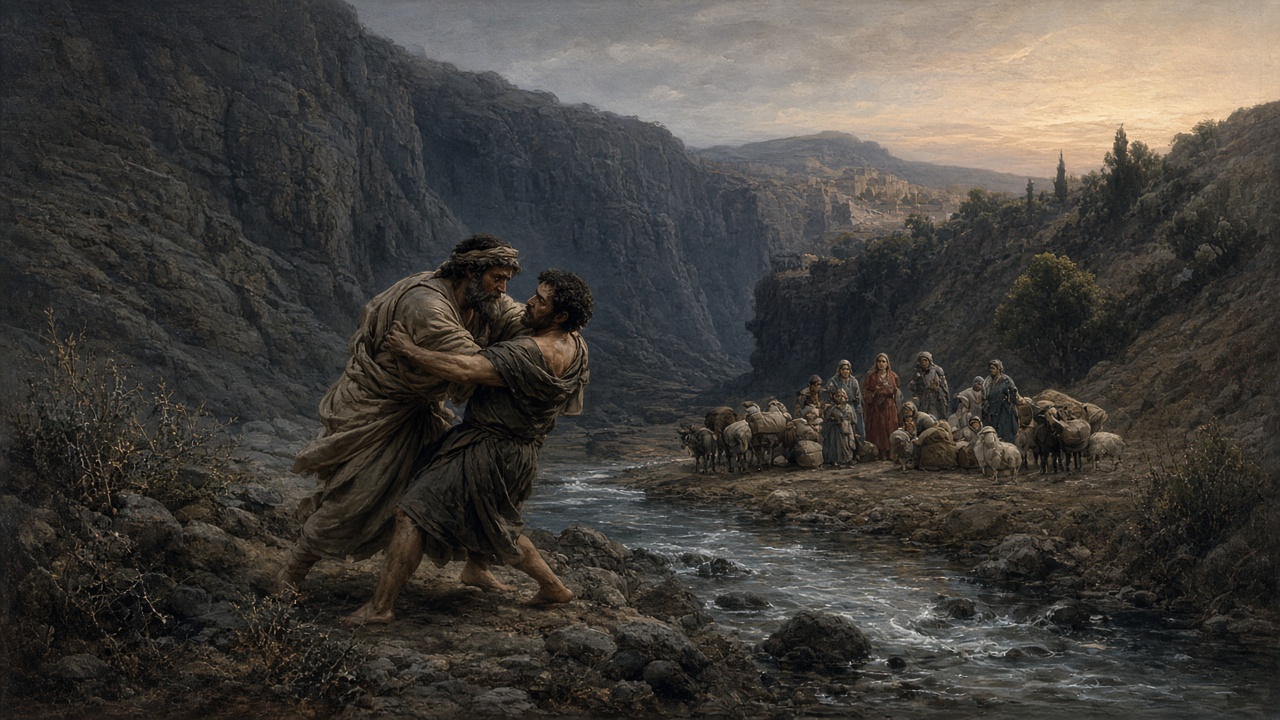
24Mes naiꞌ Yakop namaik anmees anbi noe je panin. Rarit atoin es neem. Atoniꞌ naan nok naiꞌ Yakop anmaboon ein anbi naan, tar antea neis noi nmeu. 25Oras atoniꞌ naan annaben nak, naiꞌ Yakop he niis ee jen ate, in ntuuf naiꞌ Yakop in aꞌbokon, tar antea in nuin pusun uun ne natposiꞌ npoi naꞌko in tarun. 26Onaim atoniꞌ naan naꞌuab am nak, “Mufetiꞌ kau. Kreoꞌ goes te maans ee he npeeꞌ jen.”
Mes naiꞌ Yakop nataah am nak, “Ho muꞌuab amfee kau tetus feꞌ, naꞌ au ufetiꞌ ko.”
27Onaim atoniꞌ naan, nataan ee mnak, “Ho kaan maan sekau?”
In nataah am nak, “Naiꞌ Yakop.”
28Rarit atoniꞌ naan naꞌuab am nak, “Ho kanam naan, ka naiꞌ Yakop fa heen. Mes anmurai oras ia, atoniꞌ anteek ko nak, naiꞌ Israꞌel (reꞌ in aꞌmoufn ii, ‘nmabonan nok Uisneno’), natuin ho mmabonan maꞌtaniꞌ mok mansian ma mok Uisneno, tar antea ho miis.”
29Onaim naiꞌ Yakop nataan am nak, “Ho kaan maan sekau?”
Mes atoniꞌ naan nataah am nak, “Ho he mutaan au kaank ii he saaꞌ?” Rarit in naꞌuab anfee tetus neu naiꞌ Yakop anbi naan.
30Onaim naiꞌ Yakop naꞌuab am nak, “Au ꞌiit aꞌrair Uisneno humaf nok humaf, mes au ꞌmoin feꞌ.” Natuin rasi naan ate, in nakanab bare naan, Peniꞌel (reꞌ in oetn ii, ‘Uisneno In human’).
31Oras maans ee nsae nrari te, naiꞌ Yakop annao nkoon, nasaitan bare naan. Mes in nsereꞌ, natuin in pusun uun ee nasuir. 32Etun antea oras ia, atoin Israelas sin ka nekun fa sisi naꞌko muiꞌt ein sin pusuk uuk ein, natuin Uisneno ntuuf nasurib sin aam uuf naiꞌ Yakop in nuin pusun uun.
Did you know?
At the Jabbok, on the Way to Esau
- Mahanaim means “two camps.” Jacob gave that name to the place near the Jabbok, beyond the Jordan, when the angels of God met him and he said, “This is the camp of God.” There he also divided his people, flocks, herds, and camels into two camps, hoping one might escape if Esau attacked the other.Sources: Mahanaim · the Bible text itself
- The Jabbok, whose name is explained as “a pouring out, or a wrestling,” is a stream east of the Jordan. It joins the Jordan about midway between the Sea of Galilee and the Dead Sea, after a course of about 65 miles through a wild, deep ravine. At its ford Jacob sent his two wives, two maidservants, eleven sons, and all he owned across, then remained alone and wrestled with a man until daybreak.Sources: Jabbok · the Bible text itself
- Jacob sent messengers to Esau in the land of Seir, the country of Edom, calling him lord and himself a servant. Seir is a mountainous region along the east side of the Arabah, from the southeastern end of the Dead Sea toward Akabah, the eastern branch of the Red Sea; the Edomites occupied it, and it was allotted to Esau’s descendants. Esau, the firstborn twin and a hunter, had sold his birthright for red lentil stew and was also called Edom, “red,” while Jacob—whose name means “one who follows on another’s heels,” or “supplanter”—had conspired with his mother to deceive Isaac.Sources: the Bible text itself · Seir · Esau (Edom) · Jacob (Israel)
Notes written with AI assistance from open sources (Theographic Bible Metadata, CC BY-SA 4.0; Easton’s Bible Dictionary, public domain) and reviewed before publishing.
Places in this chapter
- Edom · 30.746, 35.604 · verse 3
- Jordan · Today: Jordan River · 31.761, 35.558 · verse 10
- Jabbok · Today: Zarqa River · 32.115, 35.543 · verse 22
Only places identified with high confidence are shown (90% or more according to the scholarly sources compiled by OpenBible). Period map: DARE (Digital Atlas of the Roman Empire), CC BY 4.0; modern map: © OpenStreetMap contributors; places: OpenBible.info (CC BY 4.0).
Credits and license for this translation
Uisneno In Kabin ma Prenat: Rais Manba'an Fe'u nok Reta' Ahun-hunut
Genesis and the New Testament in the Amarasi language of Indonesia
Kejadian dan Perjanjian Baru dalam bahasa Amarasi dari
copyright © 1999-2014 Unit Bahasa dan Budaya, Kupang NTT, Indonesia
Language: Amarasi
Translation by: Wycliffe Bible Translators
This translation is made available to you under the terms of the
Creative Commons Attribution-No Derivatives license 4.0.
You may share and redistribute this Bible translation or extracts from it in any format, provided that:
You include the above copyright and source information.
You do not make any derivative works that change any of the actual words or punctuation of the Scriptures.
Pictures included with Scriptures and other documents on this site are licensed just for use with those Scriptures and documents.
For other uses, please contact the respective copyright owners.
2022-03-11
Source: http://ebible.org/aaz/ · eBible.org