Genesis 13
Uisneno In Kabin ma Prenat: Rais Manba'an Fe'u nok Reta' Ahun-hunut · Tap a verse to see its cross-references.
Naiꞌ Abram ma naiꞌ Rot anbaits ok
1Rarit naiꞌ Abram nasaitan pah Masir, he ntebi nfain neun pah Negep. In neik in fee, ma in baer pusaak ein okeꞌ. In oirf ee anah naiꞌ Rot nok amsaꞌ. 2Naiꞌ Abram naan, atoin amuꞌit. In muiꞌt ein amfau-rutu. Noni mnatuꞌ msaꞌ, mfaun.
3Naꞌko Negep in natnan-nain he nfain on kuan Betel ma kuan Ai sin atnaank ein. Unuꞌ te, in natua nbi naan. 4Ma in nbaik mei fuat amsaꞌ. Rarit in naꞌruriꞌ ma naꞌbees neu UISNENO nbi bare naan.
5Naiꞌ Rot, reꞌ nok naiꞌ Abram naan, nmuiꞌ muꞌit amsaꞌ. In muiꞌt ein amfaun. Ma in nmuiꞌ ameput namfau msaꞌ. 6Mes bare naan ka mainuan reko fa neu naiꞌ Abram ma naiꞌ Rot sin. Natuin sin aꞌmuiꞌk ein namfaun, etun sin ka bisa fa he nmoin nabuan. Onaim naiꞌ Abram ma naiꞌ Rot sin atuuks ein anmatoen, natuin huun reꞌ nbi bare naan ka nanokab fa neu sin muiꞌt ein. (Oras naan, atoin Kananas ma atoin Feris feꞌ natuan nbin naan amsaꞌ.)
8Onaim naiꞌ Abram nak neu in anah naiꞌ Rot am, nak “Rot! Hit nua kit umi nanan. Natiꞌ hit nua kit kaisaꞌ tmatenab, ma hit atuuks ein amsaꞌ kaisaꞌ nmatoen piut. 9Reko nneis hit nua kit atbaits ok. Bare ia, mainuan feꞌ. Onaim karu ho mpiir bare nbi pasaꞌ ponain, henat au ꞌait abit pasaꞌ haaꞌ-nua. Mes karu ho mpiir bare nbi pasaꞌ haaꞌ-nua, henat au ꞌait abit pasaꞌ ponain.”
10Rarit naiꞌ Rot ankisu nfuun am nateef. Ma in niit karopu mneer koꞌu noe Yarden reꞌ oe ji nho-hoe, ntea kuan Soar. Bare naan in amrian ii on reꞌ UISNENO in poꞌon, ma on reꞌ pah Masir. (Oras naan, UISNENO feꞌ ka nareuꞌ fa kota Sodom ma kota Gomora. Etun bare naan reko feꞌ.) 11Onaim naiꞌ Rot anpiir naan bare nbi karopu mneer koꞌu noe Yarden naan. Ma nua sin anbaits ok. Rarit naiꞌ Rot annao nꞌain pasaꞌ maans ee ꞌsaen. 12Mes naiꞌ Abram natua nabaar anbi pah Kanaꞌan. Naiꞌ Rot annao natua nbi kuan-kuan reꞌ anhaumaak kota Sodom et karopu mneer koꞌu noe Yarden. 13Mes abitan kota Sodom naan, atoin aburaurt ein. Ma sin ka nfairoir fa UISNENO msaꞌ.
14Oras naiꞌ Rot ma naiꞌ Abram anbaits ok, UISNENO nak naiꞌ Abram am nak, “Abram! Ho mkius mutef-tefan miit bare-bare muꞌko bare reꞌ ho mhaek naan. Amkius murek-rekoꞌ ꞌrii-ꞌneꞌu, koti-mmaat. 15Au of aꞌfee afu bare-bare reꞌ ho mkius sin naan, ꞌeu ko ma ꞌeu ho sufam-kauꞌm ein, he njarin sin auf pusaak tar antea nabar-baar. 16Au of aꞌmoeꞌ ho sufam-kauꞌm ein he nfain too mfaun on reꞌ snaen anbi tais je ninin. Tar atoniꞌ ka nsoiꞌ nabeiꞌ sin fa msaꞌ. 17Oras ia, ho mnao mnoon bare-bare reꞌ ho miit murair sin naan, natuin Au he ꞌfee sin ꞌeu ko!”
18Rarit naiꞌ Abram sin natnanin, ma nfain natua nteinꞌ ein nbin hau kouꞌ guin Mamre, npaumaak kuan Hebron. Rarit in nbaik mei fuat, onaim naꞌruriꞌ ma naꞌbesan neun UISNENO nbin naan.
Did you know?
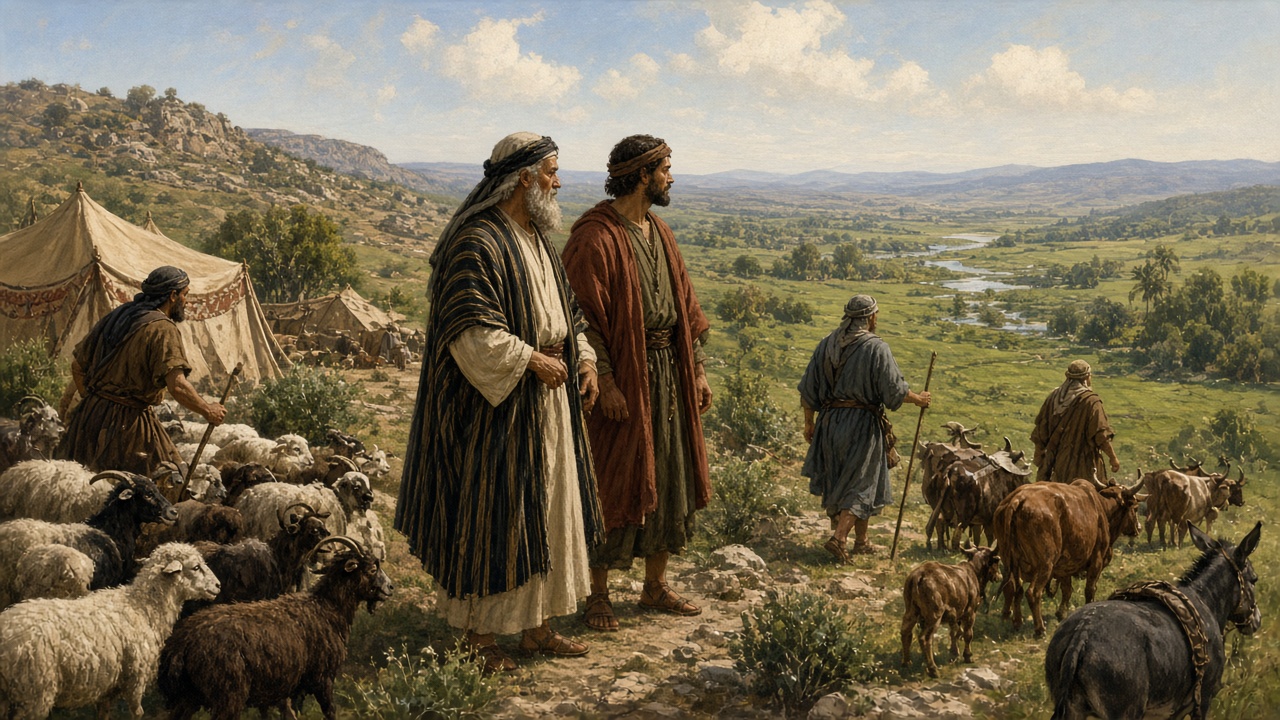
Abram and Lot Separate
- Abram came up from Egypt into the Negev, the arid district south of Palestine through which the caravan route ran from central Palestine to Egypt, and traveled from place to place toward Bethel.Sources: Negeb · the Bible text itself
- He returned to the place between Bethel and Ai where his tent had stood and where he had built an altar, and there he called on the name of the LORD. Easton's Bible Dictionary (1897) describes Bethel, about ten miles north of Jerusalem, as originally the royal Canaanite city of Luz, and holds that the name Bethel was first given to a nearby sanctuary rather than to the city itself until the tribe of Ephraim conquered it. Ai was one of the royal Canaanite cities and lay to the east of Bethel.Sources: Bethel (of Palestine) · Ai · the Bible text itself
- Lot looked out and saw the plain of the Jordan, well watered all the way to Zoar like the garden of the LORD and like the land of Egypt. Easton's Bible Dictionary (1897) calls this the first historical notice of the Jordan, in the account of Abraham and Lot's separation, and places Sodom, toward which Lot pitched his tent, in the vale of Siddim. The chapter notes that the LORD had not yet destroyed Sodom and Gomorrah, a destruction the dictionary attributes to fire from heaven because of the city's wickedness.Sources: Plain of Jordan · Sodom · the Bible text itself
Notes written with AI assistance from open sources (Theographic Bible Metadata, CC BY-SA 4.0; Easton’s Bible Dictionary, public domain) and reviewed before publishing.
Places in this chapter
- Egypt · 30.129, 31.308 · verses 1, 10
- Negeb · 31.245, 34.841 · verses 1, 3
- Jordan Valley · 32.317, 35.570 · verses 10, 11, 12
- Canaan · 32.767, 35.333 · verse 12
- Hebron · Today: Tel Rumeida · 31.525, 35.102 · verse 18
Only places identified with high confidence are shown (90% or more according to the scholarly sources compiled by OpenBible). Period map: DARE (Digital Atlas of the Roman Empire), CC BY 4.0; modern map: © OpenStreetMap contributors; places: OpenBible.info (CC BY 4.0).
Credits and license for this translation
Uisneno In Kabin ma Prenat: Rais Manba'an Fe'u nok Reta' Ahun-hunut
Genesis and the New Testament in the Amarasi language of Indonesia
Kejadian dan Perjanjian Baru dalam bahasa Amarasi dari
copyright © 1999-2014 Unit Bahasa dan Budaya, Kupang NTT, Indonesia
Language: Amarasi
Translation by: Wycliffe Bible Translators
This translation is made available to you under the terms of the
Creative Commons Attribution-No Derivatives license 4.0.
You may share and redistribute this Bible translation or extracts from it in any format, provided that:
You include the above copyright and source information.
You do not make any derivative works that change any of the actual words or punctuation of the Scriptures.
Pictures included with Scriptures and other documents on this site are licensed just for use with those Scriptures and documents.
For other uses, please contact the respective copyright owners.
2022-03-11
Source: http://ebible.org/aaz/ · eBible.org