Genesis 11
Uisneno In Kabin ma Prenat: Rais Manba'an Fe'u nok Reta' Ahun-hunut · Tap a verse to see its cross-references.
Kota Babel
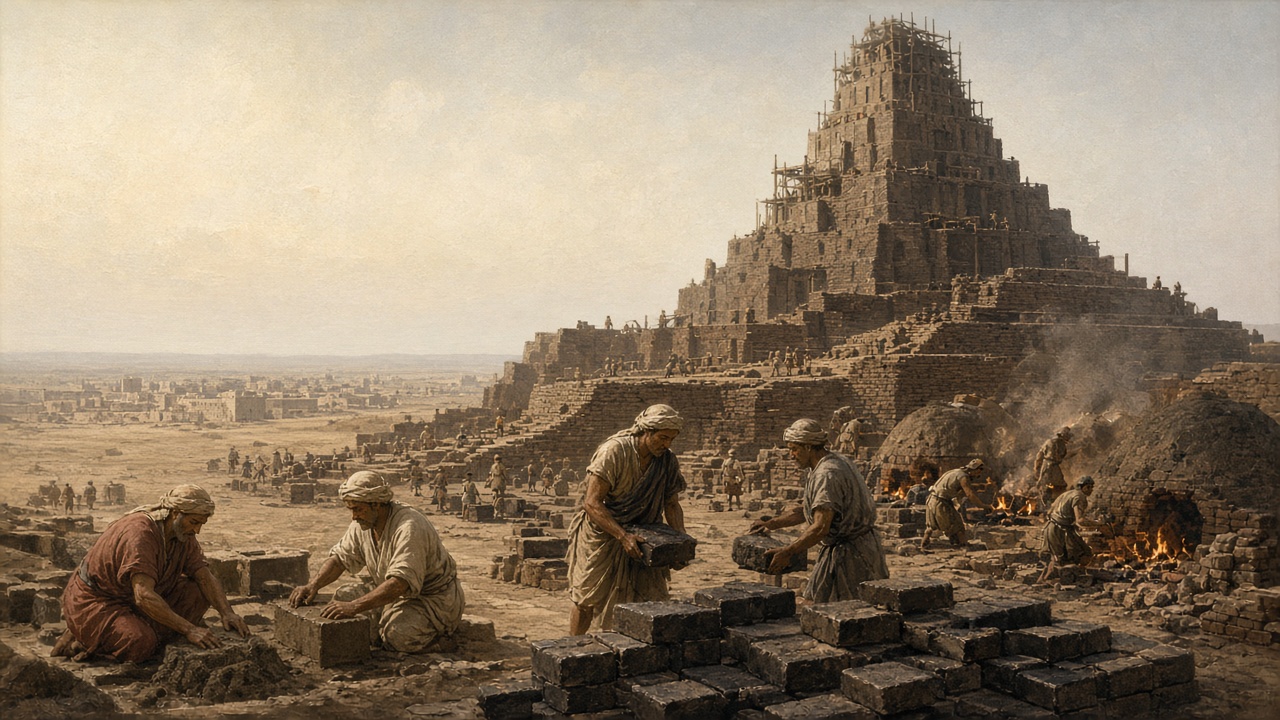
1Un-unuꞌ feꞌe te, mansian pah-pinan naꞌuab ein neik uab meesꞌ aah. 2Oras sin bian anmurai nanain ein neun pasaꞌ neon-saet, sin ntean mneer es et Sinear, onaim sin natuan nbin naan.
3Sin arsin anmaꞌakoran am nak, “Hoe! Aok-bian arki! Iim he hit tafenaꞌ kuuk kota kouꞌ goes. Onaim hit tmoeꞌ faut meꞌe, rarit hit tout sin tar naheran. Hit taktutaꞌ fatun naan ma traem sin tpaek ter. Rarit hit tahakeꞌ koat maꞌuim fatu mnaun es anbi kota koꞌu naan in nanan. Koat maꞌuim fatu naan, in aꞌpuupn ee ansutrai neno, henatiꞌ hit matekaꞌ kit. Ma maut he hit tjair uuf kouꞌ goes, ma kaisaꞌ tbaits ok.”
5Onaim UISNENO nsaun neem ma nnoon kota ma koat maꞌuim faut maktuta mnaun aꞌratas reꞌ mansian ein naan nafeen ee. 6Rarit In naꞌuab am nak, “Sin reꞌ ia, uuf meseꞌ ma uab meseꞌ. Saaꞌ reꞌ sin nmoeꞌ je oras ia, feꞌ nfaat noon. Nokaꞌ-nmeu, karu sin arsin nmafutun njarin meseꞌ on reꞌ oras ia, sin of nabeꞌin he nmoꞌen saaꞌ-saaꞌ ahaa. 7Reko nneis Hit tsaun he trikrakan sin uab, he njair uabaꞌ humaꞌ-humaꞌ. Maut henatiꞌ es-es ate ka nahiin fa es in uaban.”
8Rarit Uisneno nsanu ma nrikrakan sin uab. Nok ranan naan, In nmoeꞌ mansian ein ansiksakn ok neun areꞌ bare nbin pah-pinan. Onaim sin ka nafenaꞌ nakonob fa kota naan. 9Natuin UISNENO nrikrakan sin uab, ma nsiksakan sin neun areꞌ bare nbin pah-pinan, etun sin nakanab kota naan Babel (reꞌ he noi humaꞌ meseꞌ on reꞌ kata es, reꞌ in oetn ii ‘takaꞌnanaꞌ’).
Naiꞌ Sem in suufk ein tar antea naiꞌ Abram
10Naiꞌ Sem in suufk ein esan reꞌ ia: oras noe sakoꞌ naan namsau toon nua, naiꞌ Sem anmoin naan toon nautn es (100), in nahoniꞌ riꞌaan moen jes, ma nakaanb ee naiꞌ Arpaksat. 11Rarit in nmoni ntein toon natun niim (500) feꞌ, ma in nahoni nteniꞌ riꞌaan mone ma riꞌaan feto.
12Oras naiꞌ Arpaksat nmoin naan toon boꞌ tenu mniim (35), in nahoniꞌ riꞌaan moen jes, ma nakaanb ee, naiꞌ Sera. 13Rarit naiꞌ Arpaksat nmoni ntein toon natun haa mtoon teun (403) feꞌ, ma in nahoni nteniꞌ riꞌaan mone ma riꞌaan feto.
14Oras naiꞌ Sera nmoin naan toon boꞌ teun (30), in nahoniꞌ riꞌaan moen jes, es reꞌ naiꞌ Eber. 15Rarit naiꞌ Sera nmoni ntein toon natun haa mtoon teun (403) feꞌ, ma in nahoni nteniꞌ riꞌaan mone ma riꞌaan feto.
16Oras naiꞌ Eber nmoin naan toon boꞌ tenu mhaa (34), in nahoniꞌ riꞌaan moen jes, es reꞌ naiꞌ Pelek. 17Rarit naiꞌ Eber nmoni ntein toon natun haa mboꞌ teun (430) feꞌ, ma in nahoni nteniꞌ riꞌaan mone ma riꞌaan feto.
18Oras naiꞌ Pelek anmoin naan toon boꞌ teun (30), in nahoniꞌ riꞌaan moen jes, es reꞌ naiꞌ Rehu. 19Rarit naiꞌ Pelek nmoni ntein toon natun nua mtoon seo (209) feꞌ, ma in nahoni nteniꞌ riꞌaan mone ma riꞌaan feto.
20Oras naiꞌ Rehu nmoin naan toon boꞌ tenu mnua (32), in nahoniꞌ riꞌaan moen jes, es reꞌ naiꞌ Seruk. 21Rarit naiꞌ Rehu nmoni ntein toon natun nua mtoon hiut (207) feꞌ, ma in nahoni nteniꞌ riꞌaan mone ma riꞌaan feto.
22Oras naiꞌ Seruk anmoin naan toon boꞌ teun (30), in nahoniꞌ riꞌaan moen jes, es reꞌ naiꞌ Nahor. 23Rarit naiꞌ Seruk nmoni ntein toon natun nua (200) feꞌ, ma in nahoni nteniꞌ riꞌaan mone ma riꞌaan feto.
24Oras naiꞌ Nahor anmoin naan toon boꞌ nua mseo (29), in nahoniꞌ riꞌaan moen jes, es reꞌ naiꞌ Tera. 25Rarit naiꞌ Nahor nmoni ntein toon nautn es boꞌes am seo (119) feꞌ, ma in nahoni nteniꞌ riꞌaan mone ma riꞌaan feto.
26Oras naiꞌ Tera nmoin naan toon boꞌ hitu nneis, in nahoniꞌ riꞌaan mone teun, esan reꞌ: naiꞌ Abram, naiꞌ Nahor, ma naiꞌ Haran.
Naiꞌ Tera in sufan-kaꞌun
27Naiꞌ Tera in sufan-kauꞌn ein, esan reꞌ ia: naiꞌ Tera in aanh ein, naiꞌ Abram, naiꞌ Nahor, ma naiꞌ Haran. Naiꞌ Haran nahoniꞌ riꞌaan moen jes, es reꞌ naiꞌ Rot. 28Naiꞌ Haran nmate nbi in kua mnasiꞌ Ur, et pah atoin Kasdimas. Oras in anmaet, in amaf naiꞌ Tera nmoin feꞌ. 29Naiꞌ Abram ansao bi Sarai. Naiꞌ Nahor ansao naiꞌ Haran in aan feto, bi Milka. Naiꞌ Haran nahoniꞌ riꞌaan moen jes amsaꞌ, es reꞌ naiꞌ Jiska. 30Mes bi Sarai nkiu.
31Neot es, naiꞌ Tera neik in anah naiꞌ Abram, in aan nanef bi Sarai, ma in upuf naiꞌ Rot. Sin npoin ma nnaon nasaitan sin kua-mnasiꞌ Ur. Oras naan, sin he nnaon neu pah Kanaꞌan. Mes antean pah Haran, sin natuan nbin naan.
32Anbin naan, naiꞌ Tera nmaet, oras in nmoin naan toon natun nua mtoon niim (205).
Did you know?
Babel and the Road from Ur
- Travelers in this chapter settle on a plain in Shinar and build with baked brick and tar instead of stone and mortar. A dictionary treats Shinar as probably Babylonia or southern Mesopotamia, extending almost to the Persian Gulf, says the tower of Babel was built there, and describes the land's early inhabitants as people who made bricks and built cities.Sources: the Bible text itself · Shinar
- The unfinished city is named Babel because, the narrative says, there the Lord confused the language of the whole world and scattered its people. A dictionary explains the name as 'confusion' and suggests the tower was probably meant as a rallying-point on the wide plain of Shinar, after a migration from the uplands of Armenia, so the builders would not be scattered.Sources: the Bible text itself · Babel
- The chapter ends with Terah leaving Ur of the Chaldeans for Canaan with Abram, Sarai, and his grandson Lot, then settling in Haran, where he dies at 205; his son Haran had already died in Ur. A dictionary calls Ur that son's birthplace, the largest city of Shinar or northern Chaldea, and a center of trade and political power, and places Haran, now Harran and called Charran in the Greek Old Testament and in Acts, on the Belik, a Euphrates tributary in Upper Mesopotamia, where Abram stayed until Terah died.Sources: the Bible text itself · Terah · Ur of the Chaldees · Haran
Notes written with AI assistance from open sources (Theographic Bible Metadata, CC BY-SA 4.0; Easton’s Bible Dictionary, public domain) and reviewed before publishing.
Places in this chapter
- Shinar · Today: Babylonia · 32.543, 44.422 · verse 2
- Chaldea · 30.962, 46.104 · verses 28, 31
- Canaan · 32.767, 35.333 · verse 31
- Haran · Today: Harran · 36.864, 39.033 · verses 31, 32
Only places identified with high confidence are shown (90% or more according to the scholarly sources compiled by OpenBible). Period map: DARE (Digital Atlas of the Roman Empire), CC BY 4.0; modern map: © OpenStreetMap contributors; places: OpenBible.info (CC BY 4.0).
Credits and license for this translation
Uisneno In Kabin ma Prenat: Rais Manba'an Fe'u nok Reta' Ahun-hunut
Genesis and the New Testament in the Amarasi language of Indonesia
Kejadian dan Perjanjian Baru dalam bahasa Amarasi dari
copyright © 1999-2014 Unit Bahasa dan Budaya, Kupang NTT, Indonesia
Language: Amarasi
Translation by: Wycliffe Bible Translators
This translation is made available to you under the terms of the
Creative Commons Attribution-No Derivatives license 4.0.
You may share and redistribute this Bible translation or extracts from it in any format, provided that:
You include the above copyright and source information.
You do not make any derivative works that change any of the actual words or punctuation of the Scriptures.
Pictures included with Scriptures and other documents on this site are licensed just for use with those Scriptures and documents.
For other uses, please contact the respective copyright owners.
2022-03-11
Source: http://ebible.org/aaz/ · eBible.org