Genesis 1
Η Παλαιά Διαθήκη κατά τη μετάφραση των εβδομήκοντα (Ο') | SEPTUAGINTA · Tap a verse to see its cross-references.
About this book
About Genesis
- Among Jews the book is called Bereshith, meaning in the beginning, from its first word; Christians know it as Genesis, the Greek name used in the Septuagint, meaning creation or generation, because it tells of the origin of all things. It is the first of the five books that Jews call the Torah, the law, and that are collectively known as the Pentateuch, a Greek term for the five-fold book. Easton thinks the division into five books probably came from the Greek translators, and that the familiar book names are Greek.Sources: Easton: Genesis
- Easton's Bible Dictionary (1897) attributes Genesis to Moses and allows that he may have used older documents or traditions already current in his time. It gives no date of composition. By what Easton calls the usual computation, the narrative spans about 2,369 years.Sources: Easton: Genesis
- Easton divides Genesis into two principal parts. Chapters 1-11 give a general history of humankind down to the Dispersion; chapters 12-50 give the early history of Israel down to the death and burial of Joseph. Five figures organize the successive periods: Adam, Noah, Abraham, Isaac, and Jacob.Sources: Easton: Genesis
- Abram sojourned in Chaldea until he left Ur and traveled some three hundred miles north to Haran. Jacob later fled to Laban's house at Haran in Mesopotamia and married Laban's daughters, Leah and Rachel. The narrative then reaches Egypt: Easton takes Joseph's Pharaoh to be probably Apopi, the last Hyksos king, while some argue for the reign of Thothmes III.Sources: Abraham · Laban · Pharaoh (of Joseph)
- Easton notes that Sarah, Abraham's wife, died at one hundred and twenty-seven, the only woman's age recorded in Scripture, and that her death led Abraham to buy the cave of Machpelah as a family burial place.Sources: Sarah
Notes written with AI assistance from open sources (Theographic Bible Metadata, CC BY-SA 4.0; Easton’s Bible Dictionary, public domain) and reviewed before publishing.
1ΕΝ ἀρχῇ ἐποίησεν ὁ Θεὸς τὸν οὐρανὸν καὶ τὴν γῆν. 2ἡ δὲ γῆ ἦν ἀόρατος καὶ ἀκατασκεύαστος, καὶ σκότος ἐπάνω τῆς ἀβύσσου, καὶ πνεῦμα Θεοῦ ἐπεφέρετο ἐπάνω τοῦ ὕδατος. 3καὶ εἶπεν ὁ Θεός· γενηθήτω φῶς· καὶ ἐγένετο φῶς. 4καὶ εἶδεν ὁ Θεὸς τὸ φῶς, ὅτι καλόν· καὶ διεχώρισεν ὁ Θεὸς ἀνὰ μέσον τοῦ φωτὸς καὶ ἀνὰ μέσον τοῦ σκότους. 5καὶ ἐκάλεσεν ὁ Θεὸς τὸ φῶς ἡμέραν καὶ τὸ σκότος ἐκάλεσε νύκτα. καὶ ἐγένετο ἑσπέρα καὶ ἐγένετο πρωΐ, ἡμέρα μία.
6Καὶ εἶπεν ὁ Θεός· γενηθήτω στερέωμα ἐν μέσῳ τοῦ ὕδατος καὶ ἔστω διαχωρίζον ἀνὰ μέσον ὕδατος καὶ ὕδατος. καὶ ἐγένετο οὕτως. 7καὶ ἐποίησεν ὁ Θεὸς τὸ στερέωμα, καὶ διεχώρισεν ὁ Θεὸς ἀνὰ μέσον τοῦ ὕδατος, ὃ ἦν ὑποκάτω τοῦ στερεώματος, καὶ ἀναμέσον τοῦ ὕδατος τοῦ ἐπάνω τοῦ στερεώματος. 8καὶ ἐκάλεσεν ὁ Θεὸς τὸ στερέωμα οὐρανόν. καὶ εἶδεν ὁ Θεός, ὅτι καλόν, καὶ ἐγένετο ἑσπέρα καὶ ἐγένετο πρωΐ, ἡμέρα δευτέρα.
9Καὶ εἶπεν ὁ Θεός· συναχθήτω τὸ ὕδωρ τὸ ὑποκάτω τοῦ οὐρανοῦ εἰς συναγωγὴν μίαν, καὶ ὀφθήτω ἡ ξηρά. καὶ ἐγένετο οὕτως. καὶ συνήχθη τὸ ὕδωρ τὸ ὑποκάτω τοῦ οὐρανοῦ εἰς τὰς συναγωγὰς αὐτῶν, καὶ ὤφθη ἡ ξηρά. 10καὶ ἐκάλεσεν ὁ Θεὸς τὴν ξηρὰν γῆν καὶ τὰ συστήματα τῶν ὑδάτων ἐκάλεσε θαλάσσας. καὶ εἶδεν ὁ Θεός, ὅτι καλόν. 11καὶ εἶπεν ὁ Θεός· βλαστησάτω ἡ γῆ βοτάνην χόρτου σπεῖρον σπέρμα κατὰ γένος καὶ καθ᾿ ὁμοιότητα, καὶ ξύλον κάρπιμον ποιοῦν καρπόν, οὗ τὸ σπέρμα αὐτοῦ ἐν αὐτῷ κατὰ γένος ἐπὶ τῆς γῆς. καὶ ἐγένετο οὕτως. 12καὶ ἐξήνεγκεν ἡ γῆ βοτάνην χόρτου σπεῖρον σπέρμα κατὰ γένος καὶ καθ᾿ ὁμοιότητα, καὶ ξύλον κάρπιμον ποιοῦν καρπόν, οὗ τὸ σπέρμα αὐτοῦ ἐν αὐτῷ κατὰ γένος ἐπὶ τῆς γῆς. 13καὶ εἶδεν ὁ Θεός, ὅτι καλόν. καὶ ἐγένετο ἑσπέρα καὶ ἐγένετο πρωΐ, ἡμέρα τρίτη.
14Καὶ εἶπεν ὁ Θεός· γενηθήτωσαν φωστῆρες ἐν τῷ στερεώματι τοῦ οὐρανοῦ εἰς φαῦσιν ἐπὶ τῆς γῆς, τοῦ διαχωρίζειν ἀνὰ μέσον τῆς ἡμέρας καὶ ἀνὰ μέσον τῆς νυκτός· καὶ ἔστωσαν εἰς σημεῖα καὶ εἰς καιροὺς καὶ εἰς ἡμέρας καὶ εἰς ἐνιαυτούς· 15καὶ ἔστωσαν εἰς φαῦσιν ἐν τῷ στερεώματι τοῦ οὐρανοῦ, ὥστε φαίνειν ἐπὶ τῆς γῆς. καὶ ἐγένετο οὕτως. 16καὶ ἐποίησεν ὁ Θεὸς τοὺς δύο φωστῆρας τοὺς μεγάλους, τὸν φωστῆρα τὸν μέγαν εἰς ἀρχὰς τῆς ἡμέρας καὶ τὸν φωστῆρα τὸν ἐλάσσω εἰς ἀρχὰς τῆς νυκτός, καὶ τοὺς ἀστέρας. 17καὶ ἔθετο αὐτοὺς ὁ Θεὸς ἐν τῷ στερεώματι τοῦ οὐρανοῦ, ὥστε φαίνειν ἐπὶ τῆς γῆς 18καὶ ἄρχειν τῆς ἡμέρας καὶ τῆς νυκτὸς καὶ διαχωρίζειν ἀνὰ μέσον τοῦ φωτὸς καὶ ἀνὰ μέσον τοῦ σκότους. καὶ εἶδεν ὁ Θεός, ὅτι καλόν. 19καὶ ἐγένετο ἑσπέρα καὶ ἐγένετο πρωΐ, ἡμέρα τετάρτη.
20Καὶ εἶπεν ὁ Θεός· ἐξαγαγέτω τὰ ὕδατα ἑρπετὰ ψυχῶν ζωσῶν καὶ πετεινὰ πετόμενα ἐπὶ τῆς γῆς κατὰ τὸ στερέωμα τοῦ οὐρανοῦ. καὶ ἐγένετο οὕτως. 21καὶ ἐποίησεν ὁ Θεὸς τὰ κήτη τὰ μεγάλα καὶ πᾶσαν ψυχὴν ζῴων ἑρπετῶν, ἃ ἐξήγαγε τὰ ὕδατα κατὰ γένη αὐτῶν, καὶ πᾶν πετεινὸν πτερωτὸν κατὰ γένος. καὶ εἶδεν ὁ Θεός, ὅτι καλά. 22καὶ εὐλόγησεν αὐτὰ ὁ Θεός, λέγων· αὐξάνεσθε καὶ πληθύνεσθε καὶ πληρώσατε τὰ ὕδατα ἐν ταῖς θαλάσσαις, καὶ τὰ πετεινὰ πληθυνέσθωσαν ἐπὶ τῆς γῆς. 23καὶ ἐγένετο ἑσπέρα καὶ ἐγένετο πρωΐ, ἡμέρα πέμπτη.
24Καὶ εἶπεν ὁ Θεός· ἐξαγαγέτω ἡ γῆ ψυχὴν ζῶσαν κατὰ γένος, τετράποδα καὶ ἑρπετὰ καὶ θηρία τῆς γῆς κατὰ γένος. καὶ ἐγένετο οὕτως. 25καὶ ἐποίησεν ὁ Θεὸς τὰ θηρία τῆς γῆς κατὰ γένος, καὶ τὰ κτήνη κατὰ γένος αὐτῶν καὶ πάντα τὰ ἑρπετὰ τῆς γῆς κατὰ γένος αὐτῶν. καὶ εἶδεν ὁ Θεός, ὅτι καλά. 26καὶ εἶπεν ὁ Θεός· ποιήσωμεν ἄνθρωπον κατ᾿ εἰκόνα ἡμετέραν καὶ καθ᾿ ὁμοίωσιν, καὶ ἀρχέτωσαν τῶν ἰχθύων τῆς θαλάσσης καὶ τῶν πετεινῶν τοῦ οὐρανοῦ καὶ τῶν κτηνῶν καὶ πάσης τῆς γῆς καὶ πάντων τῶν ἑρπετῶν τῶν ἑρπόντων ἐπὶ γῆς γῆς. 27καὶ ἐποίησεν ὁ Θεὸς τὸν ἄνθρωπον, κατ᾿ εἰκόνα Θεοῦ ἐποίησεν αὐτόν, ἄρσεν καὶ θῆλυ ἐποίησεν αὐτούς. 28καὶ εὐλόγησεν αὐτοὺς ὁ Θεός, λέγων· αὐξάνεσθε καὶ πληθύνεσθε καὶ πληρώσατε τὴν γῆν καὶ κατακυριεύσατε αὐτῆς καὶ ἄρχετε τῶν ἰχθύων τῆς θαλάσσης καὶ τῶν πετεινῶν τοῦ οὐρανοῦ καὶ πάντων τῶν κτηνῶν καὶ πάσης τῆς γῆς καὶ πάντων τῶν ἑρπετῶν τῶν ἑρπόντων ἐπὶ τῆς γῆς. 29καὶ εἶπεν ὁ Θεός· ἰδοὺ δέδωκα ὑμῖν πάντα χόρτον σπόριμον σπεῖρον σπέρμα, ὅ ἐστιν ἐπάνω πάσης τῆς γῆς, καὶ πᾶν ξύλον, ὃ ἔχει ἐν ἑαυτῷ καρπὸν σπέρματος σπορίμου, ὑμῖν ἔσται εἰς βρῶσιν· 30καὶ πᾶσι τοῖς θηρίοις τῆς γῆς καὶ πᾶσι τοῖς πετεινοῖς τοῦ οὐρανοῦ καὶ παντὶ ἑρπετῷ ἕρποντι ἐπὶ τῆς γῆς, ὃ ἔχει ἐν ἑαυτῷ ψυχὴν ζωῆς, καὶ πάντα χόρτον χλωρὸν εἰς βρῶσιν. καὶ ἐγένετο οὕτως. 31καὶ εἶδεν ὁ Θεὸς τὰ πάντα, ὅσα ἐποίησε, καὶ ἰδοὺ καλὰ λίαν. καὶ ἐγένετο ἑσπέρα καὶ ἐγένετο πρωΐ, ἡμέρα ἕκτη.
Did you know?
The creation of heaven and earth
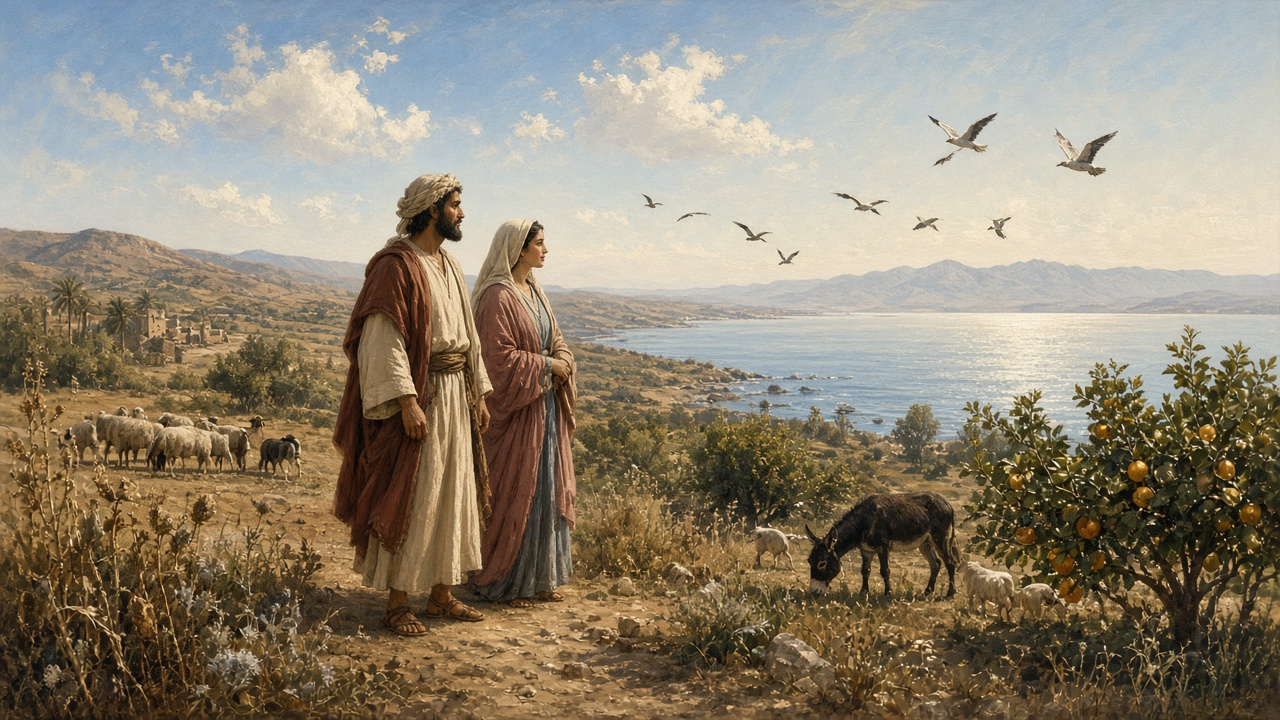
- The chapter tells the making of the heavens and the earth over six days, and each day closes with the same refrain: there was evening, and there was morning. Light is brought into being on the first day and named “day,” while the darkness is named “night.” Only on the fourth day are two great lights and the stars set in the expanse of the sky, to separate day from night and to mark seasons, days, and years.Sources: the Bible text itself
- The story opens on an earth that is formless and void, with darkness over the surface of the deep and the Spirit of God hovering over the waters. God makes an expanse and calls it “sky,” separating the waters above from the waters below. The waters under the sky are gathered into one place so that dry land, called “earth,” and the seas appear, and the earth brings forth seed-bearing plants and fruit trees.Sources: the Bible text itself
- On the sixth day livestock, land crawlers, and beasts of the earth are made, and human beings are created male and female in the image of God, blessed, and told to fill the earth and rule the other creatures. Seed-bearing plants and fruit trees are given to them for food, and every green plant to every creature that has the breath of life, and God looks at all that has been made and calls it very good. One event chronology places the start of the creation of all things in 4003 BC and gives it a duration of seven days.Sources: the Bible text itself · Creation of all things
Notes written with AI assistance from open sources (Theographic Bible Metadata, CC BY-SA 4.0; Easton’s Bible Dictionary, public domain) and reviewed before publishing.
Credits and license for this translation
Η Παλαιά Διαθήκη κατά τη μετάφραση των εβδομήκοντα (Ο') | SEPTUAGINTA
The Old Testament in Ancient Greek, Septuagint translation
Public Domain
℗ Orthodox Media Network
Language: Ελληνικά (Greek, Ancient)
Dialect: Koine
ORTHODOX MEDIA NETWORK-ΟΡΘΟΔΟΞΟ ΔΙΚΤΥΟ ΕΝΗΜΕΡΩΣΗΣ
A Voice from the Heart of Mount Athos to the World
Orthodox Media Network ( https://vivlos.link/DEqNY ) was founded on Mount Athos – the only monastic republic in the world – with main mission to promote the Holy Scriptures and preserve the spiritual and cultural heritage of Orthodox monasticism, using mainly the internet.
Since 2010, its founder and General Secretary, Apostolos Vavylis, has become the first person internationally to record the entire Bible in both the original ancient Greek text and its modern Greek translation. This work – unprecedented in Orthodox tradition – has reached and inspired millions:
* Over 15 million people (estimated) have listened to at least one chapter of the recorded Bible.
* Hundreds of independent accounts across nearly every digital platform, share these recordings in countless forms.
We have never claimed copyright or demanded takedowns of these reproductions — because our goal is not profit, but the free and faithful dissemination of the Word of God and the blessing it brings to the world.
We welcome anyone that would like to publicly share our work with the only condition to publish the present text as a minimum respect to our mission.
* Our vision:
To place a Bible in every Greek-speaking home, wherever it may be on earth.
There are an estimated 17 million Greeks living in nearly 100 countries.
* If you wish to support or partner with us, please contact:
* [email protected]
The Old Testament (Septuaginta)
We are a voice of Orthodoxy, a witness of the Word, and a blessing to the Nations.
2026-02-13
Source: http://ebible.org/grclxx/ · eBible.org