Hosea 1
Berean Standard Bible · Tap a verse to see its cross-references.
About this book
About Hosea
- Easton's Bible Dictionary (1897) presents Hosea, whose name means "Salvation," as the son of Beeri and the author of the book of prophecies that bears his name. It says he belonged to the kingdom of Israel, and that the superscription (Hosea 1:1-2) indicates a ministry of some sixty years.Sources: Easton: Hosea · Hosea
- The same dictionary argues for a northern origin from his rough, Aramaizing diction, his close knowledge of places in Ephraim, his calling the kingdom "the land" (Hosea 1:2), and his calling the Israelite king "our" king (Hosea 7:5). It also describes him as the only prophet of Israel who left a written prophecy.Sources: Easton: Hosea · Hosea
- An entry on Jotham, son and successor of Uzziah as king of Judah, dates his sole reign to 759-743 B.C. and calls him a contemporary of Isaiah, Hosea, and Micah. Baal, identified as the principal male god of the Phoenicians, appears in the plural Baalim in Hosea 2:17.Sources: Jotham · Baal
- Hosea's first daughter is named Lo-ruhamah, "not pitied," and is presented as a type of Jehovah's temporary rejection of his people (Hosea 1:6; 2:23). Beth-aven, "house of nothingness," stands for Bethel in Hosea 4:15, 5:8, and 10:5, and is explained as a "house of idols," because calves were worshipped there and it was no longer a "house of God." Hosea 12:2-4 is also cited for Jacob, called Israel, whose name is explained as one who follows on another's heels, or supplanter.Sources: Lo-ruhamah · Beth-aven · Jacob (Israel)
Notes written with AI assistance from open sources (Theographic Bible Metadata, CC BY-SA 4.0; Easton’s Bible Dictionary, public domain) and reviewed before publishing.
Hosea’s Wife and Children
1This is the word of the LORD that came to Hosea son of Beeri in the days of Uzziah, Jotham, Ahaz, and Hezekiah, kings of Judah, and of Jeroboam son of Jehoash, king of Israel.
2When the LORD first spoke through Hosea, He told him, “Go, take a prostitute as your wife and have children of adultery, because this land is flagrantly prostituting itself by departing from the LORD.”
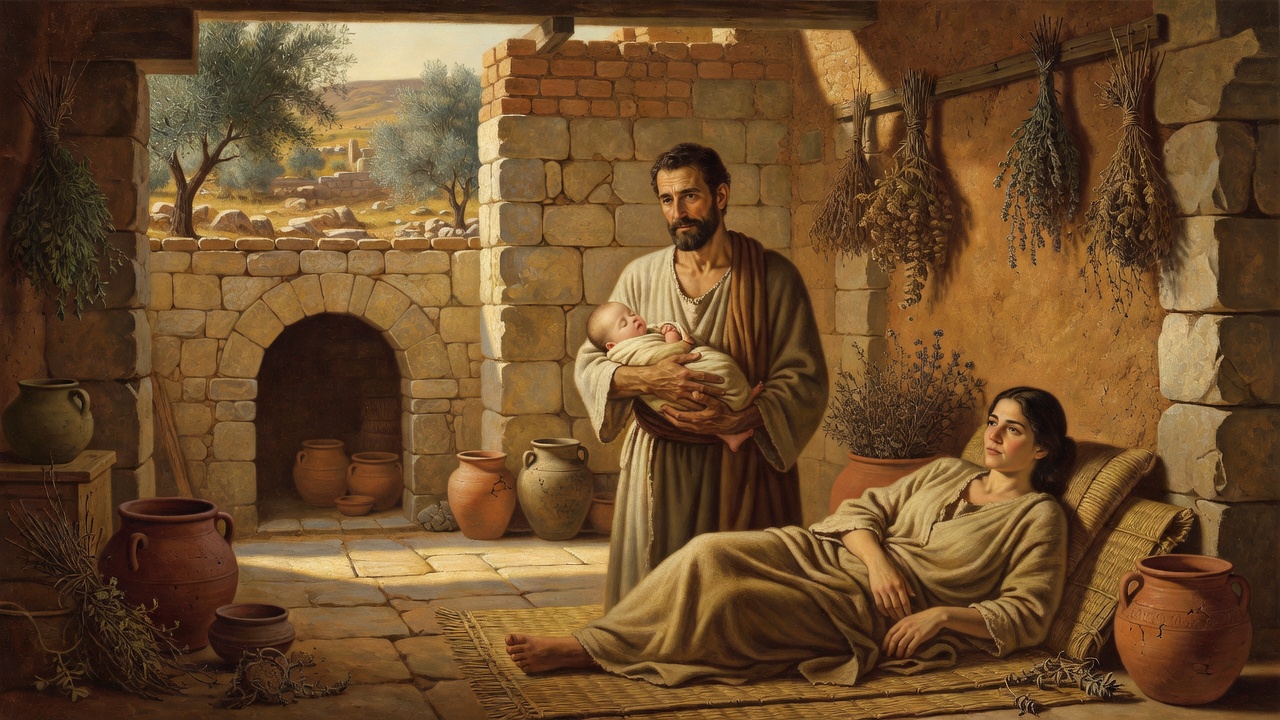
3So Hosea went and married Gomer daughter of Diblaim, and she conceived and bore him a son.
4Then the LORD said to Hosea, “Name him Jezreel, for soon I will bring the bloodshed of Jezreel upon the house of Jehu, and I will put an end to the kingdom of Israel. 5And on that day I will break the bow of Israel in the Valley of Jezreel.”
6Gomer again conceived and gave birth to a daughter, and the LORD said to Hosea, “Name her Lo-ruhamah, for I will no longer have compassion on the house of Israel, that I should ever forgive them. 7Yet I will have compassion on the house of Judah, and I will save them—not by bow or sword or war, not by horses and cavalry, but by the LORD their God.”
8After she had weaned Lo-ruhamah, Gomer conceived and gave birth to a son. 9And the LORD said, “Name him Lo-ammi, for you are not My people, and I am not your God.
10Yet the number of the Israelites will be like the sand of the sea, which cannot be measured or counted. And it will happen that in the very place where it was said to them, ‘You are not My people,’ they will be called ‘sons of the living God.’ 11Then the people of Judah and of Israel will be gathered together, and they will appoint for themselves one leader, and will go up out of the land. For great will be the day of Jezreel.
Did you know?
A Prophet's Marriage and Symbolic Children
- Hosea, the son of Beeri, was a prophet from the northern kingdom of Israel whose ministry extended through the reigns of Jeroboam II in Israel and kings Uzziah, Jotham, Ahaz, and Hezekiah in Judah. He is the only prophet from the northern kingdom to leave a surviving book of written prophecies.Sources: Hosea · the Bible text itself
- The names given to Hosea and Gomer's children carried direct prophetic warnings for Israel. Jezreel recalled royal bloodshed and judgment, Lo-ruhamah meant not pitied, and Lo-ammi meant not my people, symbolizing the rupture between God and the kingdom.Sources: Lo-ruhamah · the Bible text itself
- Jezreel was a major town in Issachar where northern kings kept a royal residence and where Jehu had violently destroyed the dynasty of Ahab. The surrounding valley was a historic battlefield, making the promise to break Israel's bow there a vivid image of military defeat.Sources: Jezreel · Valley of Jezreel · the Bible text itself
Notes written with AI assistance from open sources (Theographic Bible Metadata, CC BY-SA 4.0; Easton’s Bible Dictionary, public domain) and reviewed before publishing.
Places in this chapter
- Valley of Jezreel · Today: Jezreel Valley · 32.596, 35.242 · verse 5
Only places identified with high confidence are shown (90% or more according to the scholarly sources compiled by OpenBible). Period map: DARE (Digital Atlas of the Roman Empire), CC BY 4.0; modern map: © OpenStreetMap contributors; places: OpenBible.info (CC BY 4.0).
Credits and license for this translation
Berean Standard Bible
The Holy Bible in English: Berean Standard Bible
Public Domain
Language: English
Contributor: BSB Publishing, LLC
2026-10-02
Source: http://ebible.org/engbsb/ · eBible.org