Mark 1
Thukam Thar Lente Ṭon · Tap a verse to see its cross-references.
About this book
About Mark
- Easton's Bible Dictionary (1897) identifies the evangelist as John, whose surname was Mark. Mark, or Marcus, was his Roman name and gradually replaced the Jewish name John. He was the son of Mary, a woman of some means and influence, was probably born in Jerusalem, where she lived, and was a cousin of Barnabas; of his father, the entry says, nothing is known.Sources: Easton: Mark
- Easton's Bible Dictionary (1897) does not give a date for the Gospel. It places Mark with Paul and Barnabas on their first journey about A.D. 47 as their attendant, called their minister; he turned back at Perga in Pamphylia, and about three years later Paul refused to take him, which caused a sharp contention with Barnabas. The entry says he was later reconciled, was with Paul during his first imprisonment in Rome, then with Peter in Babylon—at that time and for some centuries afterward one of the chief seats of Jewish learning—and with Timothy in Ephesus.Sources: Easton: Mark
- Under the Romans in the time of Christ, Judea was the southernmost of the three divisions of Palestine and part of the province of Syria, though the name was sometimes used for Palestine as a whole. Pontius Pilate, the sixth procurator of Judea (A.D. 26–36), had his headquarters at Caesarea but often went up to Jerusalem; his rule covered the ministries of John the Baptist and of Jesus.Sources: Judea · Pontius Pilate
- The Jews called the region Galil; because its original inhabitants remained there a long time, it was also called Galilee of the Gentiles, and Upper Galilee was distinguished from Lower Galilee to the south. Simon Peter, of Bethsaida on the western coast of the Sea of Galilee, was trained as a fisher, and James and John, sons of Zebedee, also worked as fishermen on that lake.Sources: Galilee · Simon Peter · James (Son of Zebedee) · John the Apostle
- Easton considers it probable that Mark was converted by Peter in his mother's house in Jerusalem, where Peter, released from prison, found many gathered in prayer, and notes that Peter calls him his son. The same entry also thinks it probable that the young man mentioned in Mark 14:51–52 was Mark himself.Sources: Easton: Mark
Notes written with AI assistance from open sources (Theographic Bible Metadata, CC BY-SA 4.0; Easton’s Bible Dictionary, public domain) and reviewed before publishing.
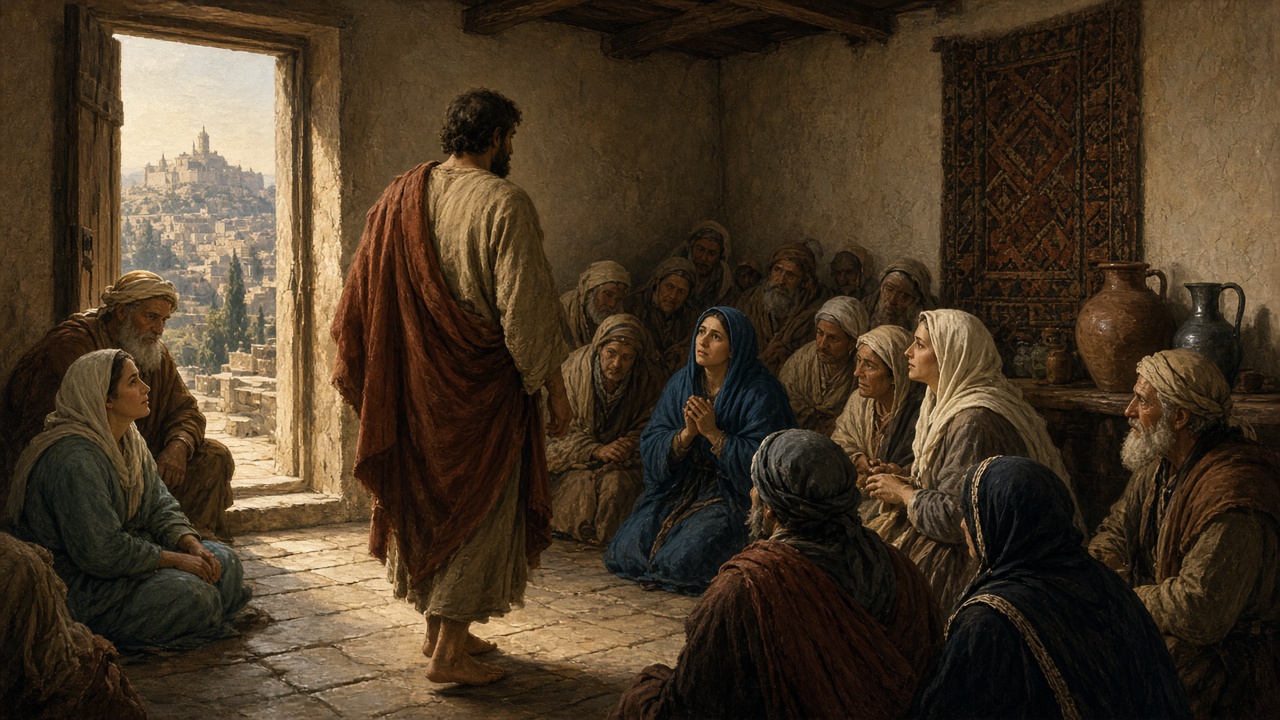
Baptisma Petu Johan ih Thusipnak
1Pathian Fapa, Jesuh Khrih ih Thuthang Ṭha ih hramthawhnak cu hitih in a si. 2Profet Isaiah ih nganmi mangin:
“ ‘Zohhnik, na hmai ah ka palai ka thlah thok,
Ani nih na zalam a timtuah thok.’
3Ramṭhing ih mi pakhat hehnak aw nih,
‘Bawipa ih zalam timtuah uh;
A zalam cu dingter uh,’ a ti.”
4Baptisma petu Johan cu ramṭhing la in a ban ih, sual ngaihthiamnak hrangah sirfaknak baptisma thu a sim. Ani nih mipi pawl sinah, “Nan sual sir uh la baptisma la uh. Cun Pathian nih nan sual pawl nan ta ngaihthiam thok,” tiah a ti. 5Cun Judea peng pumpi le Jerusalem mi zate pawl cu a sinah an feh. An sualnak pawl an phuang ih Johan hmangin Jordan tikua ah baptisma an co.
6Johan cu kalauk hmul ih tuahmi hnipuan a hru ih a tai ah saphaw taikap a kap. Cun khabawk le hramlak khuailawti cu caw ah a ei. 7Cun, a thusipmi cu, “Ka dungih a tiang dingmi pa hi kei nakin a picang sawn, a hmai ah kun pit in a kedap hri phoihsaktu ding hmanah kei cu ka tlak lo. 8Kei cu ti in baptisma nan ta pe; asinain ani cu Thlarau Thianghlim thawn baptisma nan ta pe thok,” tiah a i.
Jesuh ih Baptisma le Tukforhnak
9Cuvai ni ah Jesuh cu Galilee peng Nazareth khua in a ban ih Johan hmangin Jordan tikua ah baptisma a la. 10Cun Jesuh cu ti sungih a hang suah cangka in van a hong fa ih Thlarau cu thute mangin a tlunih a rong ṭum cu a hmu. 11Cun van in aw pakhat nih, “Nang cu ka duhdawt ngaimi ka Fapa na si, na cungah ka lung a kim setak,” tiah a ti.
12Hmakhatte ah Thlarau nih Jesuh cu ramṭhing ah a ṭhita. 13Cun cuvai hmun ah ni sawmli a um ih Seihtan nih a tukforh. Ramsa pawl thawn an um ih vancungmi pawl nih an tuamhlawm.
Jesuh nih Nga Tlaitu Pali A Ko
14Johan thawng an thlak hnukah Jesuh cu Galilee peng ah a feh ih Pathian ih Thuthang Ṭha a sim. 15Jesuh nih, “Tikcu a kim i ih Pathian uknak a nai i! Nan sual sir u la Thuthang Ṭha cu zum uh!” tiah a sim.
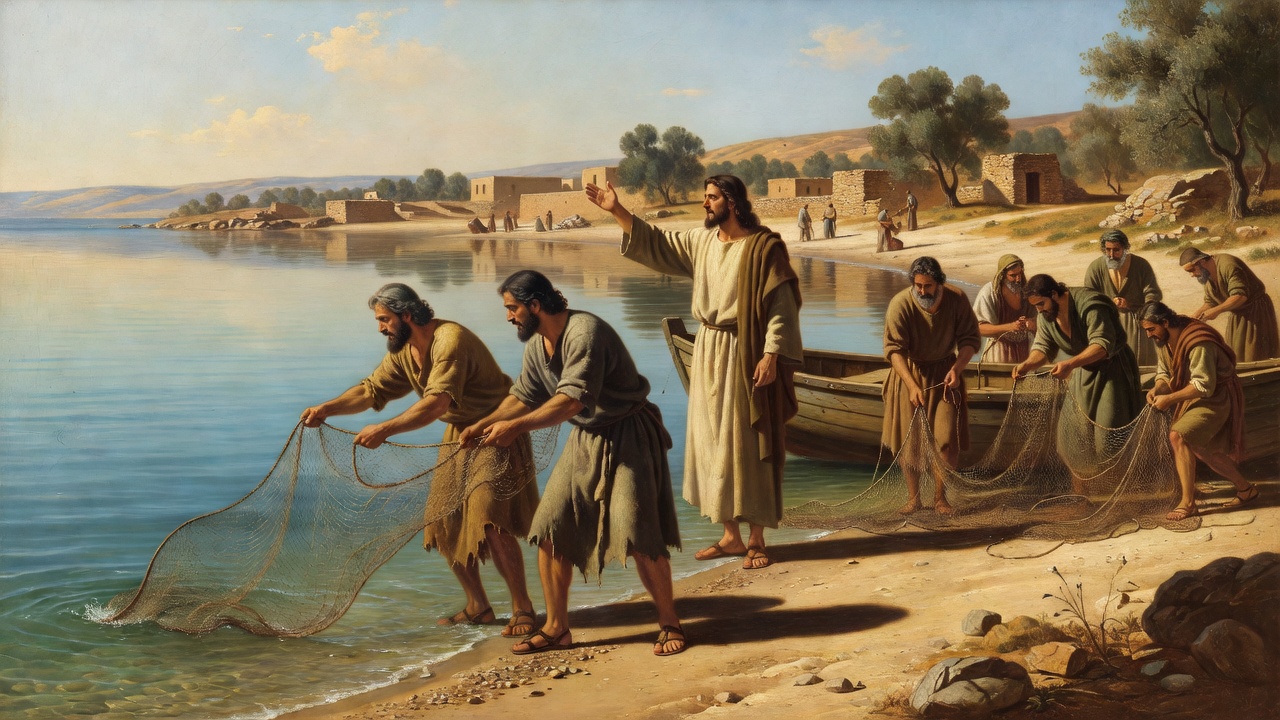
16Jesuh cu Galilee Tili kap ih a feh laiah, Simon le a unaupa Andru cu nga tlaitu an ih ruangah, tili sungah sur an vorh berbo lai a hmu hnei. 17Cun Jesuh nih an sinah, “Ka thlun uh, cule minung tlaitu ah nan ta tuah thok,” tiah a ti hnei. 18Hmakhatte ah an ni nih an sur pawl an ramta ih a dung an thlun.
19Cun Jesuh cu a hlat deuhnak ah a feh ih, Zebedi ih fapa James le a unaupa Johan lawng sungih an sur pawl an rep berbo lai a hmu hnei. 20Hmakhatte ah Jesuh nih a ko hnei ih, an pa Zebedi cu an tlakfa pawl thawn lawng sungah an ramta ih a dung an thlun.
Thlarau Sia ih Molhmi Pa
21Jesuh le a dungthluntu pawl cu Kapernaum khua ah an feh, a zingla Sabbath ni ah Jesuh cu Sinakok ah a lut ih thuzirh a thok. 22A thuzirhmi ah an mang a bang, zangahtihle Daanthiam pawl mang i lo in, ani cu thuneitu pakhat mangin a zirh.
23Cuvai can ah thlarau sia ih molhmi pa pakhat cu Sinakok sung ah a tiang ih, 24“Nazareth mi Jesuh, zangtu ah kan na ṭul? Kan na siatsuah dingah maw na tiang? Hu na si tih ta fiah — nang cu Pathian ih mi Thianghlim Pakhat na si,” tiah a hek.
25Cun Jesuh nih cupa cu, “Daite in um, cupa ih sung in suak!” tiah a tai.
26Thlarau sia nih cupa cu thangai in a caihter ih thangngai a heh hnuk ah, cupa ih sung in a suak. 27Cun an zatein an mangbang colh ih, “Aimang thil cu zangtih in a i? Zirhnak thar maw a i? Thlarau sia pawl hman thuneihnak thawn thu a pe hnei ih a thu an thlun!” tiah pakhat le pakhat an sutfa.
28Cutin Jesuh ih thuhla cu hmakhatte ah Galilee peng zate ah a thang colh.
Jesuh nih Mi Tamngai A Damter
29Jesuh cu Sinakok ih a suah cang in Simon le Andru teiʼ inn ah James le Johan thawn an lut. 30Simon nupi ih nu cu khurhfah in a fak ih a it; Jesuh a tian cang in cuvai thu cu an sim lohli. 31Jesuh cu a sin a va feh ih a kut in a han tho. A khurhfahnak cu a dam ih a tuamhlawm hnei.
32Ni a pil ih simla a tian tikah, mi fak pawl le thlarau sia ih molhmi pawl hmahhmah cu Jesuh sinah an tianpit. 33Cun an khawpawh in cuvai inn suahka hmai ah an hmuakkhawmfa. 34Jesuh nih fahnak phunphun ih a fakmi pawl a damter, cule khawsia tamngai khaw a dawisuak hnei. Khawsia pawl cu ṭon a sian hnei lo; zangahtihle hutu a si tih an fiah.
Galilee ah Jesuh Thu A Sim
35Zingmaw khawvang hlan ah Jesuh cu a tho ih inn leng ah a suak. Thawngṭhingnak hmun ah a feh ih thla a cam. 36Simon le a rualpi pawl nih Jesuh cu an hrawl, 37an hmuh tikah, “Mi hmahhmah nih ta hrawl eng,” tiah an sim.
38Jesuh nih, “Khua kiangkap dang ah feh uh sing. Thu ka sim hnei thok. Zangahtihle cucu ka tiannaksan a i,” tiah a sawn hnei.
39Cun Galilee peng hmahhmah ah a feh ih an sinakok pawl ah thu a sim ih khawsia pawl khaw a dawisuak.
Jesuh nih Miphar Pakhat A Damter
40Miphar pa pakhat cu Jesuh sin a feh ih, khuk bil in bopnak a hler ih, “na duh ah cu, ka na thiangter thei,” tiah a ti.
41Jesuh nih a thinfak ih a kut dawh pit in a tham. Cule a sinah, “Ta ka thianter ka duh, thiang i,” tiah a ti. 42Hmakhatte ah a pharfah a dam ih a thiang. 43Jesuh nih fak ngai in ralrinnak a pe ih a hlatnak ah a fehter lohli, 44Cun a sinah, “Ngai hnik! Hutu sinah zangkhaw sim hlah. Cunakin puithiam sinah va feh cih la tak zohfel seh; mi hmahhmah nih na dam tihmi an fiahnak dingah Moses ih thupekmi mangin mithiang na sihnak dingah thawinak pe,” tiah thu a pe.
45Sikhawsehla cupa cu a feh ih a damnak thu cu duhsah ngaiin a sim ih khawhra a thang. Curuangah Jesuh cu mi ih hmuhhngan in khaw sungah a lut thei i lo. Khaw lengah a um ih a sinah hmunzakip in mi nih an pha.
Did you know?
The gospel begins by the Jordan and in Galilee
- John, who appears in the wilderness preaching a baptism of repentance, was of priestly descent. His father Zacharias was a priest of the course of Abia, and his mother Elisabeth was of the daughters of Aaron; his birth is said to have taken place six months before that of Jesus. His mission is described as the subject of prophecy in Isaiah and Malachi.Sources: John the Baptist · the Bible text itself
- Simon and his brother Andrew were fishermen from Bethsaida, on the western coast of the Sea of Galilee. Andrew had been a disciple of John the Baptist and had already brought Simon to Jesus; the brothers kept working as fishermen until after John's imprisonment. James and John were sons of Zebedee, a Galilean fisherman of some position in Capernaum who had hired servants of his own; they left him in the boat with those men.Sources: Simon Peter · Andrew · Zebedee · the Bible text itself
- The Sea of Galilee, also called the Sea of Tiberias, is about twelve and a half miles long and from four to seven and a half miles wide, and its surface lies 682 feet below the Mediterranean. Jesus came to be baptized from Nazareth in Galilee, a town not mentioned in the Old Testament and the home of Joseph and Mary. Under the Romans, Judea was the southernmost of the three divisions of Palestine, and people went out to John from Jerusalem and the countryside of Judea.Sources: Sea of Galilee · Nazareth · Judea · the Bible text itself
Notes written with AI assistance from open sources (Theographic Bible Metadata, CC BY-SA 4.0; Easton’s Bible Dictionary, public domain) and reviewed before publishing.
Places in this chapter
- Jerusalem · 31.777, 35.234 · verse 5
- Jordan · Today: Jordan River · 31.761, 35.558 · verses 5, 9
- Judea · Today: Judea 1 · 31.777, 35.234 · verse 5
- Galilee · 32.760, 35.527 · verses 9, 14, 28, 39
- Nazareth · 32.702, 35.298 · verses 9, 24
- Sea of Galilee · 32.819, 35.590 · verse 16
Only places identified with high confidence are shown (90% or more according to the scholarly sources compiled by OpenBible). Period map: DARE (Digital Atlas of the Roman Empire), CC BY 4.0; modern map: © OpenStreetMap contributors; places: OpenBible.info (CC BY 4.0).
Credits and license for this translation
Thukam Thar Lente Ṭon
The Holy Bible in the Falam Chin language of Myanmar: Thukam Thar Lente Ṭon
copyright © 2025 The Word for the World International
Language: Falam
Contributor: The Word for the World International
Lente Thukam Thar
The New Testament in Lente Language
The Word for the word
This translation is made available to you under the terms of the
Creative Commons Attribution Share-Alike license 4.0.
You have permission to share and redistribute this Bible translation in any format and to make reasonable revisions and adaptations of this translation, provided that:
You include the above copyright and source information.
If you make any changes to the text, you must indicate that you did so in a way that makes it clear that the original licensor is not necessarily endorsing your changes.
If you redistribute this text, you must distribute your contributions under the same license as the original.
Pictures included with Scriptures and other documents on this site are licensed just for use with those Scriptures and documents.
For other uses, please contact the respective copyright owners.
Note that in addition to the rules above, revising and adapting God's Word involves a great responsibility to be true to God's Word. See Revelation 22:18-19.
2025-07-02
Source: http://ebible.org/cfm/ · eBible.org